




Natural Home Remedies for Food Poisoning
By Dr Ashok Pal +2 more

Medically reviewed by Dr. Avinav Gupta
Last updated: Oct 19, 2026 Published on: May 9, 2022


Get,

to manage your symptom
Get your,

4 Cr+ families
benefitted

OTP sent to 9988776655



You’ve successfully subscribed to receive
doctor-approved tips on
Whatsapp

Get ready to feel your best.


Register to Avail the Offer
Send OTPBy continuing, you agree with our Privacy Policy and Terms and Conditions
Hi There,
Sign up on PharmEasy now!!


Trusted by 4 crore+ families

OTP sent to 9988776655
You have unlocked 25% off on medicines


Code: NU25

By Dr Ashok Pal +2 more
Table of Contents
Food poisoning, also called foodborne illness, occurs when we consume food that has been contaminated by microbes. These microorganisms can contaminate the food during any part of their processing journey till it reaches us and causes illness. Food poisoning is not necessarily caused by outside food, it can also occur when food is incorrectly handled or cooked at home. The symptoms of food poisoning can begin within a few hours of eating contaminated food. It may resolve without any treatment as well in mild cases, which is often the case, but sometimes in severe cases, a person might require hospital admission too4.
Most often, food poisoning is seen in a large group of people who have all consumed the same contaminated food. It can also occur in individuals. Food poisoning is mainly the result of contamination of food, which can occur due to :

Some of the most commonly experienced symptoms by people suffering from food poisoning are2,5:
The symptoms of food poisoning can range from mild to very serious, depending on the type of microorganisms we get infected by and each body’s individual defense system2. A few home remedies for food poisoning are as follows:

As vomiting is one of the common symptoms experienced, rehydration becomes very important2. ORS is the most scientifically supported home measure for food poisoning. It is recommended by health authorities worldwide to replace fluids and salts lost through vomiting and diarrhoea, and is considered a first-line approach for managing mild dehydration at home6.
Oral rehydration solution (ORS) can also be prepared at home by adding sugar and salt to a bottle of clean drinking water as per WHO guidelines. This homemade electrolyte-rich solution should be sipped every few minutes and should be used up within a day. Adding a pinch of cinnamon to coconut water and consuming it is also helpful for vomiting.

Lemon juice can be consumed by people when they experience food poisoning. It can be consumed by taking one glass of drinking water and squeezing half a lemon into it. It is a refreshing liquid and seems to make one feel better after consuming it.
Although, lemon juice is refreshing and may help some people feel better, but there is little direct scientific evidence that it treats food poisoning. Its benefit is largely comfort-based7.

Apple cider vinegar is another popular home remedy being used for food poisoning. Add a few spoons of apple cider vinegar to a glass of water and consume two to three times a day to reap its benefits.
Despite its popularity, there is insufficient scientific evidence to show that apple cider vinegar treats food poisoning. Claims about its benefits remain largely unverified.

This is one of the more uncommon remedies used, but it is quite effective. Oregano oil or thyme oil, one of these two oils can be used. These oils seem to provide relief from the discomfort caused by food poisoning. To use it, we must add a few drops of the oil to water and consume it one to two times a day. How or why this works is not very clear.

Bananas are commonly consumed during recovery from diarrhoea because they are easy to digest and contain potassium, an electrolyte that can be lost during diarrhoea. Therefore, they are often included as part of supportive dietary measures during food poisoning. Some people consume a banana by mixing it with curd, for better effects, but it can be consumed directly as well. It may help support nutritional intake during recovery
Bananas are easy to digest and provide potassium, an electrolyte that can be lost during diarrhoea. They are often part of bland diets recommended during recovery, so there is reasonable support for their supportive role8.
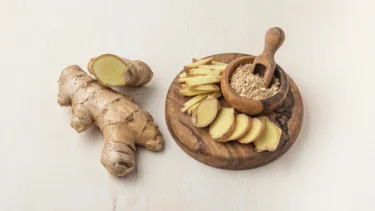
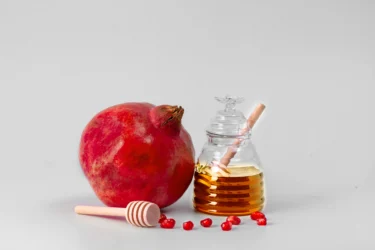
Ginger (adrak) has been used in ayurveda for centuries to relieve vomiting, loss of appetite, and diarrhoea. A basin is made using amlaki and black gram around the navel. To this, the juice of fresh ginger is added once daily and retained for some time, to treat diarrhoea. As a cure for vomiting, ginger juice must be mixed with lemon juice and consumed fresh3. We can mix ginger (juice) in warm water and add honey to it as well. These home remedies are not just safe and natural, but also very tasty.
Ginger has some research suggesting it may help ease nausea and vomiting. While it is not a cure for food poisoning, it may offer symptomatic comfort, making it a reasonable supportive remedy9.
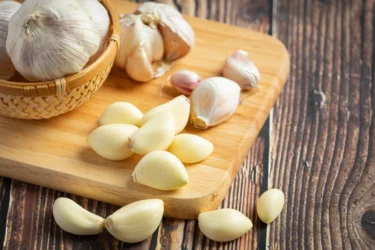
Swallowing fresh cloves of garlic with water is said to have beneficial effects on our bodies, as garlic acts like a cleansing agent. If consumed in a juice form, garlic is said to be even more effective, that is, if the pungent odour can be tolerated by you! It is said to be effective in the case of food poisoning.
Garlic has known antimicrobial properties in laboratory studies, but there is limited evidence that eating it treats food poisoning in people. It should be viewed as a traditional remedy rather than a proven treatment10.
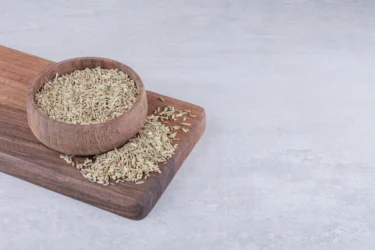
To use jeera as a remedy for food poisoning, we can take a little bit of jeera in water and boil it. After it boils, we can add a little coriander juice and salt to taste. This liquid preparation can be consumed a few times a day safely.
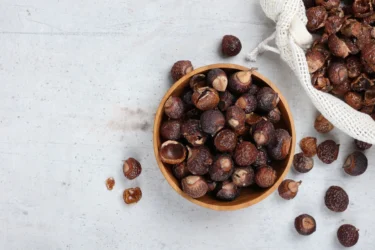
It is also known as Risht (in Hindi) or Indian soapnut, and it is used in ayurveda as a remedy for food poisoning. To use it, we need to soak a few of these aristhtaka seeds in a bottle of water and consume the water. This is said to reduce the poisoning3.
The following remedies are also recommended for use for diarrhoea in Ayurveda:
When it comes to food poisoning, the biggest immediate risk is not the infection itself but dehydration. Vomiting and diarrhoea cause the body to lose large amounts of water and essential salts (electrolytes), which can leave you feeling weak, dizzy, and unwell11.
This is why oral rehydration solution (ORS) is considered the first-line home measure for mild food poisoning involving vomiting or diarrhoea.
How ORS Helps:
ORS is more than just water. It contains a carefully balanced mix of salts and sugar that:
Sipping ORS slowly and frequently throughout the day can help maintain hydration while your body recovers.
While other remedies in this article may provide comfort or ease certain symptoms, they should not replace ORS and adequate hydration. Keeping well-hydrated is one of the most important steps you can take at home while recovering from food poisoning.
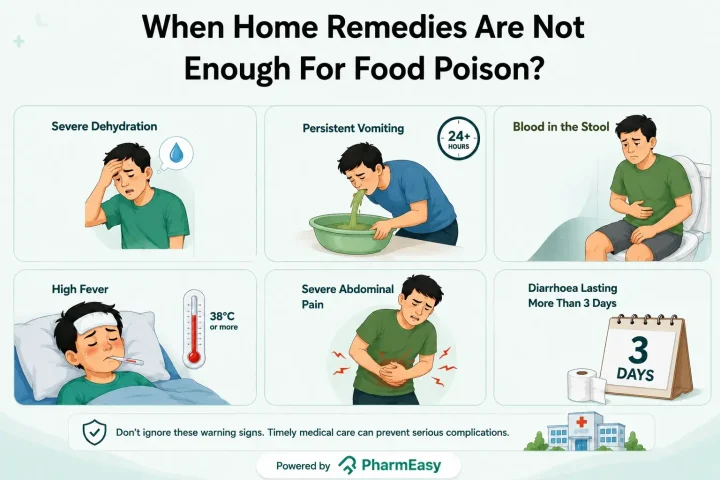
Most cases of food poisoning are mild and improve on their own with rest and hydration. However, certain warning signs indicate that home care is not enough and prompt medical attention is needed.
Seek medical help if you notice any of the following:
If any of these occur, do not rely on home remedies alone; consult a doctor or healthcare provider without delay.
Some people are more vulnerable to complications from food poisoning and should seek medical advice early, even with milder symptoms. These groups include12:
For these individuals, it is always safer to consult a healthcare professional promptly rather than waiting to see if symptoms improve.
In some cases, certain over-the-counter (OTC) medicines may help ease the symptoms of food poisoning in adults. For example, OTC anti-nausea or anti-emetic medicines are sometimes used to reduce nausea and vomiting, which may make it easier to keep fluids down.
While some adults may find these helpful, there are important safety points to keep in mind:
Note: This section refers to general OTC options only. It does not cover prescription medicines, and you should always consult a doctor or pharmacist before taking any medication, especially if you have existing health conditions, are pregnant, or are caring for a child.
Alongside rest and a bland diet, a few products may support recovery from mild food poisoning. These are general options and not essential for everyone.
Note: These products may play a supportive role, but they are not a substitute for adequate hydration or medical care when it is needed. If you are unsure whether a product is suitable for you, it is best to check with a pharmacist or doctor before use.
Also Read: Everything You Need to Know About the Hepatitis A Vaccine
It is wise to visit your doctor or a local healthcare provider if the following symptoms are noticed:
Also Read: Causes Behind Recurring Stomach Pain
Food poisoning is a common condition occurring as a result of eating food that has been contaminated by microorganisms; it can certainly be the source of a lot of discomfort. It can be quite unsettling with symptoms of nausea, vomiting, diarrhoea, and fever. It drains the body of vital water and minerals. Therefore, home remedies for food poisoning mainly consist of replenishing our body and relieving the distress. Rest and proper nutrition are what will help you regain your strength and eliminate the disease-causing germs.
Also Read: Natural Home Remedies for Open Pores
Food poisoning can cause dehydration, which may cause dizziness. Make sure to increase your water intake and consume oral rehydration syrup (ORS) if you feel dizzy.
Food poisoning mainly affects the stomach and causes diarrhoea, vomiting, etc2. It is not reported to have any effects on the kidney.
Puffed rice/popped rice, locally called poha, can be soaked in water. It is known to be effective in relieving vomiting.
There is no evidence stating that loss of hair is caused due to food poisoning. More evidence in the form of research is required to correlate the two.
1. MADDOCK EC. Food poisoning. Pharm J [Internet]. 1947;104(4344):87. Available from: https://medlineplus.gov/ency/article/001652.htm
2. Food Posisoning Symptoms [Internet]. CDC.gov. 2022 [cited 6 May 2022]. Available from: https://www.cdc.gov/foodsafety/symptoms.html
3. AYUSH. Ayurveda Offering Herbal Healing [Internet]. 1–128 p. Available from: https://www.esic.nic.in/attachments/publicationfile/7d11b02e5abb4717d53b4ce05efabd21.pdf
4. National Institute of Diabetes and Digestive and Kidney Diseases. Definition & facts of food poisoning. National Institute of Diabetes and Digestive and Kidney Diseases. 2025 [cited 2025 May 14]. Available from: https://www.niddk.nih.gov/health-information/digestive-diseases/food-poisoning/definition-facts
5. Department of Health & Human Services. Food poisoning – prevention. Better Health Channel. [cited 2025 May 14]. Available from: https://www.betterhealth.vic.gov.au/health/healthyliving/food-poisoning-prevention
6. Aghsaeifard Z, Heidari G, Alizadeh R. Understanding the use of oral rehydration therapy: A narrative review from clinical practice to main recommendations. Health Sci Rep. 2022 Sep 11;5(5):e827. doi: 10.1002/hsr2.827. PMID: 36110343; PMCID: PMC9464461. Available from: https://pmc.ncbi.nlm.nih.gov/articles/PMC9464461/
7. Kişla D. Effectiveness of lemon juice in the elimination of Salmonella Typhimurium in stuffed mussels. J Food Prot. 2007 Dec;70(12):2847-50. doi: 10.4315/0362-028x-70.12.2847. PMID: 18095441. Available from: https://pubmed.ncbi.nlm.nih.gov/18095441/
8. Sarmin M, Hossain MI, Islam SB, Alam NH, Sarker SA, Islam MM, Chisti MJ, Islam SMR, Mahfuz M, Ahmed T. Efficacy of a Green Banana-Mixed Diet in the Management of Persistent Diarrhea: Protocol for an Open-Labeled, Randomized Controlled Trial. JMIR Res Protoc. 2020 Mar 6;9(3):e15759. doi: 10.2196/15759. PMID: 32224490; PMCID: PMC7154927. Available from: https://pmc.ncbi.nlm.nih.gov/articles/PMC7154927/
9. Lete I, Allué J. The Effectiveness of Ginger in the Prevention of Nausea and Vomiting during Pregnancy and Chemotherapy. Integr Med Insights. 2016 Mar 31;11:11-7. doi: 10.4137/IMI.S36273. PMID: 27053918; PMCID: PMC4818021. Available from: https://pmc.ncbi.nlm.nih.gov/articles/PMC4818021/
10. Rouf R, Uddin SJ, Sarker DK, Islam MT, Ali ES, Shilpi JA, Nahar L, Tiralongo E, Sarker SD. Antiviral potential of garlic (Allium sativum) and its organosulfur compounds: A systematic update of pre-clinical and clinical data. Trends Food Sci Technol. 2020 Oct;104:219-234. doi: 10.1016/j.tifs.2020.08.006. Epub 2020 Aug 19. PMID: 32836826; PMCID: PMC7434784. Available from: https://pmc.ncbi.nlm.nih.gov/articles/PMC7434784/
11. National Institute of Diabetes and Digestive and Kidney Diseases (NIDDK). Treatment for food poisoning. Bethesda (MD): [cited 2026 Jun 23]. Available from: https://www.niddk.nih.gov/health-information/digestive-diseases/food-poisoning/treatment
12. Centers for Disease Control and Prevention (CDC). People at increased risk for food poisoning. Atlanta (GA): CDC; [cited 2026 Jun 23]. Available from: https://www.cdc.gov/food-safety/risk-factors/index.html
13. National Health Service (NHS). Probiotics. London (UK): NHS; [cited 2026 Jun 23]. Available from: https://www.nhs.uk/tests-and-treatments/probiotics/
Disclaimer: The information provided here is for educational/awareness purposes only and is not intended to be a substitute for medical treatment by a healthcare professional and should not be relied upon to diagnose or treat any medical condition. The reader should consult a registered medical practitioner to determine the appropriateness of the information and before consuming any medication. PharmEasy does not provide any guarantee or warranty (express or implied) regarding the accuracy, adequacy, completeness, legality, reliability or usefulness of the information; and disclaims any liability arising thereof.
Links and product recommendations in the information provided here are advertisements of third-party products available on the website. PharmEasy does not make any representation on the accuracy or suitability of such products/services. Advertisements do not influence the editorial decisions or content. The information in this blog is subject to change without notice. The authors and administrators reserve the right to modify, add, or remove content without notification. It is your responsibility to review this disclaimer regularly for any changes.
 50
50  2
2Comments

Leave your comment...
You may also like
























Comments