
Introduction
Muscles, along with the bones form an integral part of the musculoskeletal system, which control almost all voluntary movements in the body. In addition, muscles are required for proper metabolism, injury prevention, overall health, and improved quality of life1.
As we age, muscle mass reduces, leading to several health problems, like reduced physical strength and mobility, metabolic disturbances and increased risk of fractures and falls. Maintaining and building muscle is essential for better heart health, reducing the risk of diabetes, weight management, improving lifespan, and reducing weakness and fatigue2.
Lately, the awareness of muscle gain has increased, and so we have dived into this topic. We will discuss about its overall importance, how to gain muscles effectively and also touch upon the common mistakes that can happen during this process.
Advertisement
What Happens When You Gain Muscle?
A muscle cell is the powerhouse of energy. Exercising the muscles burns more calories at rest, increasing the Basal Metabolic Rate (BMR), eventually improving the outcome of weight loss programmes.
Muscle gain also changes the way our body handles glucose. The more muscle, the better the glucose uptake. Higher muscle mass enhances insulin sensitivity, better regulation of blood sugars, and eventually reduces the risk of type 2 diabetes.
Building muscles can improve heart health by regulating the levels of good and bad cholesterol. Stronger muscles are known to reduce blood pressure, improve circulation, and ultimately reduce the risk of cardiovascular diseases.
The release of endorphins during muscle-gaining exercises has a positive impact on emotional health and mood. They improve symptoms of depression and anxiety. Moreover, gaining and maintaining muscle mass has been known to improve cognitive function and reduce the risk of dementia.
Improved muscle mass directly improves balance, stability, and bone health, leading to stronger bones. This significantly reduces the risk of falls and fractures.
Advertisement
In addition to the above benefits, gaining muscle is essential for overall health and is associated with a longer lifespan with improved quality of life3,4.
How to Gain Muscle Effectively?
With an overwhelming amount of information on how to gain muscle, it is imperative to cut the background noise and follow an effective, scientifically proven, and driven programme. If you have never been active or haven´t exercised in a while, start slow and low. Consult an expert about how to exercise to gain muscle. Some proven ways to effectively gain muscle are:
- Strength/ resistance training: The most effective way to gain muscle is by strength/resistance training, where muscles work against a force, making them stronger.
- Diet: A balanced diet consisting of fruits, vegetables, nuts, seeds and whole grains, which must include enough lean proteins is important. Including lean meats, eggs, seafood, dals, tofu, and paneer is essential for muscle gain.
- Rest and sleep: Muscle repair is as important as muscle building. Adequate sleep and rest are essential for muscle recovery. Even when you are resting, your muscles are growing and building.
- Staying active: In addition to strength/ resistance training, staying active at home and at work helps maintain muscle mass. All types of activities help1,4,5!
Note: All exercises must be tailored and monitored by professionals. Consult experts who can advise you on how to exercise for muscle gain and nutritional requirements, depending on your age, physical status and coexisting medical conditions.
Best Exercises to Gain Muscle
Multi-joint strength/resistance training exercises with full range of movement for targeted muscle groups is important to build and gain muscle. The American College of Sports Medicine recommends strength training 2-3 days a week with 1-2 sets for each muscle group, each set having 8-14 repetitions with 60-70% 1RM (One-Repetition Maximum) or lower for beginners. This can be increased to 4-10 weekly sets with 6-15 RM. Use of exercise equipment like dumbbells, barbells or strength training machines under supervision is extremely popular for gaining muscle mass6,7,8.
The following exercises, mostly done using these equipment, can be helpful for increasing overall muscle mass in the targeted muscle groups discussed below6,8:
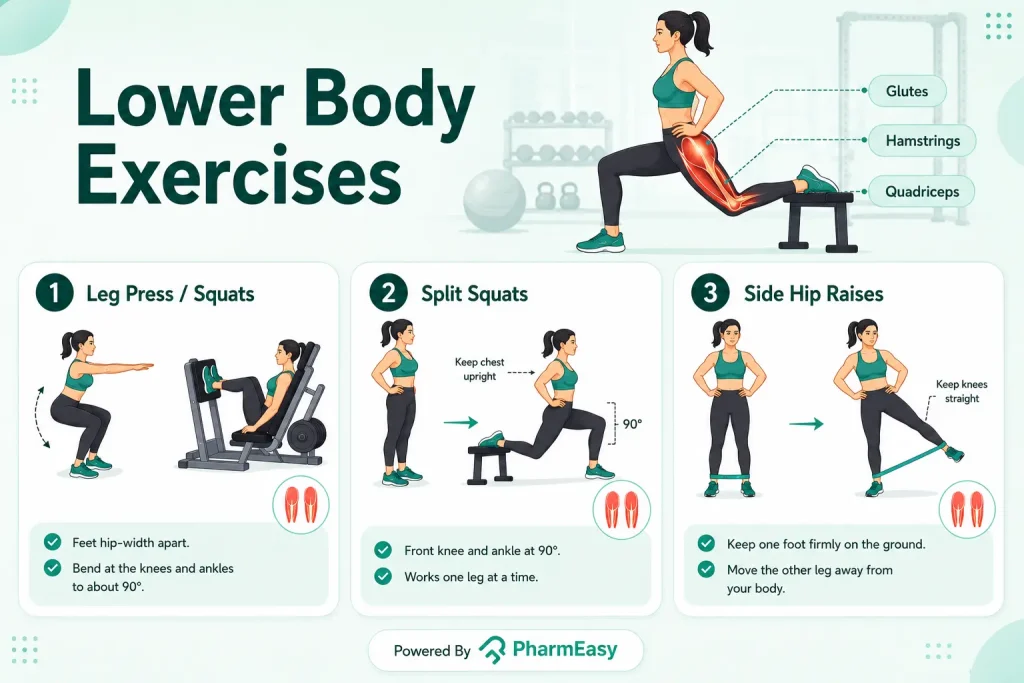
1. Lower Body Bilateral or Unilateral Exercises
To Strengthen the Glutes, Hamstrings, and Quadriceps
- Leg pressing exercises like squats: Can be done on squat machines or on the floor. With feet hip-width apart, press the foot plate away from you or try to sit back, making an angle of 90° at the ankles and the knees.
- Split squats: Can be done on machines or the floor. With one leg firmly on the ground and the other leg either in a leg strap behind you or on a bench, bring your body down to make an angle of 90° at the ankles and the knees with the front leg.
- Side hip raises: Can be done with machines or resistance bands, standing or lying down. Keeping one foot firmly on the ground, move the other leg away from your body with knees straight. If using a resistance band, place it just over the ankles.
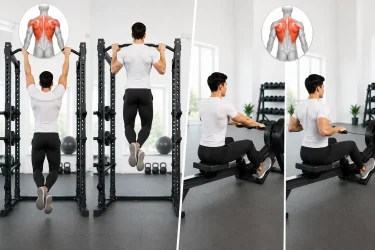
2. Upper body pulling exercises
For upper body and core strength
- Pull-ups or chin-ups: By hanging onto the overhead fixed horizontal bar, pull yourself up so that the chin goes over the bar.
- Can also be done on rowing machines.
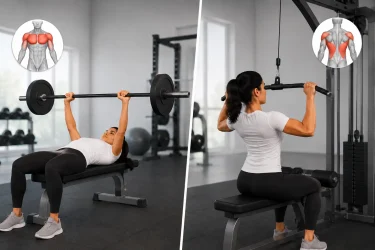
3. Upper body pushing exercises
For strong shoulders, deltoids (shoulder muscle), and upper back muscles
- Bench press: can be done sitting or lying on a bench. Push the bar away from the chest or pull the hanging bar towards the chest while breathing in.
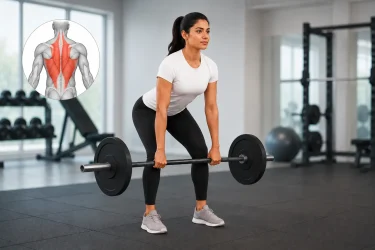
4. Back exercises
For strengthening of back muscles and better posture
- Deadlifts: Start standing straight with weights in your arms by your side. Slowly hinge at the hips, keeping the back straight to bring the weights towards the feet. Lift back up to the start position. Keep knees slightly bent throughout the exercise.
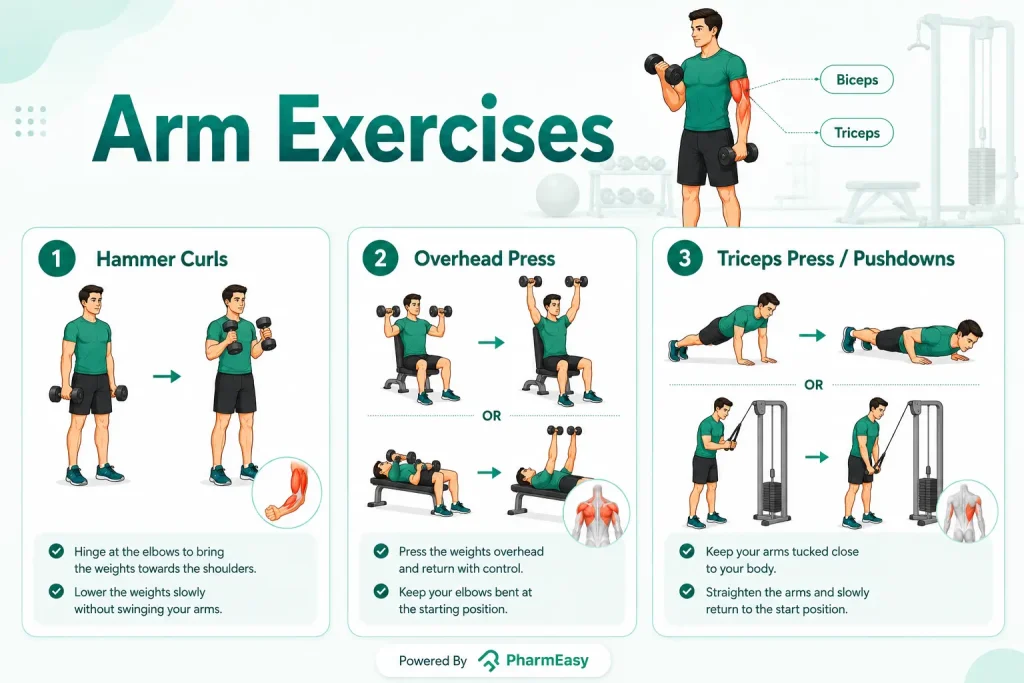
5. Arm exercises
For biceps and triceps strengthening
- Hammer curls: with arms at your sides, hinge at the elbow to bring the weights towards the shoulder. Slowly bring the arms back down. Do not swing the arms.
- Overhead press: Can be done sitting or lying down. Starting with arms on the sides and elbows bent, bring the weights over the head and bring them back to the start position.
- Triceps press/pushdowns: Can be done on the floor or on the machines. Push-ups on the floor with arms tucked into the side; bring the chest to the floor. Can be done with knees on or off the ground. In a lying down position, arms firmly tucked to the waist, push weights away from the body to make the arms almost straight. Slowly bring the arms back to the start position.
If you ask your trainer how to gain muscle fast, they will probably advise on strategies like:
- Drop-sets: A set of exercises with regular load followed by a set/sets of decreasing loads
- Supersets: Multiple sets of exercises with determined load without any rest/pause
- Cluster sets: A technique where the regular sets with chosen muscle groups are interrupted with inter-set pauses, eventually leading to better volume of training7.
Remember, there is no one-size-fits-all policy when it comes to muscle gain. You trainer will design your routine based on your body and needs.
Home Workout for Muscle Gain
When you think of muscle gain, it is not necessary to rush through the door and take an expensive gym membership. Here we can show you how you can gain muscle at home without any fancy equipment. Some of the reasons why home workouts are enticing are:
- Less expensive than regular gyms
- Flexibility of time
- Can easily be fit into existing busy schedules
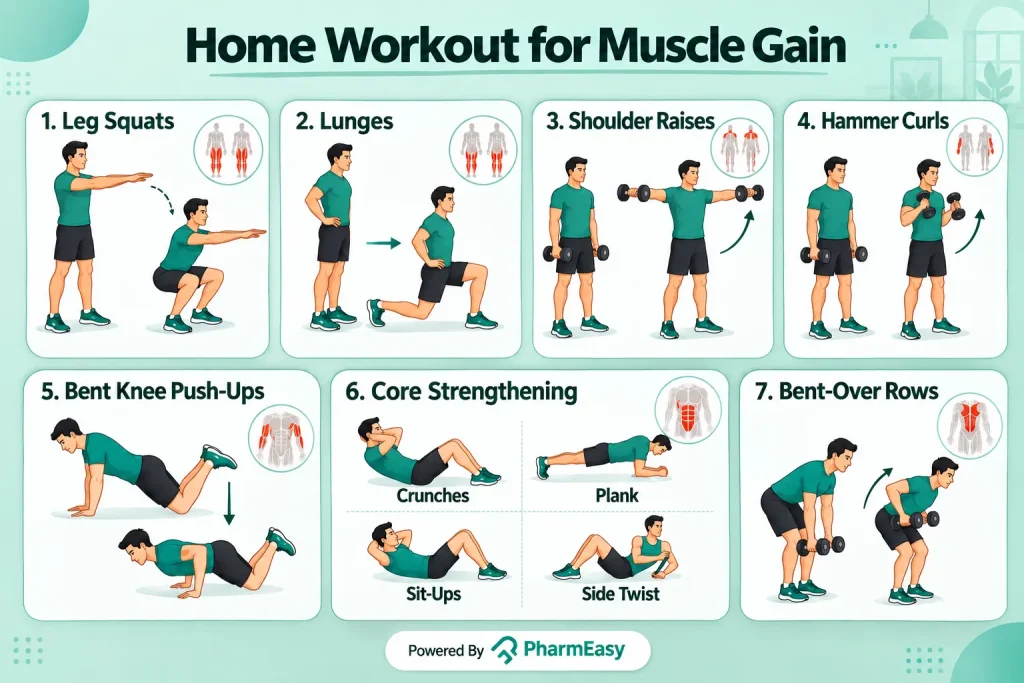
Some recommended exercises for getting the best out of home workouts for muscle gain are:
- Leg squats (for strengthening of leg and buttock muscles like quadriceps, hamstrings, and glutes): 15 repetitions- Place your legs hip-width apart and sit back on an imaginary chair behind you. Stand and repeat. Can also be done holding weights.
- Lunges (for strengthening of leg and buttock muscles like quadriceps, hamstrings, and glutes): 15 repetitions- Step forward in a standing position and bend your front knee. With your back straight, lower your hips to the floor, making your front thigh as parallel to the ground as possible.
- Shoulder raises (workout for shoulder muscles like deltoids and rotator cuff and upper back muscles like trapezius): 15 repetitions- Standing with feet hip-width apart, lift the weights in your hands sideways without bending your elbows. Reach up to shoulder height and release the weights slowly back down. Do not swing your arms.
- Hammer curls (for stronger upper arms or biceps): 15 repetitions- Standing with feet hip-width apart, lift the weights in your hands, bending at the elbow. Go as near to your shoulder as possible and release the hands back down. Do not swing your arms.
- Bent knee push-ups (for strengthening shoulder muscles, arm muscles like triceps and upper back muscles): 15 repetitions- Starting in table top position with hands under the shoulders, slowly bring the chest forward and down to the floor by bending the elbows and keeping them close to the body. Keep the back straight and push yourself back to the table top position. You can also do this exercise against a wall.
- Core strengthening exercises (for strengthening abdominal muscles like rectus and transverse abdominis, and obliques): 15 repetitions- Choose from crunches, plank, sit-ups, and side twist.
- Weighted bend-over rows (for strengthening of back muscles like latissimus dorsi and rhomboids): Start in a standing position with weights in your arms. Keeping your back straight and hinging at the hips, bring the weights towards your feet. Slowly lift yourself back to the start position. Keep your knees slightly bent throughout the exercise.
Note: Start slow and low if you are a beginner. Select weights between 1-2.25 kgs. You can also do these exercises with resistance bands. For optimal benefits, exercise about 150 minutes/week divided into 2-3 times/week, resting between your workout days6,9,10.
How to Lose Fat and Gain Muscle at the Same Time
The process of losing fat and gaining muscle at the same time is called body recomposition. The scientific community has developed several strategies to achieve this goal11,12,13,14:
- Exercise: The American College of Sports Medicine recommends about 150 minutes of moderate-intensity exercise, especially strength/resistance training. This increases your heart rate, burns calories, improves metabolism, and helps in fat loss. The strength/resistance training helps to gain muscle, which further promotes fat loss.
- Nutrition: Eat a healthy and balanced diet that is full of fresh fruits and vegetables. Control your portion size. Eat only when hungry and avoid sugary and fried snacks. Eat an adequate portion of proteins, healthy fats, and whole grains. Drink plenty of water.
- Stress and sleep: Stress increases the level of cortisol in the body, causes sleeplessness, and alters metabolism. This can lead to weight gain. A good night´s sleep is essential for muscle recovery and helps with weight loss. Incorporate strategies to reduce stress and improve sleep21.
- Specific Diets:
- Bulk and Cut Protocol: Cyclic intake of a high-calorie and high-protein diet followed by a calorie-restricted and protein-maintained diet helps bodybuilders lose fat and gain muscle.
- Time-restricted eating: Intermittent fasting such as 16:8 (16 hours of fasting and 8 hours of eating window) method helps in fat mass reduction.
Also Read: Muscle Gain Diet: Best Foods, 7 Day Meal Plan & Nutrition Tips
Common Mistakes That Slow Muscle Gain
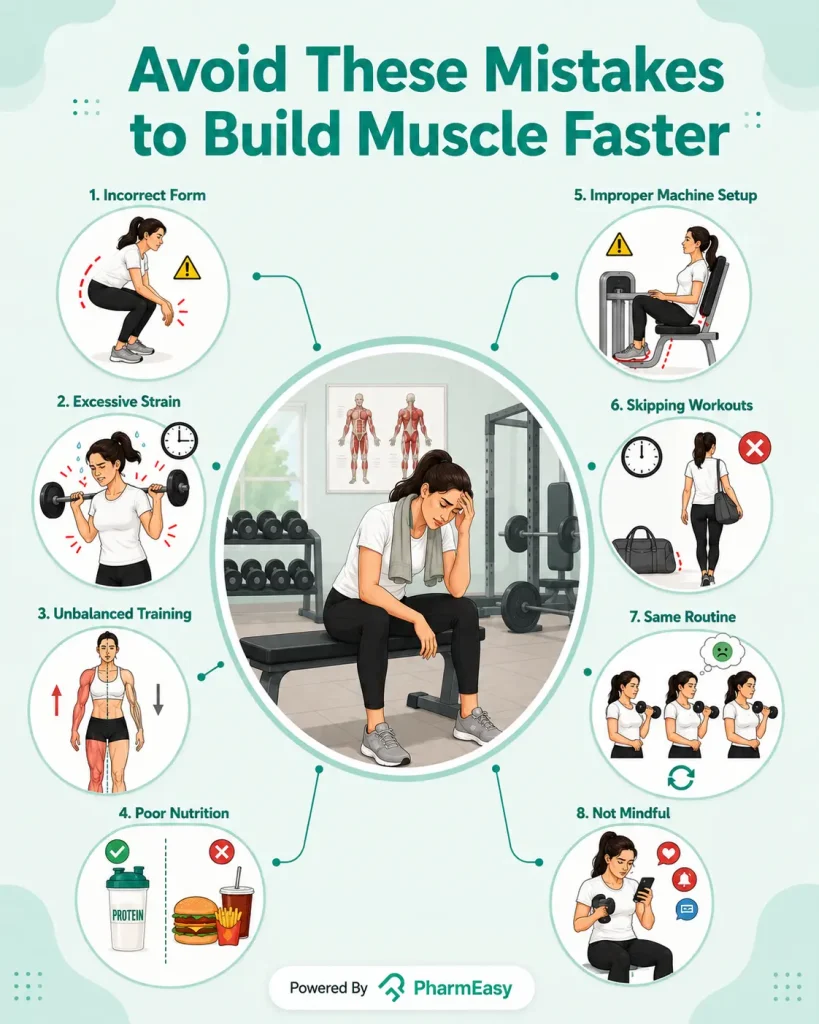
After knowing what to do and how to do it, it is equally important to know what mistakes can lead to slow muscle gain. Common mistakes that may cause injury and slow your progress are:
- Incorrect form: The most common mistake that leads to injuries and slows down progress.
- Excessive strain: Training longer, harder, and more frequently causes burnout and fatigue. Not giving enough rest for the muscles to recover can slow down muscle gain.
- Unbalanced strength exercises: Not training all the muscles adequately causes an imbalance in the strength of muscle groups that can lead to injuries and slow down progress.
- Improper use/adjustment of machines: Improperly using the strength machines or those that have not been adjusted to your body size can lead to sub-optimal muscle gain.
- All or none attitude: A common mistake is to skip a training session because of not having enough time for a full workout. A short session is always better than skipping training.
- Following a boring routine: A variety in workouts is essential for adequate motivation and to prevent boredom.
- Poor nutrition: Not having a balanced diet and enough protein for muscle building can lead to slow muscle gain.
- Not being mindful: It is probably the most under-rated mistake. Distractions can slow down the workout, leading to suboptimal results15.
Also Read: Plantar Fasciitis Stretches: Best Exercises, Benefits & How to Do Them
Conclusion
The importance of muscle gain goes far beyond aesthetic value. It is a time-tested formula that has been honed and perfected by scientists all over the world, and, when applied, results in a sustained improvement in overall well-being. It aptly combines nutrition, training, and rest, paving the path for a healthier, potentially disease-free life. It does not matter if you work out in the comfort of your home or hit the gym regularly, consistency, proper form, and mindfulness of your body´s signals make muscle gain a safe, rewarding path to good health.
Frequently Asked Questions (FAQs)
What to eat to gain muscle?Always eat a balanced diet that includes plenty of fresh fruits and vegetables. This has plenty of micronutrients and antioxidants. A high-calorie diet coupled with strength/resistance training is recommended for building muscle. Adequate protein intake of about 0.83g/kg/day, (according to WHO) should be distributed evenly among meals. Equally important is the timing of protein intake- 1-2 hours before or after a workout is most optimal for muscle gain16.
How can I bulk in 7 days?Bodybuilders tweak their appearance in the final days/weeks of competition by increasing the carbohydrates in the food and reducing salt and water intake to get the bulked-up look. These strategies lack scientific evidence and may cause more harm to the body than good17.
Can a skinny person gain muscle?Yes. A high-calorie diet, especially rich in protein, along with a structured plan for resistance training, can help gain muscle in any individual.
Is 2 months enough to grow muscle?There are studies which show an 8-week structured strength training plan increases muscle mass. However, every individual is different. It is best to consult an expert on how long it would take you to build muscle7.
What drink builds muscle fast?Drink enough water before and after workouts. Research has shown that drinking milk after a training session, combined with 12 weeks of strength training, leads to significant muscle gain. Always make sure to consult a nutrition expert for your dietary and fitness goals18,19.
When to eat protein to build muscle? There is not enough evidence to suggest that the timing of protein intake matters in overall muscle gain, as long as protein intake is adequate20.
References
- Branch NSCO. Health Lesson: Learning About Muscles [Internet]. National Institute of Arthritis and Musculoskeletal and Skin Diseases. 2024 June [updated 2025 June][cited 2026 July 22]. Available from: https://www.niams.nih.gov/health-topics/educational-resources/health-lesson-learning-about-muscles
- Why the Skeletal Muscle is Essential for Your Health | OSU Health Plan [Internet]. Osumc.edu. Why the Skeletal Muscle is Essential for Your Health | OSU Health Plan; 2024 [updated 2024 Dec 5][cited 2026 July 22]. Available from: https://osuhp-test.osumc.edu/news/why-skeletal-muscle-essential-your-health
- Seguin RA, Epping JN, M Ed David, Buchner M, H Rina Bloch, Miriam E, et al. STRENGTH TRAINING FOR OLDER ADULTS.[Book]. (chapter 1, page 12) In 2003 [cited 2026 July 22]. Available from: https://www.cdc.gov/physicalactivity/downloads/growing_stronger.pdf
- Why Muscle Mass Matters and How to Keep It [Internet]. Massachusetts General Hospital. 2024 [updated 2025 May 8][cited 2026 July 22]. Available from: https://www.massgeneral.org/news/article/why-muscle-mass-matters-and-how-to-keep-it
- Know the importance of muscles and protein [Internet]. MSU Extension. 2015 [updated 2015 June 24][cited 2026 July 22]. Available from: https://www.canr.msu.edu/news/know_the_importance_of_muscles_and_protein
- Iversen VM, Norum M, Schoenfeld BJ, Fimland MS. No Time to Lift? Designing Time-Efficient Training Programs for Strength and Hypertrophy: A Narrative Review. Sports Med. 2021 Oct;51(10):2079-2095. [cited 2026 July 22]. doi: 10.1007/s40279-021-01490-1. Epub 2021 Jun 14. PMID: 34125411; PMCID: PMC8449772. https://pubmed.ncbi.nlm.nih.gov/34125411/
- Krzysztofik M, Wilk M, Wojdała G, Gołaś A. Maximizing Muscle Hypertrophy: A Systematic Review of Advanced Resistance Training Techniques and Methods. Int J Environ Res Public Health. 2019 Dec 4;16(24):4897. [cited 2026 July 22] doi: 10.3390/ijerph16244897. PMID: 31817252; PMCID: PMC6950543. https://pmc.ncbi.nlm.nih.gov/articles/PMC6950543/
- Kompf JM, Rhodes RE, Lee S. Selecting Resistance Training Exercises for Novices: A Delphi Study with Expert Consensus. Am J Lifestyle Med. 2022 Jul 18;19(3):437-449.[cited 2026 July 22] doi: 10.1177/15598276221115662. PMID: 40041305; PMCID: PMC11873903. https://pmc.ncbi.nlm.nih.gov/articles/PMC11873903/
- Indoor fitness routine: MedlinePlus Medical Encyclopedia [Internet]. medlineplus.gov. [updated 2024 Apr 18][cited 2026 July 22]. Available from: https://medlineplus.gov/ency/patientinstructions/000890.htm
- Strength Training at Home. [Internet].Department of Health and Human Services USA. Office of the Assistant Secretary for Health In [cited 2026 July 22]. Available from: https://womenshealth.gov/sites/default/files/_documents/2025/sarcopenia/Sarc-StrengthHome-082323-508.pdf
- Can you boost your metabolism?: MedlinePlus Medical Encyclopedia [Internet]. Medlineplus.gov. 2016 [updated 2024 May 14][cited 2026 July 22]. Available from: https://medlineplus.gov/ency/patientinstructions/000893.htm
- Bonilla DA, Petro JL, Cannataro R, Kreider RB, Stout JR. Editorial: New insights and advances in body recomposition. Frontiers in Nutrition [Internet]. 2024 Sept 3 [cited 2026 July 22];11:1467406–6. Available from: https://pmc.ncbi.nlm.nih.gov/articles/PMC11405322/
- Giannopoulos AJ, Kottaras S, Allanigue B, Coish JM, Ditor DS, Fajardo VA, et al. A Pilot 24-Week ‘Bulk and Cut’ Dietary Protocol Combined with Resistance Training Is Feasible and Improves Body Composition and TNF-α Concentrations in Untrained Adult Males. Nutrients [Internet]. 2025 Apr 4 [cited 2026 July 22];17(7):1265. Available from: https://pmc.ncbi.nlm.nih.gov/articles/PMC11990763/
- Gavanda, S., Arnet, L., Löffler, D., Dissemond, J., Havers, T., Thimo Wiewelhove, Geisler, S., Held, S., Brinkmann, C., & Eduard Isenmann. (2026). Time-Restricted eating during a bulking phase is associated with reduced fat accumulation, while muscle and strength gains are maintained: A 12-Week randomized controlled trial. Journal of Nutrition, 101722–101722.[cited 2026 July 22] https://doi.org/10.1016/j.tjnut.2026.101722
- American Council on Exercise (ACE’s) Top Ten Mistakes People Make in the Gym.[cited 2026 July 22]. Available from: https://www.bnl.gov/bera/docs/pdf/exercise-ace.pdf
- Carbone JW, Pasiakos SM. Dietary Protein and Muscle Mass: Translating Science to Application and Health Benefit. Nutrients [Internet]. 2019 May 22 [cited 2026 July 22];11(5):1136–6. Available from: https://pmc.ncbi.nlm.nih.gov/articles/PMC6566799/
- Escalante G, Stevenson SW, Barakat C, Aragon AA, Schoenfeld BJ. Peak week recommendations for bodybuilders: an evidence based approach. BMC Sports Science Medicine and Rehabilitation [Internet]. 2021 June 13 [cited 2026 July 22];13(1):68–8. Available from: https://pmc.ncbi.nlm.nih.gov/articles/PMC8201693/
- Roy B D. Milk: the new sports drink? A Review. Journal of the International Society of Sports Nutrition [Internet]. 2008 Jan 3 [cited 2026 July 22];5(1). Available from: https://pmc.ncbi.nlm.nih.gov/articles/PMC2569005/
- Nutrition and athletic performance: MedlinePlus Medical Encyclopedia [Internet]. Medlineplus.gov. 2020 [updated 2025 Apr 1][cited 2026 July 22]. Available from: https://medlineplus.gov/ency/article/002458.htm
- Schoenfeld BJ, Aragon AA, Krieger JW. The effect of protein timing on muscle strength and hypertrophy: a meta-analysis. Journal of the International Society of Sports Nutrition [Internet]. 2013 Jan 3 [cited 2026 July 22];10(1). Available from: https://pmc.ncbi.nlm.nih.gov/articles/PMC3879660/
- Hirotsu C, Tufik S, Levy Andersen M. Interactions between sleep, stress, and metabolism: From physiological to pathological conditions. Sleep Science [Internet]. 2015 Sept 28 [cited 2026 July 27];8(3):143. Available from: https://pmc.ncbi.nlm.nih.gov/articles/PMC4688585/
Disclaimer: The information provided here is for educational/awareness purposes only and is not intended to be a substitute for medical treatment by a healthcare professional and should not be relied upon to diagnose or treat any medical condition. The reader should consult a registered medical practitioner to determine the appropriateness of the information and before consuming any medication. PharmEasy does not provide any guarantee or warranty (express or implied) regarding the accuracy, adequacy, completeness, legality, reliability or usefulness of the information; and disclaims any liability arising thereof.
Links and product recommendations in the information provided here are advertisements of third-party products available on the website. PharmEasy does not make any representation on the accuracy or suitability of such products/services. Advertisements do not influence the editorial decisions or content. The information in this blog is subject to change without notice. The authors and administrators reserve the right to modify, add, or remove content without notification. It is your responsibility to review this disclaimer regularly for any changes.







































Comments