




What Is DHT and How Does It Affect Hair Loss? Symptoms, Testing, and Natural DHT Control
By Dr. Raina N. Nahar +2 more

Medically reviewed by Dr. Raina N. Nahar
Last updated: Aug 19, 2026 Published on: Aug 12, 2026


Get,

to manage your symptom
Get your,

4 Cr+ families
benefitted

OTP sent to 9988776655



You’ve successfully subscribed to receive
doctor-approved tips on
Whatsapp

Get ready to feel your best.


Register to Avail the Offer
Send OTPBy continuing, you agree with our Privacy Policy and Terms and Conditions
Hi There,
Sign up on PharmEasy now!!


Trusted by 4 crore+ families

OTP sent to 9988776655
You have unlocked 25% off on medicines


Code: NU25

By Dr. Raina N. Nahar +2 more
Table of Contents
Have you noticed more hair than usual on your pillow, in the shower, or on your comb? Hair loss is common. The most common type is androgenetic alopecia, also called genetic or pattern hair loss. It can affect both men (about 8 out of 10) and women (about 4 out of 10), although the pattern may look different1. Genes and hormones both play a role. One hormone involved is dihydrotestosterone (DHT)1. This article explains what DHT is, how it can affect hair growth, how doctors may assess DHT-related hair loss, and what lifestyle steps may support hair health.
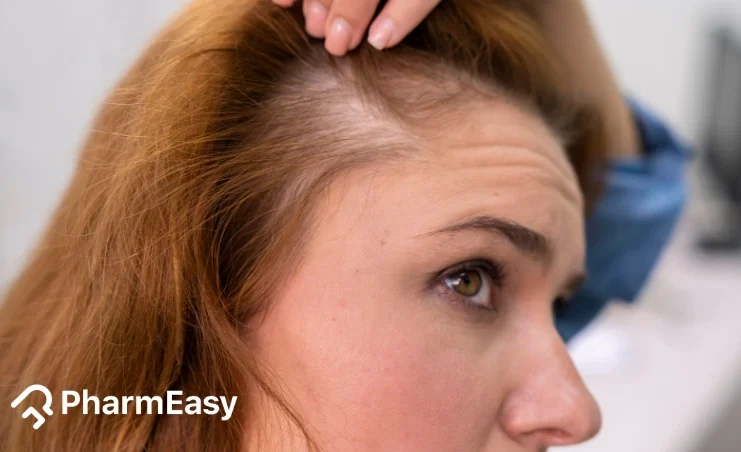
DHT is a natural hormone made from testosterone with the help of an enzyme called 5-alpha-reductase. DHT assists normal male development, especially during puberty. It contributes to changes such as facial and body hair growth, a deeper voice, and growth of the prostate gland2. In adult women, however, DHT is not very beneficial2.
Did You Know?
Hair grows from tiny openings in the skin called hair follicles4. In people who are genetically sensitive to DHT, the hormone can attach to these follicles, especially on the scalp. Over time, the follicles may shrink. This process is called miniaturisation. Smaller follicles produce thinner and shorter hairs. The active growth phase may also become shorter, while the resting phase becomes longer. As this continues, some follicles may stop producing visible hair. Early diagnosis and treatment can help slow this process in some people1.
High DHT levels do not always cause noticeable symptoms. However, increased DHT activity may lead to certain changes in the body, especially in people who are genetically sensitive to its effects. Some possible symptoms of high DHT include:
Note: These symptoms may also be linked to other health conditions, so consulting a doctor is important for an accurate diagnosis.
Doctors do not usually diagnose hair loss by checking DHT alone. They first look at the pattern of hair loss, medical history, family history, scalp health, medicines, nutrition, and any symptoms that may suggest a hormone or thyroid problem.
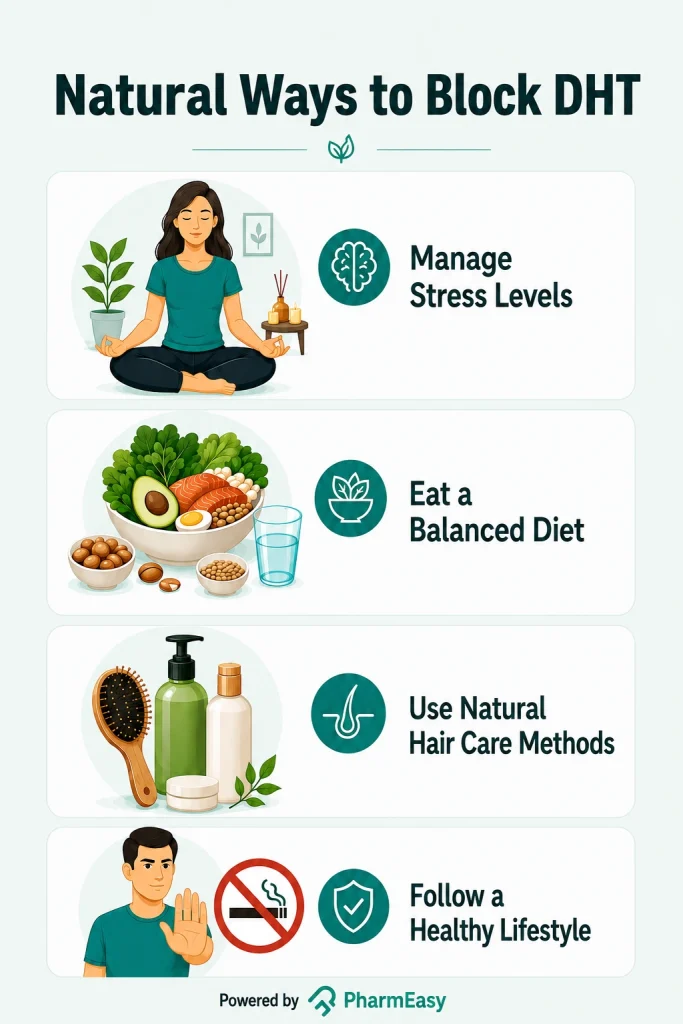
Many people search for ways to reduce DHT when they learn that DHT is linked to pattern hair loss. Lifestyle changes can support general hair and scalp health, but they may not directly lower DHT enough to treat androgenetic alopecia. Medical treatments may be considered by a doctor when appropriate.
Note: The results of these approaches may differ depending on the individual. If you are experiencing persistent hair loss or noticeable hair thinning, it is best to consult a doctor for proper evaluation and treatment.
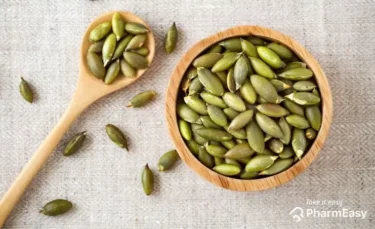
Some foods contain nutrients or plant compounds that have been studied for possible effects on hormone pathways linked to DHT. However, most evidence is early, indirect, or based on small studies. These foods may support general health, but they should not be described as proven DHT blockers.
Note: Including these foods as part of a balanced diet may support overall health, but they should not be an alternative for medical treatment. If you have persistent hair loss or concerns about high DHT levels, consult your doctor for proper evaluation and guidance.
Several supplements are marketed as “DHT blockers.” The table below explains the difference between food-based approaches and supplements.
| Natural DHT Blockers (Food Sources) | DHT Blocker Supplements |
| Whole foods that contain different nutrients such as vitamins, minerals, antioxidants, and healthy fats along with possible DHT-related benefits10,12,15. | Contain concentrated amounts of specific ingredients, such as from saw palmetto (a type of palm), that are marketed for their likely DHT-blocking effects16. |
| Can be used as part of a healthy eating pattern, which can support overall wellness. | Effectiveness may vary depending on the ingredients they contain17,18. |
| Usually safe for most people when eaten as part of a balanced diet, unless a person has an allergy or specific dietary restriction. | May carry a risk of side effects or interactions, especially when taken in high doses or with certain medications17. |
| May support hair health through nutrients and antioxidants, but any direct effect on DHT is uncertain10–14. | Some supplements may aim to reduce the conversion of testosterone to DHT, but strength, quality, safety, and results may vary17. |
Note: Foods and supplements should not replace medical treatment. Supplements can interact with medicines and may not be suitable for everyone. Prescription medicines are approved for specific uses, but over-the-counter “DHT blocker” supplements are not approved by the FDA to treat hair loss. Speak with a qualified doctor before using any supplement or medicine for hair loss.
Medicines that lower DHT can cause side effects in some people. These effects are more commonly discussed in men using prescription DHT-lowering medicines, but anyone considering treatment should review benefits and risks with a doctor.
Consult a doctor if your hair fall becomes persistent, worsens over time, or starts affecting your daily life. Medical advice is also important if you notice sudden hair shedding, a receding hairline, thinning hair, or bald patches1,2. If your scalp feels itchy, painful, red, or flaky along with hair loss, it could indicate an underlying scalp condition that requires treatment19.
If you are taking DHT-blocking medications or supplements and develop side effects such as reduced sex drive, erectile or ejaculatory problems, skin rashes, mood changes, or breast enlargement (in men), consult your doctor promptly17,18.
Hair loss that begins after starting a new medication, recovering from a recent illness, or experiencing significant stress should also be evaluated20. In women with PCOS, symptoms such as hair fall, irregular periods, excessive facial hair, or severe acne may indicate a hormonal imbalance that requires medical attention6.
Also Read: Blood Test for Hair Loss: Who Should Get Tested, Types and Prevention
Understanding DHT can help explain why pattern hair loss happens in some people. DHT is a normal hormone, but people who are genetically sensitive to it may develop gradual hair thinning. Healthy habits, gentle hair care, and good nutrition can support hair health, but persistent or worsening hair loss should be assessed by a doctor. Early medical advice can help identify the cause and discuss treatment options that may slow hair loss or improve hair growth.
Lowering DHT may help slow hair loss and protect existing hair follicles in some people with androgenetic alopecia. Regrowth is possible for some people, especially when treatment starts early, but results vary. A doctor can help decide whether prescription-based treatments are suitable18.
You usually cannot tell that DHT is high from symptoms alone. A doctor may look at your hair loss pattern, scalp, medical history, family history, medicines, and symptoms such as acne, excess facial or body hair, irregular periods, or prostate-related symptoms. A DHT blood test may be used in selected cases, but it is not the only way to assess hair loss1,3.
DHT-related hair loss can often be slowed, and some people may see thicker hair with the right treatment. Complete reversal is less likely when follicles have stopped producing visible hair for a long time. Early medical advice gives the best chance of preserving existing hair18.
DHT may make oil glands in the skin more active. This can lead to oily skin and may contribute to acne in some people, but acne can have many causes. If acne is persistent, painful, or causing scarring, it is best to speak with a doctor or dermatologist21.
Current evidence is not enough to confirm that creatine raises DHT or directly causes DHT-related hair loss. If you notice hair shedding after starting any supplement, stop guessing and speak with a healthcare professional, especially if hair loss is sudden or worsening22.
Some prescription medicines that lower DHT may cause erectile problems in some people, although this does not happen to everyone. Do not stop a prescribed medicine without medical advice. If you notice sexual side effects, mood changes, breast tenderness, or any worrying symptom, contact your doctor18.
1. Bazargan AS, Jafarzadeh A, Ayoubi A, et al. Investigating the relationship between androgenetic alopecia and hair shape, color, and thickness: A case‐control study. Health Sci Rep. 2025;8(5):e70764. doi:10.1002/hsr2.70764. Available from: https://pmc.ncbi.nlm.nih.gov/articles/PMC12040711/
2. Kinter KJ, Amraei R, Anekar AA. Biochemistry, dihydrotestosterone. In: StatPearls. StatPearls Publishing; 2026. Accessed August 6, 2026. Available from: http://www.ncbi.nlm.nih.gov/books/NBK557634/
3. Swerdloff RS, Dudley RE, Page ST, Wang C, Salameh WA. Dihydrotestosterone: Biochemistry, Physiology, and Clinical Implications of Elevated Blood Levels. Endocr Rev. 2017;38(3):220-254. doi:10.1210/er.2016-1067. Available from: https://pubmed.ncbi.nlm.nih.gov/28472278/
4. Hair. Better Health Channel. 2023. Accessed August 6, 2026. Available from: https://www.betterhealth.vic.gov.au/health/conditionsandtreatments/hair
5. Makrantonaki E, Ganceviciene R, Zouboulis C. An update on the role of the sebaceous gland in the pathogenesis of acne. Dermatoendocrinology. 2011;3(1):41-49. doi:10.4161/derm.3.1.13900. Available from: https://pmc.ncbi.nlm.nih.gov/articles/PMC3051853/
6. Ebrahimian A, Moradi A, Kheyri V, Najafipour F, Sadra V. Evaluation of dihydrotestosterone levels and total testosterone to dihydrotestosterone ratio with clinical symptoms and metabolic parameters in patients with polycystic ovary syndrome. BMC Endocr Disord. 2025;25:263. doi:10.1186/s12902-025-02070-4. Available from: https://pmc.ncbi.nlm.nih.gov/articles/PMC12617002/
7. Gokce N, Basgoz N, Kenanoglu S, et al. An overview of the genetic aspects of hair loss and its connection with nutrition. J Prev Med Hyg. 2022;63(2 Suppl 3):E228-E238. doi:10.15167/2421-4248/jpmh2022.63.2S3.2765. Available from: https://pmc.ncbi.nlm.nih.gov/articles/PMC9710406/
8. Relaxation techniques – relieving stress and anxiety. Healthdirect. 2026. Accessed August 6, 2026. Available from: https://www.healthdirect.gov.au/relaxation-techniques-for-stress-relief
9. Hair styling without damage. Accessed August 6, 2026. Available from: https://www.aad.org/public/diseases/hair-loss/hair-care/styling
10. Dhamija P, More A, Choudhary N, Wadhe T, Barai J, Shah D. Seed Cycling and Hormonal Balance: A Case Study of Successful Fertility Intervention in Polycystic Ovarian Syndrome. J Pharm Bioallied Sci. 2025;17(Suppl 1):S1030-S1033. doi:10.4103/jpbs.jpbs_164_25. Available from: https://pmc.ncbi.nlm.nih.gov/articles/PMC12156535/
11. Naftalin RJ, Afzal I, Cunningham P, et al. Interactions of androgens, green tea catechins and the antiandrogen flutamide with the external glucose-binding site of the human erythrocyte glucose transporter GLUT1. Br J Pharmacol. 2003;140(3):487-499. doi:10.1038/sj.bjp.0705460. Available from: https://pmc.ncbi.nlm.nih.gov/articles/PMC1574051/
12. Arias-Chávez DJ, Mailloux-Salinas P, Ledesma-Aparicio J, et al. Tomato lipidic extract plus selenium decrease prostatic hyperplasia, dihydrotestosterone and androgen receptor expression versus finasteride in rats. World J Urol. 2023;41(10):2793-2799. doi:10.1007/s00345-023-04558-x. Available from: https://pubmed.ncbi.nlm.nih.gov/37659980/
13. Dillingham BL, McVeigh BL, Lampe JW, Duncan AM. Soy protein isolates of varying isoflavone content exert minor effects on serum reproductive hormones in healthy young men. J Nutr. 2005;135(3):584-591. doi:10.1093/jn/135.3.584. Available from: https://pubmed.ncbi.nlm.nih.gov/15735098/
14. Ide H, Lu Y, Noguchi T, et al. Modulation of AKR1C2 by curcumin decreases testosterone production in prostate cancer. Cancer Sci. 2018;109(4):1230-1238. doi:10.1111/cas.13517. Available from: https://pubmed.ncbi.nlm.nih.gov/29369461/
15. Raza N, Sadaf A, Mushtaq R, et al. Nutritional and Health Potential of Edible Seeds: Micronutrient Bioavailability and Mechanistic Insights. Food Sci Nutr. 2026;14(2):e71480. doi:10.1002/fsn3.71480. Available from: https://pmc.ncbi.nlm.nih.gov/articles/PMC12852966/
16. Evron E, Juhasz M, Babadjouni A, Mesinkovska NA. Natural Hair Supplement: Friend or Foe? Saw Palmetto, a Systematic Review in Alopecia. Skin Appendage Disord. 2020;6(6):329-337. doi:10.1159/000509905. Available from: https://pmc.ncbi.nlm.nih.gov/articles/PMC7706486/
17. Ashique S, Sandhu NK, Haque SkN, Koley K. A Systemic Review on Topical Marketed Formulations, Natural Products, and Oral Supplements to Prevent Androgenic Alopecia: A Review. Nat Prod Bioprospect. 2020;10(6):345-365. doi:10.1007/s13659-020-00267-9. Available from: https://pmc.ncbi.nlm.nih.gov/articles/PMC7648777/
18. Devjani S, Ezemma O, Kelley KJ, Stratton E, Senna M. Androgenetic Alopecia: Therapy Update. Drugs. 2023;83(8):701-715. doi:10.1007/s40265-023-01880-x. Also Read: https://pmc.ncbi.nlm.nih.gov/articles/PMC10173235/
19. Dandruff, Cradle Cap, and Other Scalp Conditions: MedlinePlus. Accessed August 6, 2026. https://medlineplus.gov/dandruffcradlecapandotherscalpconditions.html
20. Singh S, Muthuvel K. Practical Approach to Hair Loss Diagnosis. Indian J Plast Surg. 2021;54(4):399-403. doi:10.1055/s-0041-1739240. Available from: https://pmc.ncbi.nlm.nih.gov/articles/PMC8719967/
21. Lee WJ, Jung HD, Chi SG, et al. Effect of dihydrotestosterone on the upregulation of inflammatory cytokines in cultured sebocytes. Arch Dermatol Res. 2010;302(6):429-433. doi:10.1007/s00403-009-1019-6. Available from: https://www.researchgate.net/publication/40820124_Effect_of_dihydrotestosterone_on_the_upregulation_of_inflammatory_cytokines_in_cultured_sebocytes
22. Lak M, Forbes SC, Ashtary-Larky D, et al. Does creatine cause hair loss? A 12-week randomized controlled trial. J Int Soc Sports Nutr. 22(Suppl 1):2495229. doi:10.1080/15502783.2025.2495229. Available from: https://pmc.ncbi.nlm.nih.gov/articles/PMC12020143/
Disclaimer: The information provided here is for educational/awareness purposes only and is not intended to be a substitute for medical treatment by a healthcare professional and should not be relied upon to diagnose or treat any medical condition. The reader should consult a registered medical practitioner to determine the appropriateness of the information and before consuming any medication. PharmEasy does not provide any guarantee or warranty (express or implied) regarding the accuracy, adequacy, completeness, legality, reliability or usefulness of the information; and disclaims any liability arising thereof.
Links and product recommendations in the information provided here are advertisements of third-party products available on the website. PharmEasy does not make any representation on the accuracy or suitability of such products/services. Advertisements do not influence the editorial decisions or content. The information in this blog is subject to change without notice. The authors and administrators reserve the right to modify, add, or remove content without notification. It is your responsibility to review this disclaimer regularly for any changes.


Comments

Leave your comment...
You may also like














Comments