



Generic GLP-1 Medications: Availability, Costs & Affordable Alternatives
By Dr. Ritika Singh +2 more

Medically reviewed by Dr. Ritika Singh
Last updated: Oct 1, 2026 Published on: Aug 13, 2026


Get,

to manage your symptom
Get your,

4 Cr+ families
benefitted

OTP sent to 9988776655



You’ve successfully subscribed to receive
doctor-approved tips on
Whatsapp

Get ready to feel your best.


Register to Avail the Offer
Send OTPBy continuing, you agree with our Privacy Policy and Terms and Conditions
Hi There,
Sign up on PharmEasy now!!


Trusted by 4 crore+ families

OTP sent to 9988776655
You have unlocked 25% off on medicines


Code: NU25

By Dr. Ritika Singh +2 more
Table of Contents
GLP-1 (Glucagon-like peptide 1) agonists are a group of medicines that are being used to treat type 2 diabetes patients. They mimic the action of the GLP-1 hormone in the body that is involved in stimulating insulin secretion (a hormone that reduces sugar levels in the blood) and inhibiting glucagon secretion (hormone which increase the sugar levels in the blood). These actions help in maintaining optimal blood glucose levels while also acting as a regulator of food intake and appetite. WHO added GLP-1 therapies to its Essential Medicines List in September 2025 for high-risk type 2 diabetes.
Later, on December 1, 2025, WHO released guidelines on the use of GLP-1 receptor agonists /GIP dual agonists in long-term obesity management1. Even though there is a rapid production of GLP-1 medications across the global market, these are expected to reach fewer than 10% of people who could benefit from the treatment by 20302. However, with the generic variants coming up for some GLP-1 medications, the outreach could increase.
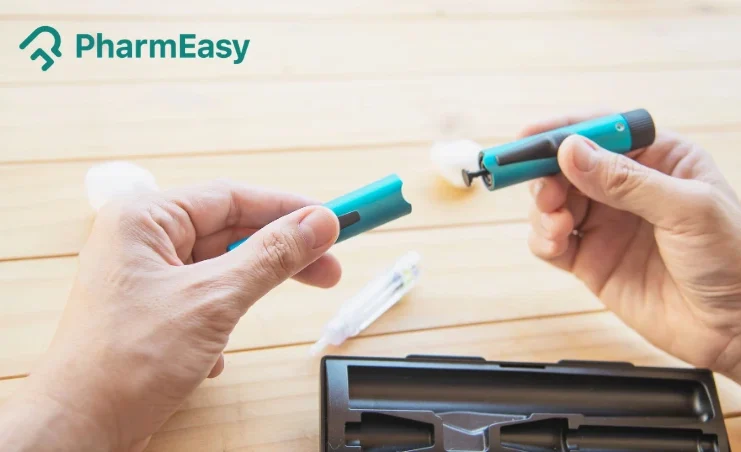
A generic drug is an approved copy of the brand drug that mimics the branded drug in its safety, effectiveness, dosage and administration3. So, generic GLP-1 medicines are generally more cost-effective brand alternatives that are approved for use in patients with type 2 diabetes4.
In this blog, we will cover the availability of generic GLP-1 medicines, the difference between generic names and brand names, their cost, and the possible risks and reasons behind limitation of generic medications. We will also discuss some alternatives to GLP-1 medications and share some tips on how to choose the right medication.

Answer a few quick questions to check eligibility.
Your response has been submitted.
Our team will contact you shortly.
GLP-1 medications for managing type 2 diabetes are commonly available under brand names Ozempic (semaglutide), Victoza (liraglutide) or Byetta (exenatide).
Generic GLP-1 medications are medicines which are approved substitutes for the branded medicines in action, effect, strength, and mode of administration as they contain the same active molecules.
United States Food & Drug Administration has approved a generic variant with the active ingredient liraglutide and a generic variant of the active ingredient exenatide, used to improve blood sugar in type 2 diabetes patients4.
In India, generic injectable semaglutide drugs have been approved by CDSCO after the patent expiry of semaglutide in March 2026. The manufacturers of these include Sun Pharma, Dr Reddy’s, Natco and Glenmark, and the generic drugs came into action as a substitute for branded Ozempic5. Torrent Pharmaceuticals has also launched the first generic oral semaglutide (Sembolic/Semalix)9 in India alongside its injectable version on March 21, 2026.
GLP-1 generic names can vary based on the manufacturers, with the same active ingredient. Here are some generic GLP-1 medications5:
| Brand Name | Generic Name | Drug Class | Drug Availability |
| Ozempic | Semanat | Semaglutide: GLP-1 receptor agonist | Multi-dose vial |
| Ozempic | GLIPIQ | Semaglutide: GLP-1 receptor agonist | Vial-based |
| Ozempic | Obeda | Semaglutide: GLP-1 receptor agonist | Pre-filled disposable pen |
| Ozempic | Sematrinity | Semaglutide: GLP-1 receptor agonist | Multi-dose pen |
| Ozempic | Semaglyn | Semaglutide: GLP-1 receptor agonist | Reusable Pen |
| Ozempic | Semanext | Semaglutide: GLP-1 receptor agonist | Pre-filled pen |
| Victoza | Lirafit | Liraglutide: GLP-1 receptor agonist | Pre-filled pen |
This is why all GLP-1 formulations are classified under Schedule H drugs (prescription-only) and over-the-counter sales are strictly prohibited.
Generic GLP-1 drug applicants must prove to the approving authorities that the generic medicine is the same as the branded one. Factors limiting the availability of generic medications can be:
Note: Generic GLP-1 prices in India have fallen steadily since the March 2026 patent expiry and launch of generics, as more manufacturers have entered the market. The figures above are reported as of August 2026 and may continue to change; readers should confirm pricing with their pharmacy or the manufacturer before purchase.
The generic medicines are considered the cheaper versions of branded drugs. However, certain situations can cause generic manufacturers to increase the prices of drugs10:
With several generics flooding the market, the chances of having a counterfeit product are also high. These may have too little or too much of the active ingredient or even wrong ingredients. The use of cheap or counterfeit GLP-1 medicines can be associated with several potential health risks, which can include11:
Also Read: Starting a GLP-1 Medicine: A Simple Guide for Patients
Choosing the right GLP-1 medicines depends on your major concerns, medical history, side effects12 and cost.
Most GLP-1 medicines are helpful in type-2 diabetes cases. However, their action gets better when taken along with healthy lifestyles such as regular exercise and a healthy diet. If, along with diabetes, weight loss is also a concern, CDSCO-approved brands of GLP-1 medicines like Ozempic/generic Semaglutide and Mounjaro (tirzepatide) are recommended1.
Your doctor might also check other health conditions and can suggest appropriate medicines. Semaglutide (SELECT trial) alongside Dulaglutide and Liraglutide are the approved medicines for the treatment of diabetes patients who have heart problems17,18. Semaglutide (Ozempic) based on the FLOW trial, has approval for proven kidney protection in people with Type-2 DM1,16. Your healthcare provider can better choose the most suitable medication for you based on your health needs.
For semaglutide, it is available both as tablets and injections. People who are afraid of injections can consider the option of pills12. However, only your doctor can advise the appropriate medicine suitable for you based on your health conditions.
Most of the side effects happen due to beginning of treatment and when dose is increased, and these improve as the body gets adjusted to the treatment12. If you are concerned about the side effects, discuss with your doctor about which. Choosing the best GLP-1 agonist based on your health condition can only be done by a doctor.
These medicines need to be taken for the long term, and these possess high costs8. These factors can be discussed with your healthcare provider for better options.
These are the points you need to consider before selecting a GLP-1 medicine; however, your doctor is the only person who can assess your health conditions, your specific concerns, and the concerned side effects and suggest the appropriate medicine accordingly. Self-medication might be dangerous to your health.
Also Read: Why Should Doctors Prescribe Generic Drugs? Advantages & Disadvantages
Generic GLP-1 medications are the affordable substitutes of the branded drugs, which should be the same in their ingredients, strength, dosages and mode of administration. In India, GLP-1 drugs are advised to be used only by the prescription of a doctor. It is important to choose the right medication, even in generics, as counterfeit products can be dangerous to health.
Ozempic is a Brand name, which contains the active ingredient semaglutide and is a GLP-1 receptor agonist used to control blood sugar in type 2 diabetes patients13. Generic GLP-1 medicine is a cost-effective substitute for brand-name medicines in their dosage, safety, effectiveness and mode of taking6.
Ozempic is the brand name for the injectable semaglutide drug, and it has a high cost. In India, now generic semaglutide is available which is at a lower cost compared to branded Ozempic. It can be found under names like Noveltreat, Obeda, Sematrinity and Semanext
Ozempic is the brand name for the injectable semaglutide drug, and it has a high cost. In India, now generic semaglutide is available which is at a lower cost compared to branded Ozempic. It can be found under names like Noveltreat, Obeda, Sematrinity and Semanext5.
Yes, but switching between a branded and generic GLP-1 medicine should only be done under your doctor’s guidance. Your doctor can confirm the correct dose, device type, and monitoring needed during the switch, since pen mechanisms and dose-adjustment steps can vary between brands.
Yes. GLP-1 medicines, including generic versions, are classified as Schedule H drugs under India’s Drugs and Cosmetics Rules, 1945, and can only be sold against a valid prescription from a registered medical practitioner. Buying them without a prescription is not permitted14.
1. GLP-1 agonists: MedlinePlus Medical Encyclopedia. Accessed August 3, 2026. https://medlineplus.gov/ency/article/007853.htm
2. WHO issues global guideline on the use of GLP-1 medicines in treating obesity. Accessed August 4, 2026. Available from: https://www.who.int/news/item/01-12-2025-who-issues-global-guideline-on-the-use-of-glp-1-medicines-in-treating-obesity
3. Research C for DE and. Generic Drugs: Questions & Answers. FDA. Published online June 8, 2026. Accessed August 4, 2026. https://www.fda.gov/drugs/generic-drugs/generic-drugs-questions-answers
4. Commissioner O of the. FDA Approves First Generic of Once-Daily GLP-1 Injection to Lower Blood Sugar in Patients with Type 2 Diabetes. FDA. December 27, 2024. Accessed August 3, 2026. https://www.fda.gov/news-events/press-announcements/fda-approves-first-generic-once-daily-glp-1-injection-lower-blood-sugar-patients-type-2-diabetes
5. Menon DRM, MD. Generic Semaglutide India 2026: Brands, Prices, Cost | DermaVue. DermaVue Skin & Hair Clinics. April 7, 2026. Accessed August 6, 2026. Available from: https://dermavue.com/medical-weight-loss/generic-glp1-india/
6. Research C for DE and. Generic Drug Facts. FDA. Published online June 2, 2026. Accessed August 3, 2026. Available from: https://www.fda.gov/drugs/generic-drugs/generic-drug-facts
7. Research C for DE and. What Is the Approval Process for Generic Drugs? FDA. Published online September 16, 2025. Accessed August 3, 2026. Available from: https://www.fda.gov/drugs/generic-drugs/what-approval-process-generic-drugs
8. Paddu NU, Lawrence B, Wong S, Poon SJ, Srivastava G. Weight maintenance on cost‐effective antiobesity medications after 1 year of GLP‐1 receptor agonist therapy: a real‐world study. Obes Silver Spring Md. 2024;32(12):2255-2263. doi:10.1002/oby.24177. Available from: https://pubmed.ncbi.nlm.nih.gov/39558626/
9. Regalla DKR, Patel P. Oral Antidiabetic Medications. In: StatPearls. StatPearls Publishing; 2026. Accessed August 3, 2026. Available from: http://www.ncbi.nlm.nih.gov/books/NBK482386/
10. Torreele E. Why are our medicines so expensive? Spoiler: Not for the reasons you are being told. Eur J Gen Pract. 2024;30(1):2308006. doi:10.1080/13814788.2024.2308006. PMID: 38299574; PMCID: PMC10836477. Available from: https://pmc.ncbi.nlm.nih.gov/articles/PMC10836477/
11. Semaglutide injection products. Accessed August 4, 2026. Available from: https://www.who.int/news-room/questions-and-answers/item/semaglutide-injection-products
12. Kalra S. Choosing Appropriate Glucagon-like Peptide 1 Receptor Agonists: A Patient-Centered Approach. Diabetes Ther. 2014 Jun;5(1):333-40. doi: 10.1007/s13300-014-0058-y. Epub 2014 Feb 19. Available from: https://pubmed.ncbi.nlm.nih.gov/24549850/
13. OZEMPIC. Accessed August 4, 2026. https://www.accessdata.fda.gov/drugsatfda_docs/label/2026/209637s038lbl.pdf
14. Government of India, Ministry of Health and Family Welfare. The Drugs and Cosmetics Act, 1940 and the Drugs and Cosmetics Rules, 1945 (as amended up to 31st December 2016) [Internet]. New Delhi: Central Drugs Standard Control Organization; 2016 [cited 2026 Aug 13]. Available from: https://cdsco.gov.in/opencms/export/sites/CDSCO_WEB/Pdf-documents/acts_rules/2016DrugsandCosmeticsAct1940Rules1945.pdf
15. Elsevier. Bioequivalence – an overview | ScienceDirect Topics [Internet]. Amsterdam: Elsevier; [cited 2026 Aug 13]. Available from: https://www.sciencedirect.com/topics/biochemistry-genetics-and-molecular-biology/bioequivalence
16. Perkovic V, Tuttle KR, Rossing P, Mahaffey KW, Mann JFE, Bakris G, et al. Effects of semaglutide on chronic kidney disease in patients with type 2 diabetes. N Engl J Med. 2024;391(2):109-121. doi:10.1056/NEJMoa2403347. Epub 2024 May 24. PMID: 38785209. Available from: https://pubmed.ncbi.nlm.nih.gov/38785209/
17. American College of Cardiology. Semaglutide Effects on Cardiovascular Outcomes in People With Overweight or Obesity (SELECT) [Internet]. Washington (DC): American College of Cardiology; 2024 Sep 12 [cited 2026 Aug 13]. Available from: https://www.acc.org/latest-in-cardiology/clinical-trials/2023/11/09/15/04/select
18. Lincoff AM, Brown-Frandsen K, Colhoun HM, Deanfield J, Emerson SS, Esbjerg S, Hardt-Lindberg S, Hovingh GK, Kahn SE, Kushner RF, Lingvay I, et al. Semaglutide and cardiovascular outcomes in obesity without diabetes. N Engl J Med. 2023;389(24):2221-2232. doi:10.1056/NEJMoa2307563. Available from: https://www.nejm.org/doi/full/10.1056/NEJMoa2307563
19. U.S. Food and Drug Administration. WEGOVY (semaglutide) injection, for subcutaneous use: prescribing information [Internet]. Silver Spring (MD): U.S. Food and Drug Administration; 2023 Jul [cited 2026 Aug 13]. Available from: https://www.accessdata.fda.gov/drugsatfda_docs/label/2023/215256s007lbl.pdf
Disclaimer: The information provided here is for educational/awareness purposes only and is not intended to be a substitute for medical treatment by a healthcare professional and should not be relied upon to diagnose or treat any medical condition. The reader should consult a registered medical practitioner to determine the appropriateness of the information and before consuming any medication. PharmEasy does not provide any guarantee or warranty (express or implied) regarding the accuracy, adequacy, completeness, legality, reliability or usefulness of the information; and disclaims any liability arising thereof.
Links and product recommendations in the information provided here are advertisements of third-party products available on the website. PharmEasy does not make any representation on the accuracy or suitability of such products/services. Advertisements do not influence the editorial decisions or content. The information in this blog is subject to change without notice. The authors and administrators reserve the right to modify, add, or remove content without notification. It is your responsibility to review this disclaimer regularly for any changes.


Comments

Leave your comment...
You may also like












Comments