




What Does HBsAg Positive Mean? A Complete Guide to Hepatitis B
By Chetan Kalal +2 more

Medically reviewed by Chetan Kalal
Last updated: Sep 1, 2026 Published on: Jun 17, 2026


Get,

to manage your symptom
Get your,

4 Cr+ families
benefitted

OTP sent to 9988776655



You’ve successfully subscribed to receive
doctor-approved tips on
Whatsapp

Get ready to feel your best.


Register to Avail the Offer
Send OTPBy continuing, you agree with our Privacy Policy and Terms and Conditions
Hi There,
Sign up on PharmEasy now!!


Trusted by 4 crore+ families

OTP sent to 9988776655
You have unlocked 25% off on medicines


Code: NU25

By Chetan Kalal +2 more
Table of Contents
Seeing HBsAg Positive in results can be quite confusing and worrying, especially if you do not know how it can impact your health. HBsAg is linked to hepatitis B infection, which affects the liver and can remain unnoticed for a long time. This can range from a mild to serious condition if left untreated1. Early understanding of what the results actually mean can help you take the right steps for diagnosis, monitoring, and treatment. In this article, we will explain what HBsAg is, what is HBsAg positive, its causes and symptoms, diagnosis, treatment options, and ways to prevent hepatitis B.
HBsAg stands for Hepatitis B Surface Antigen, a protein found on the surface of the hepatitis B virus (HBV). This antigen can be seen in the blood of an infected person, making it an important marker to detect the infection.
An HBsAg test is the primary test used to check whether someone currently has a hepatitis B infection. A positive result means the hepatitis B virus (HBV) is present in the body, causing either a recent or a long-term infection. Since hepatitis B can sometimes show no symptoms in the early stages, this test plays a key role in early diagnosis and timely medical care2.
HBsAg positive means that the hepatitis B virus has been detected in your blood. This indicates that you may currently have a hepatitis B infection and can potentially spread the virus to others through blood or body fluids3.
This can occur in two situations:
A positive HBsAg result doesn’t always mean that you have a liver disease. Many people with hepatitis B may not have any symptoms at first, while others may develop symptoms such as fatigue, fever, nausea, etc3. The severity and impact of the infection can vary from person to person.
However, an HBsAg test alone cannot determine the severity of the infection. If the result shows a HBsAg positive , then further testing is needed to identify the severity and how long the infection has been in your body4. Your doctor might recommend additional tests to better understand the condition. These tests may help determine:
Early diagnosis and medical guidance are important to help reduce the risk of liver complications.
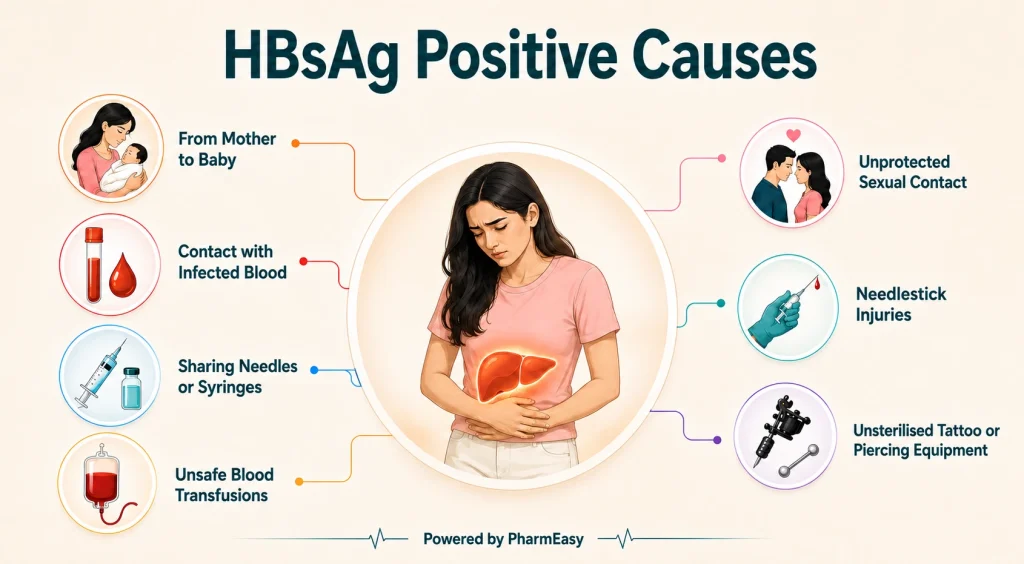
A person can be HBsAg positive when he/she is infected by HBV. Common causes and modes of transmission include:
Note: Casual contact does not spread Hepatitis B. Activities such as hugging, shaking hands, sharing food, coughing, or sneezing do not transmit the virus.
Some people with hepatitis B or those who are HBsAg test positive, may not have any symptoms, especially during the early stages. The symptoms usually occur when the condition progresses and may include:
Many older children, adolescents, and adults with acute hepatitis B may develop symptoms, while most children under 5 years usually do not show any symptoms. In chronic cases, the symptoms take even decades to develop and may be similar to those seen in acute hepatitis B5.
Diagnosing hepatitis B usually involves reviewing symptoms, medical history, physical examination, and other diagnostic procedures.
The doctor may ask about the symptoms and enquire whether any of your family members have had hepatitis B infection or other liver-related diseases. He might also ask about:
During a physical examination, your doctor may check for signs of liver problems, including:
The HBsAg blood test is one of the basic methods used by doctors for diagnosing hepatitis B infection. It detects hepatitis B surface antigen, a protein present on the surface of the HBV. If this antigen is discovered in the blood, it usually indicates that the virus is already present in the body. The doctors might prescribe several other tests if you are HBsAg positive4. These may include:
Your doctor might go for a specialised ultrasound in severe cases.
Treatment for an HBsAg positive result depends on whether the hepatitis B infection is acute or chronic. Some people may not require treatment, while some might need regular treatment and monitoring to control the infection and protect the liver.
The main goals of treatment are to reduce the amount of virus in the body and to prevent liver-related complications. Although a complete cure is difficult, treatment can help manage the infection effectively8,9.
Here your doctor might mainly focus on supportive care. Your doctor might advise you to:
However, for more severe cases or symptoms, you might need more care, and the doctor might recommend hospitalisation9.
As long-term infection may increase the risk of liver damage, cirrhosis, or liver cancer, ongoing medical care is important. At this point your doctor might suggest several medications or drugs along with lifestyle modifications.
However, not all patients who are diagnosed with chronic hepatitis B need treatment. The decision is taken by the doctors based on a patient’s symptoms, diagnostic reports and severity8.
Note: The information given above is meant for educational purpose only. Treatment for hepatitis B varies from person to person depending on the severity of the infection, liver health, and overall medical condition. Always consult a qualified doctor for proper diagnosis, treatment, and follow-up care.
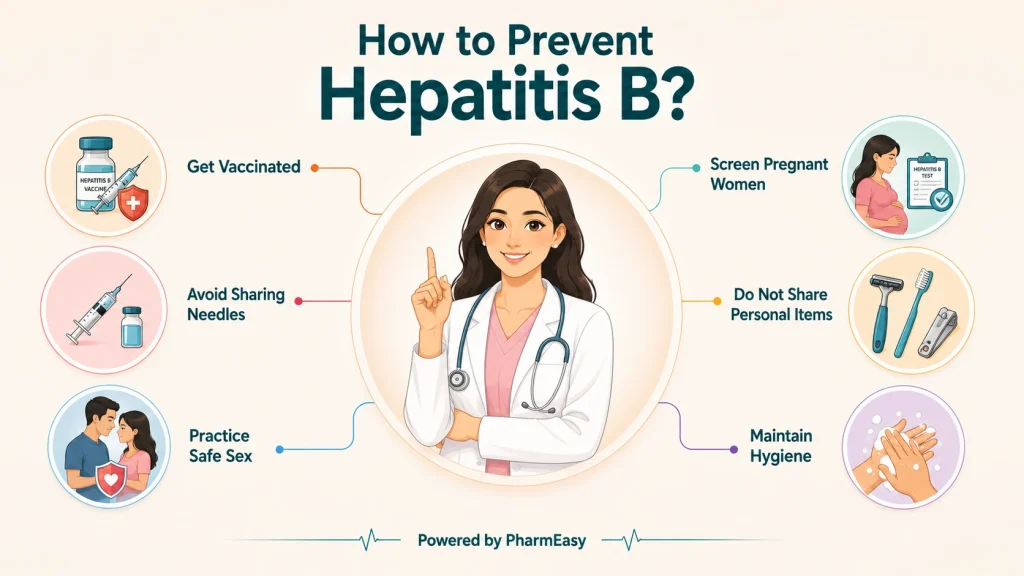
The risk of developing hepatitis B can be reduced by following certain preventive measures that includes the following:
Also Read: Low Alkaline Phosphatase (ALP): Symptoms, Causes, Diagnosis & Treatment
Consulting a doctor is very important if you:
Early medical care can help prevent liver complications and support better long-term health.
Also Read: Hepatitis B: What It Is, Causes, Symptoms & Treatment
Being HBsAg positive means that the hepatitis B virus has been detected in your body. Although this result may seem worrying, early diagnosis and proper medical care can help manage the condition effectively. Additional tests are often prescribed by the doctors to determine the stage and severity of the infection. With timely treatment, regular monitoring, vaccination, and preventive measures, many people with hepatitis B can lead healthy lives while reducing the risk of complications.
Acute hepatitis B often goes away on its own, and many people recover completely6. Chronic hepatitis B may not have a complete cure, but treatment and regular monitoring can help control the virus, reduce liver damage, and prevent complications1,8.
Yes, you can safely touch someone who is HBsAg positive. Hepatitis B is not transmitted by casual contact like touching, hugging, shaking hands, swimming in the same pool or sharing meals. The virus transmits mostly by infected blood, sexual contact, and specific bodily fluids11.
Yes, being HBsAg positive may affect pregnancy since the hepatitis B virus can transmit from mother to baby following labour. However, with good medical care, screening, and timely vaccination for newborns, the risk of transmission can be significantly reduced3,6.
Acute hepatitis B is a short-term infection that typically lasts less than six months and can resolve on its own. Chronic hepatitis B is a long-term medical condition that can cause liver damage if not controlled properly1,6.
Many people with acute hepatitis B may see HBsAg disappear from their blood within a few months as their bodies naturally eliminate the virus. However, if HBsAg remains positive for more than six months, it may indicate chronic hepatitis B1. During this phase, a complete clearance of HBsAg is uncommon and only a small number of people (about 1%) naturally lose HBsAg, and current treatments rarely achieve complete removal of the virus. Therefore, it requires continuous medical monitoring and treatment, which help reduce the severity of the infection and maintain a good liver health12.
Hepatitis B can be considered both a sexually transmitted infection (STI) and sexually transmitted disease (STD) because it can spread through sexual contact13,14. However, the term STI better suits the condition as it can also spread through infected blood, shared needles, and from mother to baby during childbirth3,6.
Yes. most people with chronic hepatitis B can live long and healthy lives with proper monitoring and treatment when needed. Avoiding or limiting alcohol and attending regular follow-up appointments are important for maintaining liver health.
1. Hepatitis B (chronic): diagnosis and management. Available from: https://www.ncbi.nlm.nih.gov/books/NBK553697/
2. Clinical Testing and Diagnosis for Hepatitis B. 2025. Available from: https://www.cdc.gov/hepatitis-b/hcp/diagnosis-testing/index.html
3. Hepatitis B. 2025. Available from: https://www.who.int/news-room/fact-sheets/detail/hepatitis-b
4. Blood Tests for Diagnosing Hepatitis B. Available from: https://www.hepb.org/prevention-and-diagnosis/diagnosis/hbv-blood-tests/
5. Symptoms of Hepatitis B. 2024. Available from: https://www.cdc.gov/hepatitis-b/signs-symptoms/index.html
6. Hepatitis B. 2024. Available from: https://www.healthdirect.gov.au/hepatitis-b
7. Additional Hepatitis B Blood Tests. Available from: https://www.hepb.org/prevention-and-diagnosis/diagnosis/hepatitis-b-blood-tests/
8. Treatment Options for Hepatitis B. Available from: https://www.hepb.org/treatment-and-management/treatment/
9. Treatment of Hepatitis B. 2024. Available from: https://www.cdc.gov/hepatitis-b/treatment/index.html
10. Clinical Overview of Perinatal Hepatitis B. 2025. Available from: https://www.cdc.gov/hepatitis-b/hcp/perinatal-provider-overview/index.html
11. Hepatitis B Prevention and Control. 2025. Available from: https://www.cdc.gov/hepatitis-b/prevention/index.html
12. Moini M, Fung S. HBsAg Loss as a Treatment Endpoint for Chronic HBV Infection: HBV Cure. Viruses. 2022;14(4):657. doi:10.3390/v14040657 https://pubmed.ncbi.nlm.nih.gov/35458387/
13. Sexually Transmitted Infections. 2025. Available from: https://medlineplus.gov/sexuallytransmittedinfections.html
14. Every Week Hundreds of People Get Hepatitis B. Available from: https://www.health.ny.gov/publications/2340/
Disclaimer: The information provided here is for educational/awareness purposes only and is not intended to be a substitute for medical treatment by a healthcare professional and should not be relied upon to diagnose or treat any medical condition. The reader should consult a registered medical practitioner to determine the appropriateness of the information and before consuming any medication. PharmEasy does not provide any guarantee or warranty (express or implied) regarding the accuracy, adequacy, completeness, legality, reliability or usefulness of the information and disclaims any liability arising thereof.
Links and product recommendations in the information provided here are advertisements of third-party products available on the website. PharmEasy does not make any representation on the accuracy or suitability of such products/services. Advertisements do not influence the editorial decisions or content. The information in this blog is subject to change without notice. The authors and administrators reserve the right to modify, add, or remove content without notification. It is your responsibility to review this disclaimer regularly for any changes.


Comments

Leave your comment...
You may also like

























Comments