




Leptospirosis: Causes, Symptoms, Diagnosis, Treatment & Prevention
By Dr. Avinav Gupta +2 more

Medically reviewed by Dr. Avinav Gupta
Last updated: Sep 10, 2026 Published on: Jul 16, 2026


Get,

to manage your symptom
Get your,

4 Cr+ families
benefitted

OTP sent to 9988776655



You’ve successfully subscribed to receive
doctor-approved tips on
Whatsapp

Get ready to feel your best.


Register to Avail the Offer
Send OTPBy continuing, you agree with our Privacy Policy and Terms and Conditions
Hi There,
Sign up on PharmEasy now!!


Trusted by 4 crore+ families

OTP sent to 9988776655
You have unlocked 25% off on medicines


Code: NU25

By Dr. Avinav Gupta +2 more
Table of Contents
The monsoon may bring cooler weather and much-needed rain, but it also creates favourable conditions for certain diseases to spread. Walking through flooded streets, cleaning waterlogged homes, or coming into contact with contaminated water can expose people to infections that often begin with non-specific symptoms such as fever and body aches. While dengue and malaria often dominate conversations during the rainy season, leptospirosis is another important infection that should not be overlooked1,2.
Leptospirosis disease is estimated to cause nearly 58,900 deaths every year, with more than 75% of cases occurring in tropical regions, including South Asia3. This is why early recognition and timely leptospirosis treatment are important, as they can significantly help reduce the risk of severe complications.

In this blog, we’ll discuss leptospirosis meaning, causes, symptoms, diagnosis, treatment, and practical ways to prevent leptospirosis, especially during the monsoons.
Leptospirosis is a bacterial infection caused by spiral-shaped bacteria belonging to the Leptospira species. It is a zoonotic disease, meaning it spreads from animals to humans2,4.
People usually become infected after coming into contact with water or soil contaminated with the urine of infected animals, particularly rodents, cattle, pigs, and dogs4,5.
Leptospirosis disease is broadly classified into two main types based on the severity of the infection, as follows:
This is the most common form, accounting for approximately 90% of leptospirosis cases. It usually causes a self-limiting illness, meaning most people recover completely with timely diagnosis and appropriate management with antibiotics (after being prescribed by a doctor)4.
A small proportion (5 to 10%) of infected individuals develop severe leptospirosis, also known as Weil’s disease6. This form is much more serious because the infection spreads beyond the bloodstream and can damage multiple organs, including the liver, kidneys, lungs, heart, and brain. It may lead to life-threatening complications without prompt diagnosis and hospital-based leptospirosis treatment4. Therefore, early recognition and appropriate medical care are critical to improve the chances of recovery.
Leptospirosis often follows a biphasic course, meaning the illness progresses through two distinct phases. However, many people experience only the first phase, while others may develop the second phase after a brief period of recovery. Leptospirosis stages include:
This is the first phase of the illness and usually begins 2 to 30 days after exposure, most commonly within 5 to 14 days6.During this phase4,6:
This phase usually lasts about 4 to 7 days
After a short period of improvement, some patients enter the second phase of the illness. During this phase6,7,8:
Early symptoms of leptospirosis often resemble those of the flu. This can make the infection difficult to recognise. Common leptospirosis symptoms include2,4,5:
In severe cases, additional symptoms may develop as the infection affects multiple organs. Severe leptospirosis symptoms include4,5,7:
The bacteria that cause leptospirosis are found in the urine of infected animals and can survive in fresh water and moist soil for weeks to months. People become infected when the bacteria enter their body through cuts or broken skin, or through the eyes, nose, or mouth. Common leptospirosis causes include2,9:
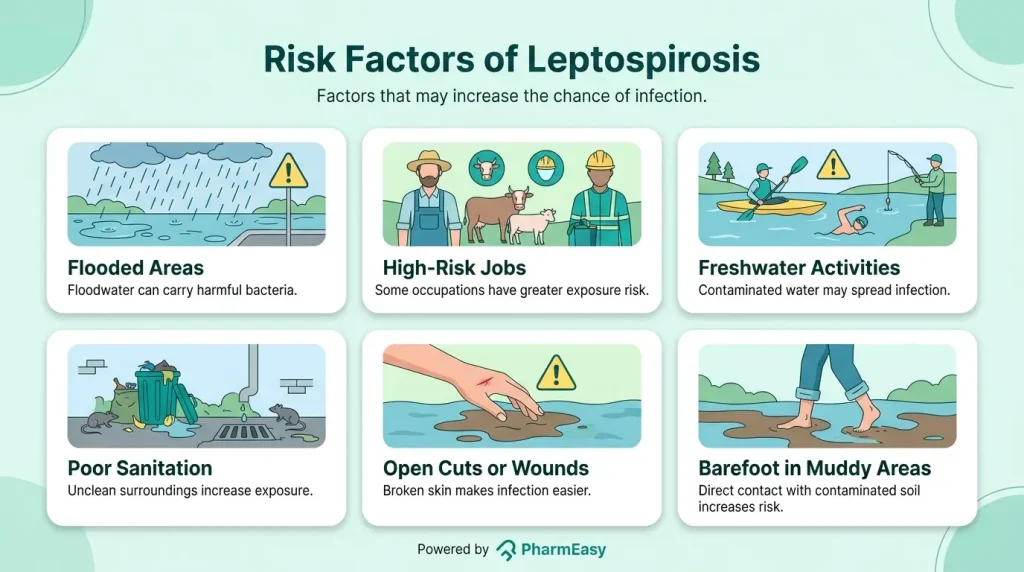
Certain activities, occupations, and environmental conditions can increase the likelihood of developing leptospirosis. Factors that increase the risk include2,10:
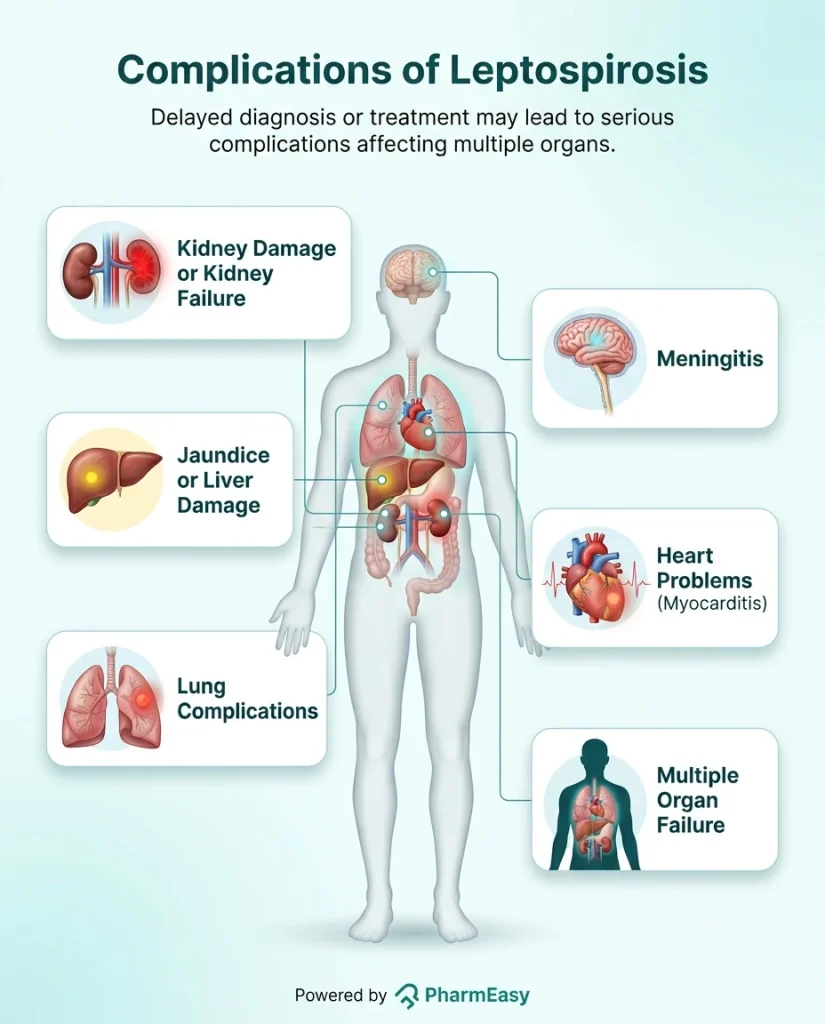
Most people with leptospirosis recover completely with timely diagnosis and appropriate treatment by a doctor. However, if the infection progresses or treatment is delayed, it can lead to the following complications and become life-threatening4,6:
Your doctor will consider your leptospirosis signs and symptoms as well as recent exposure to contaminated water or animals and recommend one or more tests to confirm the diagnosis. Common tests for leptospirosis include4
The management of leptospirosis depends on the severity of the infection. Common leptospirosis treatment/management options may include3,4:
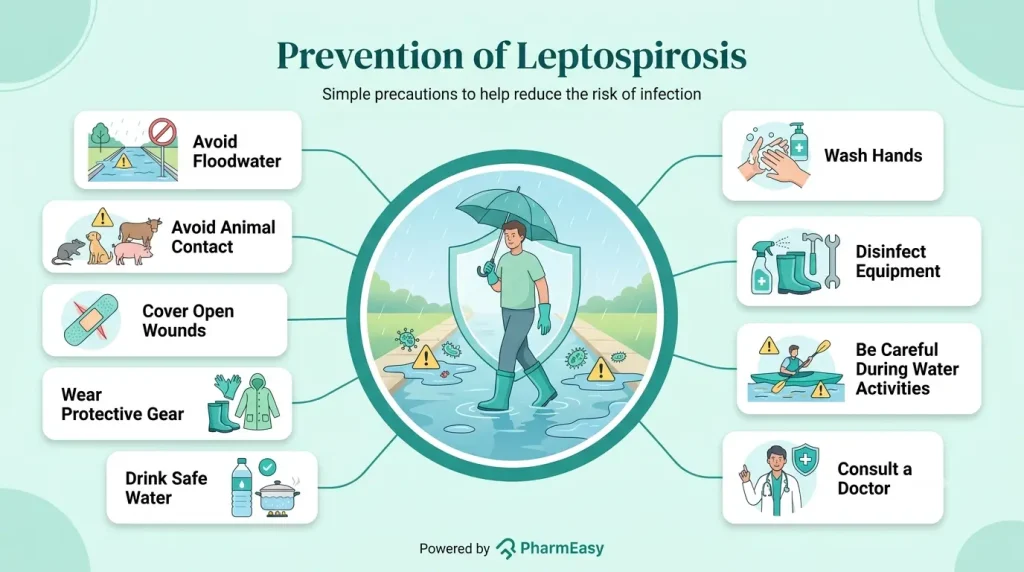
Taking a few simple precautions can significantly reduce your risk of infection, especially during the monsoon season or after flooding. Some helpful tips include2,9:
Also Read: Chandipura Virus (CHPV): Symptoms, Causes, Transmission, Treatment & Prevention
You should see a doctor if you experience the following leptospirosis symptoms, especially after exposure2,5:
You should seek emergency medical care if you have the following4,5,7:
Also Read: Influenza B: What is It, Causes, Symptoms, Treatment & Prevention
Leptospirosis is a potentially serious but manageable bacterial infection that becomes more common during the monsoon season, especially after heavy rainfall and flooding.
Leptospirosis signs and symptoms often resemble those of other illnesses. That is why recognising the signs and seeking medical care promptly are essential for avoiding severe complications. In addition to this, taking simple precautions, such as avoiding contact with contaminated water, practicing good hygiene, protecting open wounds, and using appropriate protective gear when needed, can significantly reduce your risk of infection.
Also Read: Stomach Infections in the Rainy Season and How to Prevent It
Symptoms usually appear 2 to 30 days after exposure to the bacteria, with most people developing symptoms within 5 to 14 days6.
Leptospirosis often starts with flu-like symptoms, such as fever, headache, muscle pain, chills, and red eyes. Because these symptoms are similar to those of many other infections, a doctor will consider your symptoms, possible exposure to contaminated water or animals, and laboratory tests to confirm the diagnosis4.
A complete blood count (CBC) alone cannot diagnose leptospirosis. However, it may show changes that suggest an infection. A confirmed diagnosis usually requires specific laboratory tests, such as antibody tests or molecular tests (PCR), depending on the stage of illness and test availability4.
Most people recover completely when Leptospirosis is diagnosed and treated early with appropriate antibiotics under the guidance of a doctor. Severe cases may require hospitalisation and supportive care4.
Most people experience a mild illness and recover completely. However, if left untreated, leptospirosis can lead to serious complications affecting the kidneys, liver, lungs, heart, or brain and may be life-threatening4,6.
Leptospirosis occurs worldwide but is most common in tropical and subtropical regions, particularly in areas with heavy rainfall, flooding, poor sanitation, and high rodent population11.
Hantavirus and leptospirosis are different diseases. Hantavirus is caused by a virus, while leptospirosis is caused by a bacterium. Although both can spread through exposure to rodents and may cause similar symptoms initially, they require different diagnostic tests and treatment approaches2,12.
Person-to-person transmission is extremely uncommon. Most people become infected through contact with water, soil, or food contaminated with the urine of infected animals. However, rare cases of person-to-person transmission have been reported9.
Alcohol-based disinfectants (such as 70% ethanol) are effective against many microorganisms and may be used to disinfect appropriate surfaces and equipment. However, they should not be relied upon to prevent leptospirosis after exposure to contaminated water or soil. If you think you have been exposed, wash the affected skin thoroughly with soap and clean water, cover any open cuts with a waterproof dressing, and seek medical advice if you develop symptoms2,4.
1. Infectious Diseases. In: From Monsoons to Microbes: Understanding the Ocean’s Role in Human Health. National Academies Press (US); 1999. Accessed July 13, 2026. Available from: https://www.ncbi.nlm.nih.gov/books/NBK230695/
2. About Leptospirosis. Leptospirosis. February 10, 2026. Accessed July 13, 2026. Available from: https://www.cdc.gov/leptospirosis/about/index.html
3. Gupta N, Wilson W, Ravindra P. Leptospirosis in India: a systematic review and meta-analysis of clinical profile, treatment and outcomes. Infez Med. 31(3):290-305. doi:10.53854/liim-3103-4 Available from: https://pubmed.ncbi.nlm.nih.gov/37701390/
4. Wang S, Dunn N. Leptospirosis. StatPearls; 2026. Accessed July 13, 2026. Available from: http://www.ncbi.nlm.nih.gov/books/NBK441858/
5. Haake DA, Levett PN. Leptospirosis in humans. Curr Top Microbiol Immunol. 2015;387:65-97. doi:10.1007/978-3-662-45059-8_5 Available from: https://pubmed.ncbi.nlm.nih.gov/25388133/
6. Day NPJ. Leptospirosis: Epidemiology, microbiology, clinical manifestations, and diagnosis. UpToDate. Accessed July 13, 2026. Available from: https://www.uptodate.com/contents/leptospirosis-epidemiology-microbiology-clinical-manifestations-and-diagnosis
7. Rajapakse S. Leptospirosis: clinical aspects. Clin Med. 2022;22(1):14-17. doi:10.7861/clinmed.2021-0784 Available from: https://pubmed.ncbi.nlm.nih.gov/35078790/
8. Johnson RC. Leptospira. Medical Microbiology. 1996. Accessed July 15, 2026. Available from: http://www.ncbi.nlm.nih.gov/books/NBK8451/
9. Leptospirosis. CDC. Accessed July 13, 2026. Available from: https://www.cdc.gov/leptospirosis/pdf/fs-leptospirosis-clinicians-eng-508.pdf
10. Kamath R, Swain S, Pattanshetty S, Nair NS. Studying Risk Factors Associated with Human Leptospirosis. J Glob Infect Dis. 2014;6(1):3-9. doi:10.4103/0974-777X.127941 Available from: https://pmc.ncbi.nlm.nih.gov/articles/PMC3982353/
11. Muñoz-Zanzi C, Dreyfus A, Limothai U, et al. Leptospirosis—Improving Healthcare Outcomes for a Neglected Tropical Disease. Open Forum Infect Dis. 2025;12(2):ofaf035. doi:10.1093/ofid/ofaf035 Available from: https://pubmed.ncbi.nlm.nih.gov/39963696/
12. About Hantavirus. CDC. May 9, 2026. Accessed July 13, 2026. Available from: https://www.cdc.gov/hantavirus/about/index.html
Disclaimer: The information provided here is for educational/awareness purposes only and is not intended to be a substitute for medical treatment by a healthcare professional and should not be relied upon to diagnose or treat any medical condition. The reader should consult a registered medical practitioner to determine the appropriateness of the information and before consuming any medication. PharmEasy does not provide any guarantee or warranty (express or implied) regarding the accuracy, adequacy, completeness, legality, reliability or usefulness of the information; and disclaims any liability arising thereof.
Links and product recommendations in the information provided here are advertisements of third-party products available on the website. PharmEasy does not make any representation on the accuracy or suitability of such products/services. Advertisements do not influence the editorial decisions or content. The information in this blog is subject to change without notice. The authors and administrators reserve the right to modify, add, or remove content without notification. It is your responsibility to review this disclaimer regularly for any changes.


Comments

Leave your comment...
You may also like

























Comments