




What Your Troponin Levels Reveal Before a Heart Attack?
By Dr. Vishesh Bharucha +2 more

Medically reviewed by Dr. Vishesh Bharucha
Last updated: Aug 24, 2026 Published on: Aug 24, 2026


Get,

to manage your symptom
Get your,

4 Cr+ families
benefitted

OTP sent to 9988776655



You’ve successfully subscribed to receive
doctor-approved tips on
Whatsapp

Get ready to feel your best.


Register to Avail the Offer
Send OTPBy continuing, you agree with our Privacy Policy and Terms and Conditions
Hi There,
Sign up on PharmEasy now!!


Trusted by 4 crore+ families

OTP sent to 9988776655
You have unlocked 25% off on medicines


Code: NU25

By Dr. Vishesh Bharucha +2 more
Table of Contents
Heart attacks can sometimes be ‘silent’, and simple blood tests may reveal important information about heart damage that might otherwise go unnoticed. One such marker is troponin, a protein that can provide early clues about heart injury.
Changes in troponin levels can help your doctor determine if the heart is experiencing any damage/injury due to events such as a heart attack. But what do normal troponin levels look like, and can there be high troponin levels with no heart attack?
In this blog, we will explore the cardiac troponin test, discuss what level of troponin indicates heart attack, compare troponin T vs troponin I, and explain the key troponin I and T differences to help you better understand these critical heart markers.
Troponin is a protein that is found in the heart muscle cells. Normally, only small amounts of troponin are present in the bloodstream. However, if the heart muscle is damaged, such as during a heart attack, these proteins are released into the bloodstream, causing troponin levels to rise.
Troponin consists of three protein components, T, I, and C. Of these, troponin T and troponin I are primarily associated with the heart (cardiac troponins) and can therefore be used as indicators of cardiac injury1. Since troponin is highly specific to the heart, the troponin test has become the preferred tool for detecting heart injury2.
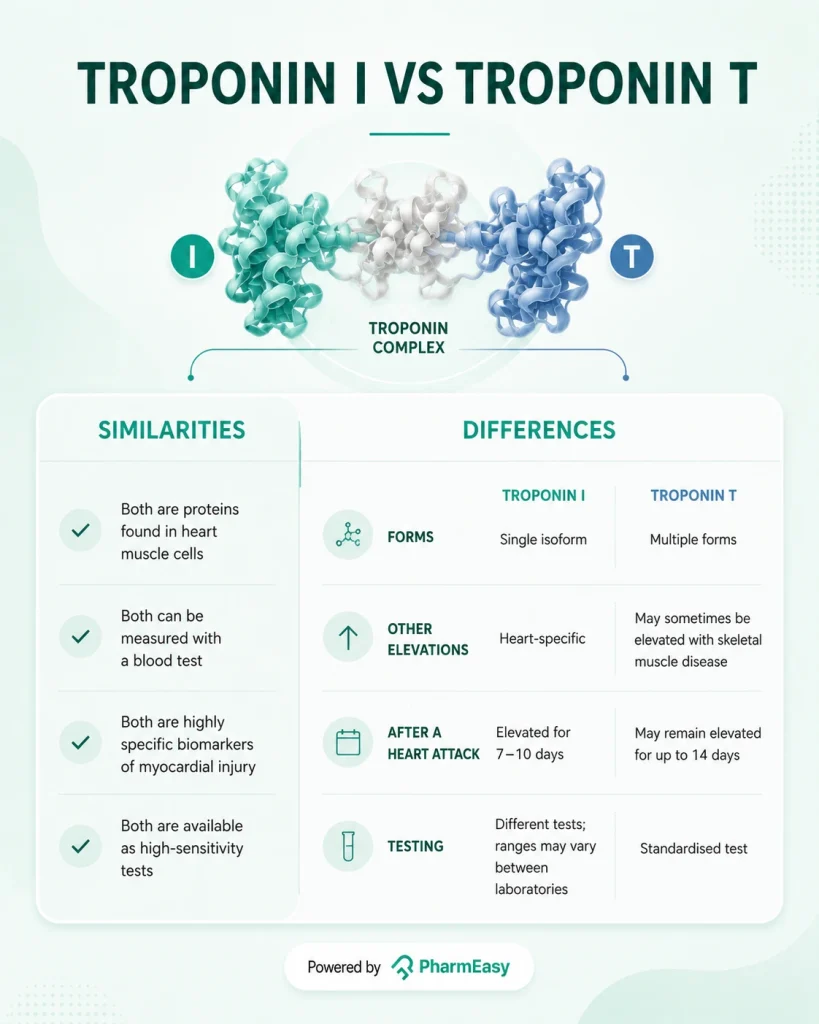
Troponins I and T are two types of troponin that are used for the same purpose. They are not identical, but are very effective at detecting a heart attack and understanding the prognosis of the individual.
Here are a few similarities and differences between them:
Despite the differences, both troponin I and troponin T can be accurately measured and are reliable indicators of heart muscle injury.
Troponin levels are very low in individuals who are healthy. Higher-than-normal troponin levels indicate that heart muscle may be damaged and is releasing troponin into the blood4. However, this does not, by itself, confirm a heart attack. To diagnose a heart attack, the doctor will interpret the troponin test result along with ECG findings and the individual’s symptoms such as chest pain2.
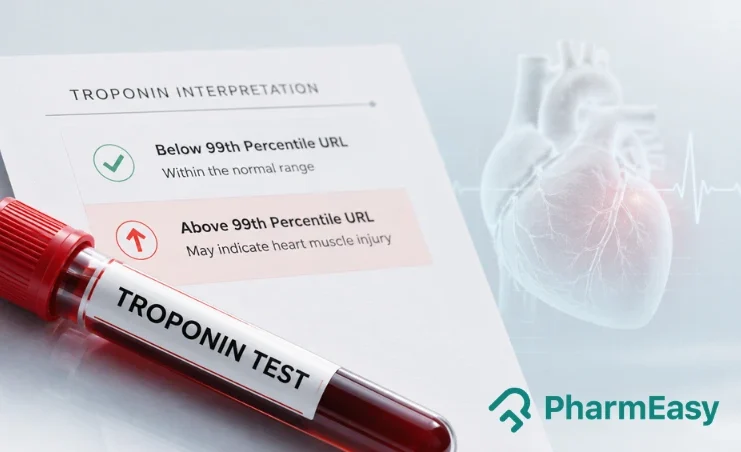
Because different laboratories use different methods (assays) to measure troponin, the normal range depends on the assay used. The result is interpreted by comparing it with the 99th-percentile upper reference limit (URL) provided by that laboratory. A value above the 99th percentile URL for that specific assay is considered elevated6.
| Troponin Results | Interpretation based on 99th Percentile URL |
| Below 99th percentile URL | Considered within the normal range for that specific test |
| Above 99th-percentile URL | May indicate heart muscle injury7 and should be interpreted along with other parameters like the individual’s symptoms, ECG findings, and repeat troponin measurements |
Troponin levels, if elevated, are usually measured more than once over several hours. A rising and falling pattern, particularly when at least one value is above the 99th-percentile URL, is more suggestive of a sudden heart injury than a stable elevated value7.
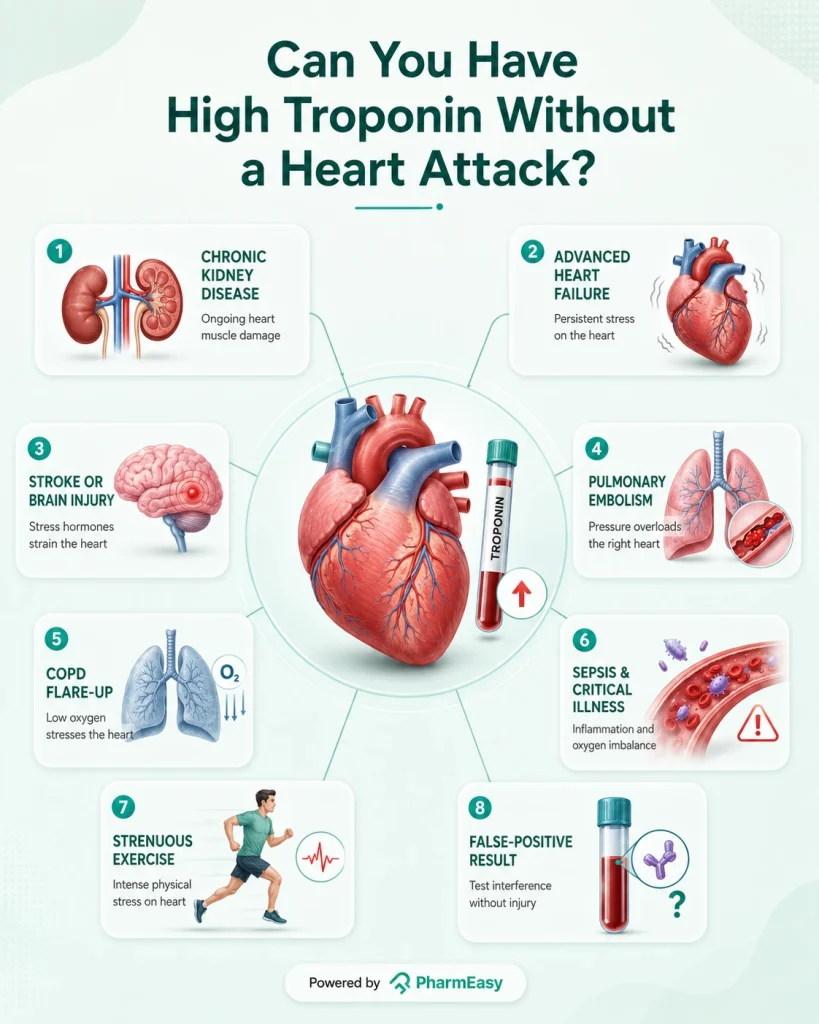
High troponin levels with no heart attack are possible and can occur in several medical conditions, such as:
Note: To diagnose acute myocardial infarction (AMI), doctors look for a rise or fall in troponin levels, with at least one value above the normal upper limit (99th percentile), along with other signs that the heart muscle is not getting enough blood. However, a rise or fall in troponin levels indicates acute heart muscle injury, but it does not always mean a heart attack. Other conditions, such as myocarditis, pulmonary embolism, severe infection (sepsis), and very fast or abnormal heart rhythms, can also cause troponin levels to rise and fall.
The troponin test is not typically used as a screening test, as troponin tests are usually done in hospital settings. However, high-sensitivity cardiac troponin (hs-cTn) tests can detect extremely small amounts of troponin in the blood, which enables doctors to diagnose or rule out acute coronary syndromes (conditions such as heart attack that cause sudden reduction/blockage of blood flow to the heart) earlier. Evidence suggests that hs-cTn tests may be of use in identifying the risk of cardiovascular disease in individuals who seem healthy or are asymptomatic2,9.
Preventive cardiac testing is not necessary for everyone, but it may be worth discussing with your doctor if you:
Note: Routine high-sensitivity troponin (hs-cTn) testing is not recommended for people without symptoms. Instead, your doctor may recommend checking blood pressure, cholesterol, blood sugar, and overall heart disease risk.
A heart-healthy lifestyle can help manage key cardiovascular risk factors. You can support heart health by following these tips:
Consult a doctor if you experience symptoms that may suggest a heart problem, such as:
These symptoms require immediate medical attention.
Also Read: High-Sensitivity Troponin I (hs-Trop I) Test: What It Is, Normal Range, Meaning & Why It Matters
Troponin testing can provide valuable information about heart health and help identify signs of heart muscle injury. Understanding troponin levels can support early awareness of cardiovascular risk. For the most accurate assessment, troponin testing and preventive heart screening should always be guided by a healthcare professional.
Yes, severe emotional stress can, in rare cases, trigger Takotsubo cardiomyopathy (also known as “broken heart syndrome”), a temporary heart condition that may lead to increased troponin levels.12
Yes. During a hypertensive emergency (a severe, sudden rise in blood pressure), the heart may experience significant strain, leading to elevated troponin levels13.
The length of time troponin levels remain high depends on the type of troponin and the cause and extent of the heart injury. In general, troponin I may remain elevated for about 7–10 days, while troponin T can stay elevated for about 14 days after heart muscle damage4.
The cardiac troponin test is highly accurate and the gold standard for detecting heart muscle damage, such as that caused by a heart attack (myocardial infarction)4.
Troponin test results are usually available within 1–2 hours. Once the results are ready, your doctor will explain what they mean and whether any further testing or treatment is needed4.
Disclaimer: The information provided here is for educational/awareness purposes only and is not intended to be a substitute for medical treatment by a healthcare professional and should not be relied upon to diagnose or treat any medical condition. The reader should consult a registered medical practitioner to determine the appropriateness of the information and before consuming any medication. PharmEasy does not provide any guarantee or warranty (express or implied) regarding the accuracy, adequacy, completeness, legality, reliability or usefulness of the information and disclaims any liability arising thereof.
Links and product recommendations in the information provided here are advertisements of third-party products available on the website. PharmEasy does not make any representation on the accuracy or suitability of such products/services. Advertisements do not influence the editorial decisions or content. The information in this blog is subject to change without notice. The authors and administrators reserve the right to modify, add, or remove content without notification. It is your responsibility to review this disclaimer regularly for any changes.


Comments

Leave your comment...
You may also like
























Comments