




Dog Skin Infection: Causes, Symptoms, Treatment & Home Care
By Dr. Ramani Jairam +2 more

Medically reviewed by Dr. Ramani Jairam
Last updated: Sep 1, 2026 Published on: Jul 8, 2026


Get,

to manage your symptom
Get your,

4 Cr+ families
benefitted

OTP sent to 9988776655



You’ve successfully subscribed to receive
doctor-approved tips on
Whatsapp

Get ready to feel your best.


Register to Avail the Offer
Send OTPBy continuing, you agree with our Privacy Policy and Terms and Conditions
Hi There,
Sign up on PharmEasy now!!


Trusted by 4 crore+ families

OTP sent to 9988776655
You have unlocked 25% off on medicines


Code: NU25

By Dr. Ramani Jairam +2 more
Table of Contents
If your dog is frequently scratching or licking, or has developed red spots on its skin, a skin infection could be the reason1. According to some studies, approximately 18.8% of dogs visit a veterinary clinic each year to receive treatment for skin conditions2. The good news is that with a proper diagnosis and treatment, most dog skin infections may be successfully managed.
This article discusses about the various of dog skin infections, including their causes, symptoms, diagnosis, treatment choices, prevention tips and some home care measures to deal with them.
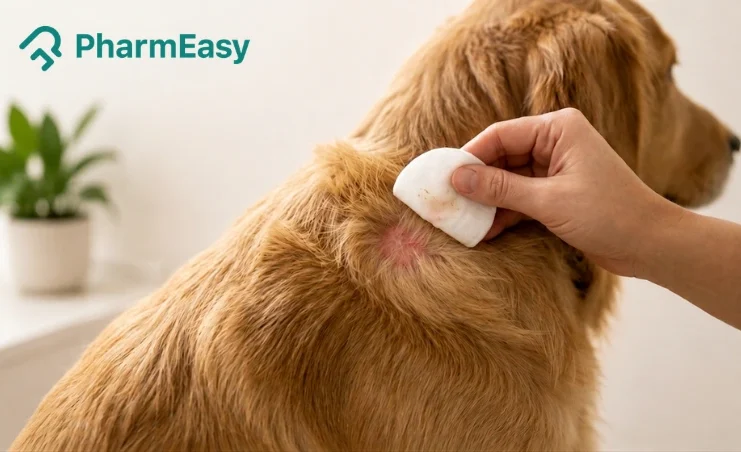
A dog skin infection occurs when harmful microorganisms such as bacteria, fungi, or parasites grow excessively on the skin1. These infections can develop when the skin’s natural protective barrier is damaged or weakened. When a dog has a skin infection, it often shows clear changes in its skin and coating, such as redness, bumps etc1,3. Sometimes, these may be left hidden in long-haired dogs, but other symptoms of skin infection such as excessive scratching, licking etc are often evident3. If left untreated, these infections can spread to deeper layers of the skin, affecting a dog’s general health and quality of life.
The following are common types of skin infections in dogs:
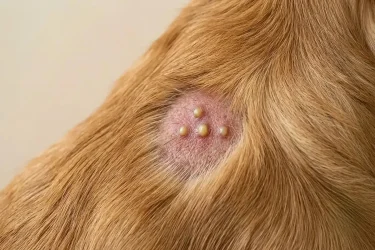
The most common cause for this is the bacterium Staphylococcus pseudintermedius causing pyoderma, which is one of the common types of skin problems in dogs. These infections are caused by bacteria that enter the skin through cuts, allergies, or irritation4. They can cause redness, irritation, pus filled bumps, hair loss, etc1.
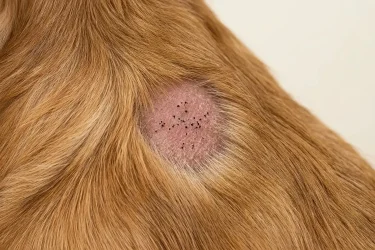
These are caused by external parasites such as fleas, ticks, and mites1,2. The most common ones include conditions such as mange and sarcoptic mange, caused by overgrowth of certain mites. These can cause hair loss, itching, etc1,5.
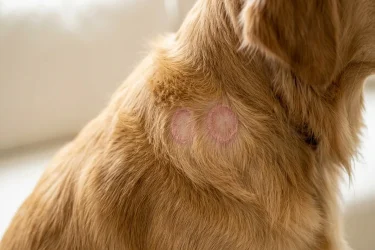
The common type of fungal skin infection in dog is ringworm. Ringworm spreads very easily from one dog to another through direct contact or by sharing things like bedding, brushes, clippers, etc. They can also spread to humans1.
Another common infection fungal or yeast infection includes the one by Malassezia pachydermatis. It is a yeast which normally lives on a dog’s skin and in its ear canals in small numbers without causing harm. However, when it overgrows, it can lead to a condition called Malassezia dermatitis, which leads to itchy, oily, smelly, or irritated skin in dogs6.
Skin infections in dogs is the overgrowth of the causative organisms such as bacteria, fungi, parasites, etc1,3 The following causes can lead to this microbial overgrowth:
Dogs can feel very uncomfortable and irritated if they have a skin infection. The following are some common signs that might help detect a dog skin infection:
There are several ways by which a skin infection in dog can be determined. The following are some common ways that the veterinarians use to determine the cause or diagnose an infection:
A dog skin infection treatment is determined by the underlying cause. Veterinarians may recommend any of the following treatments depending on the cause:

Certain home care tips can help improve some mild skin conditions. The following are some dog skin infection home remedies that can be used:
Note: Home approaches may help with skin health and healing, but they should not replace veterinary diagnosis or treatment. Some skin infections require prescription medications, and employing inappropriate treatments can worsen the condition. Always consult a veterinarian before using home approaches, especially if the symptoms are severe, spreading, or not improving.
Also Read: How to Trim Dog Nails Safely at Home
Recovery from a skin infection can be as follows:
The following says why a follow-up visit is important:
Note: Recovery depends on the severity and type of infection, as well as how well the underlying cause is addressed.
The following are some ways by which a dog’s skin infection can be avoided:
Consult a veterinarian if the dog is itching, scratching, or licking excessively or if there is redness, swelling, or painful skin sores1. If hair loss, broad skin changes, a foul odour, pus-filled lumps, or oozing sores are detected, get veterinary attention immediately3,6. Also note whether the dog is staying depressed or lethargic for a long period9. If skin infections recur frequently, they might indicate an underlying issue and require professional diagnosis and treatment.
Also Read: Why Do Dogs Vomit? Causes, Types, Treatment & Home Remedies
Skin infections are prevalent and can cause severe discomfort if not treated. They could be bacterial, fungal or parasitic and caused due to poor hygiene, allergies, or underlying medical disorders. Early diagnosis, effective medication, good hygiene, and frequent veterinary care are critical for a full recovery. Pet owners may help their dogs stay healthy, comfortable, and free of recurrent skin diseases by recognising symptoms early and taking preventive actions.
Also Read: Dog Tear Stains: Causes, Treatment & Natural Removal Tips
Some skin disorders in dogs, particularly fungal infections like ringworm and parasitic infections such as mange mites (sarcoptic mange), are contagious. These can be transmitted to other dogs, and potentially humans, through direct touch or contaminated things1.
A dog’s skin infection can be moderate to severe, depending on the cause and depth of the infection1. If left untreated, it can spread, become painful, and occasionally progress to deeper skin injury and affect the overall wellbeing.
Yes, a poor or imbalanced diet can cause skin problems in dogs, particularly if it results in nutrient shortages or food allergies1,15,16.
The antibiotic used to treat a dog’s skin infection is determined by the nature and severity of the infection. Antibiotics like amoxicillin-clavulanate and cephalosporins are commonly prescribed by veterinarians, but they should only be administered under veterinary supervision11 and after antibiotic sensitivity tests are performed.
Yes, most dogs can recover completely from fungal infections with adequate antifungal therapy and sanitation. However, therapy can take many weeks, and rigorous cleaning is required to prevent recurrence or spread6.
1. Common Skin Disorders in Dogs. 2024. doi: https://www.aphis.usda.gov/sites/default/files/acaids_canine-commonskin_ac-19-002.19.pdf
2. Scott DW, Paradis M. A survey of canine and feline skin disorders seen in a university practice: Small Animal Clinic, University of Montréal, Saint-Hyacinthe, Québec (1987-1988). Can Vet J. 1990;31(12):830-835. https://pmc.ncbi.nlm.nih.gov/articles/PMC1480900/
3. Khoshnegah J, Movassaghi AR, Rad M. Survey of dermatological conditions in a population of domestic dogs in Mashhad, northeast of Iran (2007-2011). Vet Res Forum. 2013;4(2):99-103. https://pubmed.ncbi.nlm.nih.gov/25653779/
4. Wang Q, Chen S, Ma S, et al. Antimicrobial Resistance and Risk Factors of Canine Bacterial Skin Infections. Pathogens. 2025;14(4):309. doi:10.3390/pathogens14040309 https://www.mdpi.com/2076-0817/14/4/309
5. Sood NK, Mekkib B, Singla LD, Gupta K. Cytopathology of parasitic dermatitis in dogs. J Parasit Dis. 2012;36(1):73-77. doi:10.1007/s12639-011-0083-y https://pmc.ncbi.nlm.nih.gov/articles/PMC3284611/
6. Bajwa J. Canine Malassezia dermatitis. Can Vet J. 2017;58(10):1119-1121. https://pubmed.ncbi.nlm.nih.gov/28966366/
7. Maharaj N. Yeast Dermatitis (Malassezia) in Dogs: Signs, Symptoms, Treatments. 2024. doi: https://www.akc.org/expert-advice/health/yeast-dermatitis-in-dogs/
8. Bajwa J. Canine superficial pyoderma and therapeutic considerations. Can Vet J. 2016;57(2):204-206. https://pmc.ncbi.nlm.nih.gov/articles/PMC4713004/
9. Costa GM, Araujo SL, Xavier Júnior FAF, Viana DDA, Evangelista JSAM. Dermatological manifestations associated with canine hypothyroidism: A review. Revista Brasileira de Higiene e Sanidade Animal. 2016;10(4). doi:10.5935/1981-2965.20160064 https://www.researchgate.net/publication/312411997_Dermatological_manifestations_associated_with_canine_hypothyroidism_A_review
10. T. Devi. Clinicopathological evaluation of Autoimmune skin diseases in dogs. Indian J Vet Pathol. 2026;50(2). doi:10.56093/4xxvgd67 https://epubs.icar.org.in/index.php/IJVP/article/view/179518
11. Loeffler A, Cain CL, Ferrer L, et al. Antimicrobial use guidelines for canine pyoderma by the International Society for Companion Animal Infectious Diseases (ISCAID). Veterinary Dermatology. 2025;36(3):234-282. doi:10.1111/vde.13342 https://pubmed.ncbi.nlm.nih.gov/40338805/
12. Hypothyroidism in Dogs—There are FDA-Approved Drugs to Treat It. 2021. doi: https://www.fda.gov/animal-veterinary/animal-health-literacy/hypothyroidism-dogs-there-are-fda-approved-drugs-treat-it
13. Shenoda Y, Ward MP, McKeegan D, Fawcett A. “The Cone of Shame”: Welfare Implications of Elizabethan Collar Use on Dogs and Cats as Reported by their Owners. Animals. 2020;10(2):333. doi:10.3390/ani10020333 https://pubmed.ncbi.nlm.nih.gov/32093257/
14. Ebani VV, Mancianti F. Use of Essential Oils in Veterinary Medicine to Combat Bacterial and Fungal Infections. Veterinary Sciences. 2020;7(4):193. doi:10.3390/vetsci7040193 https://pubmed.ncbi.nlm.nih.gov/33266079/
15. Drechsler Y, Dong C, Clark D, Kaur G. Canine Atopic Dermatitis: Prevalence, Impact, and Management Strategies. VMRR. 2024;Volume 15:15-29. doi:10.2147/VMRR.S412570 https://pubmed.ncbi.nlm.nih.gov/38371487/
16. Kar P, Rajesh JB, Behera SK, et al. Omega Fatty Acids and Its Role in Amelioration of Canine Dermatological Disorders. J Sci Res Rep. 2024;30(11):910-921. doi:10.9734/jsrr/2024/v30i112618 https://journaljsrr.com/index.php/JSRR/article/view/2618?__cf_chl_f_tk=fBqcrWDapAFMRPeOELIgmPbwJFn__Sex0rVkTU38cJE-1783425264-1.0.1.1-d_E66Bbt_Zhy2UumsCQLHp_LYNy2adYyI3SirEvXUbk
17. Beco L, Guaguère E, Méndez CL, Noli C, Nuttall T, Vroom M. Suggested guidelines for using systemic antimicrobials in bacterial skin infections: part 2— antimicrobial choice, treatment regimens and compliance. Veterinary Record. 2013;172(6):156-160. doi:10.1136/vr.101070 https://pubmed.ncbi.nlm.nih.gov/23292948/
Disclaimer: The information provided here is for educational/awareness purposes only and is not intended to be a substitute for medical treatment by a healthcare professional and should not be relied upon to diagnose or treat any medical condition. The reader should consult a registered medical practitioner to determine the appropriateness of the information and before consuming any medication. PharmEasy does not provide any guarantee or warranty (express or implied) regarding the accuracy, adequacy, completeness, legality, reliability or usefulness of the information; and disclaims any liability arising thereof.
Links and product recommendations in the information provided here are advertisements of third-party products available on the website. PharmEasy does not make any representation on the accuracy or suitability of such products/services. Advertisements do not influence the editorial decisions or content. The information in this blog is subject to change without notice. The authors and administrators reserve the right to modify, add, or remove content without notification. It is your responsibility to review this disclaimer regularly for any changes.


Comments

Leave your comment...
You may also like
























Comments