




Dog Tear Stains: Causes, Treatment & Natural Removal Tips
By Dr. Ramani Jairam +2 more

Medically reviewed by Dr. Ramani Jairam
Last updated: Sep 10, 2026 Published on: Jul 31, 2026


Get,

to manage your symptom
Get your,

4 Cr+ families
benefitted

OTP sent to 9988776655



You’ve successfully subscribed to receive
doctor-approved tips on
Whatsapp

Get ready to feel your best.


Register to Avail the Offer
Send OTPBy continuing, you agree with our Privacy Policy and Terms and Conditions
Hi There,
Sign up on PharmEasy now!!


Trusted by 4 crore+ families

OTP sent to 9988776655
You have unlocked 25% off on medicines


Code: NU25

By Dr. Ramani Jairam +2 more
Table of Contents
Have you ever looked at your dog and noticed reddish-brown stains beneath their eyes? These are called tear stains. They are common in dogs, especially in breeds with flat faces or light-coloured fur. In many dogs tear stains are harmless. Sudden, severe, or worsening staining can sometimes point to an eye problem that needs veterinary care1,2.
Tear stains can often be managed with gentle cleaning, regular grooming, and treatment of the underlying cause. In this blog, we explain what causes tear stains in dogs, when they may be a sign of a underlying health issue, available treatment options, and how to get rid of dog tear stains safely.
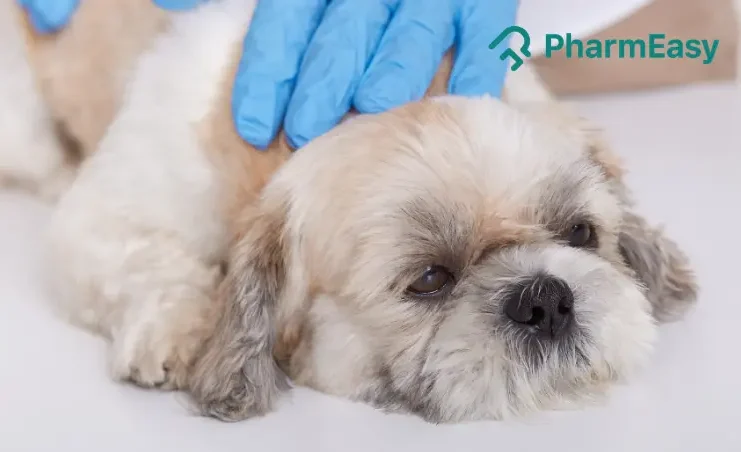
Tear stains on dogs are reddish-brown or dark marks that appear below a dog’s eyes. They happen when tears spill onto the fur instead of draining normally through the small tear ducts near the eyes. As the tears dry, natural pigments called porphyrins present in tears can stain the fur over time2,3.
Although tear stains are mainly a cosmetic concern, they can sometimes indicate an underlying health problem1,4.
Some dogs are more likely to get tear stains than others. Tear stains can happen when a dog makes too many tears or when tears do not drain well.
Certain breeds are more likely to develop tear stains because of their face and eye shape. Flat-faced breeds, such as Shih Tzus and Pekingese, may have shallow eye sockets and prominent eyes, leading to the tears spilling onto the face more easily. Small breeds, such as Bichon Frises, are also prone to staining, and stains are easier to see on light-coloured coats1,4.
Dogs may sometimes produce more tears than usual due to eye irritation. Common triggers include1,5,6:
Tears normally drain through small openings near the eyes and then into the nose. If these tear ducts are blocked, narrow, or not formed normally, tears may spill onto the face instead1. Blockages may happen because of7:
Allergies can sometimes cause watery eyes in dogs. They may be triggered by1,8:
Bacterial or viral eye infections can increase tear production and cause abnormal eye discharge. Dogs may also develop tear staining due to conditions such as1,5,9:
Food allergies or sensitivities may cause watery eyes in some dogs, which can make tear stains worse. Common food allergens in dogs include1:
Minerals in drinking water may also affect staining in some dogs, but they are not usually considered a direct cause of tear stains.
The main sign of tear staining is darker fur below the eyes. Tear stains are often harmless, but they may appear with signs of too much tearing or an eye problem. Common signs include1,5:
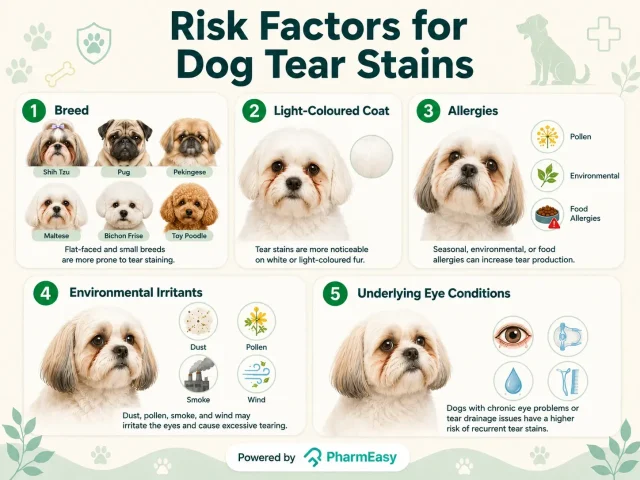
Certain dogs are more likely to develop tear stains than others. Common risk factors include1,5,8,9:
A veterinarian can usually identify tear stains by examining your dog and asking about their health history. The important step is to find out whether too many tears, poor tear drainage, or another eye condition is causing the staining. Tests may include10:
Treatment depends on why your dog is tearing. Common dog tear stain treatment and care options include:
Note: Do not use over-the-counter tear stain products, especially products used near the eyes, unless your veterinarian says they are safe for your dog.
Wondering how to remove tear stains from dogs? These gentle steps may help1:

Although tear stains cannot always be prevented, these simple measures can help reduce their recurrence1:
Also Read: How to Trim Dog Nails Safely at Home
Occasional tear stains on dogs are usually not a cause for concern. However, you should contact a veterinarian if your dog has1,6,9:
Tear stains on dogs are a common concern, especially in certain breeds, and are often harmless. However, persistent or excessive tearing can sometimes indicate an underlying eye or health problem that requires veterinary attention.
Many pet owners ask how to get rid of tear stains on dogs, and the key is to keep the eye area clean while addressing any underlying eye or health issues. If tear stains are accompanied by redness, swelling, pain, or abnormal discharge, consult your veterinarian promptly to ensure your pet receives the appropriate care.
Also Read: Tick Fever in Dogs: Symptoms, Management & Care Tips for Dog Parents
No specific food directly causes tear stains. However, food allergies or sensitivities can lead to excessive tearing, which may contribute to tear staining. Common food allergens in dogs include chicken, beef, dairy products, eggs, soy, lamb, and wheat1. If you suspect a food allergy, consult your veterinarian before changing your dog’s diet.
Tear stains are not permanent. They usually fade as the stained fur grows out or is trimmed. Regular cleaning and treatment of the underlying cause can help prevent new stains from forming1.
Tear stains themselves are not painful. However, if they are caused by an eye infection, blocked tear ducts, allergies, or another eye condition, your dog may experience discomfort that requires veterinary treatment1,5,9.
Tear stains can occur in dogs of any coat colour. They are easier to see on white or light-coloured fur, but dogs with darker coats can also have them. Breeds commonly prone to tear staining include Bulldogs, Boxers, Pekingese, Pugs, Bullmastiffs, Samoyeds, Maltese, Shih Tzus, Boston Terriers, Bichon Frises, and Standard, Miniature, and Toy Poodles. Mixed-breed dogs can also develop tear stains depending on their face shape, genetics, and environment1.
You can reduce the risk of recurring tear stains by cleaning your dog’s face daily, keeping the hair around the eyes trimmed, feeding a balanced diet, minimising exposure to eye irritants, and addressing any underlying eye conditions or allergies with your veterinarian1.
Some veterinarian-approved tear stain wipes and cleansers are safe when used as directed1. However, you should avoid products containing harsh chemicals or antibiotics unless prescribed by a veterinarian. Also, never use products intended for humans around your dog’s eyes.
Disclaimer: The information provided here is for educational/awareness purposes only and is not intended to be a substitute for medical treatment by a healthcare professional and should not be relied upon to diagnose or treat any medical condition. The reader should consult a registered medical practitioner to determine the appropriateness of the information and before consuming any medication. PharmEasy does not provide any guarantee or warranty (express or implied) regarding the accuracy, adequacy, completeness, legality, reliability or usefulness of the information; and disclaims any liability arising thereof.
Links and product recommendations in the information provided here are advertisements of third-party products available on the website. PharmEasy does not make any representation on the accuracy or suitability of such products/services. Advertisements do not influence the editorial decisions or content. The information in this blog is subject to change without notice. The authors and administrators reserve the right to modify, add, or remove content without notification. It is your responsibility to review this disclaimer regularly for any changes.


Comments

Leave your comment...
You may also like

























Comments