




Ovarian Cancer: Symptoms, Causes, Types, Stages, and Treatment Options
By Dr. Charmi Shah +2 more

Medically reviewed by Dr. Charmi Shah
Last updated: Sep 23, 2026 Published on: Sep 23, 2026


Get,

to manage your symptom
Get your,

4 Cr+ families
benefitted

OTP sent to 9988776655



You’ve successfully subscribed to receive
doctor-approved tips on
Whatsapp

Get ready to feel your best.


Register to Avail the Offer
Send OTPBy continuing, you agree with our Privacy Policy and Terms and Conditions
Hi There,
Sign up on PharmEasy now!!


Trusted by 4 crore+ families

OTP sent to 9988776655
You have unlocked 25% off on medicines


Code: NU25

By Dr. Charmi Shah +2 more
Table of Contents
Bloating, abdominal discomfort, or changes in the appetite in women may seem like digestive issues; however, if they are unusual for you and persist for longer than 2 weeks, they should be taken seriously. While these symptoms can have many causes, persistent or unusual changes may sometimes indicate ovarian cancer1. This blog explores the common signs of ovarian cancer, risk factors, diagnosis and treatment of ovarian cancer, and can help you understand what to look out for and when to seek medical advice.

Ovarian cancer is a cancer that starts in the ovaries, two small organs in the female reproductive system that produce eggs and hormones2. It develops when abnormal cells grow uncontrollably in the ovary and form a tumour3. Some ovarian cancers may start in the fallopian tubes (small tubes that connect the ovaries to the womb) or nearby peritoneal tissues4.
Although ovarian cancer cannot always be prevented, knowing the signs of ovarian cancer and recognising changes in your body can help you seek medical advice when needed. The common and possible ovarian cancer symptoms include1,5:
It is important to pay attention to symptoms that are new, persistent, occur more frequently than usual, or represent a noticeable change from your normal pattern.
Note: These symptoms may also be caused by conditions other than ovarian cancer and are not just ovarian cancer symptoms5.
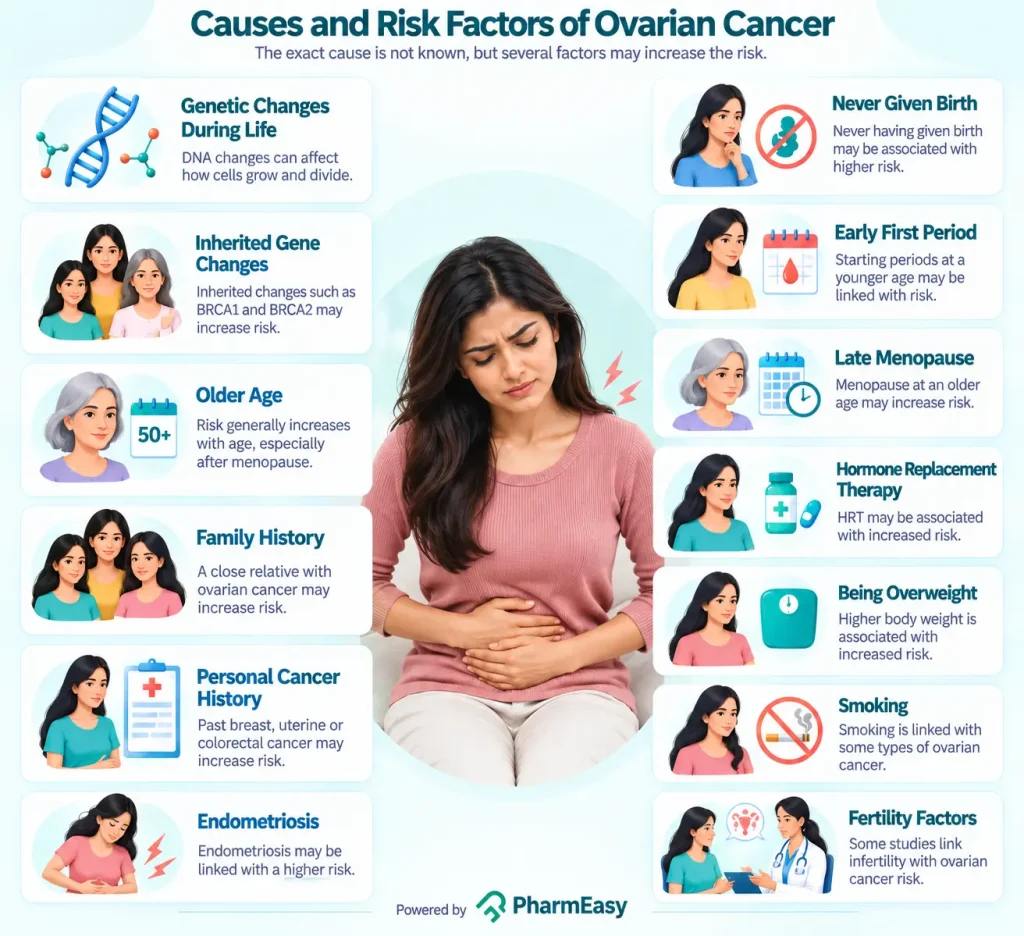
The exact cause of ovarian cancer is not exactly known. Several factors may increase the chance of developing ovarian cancer. Let’s have a look at ovarian cancer risk factors:
Note: Having one or more risk factors does not mean that a woman will develop ovarian cancer. Some women may develop the disease without having any known risk factors6.
Ovarian cancer is grouped into different types depending on the cells where the cancer starts. The three main types are9:
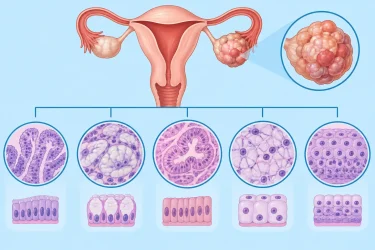
This is the most common type of ovarian cancer. It begins in the cells that form the outer covering of the ovary. The different types of epithelial ovarian cancer include9,10:
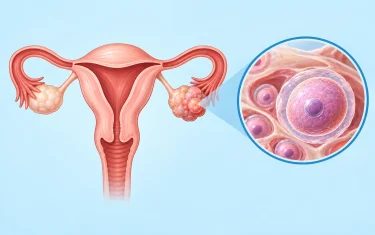
This is a less common type that starts in the cells that normally develop into eggs. It is more often found in teenagers and younger women9.
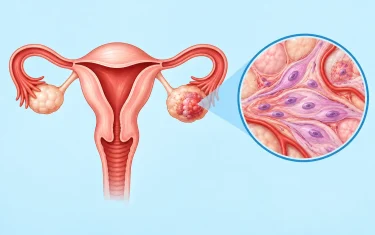
This rare type develops in the cells that support the ovary and help it produce hormones. It develops in the tissues that support the ovaries and may be diagnosed at an early stage9.
Together, these three groups make up most ovarian cancers. Some cancers found in the ovary may also have started in another part of the body and then spread to the ovary.
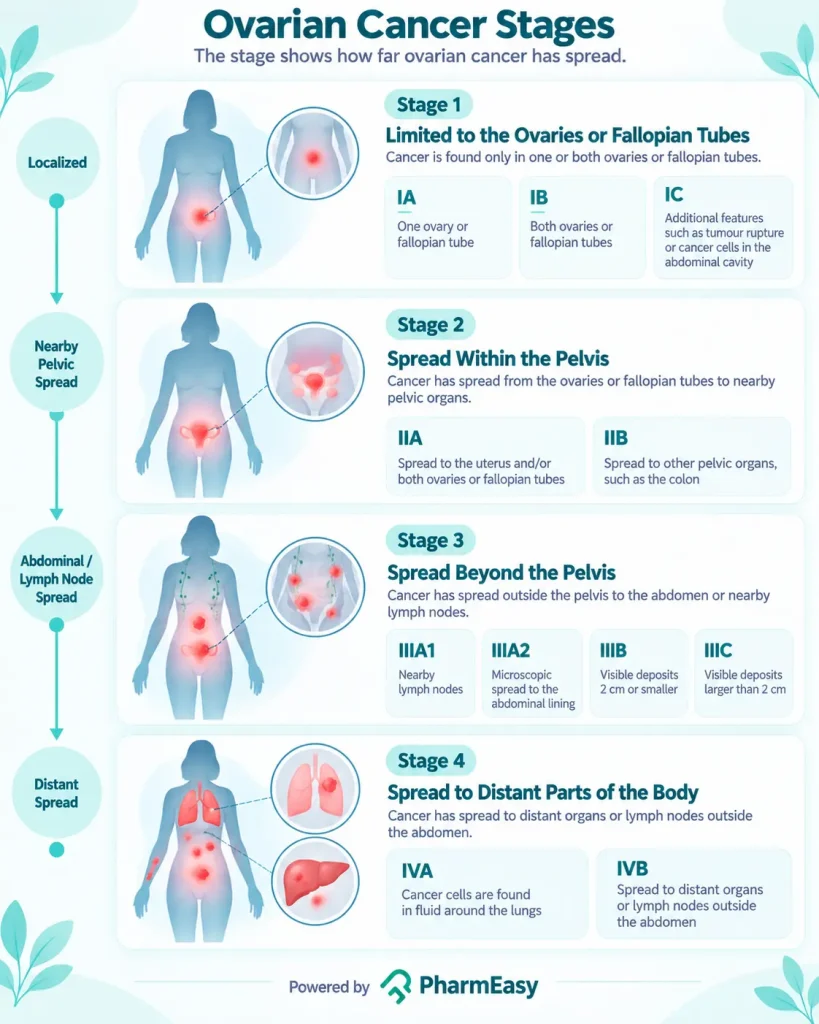
Ovarian cancer is usually divided into four stages, based on how far it has spread5.
Knowing the ovarian cancer stages helps doctors determine the right treatment options.
If a doctor suspects ovarian cancer, they may recommend a few tests for ovarian cancer diagnosis. These include:
Ovarian cancer treatment varies from person to person. It depends on the type and stage of the cancer, its location, whether it has spread, and the person’s overall health. A specialist team will discuss the most suitable treatment and what to expect5. The common options include:

Surgery is a common treatment for ovarian cancer and aims to remove as much of the cancer as possible. Depending on the type and stage of the cancer, this may involve removing one or both ovaries, the fallopian tubes, the uterus, or nearby tissues.

Chemotherapy uses medicines to stop cancer cell growth by stopping them from multiplying or killing them. It may be given before or after surgery and can also be used if the cancer returns.

These medicines target specific cancer cells or other type of cells that help cancer cells grow. They may be offered to some people with advanced or recurrent ovarian cancer.

Radiotherapy uses high-energy radiation to destroy cancer cells. It is not usually the main treatment for ovarian cancer, but it may sometimes be used to control symptoms or treat cancer that has spread to another part of the body.

This treatment uses substances to boost or direct the body’s immune system to help fight cancer cells5.

Some of the ovarian cancers develop or grow using hormones such as estrogen. Hormone therapy may be used to block these hormones so that the cancer does not grow.

If ovarian cancer comes back, the treatment will depend on where it has returned, previous treatments and the person’s overall health. Options may include chemotherapy, targeted therapy, hormone therapy or further surgery14.
Not everyone will need all these treatments. The Gynaecologic oncology team will explore options available for each individual and, based on the possible benefits and side effects of each, will help the individual decide on the most suitable approach to remove as much of the cancer as possible (cytoreduction).
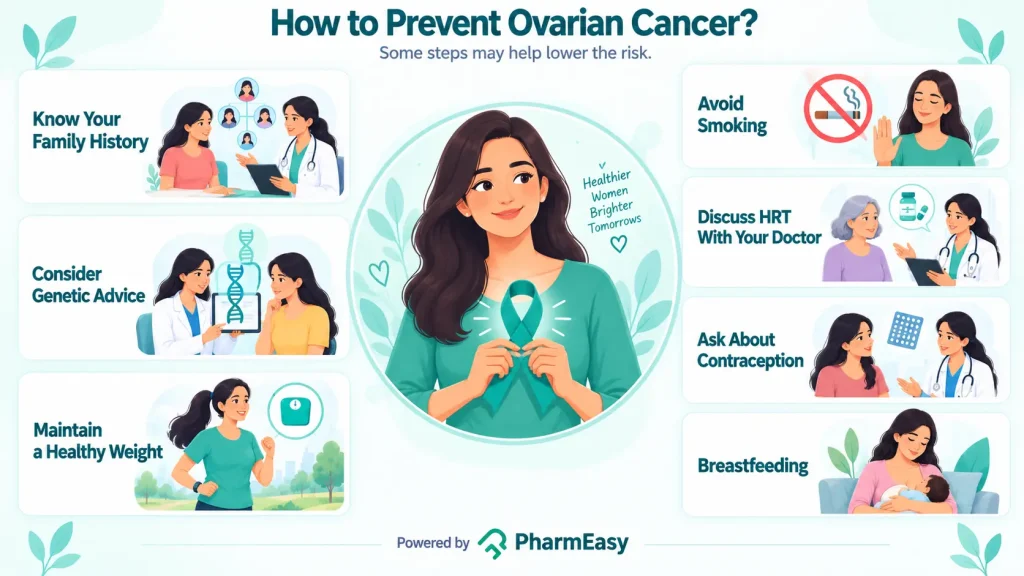
There is no certain way to prevent ovarian cancer, but some steps may help lower its chance or help early diagnosis15. These include:
No method can completely prevent ovarian cancer, so knowing the symptoms and getting unusual changes checked is important.
Also Read: Common Cancer Symptoms and Warning Signs in Women
Speak to your doctor if you notice symptoms such as the following that are unusual for you, last for 2 weeks or longer, become more frequent, or do not improve1:
These symptoms can have many causes and do not necessarily mean ovarian cancer. However, if they are unusual for you or persist, it is important to speak to your doctor.
Ovarian cancer may be hard to spot because its early signs can resemble common stomach or urinary problems. Being aware of changes such as persistent bloating, pelvic or tummy discomfort, reduced appetite or feeling full sooner than usual can help you recognise when you may need medical attention. Talking to a doctor about symptoms that don’t settle can help identify the underlying cause and ensure you get the right care early. Knowing your family history and personal risk can also help you discuss any concerns with your doctor.
Survival rates depend largely on the stage and type of ovarian cancer. Earlier-stage ovarian cancer generally has better survival outcomes than cancer diagnosed at a later stage18.
Ovarian cancer can be treated with surgery, chemotherapy and, for some people, targeted therapy. Early detection is generally linked with a better prognosis19.
Ovarian cancer can sometimes be genetic. Changes in genes such as BRCA1 and BRCA2 can increase the risk of developing ovarian cancer2.
Pelvic organs prolapse is not usually a sign of ovarian cancer20. It occurs when the womb, bladder or bowel bulges into the vagina because the supporting tissues have weakened. Symptoms of prolapse can include a feeling of heaviness or pressure in the lower abdomen or vagina, a bulge or lump in or around the vagina, constipation, or problems passing urine21.
HPV is mainly linked to cervical and some other cancers22 and is not usually known to cause ovarian cancer.
Yes. Advanced ovarian cancer can spread to the lungs and other parts of the body23 .
Some studies have suggested a possible link between polycystic ovary syndrome (PCOS) and ovarian cancer risk, particularly in younger (premenopausal) women. However, the evidence is limited and more research is needed to clarify whether PCOS is associated with an increased risk of ovarian cancer24.
1. CDC. Symptoms of Ovarian Cancer. Ovarian Cancer. February 26, 2025. Accessed September 3, 2026. https://www.cdc.gov/ovarian-cancer/symptoms/index.html
2. Ovarian Cancer. Accessed September 3, 2026. https://medlineplus.gov/ovariancancer.html
3. What Is Cancer? – NCI. September 17, 2007. Accessed September 3, 2026. https://www.cancer.gov/about-cancer/understanding/what-is-cancer
4. Ovarian, Fallopian Tube, & Primary Peritoneal Cancers Prevention – NCI. Accessed September 8, 2026. https://www.cancer.gov/types/ovarian/patient/ovarian-prevention-pdq?
5. Treatment of Ovarian Epithelial, Fallopian, & Peritoneal Cancers – NCI. February 10, 2026. Accessed September 3, 2026. https://www.cancer.gov/types/ovarian/patient/ovarian-epithelial-treatment-pdq
6. CDC. Ovarian Cancer Risk Factors. Ovarian Cancer. September 22, 2025. Accessed September 3, 2026. https://www.cdc.gov/ovarian-cancer/risk-factors/index.html
7. Ovarian cancer – Causes. nhs.uk. October 20, 2017. Accessed September 3, 2026. https://www.nhs.uk/conditions/ovarian-cancer/causes/
8. Salehi F, Dunfield L, Phillips KP, Krewski D, Vanderhyden BC. Risk factors for ovarian cancer: an overview with emphasis on hormonal factors. J Toxicol Environ Health B Crit Rev. 2008;11(3-4):301-321. doi:10.1080/10937400701876095 https://pubmed.ncbi.nlm.nih.gov/18368558/
9. 3 types of ovarian cancer, explained. NIH MedlinePlus Magazine. Accessed September 3, 2026. https://magazine.medlineplus.gov/article/3-types-of-ovarian-cancer-explained
10. Tumor Morphology | SEER Training. Accessed September 3, 2026. https://training.seer.cancer.gov/ovarian/abstract-code-stage/ovarian-morphology.html?
11. Ovarian Cancer Early Detection, Diagnosis, and Staging. Accessed September 3, 2026. https://www.cancer.org/cancer/types/ovarian-cancer/detection-diagnosis-staging.html
12. Ovarian cancer – Tests and next steps. nhs.uk. February 15, 2022. Accessed September 3, 2026. https://www.nhs.uk/conditions/ovarian-cancer/tests-and-next-steps/
13. Expert Panel on GYN and OB Imaging, Stein EB, Venkatesan AM, et al. ACR Appropriateness Criteria® Staging and Follow-Up of Ovarian Cancer: 2025 Update. J Am Coll Radiol JACR. 2025;22(11S):S689-S698. doi:10.1016/j.jacr.2025.08.033 https://pubmed.ncbi.nlm.nih.gov/41193052/
14. Treatment if your ovarian cancer comes back. Accessed September 3, 2026. https://www.cancerresearchuk.org/about-cancer/ovarian-cancer/treatment/if-your-cancer-comes-back
15. Causes, Risk Factors, and Prevention of Ovarian Cancer. Accessed September 3, 2026. https://www.cancer.org/cancer/types/ovarian-cancer/causes-risks-prevention.html
16. Ovarian cancer – Causes. nhs.uk. October 20, 2017. Accessed August 27, 2026. https://www.nhs.uk/conditions/ovarian-cancer/causes/
17. CDC. Reducing Risk for Ovarian Cancer. Ovarian Cancer. September 23, 2025. Accessed August 27, 2026. https://www.cdc.gov/ovarian-cancer/prevention/index.html
18. Yeole BB, Kumar AVR, Kurkure A, Sunny L. Population-based survival from cancers of breast, cervix and ovary in women in Mumbai, India. Asian Pac J Cancer Prev APJCP. 2004;5(3):308-315. https://pubmed.ncbi.nlm.nih.gov/15373712/
19. CDC. Treatment of Ovarian Cancer. Ovarian Cancer. April 23, 2026. Accessed September 4, 2026. https://www.cdc.gov/ovarian-cancer/treatment/index.html
20. DeMarco C. Can pelvic organ prolapse be a sign of cancer? UT MD Anderson. Accessed September 3, 2026. https://www.mdanderson.org/cancerwise/can-pelvic-organ-prolapse-be-a-sign-of-cancer.h00-159618645.html
21. Pelvic organ prolapse – NHS. Accessed September 3, 2026. https://www.nhs.uk/conditions/pelvic-organ-prolapse/
22. CDC. Cancers Caused by HPV. Human Papillomavirus (HPV). March 3, 2025. Accessed September 4, 2026. https://www.cdc.gov/hpv/about/cancers-caused-by-hpv.html
23. Gardner AB, Charo LM, Mann AK, Kapp DS, Eskander RN, Chan JK. Ovarian, uterine, and cervical cancer patients with distant metastases at diagnosis: most common locations and outcomes. Clin Exp Metastasis. 2020;37(1):107-113. doi:10.1007/s10585-019-10007-0 https://pubmed.ncbi.nlm.nih.gov/31758289/
24. Li Z, Wang YH, Wang LL, et al. Polycystic ovary syndrome and the risk of endometrial, ovarian and breast cancer: An updated meta-analysis. Scott Med J. 2022;67(3):109-120. doi:10.1177/00369330221107099 https://pubmed.ncbi.nlm.nih.gov/35686317/
Disclaimer: The information provided here is for educational/awareness purposes only and is not intended to be a substitute for medical treatment by a healthcare professional and should not be relied upon to diagnose or treat any medical condition. The reader should consult a registered medical practitioner to determine the appropriateness of the information and before consuming any medication. PharmEasy does not provide any guarantee or warranty (express or implied) regarding the accuracy, adequacy, completeness, legality, reliability or usefulness of the information; and disclaims any liability arising thereof.
Links and product recommendations in the information provided here are advertisements of third-party products available on the website. PharmEasy does not make any representation on the accuracy or suitability of such products/services. Advertisements do not influence the editorial decisions or content. The information in this blog is subject to change without notice. The authors and administrators reserve the right to modify, add, or remove content without notification. It is your responsibility to review this disclaimer regularly for any changes.


Comments

Leave your comment...
You may also like

























Comments