




Cat Vomiting: Causes, Symptoms, Treatment & Home Remedies
By Dr. Ramani Jairam +2 more

Medically reviewed by Dr. Ramani Jairam
Last updated: Sep 7, 2026 Published on: Jun 18, 2026


Get,

to manage your symptom
Get your,

4 Cr+ families
benefitted

OTP sent to 9988776655



You’ve successfully subscribed to receive
doctor-approved tips on
Whatsapp

Get ready to feel your best.


Register to Avail the Offer
Send OTPBy continuing, you agree with our Privacy Policy and Terms and Conditions
Hi There,
Sign up on PharmEasy now!!


Trusted by 4 crore+ families

OTP sent to 9988776655
You have unlocked 25% off on medicines


Code: NU25

By Dr. Ramani Jairam +2 more
Table of Contents
Seeing your little furball vomit on the floor, carpet, or bed can be really alarming. This can instantly raise concerns for pet parents. While occasional vomiting may happen due to hairballs or eating too fast, frequent or repeated episodes may indicate an underlying health concern that needs veterinary attention.
Studies suggest that digestive complaints, including cat vomiting, are among the common reasons cats are taken to veterinary clinics. Many pet owners often wonder, why do cats vomit even when they seem otherwise healthy. The answer can vary from mild stomach irritation to infections, food intolerance, parasites, or chronic medical conditions1.
In this article, we will discuss the causes of cat vomiting, common symptoms, diagnosis, cat vomiting treatment options, supportive home care tips, and what to do when a cat vomits frequently.
Vomiting in cats refers to the forceful expulsion of stomach contents through the mouth. It usually involves abdominal contractions, nausea, and retching1.
It is important to understand the difference between vomiting and regurgitation. Regurgitation usually happens without forceful abdominal movements and often involves undigested food returning soon after eating2.
Cat vomiting may appear in different forms depending on the underlying cause, frequency, and the material being expelled. Understanding the different types of vomiting helps to reach an accurate diagnosis.
There can be several causes of cat vomiting, ranging from mild digestive upset to more serious illnesses. Common causes may include3:
Pet parents who frequently ask why do cats vomit should know that repeated vomiting is not considered normal and may need veterinary attention.
The symptoms associated with cat vomiting may vary depending on the underlying cause. Common signs may include3:
Persistent symptoms should not be overlooked, particularly in kittens, old cats, or those with pre-existing health conditions.
Veterinarians may diagnose the cause of vomiting through:
The veterinarian may also ask how often the cat is vomiting, what the vomit looks like, and whether there are any other associated symptoms. Proper diagnosis is important because many conditions may have similar symptoms.
The approach to cat vomiting treatment may depend on the underlying cause, the severity of symptoms, and the cat’s overall condition. Care for your sick cat may include supportive measures such as4:
In severe cases, hospitalisation and advanced supportive care may be necessary. Pet parents should avoid giving human medications to cats without professional guidance, as some medicines may be unsafe.
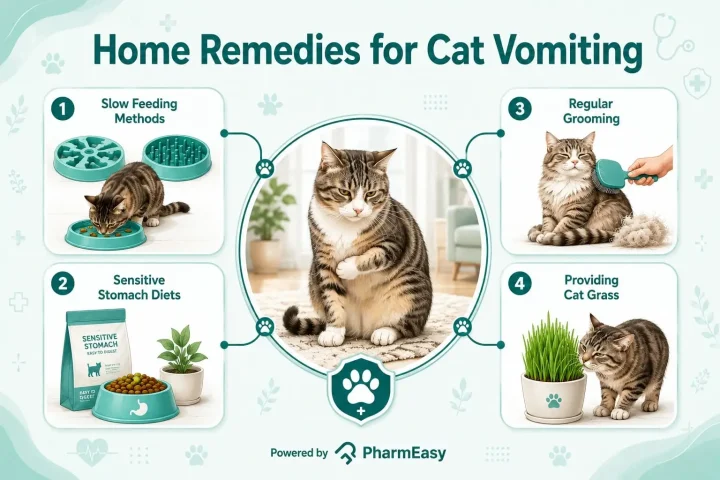
Certain supportive home remedies for cat vomiting may help in mild cases. However, these measures are not substitutes for veterinary care if symptoms continue or worsen3.
Further studies are needed to establish the effects of supportive home remedies for cat vomiting on feline digestive health.
Pet parents often search for how to stop cat vomiting safely. Based on the underlying cause of vomiting, helpful measures may include4:
If vomiting occurs frequently or is associated with other symptoms, professional evaluation is recommended.
Seek veterinary attention if your cat3:
Pet parents wondering what to do when cat vomits repeatedly should avoid delaying veterinary consultation, especially in kittens and elderly cats.
Cat vomiting can occur due to several reasons, such as hairballs, digestive upset, infections, dietary issues, or chronic health conditions. While occasional vomiting may sometimes occur in otherwise healthy cats, repeated or persistent vomiting should not be overlooked.
Understanding the causes of cat vomiting, recognising warning signs early, and seeking timely veterinary guidance may help support better outcomes and overall wellbeing of your cat.
If vomiting persists or your cat develops additional symptoms, consulting a qualified veterinarian is the safest approach.
Also Read: Why Do Dogs Vomit? Causes, Types, Treatment & Home Remedies
Vomiting in cats may be serious if it occurs frequently, contains blood, is accompanied by symptoms like lethargy, diarrhea, weight loss, or loss of appetite, or if the cat cannot keep food or water down. Vomiting in kittens and older cats may also require prompt veterinary attention3,4.
Veterinarians may sometimes recommend easily digestible diets (such as meat-based baby food without onion/garlic powder, or boiled chicken), depending on the cause4. However, all dietary changes should be made under professional guidance.
Occasional hairball-related vomiting may occur in some cats. However, persistent vomiting is not considered normal3.
Small amounts of hairball-related vomit may occasionally occur. However, if this happens frequently, it should be evaluated by a veterinarian3,4.
Some cats may vomit after eating too quickly, overeating, or consuming food that does not suit them3,4.
Stress may contribute to digestive upset in some cats8.
Some supportive home care measures may help mild digestive upset, but persistent vomiting requires veterinary evaluation3.
Vomiting multiple times in a short period or repeatedly over days should be assessed by a professional3.
Disclaimer: The information provided here is for educational/awareness purposes only and is not intended to be a substitute for medical treatment by a healthcare professional and should not be relied upon to diagnose or treat any medical condition. The reader should consult a registered medical practitioner to determine the appropriateness of the information and before consuming any medication. PharmEasy does not provide any guarantee or warranty (express or implied) regarding the accuracy, adequacy, completeness, legality, reliability or usefulness of the information; and disclaims any liability arising thereof.
Links and product recommendations in the information provided here are advertisements of third-party products available on the website. PharmEasy does not make any representation on the accuracy or suitability of such products/services. Advertisements do not influence the editorial decisions or content. The information in this blog is subject to change without notice. The authors and administrators reserve the right to modify, add, or remove content without notification. It is your responsibility to review this disclaimer regularly for any changes.


Comments

Leave your comment...
You may also like

























Comments