




Chandipura Virus (CHPV): Symptoms, Causes, Transmission, Treatment & Prevention
By Dr. Ritika Singh +2 more

Medically reviewed by Dr. Ritika Singh
Last updated: Aug 21, 2026 Published on: Aug 12, 2026


Get,

to manage your symptom
Get your,

4 Cr+ families
benefitted

OTP sent to 9988776655



You’ve successfully subscribed to receive
doctor-approved tips on
Whatsapp

Get ready to feel your best.


Register to Avail the Offer
Send OTPBy continuing, you agree with our Privacy Policy and Terms and Conditions
Hi There,
Sign up on PharmEasy now!!


Trusted by 4 crore+ families

OTP sent to 9988776655
You have unlocked 25% off on medicines


Code: NU25

By Dr. Ritika Singh +2 more
Table of Contents
During an outbreak, it is very common for parents to worry if their child suddenly develops fever, vomiting, or any unusual symptoms.
Chandipura virus (CHPV) is a virus that can cause an acute illness, particularly in children. In some cases, it can progress rapidly and be fatal1. Therefore, understanding its symptoms, how it spreads, and when medical care is needed can help families respond without unnecessary panic.

This blog explains the causes, transmission, symptoms, management, and prevention of Chandipura virus infection.
CHPV is a RNA virus classified under the genus vesiculovirus that can cause an acute infection, mainly affecting children. It belongs to the Rhabdoviridae family and is primarily transmitted by the bites of infected sandflies. Although sometimes certain mosquito species may also contribute to its spread1,2.
The infection can range from mild, flu-like symptoms to a severe illness affecting the brain, known as acute encephalitis (AES)2. And because the illness can progress quickly, recognising warning signs and seeking medical care early is important.
Did You Know?
CHPV is mainly spread through the bite of infected insects. The virus does not usually spread directly from one person to another and is strictly vector-borne. Here are some ways that this virus can spread4:
CHPV infection occurs when a person is bitten by a vector carrying the Chandipura virus. Common culprits include4:
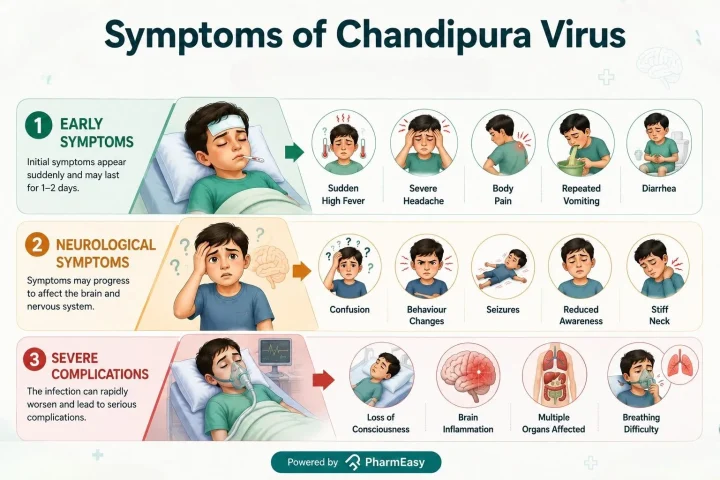
CHPV infection can begin suddenly with fever and other general symptoms, then progress rapidly to neurological symptoms. Incubation Period for CHPV infection is 24-48 hrs. Initial symptoms of Chandipura virus include4,5:
It may then progress to more severe symptoms like4,5:
Doctors generally consider the child’s symptoms, illness history, and possible exposure to vectors before ordering specific tests. Diagnoses may include tests like3,6:
Note: Since several infections can cause symptoms similar to Chandipura virus symptoms, doctors may also test for other causes of AES, depending on the clinical situation and local outbreak patterns.
CHPV infection may initially look like a common fever, but it can progress rapidly and cause serious neurological symptoms. The key differences are presented in the table below1,7.
| Feature | Common Fever | Chandipura Virus Infection |
| Cause | Can be caused by many infections (including common viral or bacterial infections) | Caused by CHPV |
| Fever | Usually the main symptom | Fever is often accompanied by other symptoms |
| Other symptoms | May include tiredness, body aches, headache, cough, or sore throat | Headache, vomiting, diarrhoea, and other flu-like symptoms may occur |
| Neurological symptoms | Usually absent | Seizures, altered consciousness, or coma may develop |
| Progression | Often improves as the underlying infection resolves | Can progress rapidly, sometimes within 48 to 72 hours |
| Who is commonly affected? | People of all ages, depending on the infection | Reported predominantly in children under 15 years |
| Diagnosis | Usually based on symptoms (testing depends on the suspected cause) | Requires laboratory testing such as RT-PCR or IgM testing |
| Treatment | Depends on the underlying cause (many common viral fevers need supportive care) | No specific antiviral treatment (early supportive and intensive care is important) |
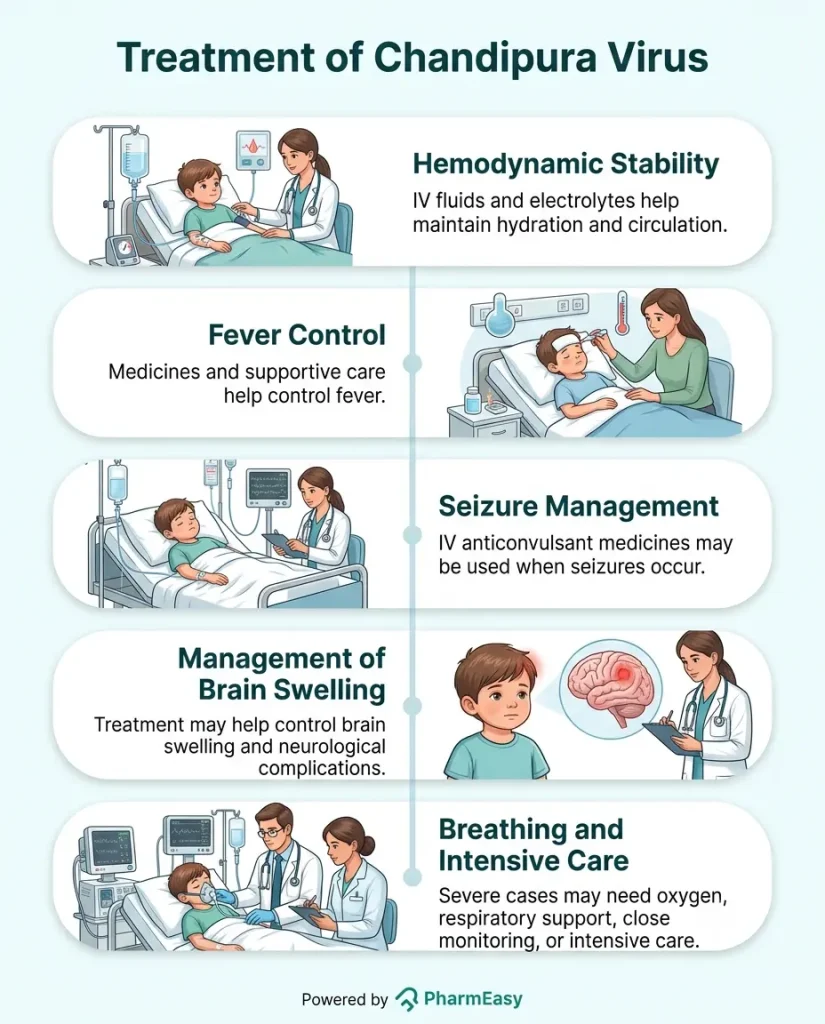
There is currently no specific antiviral treatment or approved vaccine for CHPV infection. So, the management mainly focuses on supportive care and managing complications, particularly when the infection causes encephalitis. Chandipura virus treatment or management options include1:
Most concern around CHPV infection comes from its potential to progress rapidly and affect the brain and nervous system, particularly in children. Possible complications include1,4,8:
Note: CHPV infection can also be fatal, particularly when severe encephalitis develops and progresses rapidly.
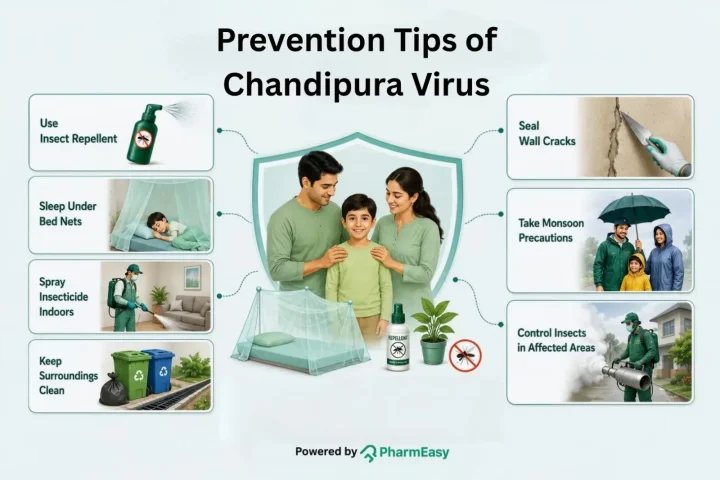
Since there is currently no licensed vaccine specifically for CHPV, prevention focuses mainly on reducing exposure to infected vectors, particularly sandflies. Practical Chandipura virus prevention measures include1,8:
Note: There is currently no specific vaccine or proven preventive medicine for CHPV, so reducing contact with infected vectors remains the key prevention strategy.
There can be confusion and fear around CHPV, especially during outbreaks. So, knowing what is true can help people take sensible precautions without unnecessary panic.
| Myth | Fact |
| CHPV spreads easily from person to person. | CHPV is primarily a vector-borne infection. There is no established evidence of routine human-to-human transmission1. |
| Only children can get CHPV virus. | Children (particularly those under 15 years) have been disproportionately affected in reported outbreaks, but CHPV infection is not exclusively limited to children9. |
| A mosquito bite always causes CHPV infection. | A bite does not automatically mean infection. CHPV transmission requires exposure to a virus-carrying vector and is more commonly associated with infected sandflies1. |
| There is a specific medicine that cures CHPV. | There is currently no established specific antiviral for CHPV. Management is mainly supportive and focuses on managing complications1. |
| A child with fever can always be monitored at home. | Fever accompanied by seizures, confusion, reduced consciousness, or other neurological symptoms that requires urgent medical care4. |
CHPV infection can progress rapidly, particularly when it affects the brain. You should seek urgent medical care if a child with fever develops8:
CHPV is a rare but serious viral infection that can particularly affect children and may progress rapidly to neurological complications such as encephalitis and seizures. Therefore, recognising early symptoms and seeking medical care is important, especially when fever is accompanied by neurological changes.
Since there is currently no licensed vaccine or specific antiviral treatment, protective measures against insect bites, maintaining good environmental sanitation, and following public-health advice during outbreaks remain key preventive measures that parents should follow.
Also Read: What Is Hantavirus? Symptoms, Causes, & Effective Prevention
CHPV and rabies virus are different viruses, although both belong to the Rhabdoviridae family1,10.
Currently, no licensed vaccine is available specifically for CHPV. Vaccine candidates are still under research and development1,3.
CHPV is primarily vector-borne, with transmission is associated mainly with infected sandflies. There is no established evidence of routine person-to-person transmission1.
Children (particularly those under 15 years of age) have been commonly affected during reported outbreaks1,4.
CHPV can progress very rapidly. Fever generally persists for around 2 to 3 days, while neurological involvement may develop within 48 to 72 30 hours of fever onset in severe cases8. Therefore, immediate medical attention is necessary.
There are currently no specific antivirals proven to cure CHPV. So, management is primarily supportive and focuses on managing symptoms and complications, particularly neurological complications1.
Disclaimer: The information provided here is for educational/awareness purposes only and is not intended to be a substitute for medical treatment by a healthcare professional and should not be relied upon to diagnose or treat any medical condition. The reader should consult a registered medical practitioner to determine the appropriateness of the information and before consuming any medication. PharmEasy does not provide any guarantee or warranty (express or implied) regarding the accuracy, adequacy, completeness, legality, reliability or usefulness of the information; and disclaims any liability arising thereof.
Links and product recommendations in the information provided here are advertisements of third-party products available on the website. PharmEasy does not make any representation on the accuracy or suitability of such products/services. Advertisements do not influence the editorial decisions or content. The information in this blog is subject to change without notice. The authors and administrators reserve the right to modify, add, or remove content without notification. It is your responsibility to review this disclaimer regularly for any changes.


Comments

Leave your comment...
You may also like
























Comments