




Pandan Leaves: Benefits, Uses, Side Effects & More
By Dr. Raghuveer +2 more

Medically reviewed by Dr. Raghuveer
Last updated: Sep 11, 2026 Published on: Jul 7, 2026


Get,

to manage your symptom
Get your,

4 Cr+ families
benefitted

OTP sent to 9988776655



You’ve successfully subscribed to receive
doctor-approved tips on
Whatsapp

Get ready to feel your best.


Register to Avail the Offer
Send OTPBy continuing, you agree with our Privacy Policy and Terms and Conditions
Hi There,
Sign up on PharmEasy now!!


Trusted by 4 crore+ families

OTP sent to 9988776655
You have unlocked 25% off on medicines


Code: NU25

By Dr. Raghuveer +2 more
Table of Contents
Pandan leaves are tropical aromatic leaves that have, for years, been highly valued across Southeast Asia for their use in culinary and traditional practices. Known as the herbs of the east, they are found and used in various tropical regions such as Malaysia, Singapore, Sri Lanka, India, Thailand, parts of South Asia, Africa, and Central America1.
This article will explore the nutritional value of pandan leaves, their benefits, side effects, how to use them and precautions to be taken while using them.
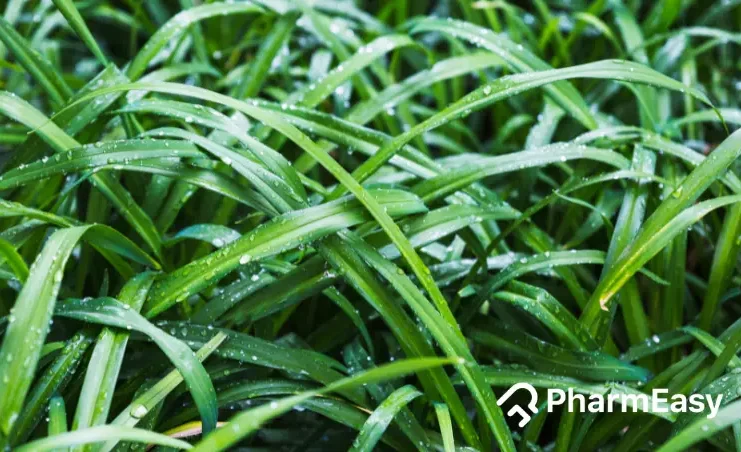
Pandan leaves are leaves of the herb Pandanus amaryllifolius, that is indigenous to the Maluku islands of Indonesia. Their taste is often compared to vanilla due to their sweet and grassy undertone. Thus, these leaves are used as a natural flavouring and colouring agent in various food products such as rice, desserts, and sweets. They also have traditionally been used to treat headaches, fever, inflammation. They are rich in antioxidant compounds that contribute to their pharmacological properties1.
Pandan leaf powder is high in fibre, composed of carbohydrates (60.3%), proteins (12.73%), fats (5.28%), crude fibre (6.38%), ash (1.45%) and some important minerals and antioxidants1.The following are some important nutrients present in pandan leaf powder:
Pandan leaves are said to have certain potential health benefits owing to their rich nutrient and antioxidant profile. Pandan leaves benefits may include:
Other Pandan leaves uses include:
Note: While these health effects of pandan leaves have been studied, most research is still in the initial stages, and their use is more common in ayurvedic or traditional medications mainly for pain relief. Therefore, these should not be considered as a substitute for any medication/medical advice, and a doctor must always be consulted before including them in routine diet especially if you have any medical condition.
There is limited evidence for the side effects of pandan leaves in humans. However, the following should be kept in mind while using Pandan leaves:
In general, excessive use of herbal supplements is also linked to kidney and liver injury and should be avoided by individuals who have chronic kidney disease or liver disorders9.
Therefore, it is best to consume Pandan leaves in moderation and discuss with a doctor in case of any chronic medical conditions. Always follow the dosage instructions advised by a healthcare provider/ayurvedic practitioner to avoid the risk of any side effects.
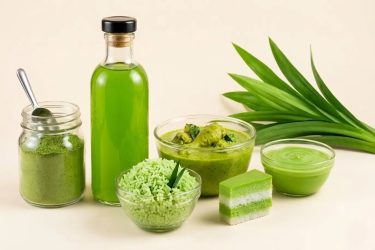
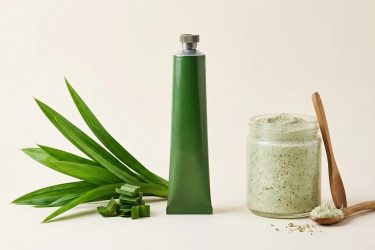
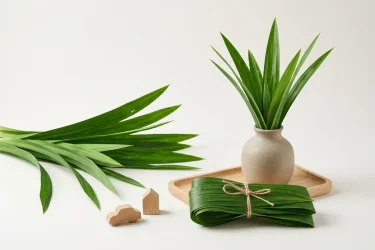
Pandan leaves are available as fresh leaves, powder, and tinctures. They can be incorporated in your daily life in the following ways:
Although pandan leaves are usually considered safe, there are some precautions that should be taken while using them:
Also Read: Lemongrass: Uses, Benefits, Side Effects and More!
There is no current evidence of drug interactions involving pandan leaves. However, pandan leaves have potential hypoglycaemia effects and hence can amplify the response that anti-diabetic drugs will have on the body1. They might also enhance the effect of blood pressure medications5. Therefore, individuals taking prescription medicines, such as antidiabetic or antihypertensive drugs, should consult their doctor before using pandan leaves.
There is not sufficient evidence regarding the side effects of pandan leaves on human health. Thus, individuals should consult their doctor before including them in their diet, particularly if they are on medications such as antidiabetic medications. If side effects such as an allergic reaction, or headache, dizziness, nausea, vomiting, and diarrhoea are seen when consuming pandan leaves, you should consult your doctor as soon as possible. When using topically, if any allergic reactions appear on the skin, immediately consult your doctor.
Also Read: Moringa Leaves – Health Benefits That You Should Know
Pandan leaves have been widely used for their flavour and aroma. They also have been used widely in traditional medicine due to their potential health benefits such as antidiabetic, antioxidant, analgesic and antimicrobial activities. They can also be used as a food preservative to avoid food borne diseases. However, like every herbal supplement, they should be used in moderation and handled properly to ensure maximum benefits. Like any herbal remedy, it is important to consult your healthcare provider before routine usage of pandan leaves, especially if you have any medical conditions.
The closest substitute to pandan leaves in terms of its aromatic and flavouring properties would be vanilla. Vanilla extract is very popular in food products such as ice-cream, cakes, chocolates, and soft drinks10.
No, pandan and lemongrass are two different plants that are found in tropical regions11.
Initial research in animals have shown beneficial effects in lowering uric acid level, however, research in humans is still limited. Therefore, individuals should consult a healthcare provider before using pandan for this purpose, and it should not be considered as an alternative to prescribed medical treatment12.
Herbal remedies should generally be avoided during pregnancy. Pregnant women should always consult their gynaecologist before consuming any natural remedies or supplements.
Yes, pandan leaves can be freeze dried for storage13.
1. Li P, Fei T, Kang J, et al. Chemical composition, bioactivity, and applications of Pandanus amaryllifolius leaves: A comprehensive review. Trends Food Sci Technol. 2026;172:105682. doi:10.1016/j.tifs.2026.105682 Available from: https://www.sciencedirect.com/science/article/abs/pii/S0924224426001548
2. Bhuyan B, Sonowal R. AN OVERVIEW OF Pandanus amaryllifolius Roxb.exLindl. AND ITS POTENTIAL IMPACT ON HEALTH. In: 2021. Accessed June 25, 2026. Available from: https://www.semanticscholar.org/paper/AN-OVERVIEW-OF-Pandanus-amaryllifolius-AND-ITS-ON-Bhuyan-Sonowal/7aca527463262b099c8a9c7c191b1e610b751119
3. Buddhakala N, Yongkhamcha B. Phytochemical constituents, and antioxidant, antidiabetic and anti-inflammatory activities of the extracts from Pandanus amaryllifolius Roxb. Journal of Herbal Medicine. 2025 Sep 25:101062. Available from: https://www.sciencedirect.com/science/article/pii/S2210803325000739
4. Wahyuni DK, Nuha GA, Atere TG, et al. Antimicrobial potentials of Pandanus amaryllifolius Roxb.: Phytochemical profiling, antioxidant, and molecular docking studies. PLoS One. 2024;19(8):e0305348. Published 2024 Aug 14. doi:10.1371/journal.pone.0305348 Available from: https://journals.plos.org/plosone/article?id=10.1371%2Fjournal.pone.0305348
5. Chiabchalard A, Nooron N. Antihyperglycemic effects of Pandanus amaryllifolius Roxb. leaf extract. Pharmacogn Mag. 2015;11(41):117-122. doi:10.4103/0973-1296.149724 Available from: https://pubmed.ncbi.nlm.nih.gov/25709220/
6. Safitri W, Putri Y, Sulistyawati RA, Sari FS, Kanita MW, Wulandari Y, Agustin WR, Sulisetyawati SD, Oktariani M. A comparative study between the effect of Pandan Wangi leaves boiled water with medication therapy on the blood pressure changes of hypertension patients. Open Access Macedonian Journal of Medical Sciences. 2021 Nov 29;9(G):317-20. Available from: https://oamjms.eu/index.php/mjms/article/view/7359
7. Lieanto C, Arief MO, Azizah FN. Solvent Types of Pandan Leaves (Pandanus amaryllifolius Roxb.) Extraction Effect on the Cutibacterium acne Activity and Development of its Spot Cream. Letters in Applied NanoBioScience. 2025;14 (4): 258 Available from: https://doi.org/10.33263/LIANBS144.258
8. Leny L, Diana VE, Ginting M, Iskandar B, Fadhila C. The effectiveness of pandan wangi leaves (Pandanus amaryllifolius Roxb.) body scrub formulation in smoothing the skin. Asian Journal of Pharmaceutical Research and Development. 2022 Feb 14;10(1):1-5. Available from: https://www.researchgate.net/publication/359354955_The_Effectiveness_of_Pandan_Wangi_Leaves_Pandanus_Amaryllifolius_RoxbBody_Scrub_Formulation_in_Smoothing_the_Skin
9. Furhad S, Bokhari A. Herbal Supplements. StatPearls. Published online September 2, 2024. Accessed June 25, 2026.Available from: https://app-statpearls-legacy-prod.azurewebsites.net/point-of-care/22811
10. Sinha AK, Sharma UK, Sharma N. A comprehensive review on vanilla flavor: Extraction, isolation and quantification of vanillin and others constituents. Int J Food Sci Nutr. 2008;59(4):299-326. doi:10.1080/09687630701539350 Available from: https://pubmed.ncbi.nlm.nih.gov/17886091/
11. Joy PP. Lemongrass. 2006. https://www.researchgate.net/publication/305495607_Lemongrass
12. Suntornsaratoon P, Bulanawichit W, Siricoon S, et al. Uricosuric, antioxidant, and anti-inflammatory properties of Pandanus amaryllifolius Roxb. extract against potassium oxonate-induced hyperuricemia in rats. Sci Rep. 2025;15(1):45700. Published 2025 Dec 25. doi:10.1038/s41598-025-27933-7 Available from: https://www.researchgate.net/publication/399070895_Uricosuric_antioxidant_and_anti-inflammatory_properties_of_Pandanus_amaryllifolius_Roxb_extract_against_potassium_oxonate-induced_hyperuricemia_in_rats
13. Adhamatika A, Murtini ES, Sunarharum WB. The effect of leaf age and drying method on physico-chemical characteristics of pandan (Pandanus amaryllifolius Roxb.) leaves powder. IOP Conf Ser Earth Environ Sci. 2021;733(1):012073. doi:10.1088/1755-1315/733/1/012073 Available from: https://iopscience.iop.org/article/10.1088/1755-1315/733/1/012073
Disclaimer: The information provided here is for educational/awareness purposes only and is not intended to be a substitute for medical treatment by a healthcare professional and should not be relied upon to diagnose or treat any medical condition. The reader should consult a registered medical practitioner to determine the appropriateness of the information and before consuming any medication. PharmEasy does not provide any guarantee or warranty (express or implied) regarding the accuracy, adequacy, completeness, legality, reliability or usefulness of the information; and disclaims any liability arising thereof.
Links and product recommendations in the information provided here are advertisements of third-party products available on the website. PharmEasy does not make any representation on the accuracy or suitability of such products/services. Advertisements do not influence the editorial decisions or content. The information in this blog is subject to change without notice. The authors and administrators reserve the right to modify, add, or remove content without notification. It is your responsibility to review this disclaimer regularly for any changes.
 1
1 
Comments

Leave your comment...
You may also like



















Comments