




Food Allergy Rash: Symptoms, Causes, Treatment & Home Remedies
By Dr. Raina N. Nahar +2 more

Medically reviewed by Dr. Raina N. Nahar
Last updated: Sep 8, 2026 Published on: Jun 12, 2026


Get,

to manage your symptom
Get your,

4 Cr+ families
benefitted

OTP sent to 9988776655



You’ve successfully subscribed to receive
doctor-approved tips on
Whatsapp

Get ready to feel your best.


Register to Avail the Offer
Send OTPBy continuing, you agree with our Privacy Policy and Terms and Conditions
Hi There,
Sign up on PharmEasy now!!


Trusted by 4 crore+ families

OTP sent to 9988776655
You have unlocked 25% off on medicines


Code: NU25

By Dr. Raina N. Nahar +2 more
Table of Contents
Have you ever noticed an itchy rash appearing after eating a particular food? This could be a sign of a food allergy rash. It may be mild in some cases, while in others it can become severe and uncomfortable1,2. To avoid such problems, it is critical to identify the particular food that is triggering the response early on1. In this blog, we will look at the symptoms, causes, treatment choices, and simple home remedies for managing food allergy rashes efficiently.

Our body always fights and tries to destroy any foreign or harmful substances that enter it in order to avoid infections and maintain good health2. A food allergy occurs when the immune system wrongly detects certain foods as harmful substances. The body responds by producing histamine, a chemical released by the white blood cells that plays a role in causing allergic reactions and inflammation symptoms. This leads to symptoms such as rashes, redness, itching, swelling, and raised bumps on the skin1,3. These reactions are referred to as food allergy rashes, which can range from mild to severe1,2.
Food allergy rash can be:
The severity of food allergy rashes varies widely from person to person and is often unpredictable. Some people may only have mild itching or a few red patches, while others may develop large hives, significant swelling, or severe allergic reactions requiring rapid medical attention2. Therefore, paying attention to when the rash appears and how it looks can help identify the food causing the allergy and guide proper treatment.
There are several types of food items which can cause food allergy. The following are a few common foods which cause mild food allergy rashes to severe ones:

Milk is the most common type of food which causes allergy. It’s mostly seen in infants and children. Cow milk contains proteins such as casein and whey. In some people these can act as allergens and trigger immune response, causing symptoms like hives, redness, itchiness, eczema, etc4.

Egg allergy is commonly caused by proteins found in egg whites, although egg yolks can also trigger reactions in some individuals. It is commonly seen in children, which starts during infancy period however, a lot of them can outgrow the allergy as they reach schooling age. The allergies are mostly related to raw or lightly cooked eggs than ones in the baked products. It can cause symptoms such as hives5.
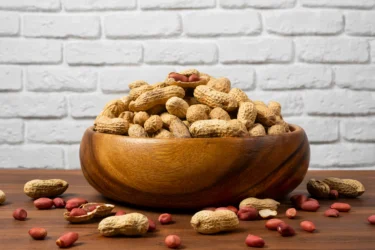
Peanut allergy is one of the most common and potentially severe food allergies. Even mild particle from it or touching a peanut can cause allergic reactions. This is when the immune system reacts to peanut proteins in sensitive individuals. It can cause symptoms such as rashes, hives, itching, and even breathing issues in severe cases6.

Shellfish and fish allergies occur when certain molecules/proteins in them act as allergens and the body reacts to it causing immune reactions. This can cause symptoms ranging from mild to severe such as rashes, hives, itching, swelling of the skin, etc. These are more common in adults and adolescents than in kids. Examples: oysters, mussels, prawns, crayfish, etc7.

Wheat allergy occurs when immune system reacts to certain proteins (commonly gluten) in wheat. This can cause allergic reactions like hives, rashes, and even shortness of breath in severe cases. This type of allergy is commonly seen in children8. Examples: Breads, doughnut, pasta, biscuits, etc.

Tree nuts allergies occur when the body produces immune response against certain proteins present in these nuts9. This causes symptoms such as hives, skin rashes, itching, etc. These types of allergies are common in children (especially those with eczema, and asthma) and even cause severe allergic reactions10. Examples: Almonds, cashews, chestnuts, walnuts, etc.
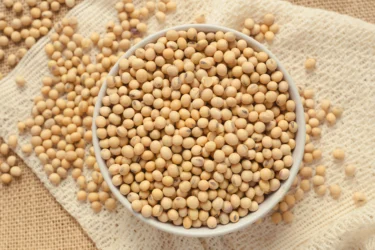
Soy allergies occur when protein found in soy products are recognised as harmful substances by the body, causing severe allergic reactions. The proteins which cause severe reactions are β-conglycinin and glycinin11. These can cause symptoms such as rashes, hives, swelling of skin, etc and commonly seen in young children (under 3 years). However, most of them outgrow the allergies during childhood12. Examples: Soybean, soymilk, tofu, tempeh, soy sauce, etc.
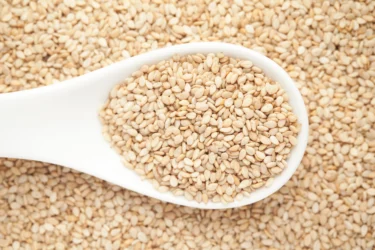
Sesame allergy occurs when proteins such as albumins present in sesame seeds trigger an immune response13. This causes several symptoms such as hives, bumps, swelling of skin, etc. This is usually seen in children, where some may overcome the condition as they grow. However, in most cases, there is a higher chance of allergy been carried throughout the life. Examples: Food prepared using sesame oil or seeds such as breads, hummus, sushi, salads, etc14.
Food allergy rashes can appear in different ways depending on the person and the trigger. The symptoms may be mild or more severe and often develop shortly after eating the allergenic food. The following are common symptoms related to food allergy skin rash:
Severe reactions may occur along with symptoms such as shortness of breath, difficulty swallowing, or wheezing, which require immediate medical attention.
Note: The information provided above is intended for general educational purposes only and should not be considered medical advice. Symptoms of rashes may vary from person to person. Please consult a qualified allergist for proper diagnosis and treatment to help avoid complications.
A food allergy rash is diagnosed by carefully evaluating symptoms and doing specific medical tests to determine the particular food trigger. Because many skin reactions might appear identical, doctors often combine medical history and allergy testing to get an accurate diagnosis.
The doctor might ask you about the food eaten before the rash appeared and ask for the symptoms (hive, redness, rashes, etc.) and when they started1. He might also ask about past allergic reactions. This helps identify possible triggers.
To confirm the diagnosis, he might recommend several tests such as:
Proper diagnosis is important because it not only confirms the food responsible for the rash but also helps in planning safe dietary choices and preventing future allergic reactions.
Note: Food allergy tests should always be performed and evaluated by a certified allergist. Do not attempt any diagnostic tests, particularly oral food challenges, without adequate medical supervision, as allergic reactions can be severe and require rapid medical attention.
Treatment of a food allergy rash focuses on relieving symptoms and preventing future episodes by avoiding triggering foods. Your doctor might prescribe following medications if the rash-related symptoms occur:
Remember, the most effective long-term food allergy rash treatment is identifying and completely avoiding food items that trigger the allergic reaction.
Note: Treatment options for food allergy rashes may vary based on the severity of the problem and the patient’s specific condition. Medications should only be used under the guidance of a qualified doctor. In case of a severe allergic response, seek immediate medical treatment.
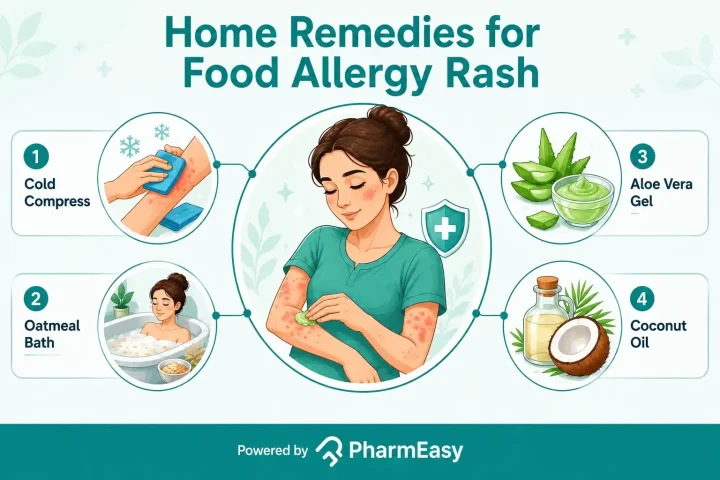
The following are some home remedies for food allergy rash and related symptoms:
Note: Home remedies may help relieve mild symptoms, but they are not a substitute for proper medical treatment. Please consult a qualified allergist for accurate diagnosis and treatment, especially if symptoms are severe or persistent.
The following are some ways by which you can avoid getting a food allergy rash:
You should seek medical attention if you experience:
Food allergy rash is a common yet unpredictable reaction that may affect skin health and comfort. While mild cases can be treated with home care and medications, identifying and avoiding trigger foods is critical to prevention. Early detection through allergy testing and good medical care can help prevent recurrent reactions and provide better long-term management.
Also Read: Food Allergies: Symptoms, Types, Diagnosis & Home Remedies
A food allergy rash usually appears as red, itchy patches or raised bumps on the skin. It may occur suddenly after eating a trigger food and can range from mild redness to widespread swelling and hives1,2,17.
A food allergy rash can last from a few to more hours, depending on the severity of the reaction. Mild rashes often fade within 24 hours, while more persistent rashes may take longer to resolve21.
A mild food allergy rash may go away on its own within a few hours to a few days once the trigger food is no longer in the body. However, recurring or worsening symptoms should be evaluated by a healthcare professional.
One of the most important conditions which is mistaken as a food allergy is food intolerance. This is because both cause similar symptoms such as stomach pain, bloating, nausea, or skin irritation, after eating particular food items.However, food intolerance does not involve the immune system and is generally less serious than a food allergy22.
Disclaimer: The information provided here is for educational/awareness purposes only and is not intended to be a substitute for medical treatment by a healthcare professional and should not be relied upon to diagnose or treat any medical condition. The reader should consult a registered medical practitioner to determine the appropriateness of the information and before consuming any medication. PharmEasy does not provide any guarantee or warranty (express or implied) regarding the accuracy, adequacy, completeness, legality, reliability or usefulness of the information; and disclaims any liability arising thereof.
Links and product recommendations in the information provided here are advertisements of third-party products available on the website. PharmEasy does not make any representation on the accuracy or suitability of such products/services. Advertisements do not influence the editorial decisions or content. The information in this blog is subject to change without notice. The authors and administrators reserve the right to modify, add, or remove content without notification. It is your responsibility to review this disclaimer regularly for any changes.


Comments

Leave your comment...
You may also like






















Comments