



High LDL (Bad) Cholesterol: Causes, Symptoms & How to Reduce It
By Ameya Tirodkar +2 more

Medically reviewed by Ameya Tirodkar
Last updated: Sep 1, 2026 Published on: Jun 5, 2026


Get,

to manage your symptom
Get your,

4 Cr+ families
benefitted

OTP sent to 9988776655



You’ve successfully subscribed to receive
doctor-approved tips on
Whatsapp

Get ready to feel your best.


Register to Avail the Offer
Send OTPBy continuing, you agree with our Privacy Policy and Terms and Conditions
Hi There,
Sign up on PharmEasy now!!


Trusted by 4 crore+ families

OTP sent to 9988776655
You have unlocked 25% off on medicines


Code: NU25

By Ameya Tirodkar +2 more
Table of Contents
Cholesterol is a wax-like, fatty substance found in the body essential for building cells, producing hormones, and supporting digestion. There are different types of cholesterol such as low-density lipoprotein (LDL), high-density lipoprotein (HDL), and very low-density lipoprotein (VLDL)1.
LDL cholesterol is generally referred to as bad cholesterol because when it is in excess, it can accumulate in the arteries, increasing the risk of heart disease2. Since high LDL cholesterol usually does not cause noticeable symptoms in the early stages3, many people may be unaware of their condition until difficulties arise.
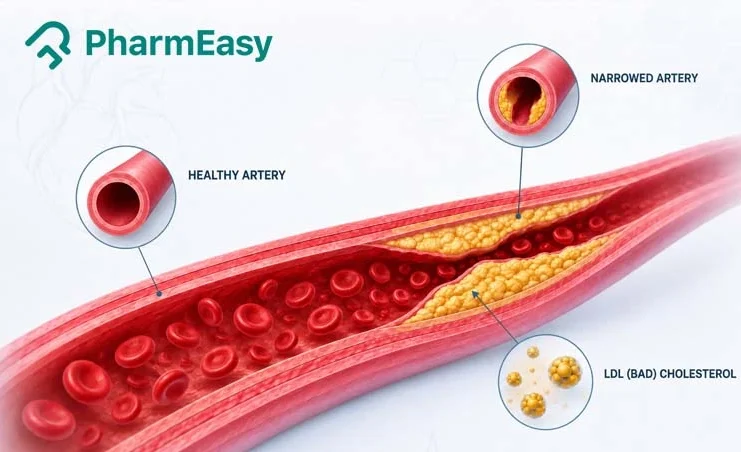
This article will guide you about the possible effects of high LDL cholesterol as well as its causes, risk factors and management strategies.
LDL stands for low-density lipoprotein. The body needs some LDL cholesterol for normal functioning. However, LDL is known as bad cholesterol because when it is inexcess it can accumulate within the arteries and form fatty deposits known as plaques (atherosclerosis)1,2. As plaque accumulates, the arteries narrow and harden, decreasing blood flow to vital organs including the heart and brain. If a plaque breaks open, it may form a blood clot that can completely block blood flow. This may lead to:
On the other hand, HDL cholesterol is known as good cholesterol because it helps remove excess cholesterol from the bloodstream1.
LDL cholesterol levels are measured through a fasting blood test called lipid profile and are usually expressed in milligrams per decilitre (mg/dL). Here is a table which shows different ranges of LDL cholesterol.
| LDL Cholesterol Level | Category |
| Less than 100 mg/dL | Optimal |
| 100-129 mg/dL | Near optimal (above optimal) |
| 130-159 mg/dL | Borderline high |
| 160-189 mg/dL | High |
| 190 mg/dL and above | Very high |
Note: LDL cholesterol levels can vary slightly based on the laboratory, age, medical history, and personal risk factors. Always consult a doctor for proper interpretation of your lipid profile results and personalised medical advice.
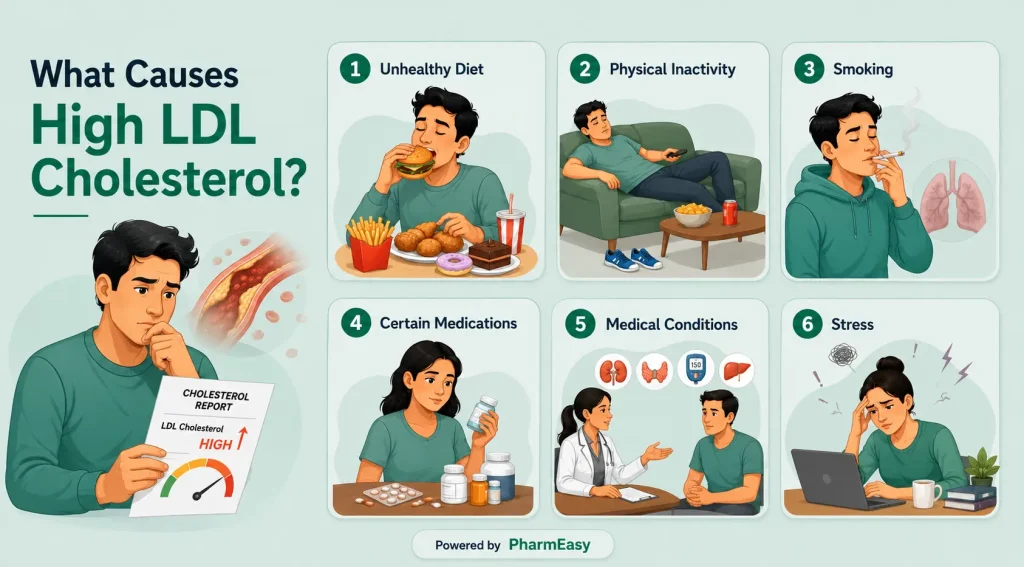
Several factors can increase LDL cholesterol levels. Here are some factors that explain what causes high LDL cholesterol levels.
Note: Reasons for high LDL cholesterol can vary among individuals. Therefore, proper diagnosis is important.
High LDL cholesterol symptoms are rarely apparent in the early stages. Many people find out only after a regular blood test or when issues arise. Severe or long-standing high LDL cholesterol can sometimes cause symptoms due to restricted blood flow causing severe conditions3,4,5. These may include the following:
Note: These symptoms typically reflect complications from long-term plaque buildup, not high LDL itself. Consult a doctor for proper evaluation and diagnosis.
The following are some risk factors that can contribute to high LDL Cholesterol:
Your doctor might suggest a lipid profile test to measure the LDL cholesterol levels. This test measures:
From this test results, high LDL cholesterol means there is an increased risk of artery clogs which can cause heart disease and other complications2.
The doctors may recommend this test:
Note: Lipid profile results should always be interpreted by a doctor along with your medical history, symptoms, and overall health condition.
As a part of high LDL cholesterol treatment, your doctor might prescribe certain medications if the cholesterol levels do not come down with lifestyle changes alone2. There are different types of medicines your doctor might give; these include the following:
Note: These medications should only be taken as prescribed by a doctor. The type of medication and dosage may differ depending on the patient’s cholesterol levels, overall health, and medical history. Do not start, stop, or change any medicine without first consulting a doctor.
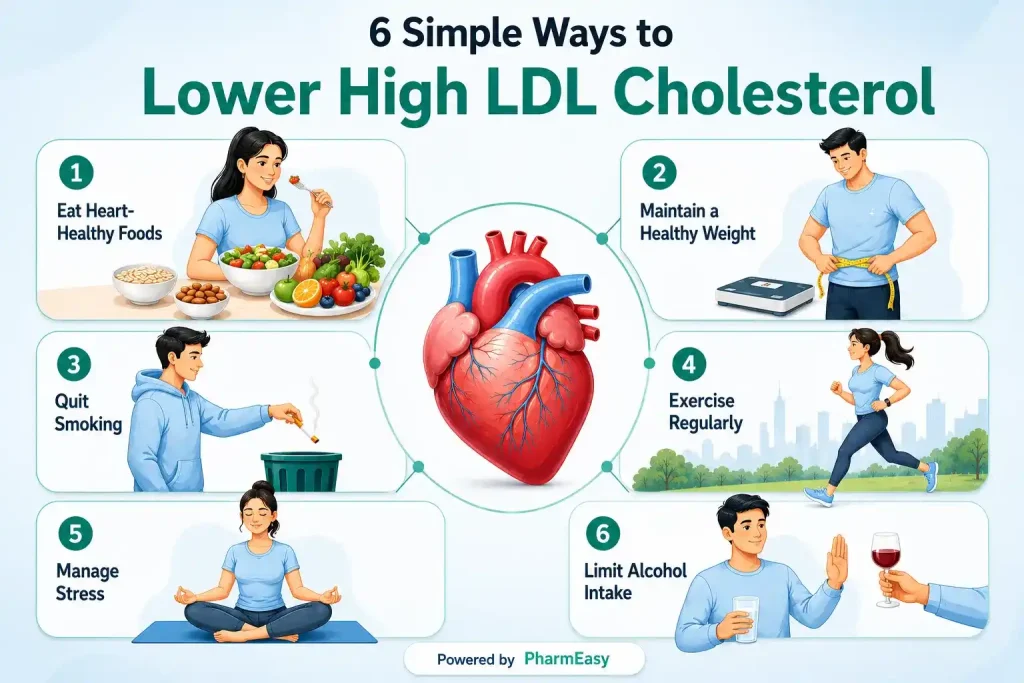
High LDL cholesterol can often be reduced through healthy lifestyle changes. The following are some simple ways by which you can help manage your LDL levels along with a proper medical treatment:
Note: Lifestyle changes may assist manage high LDL cholesterol, but their effectiveness may differ from person to person. Some people may also need medications or other medical treatments depending on their cholesterol levels, overall health, and risk of heart disease. Always seek the opinion of a doctor for an accurate diagnosis, treatment, and individualised care.
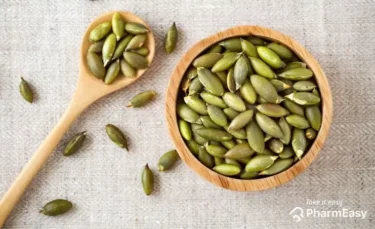
Certain foods can help naturally reduce LDL cholesterol levels. These include the following:
Note: This information is for educational purposes only and should not be considered medical advice. Diet alone may not be sufficient to control high LDL cholesterol in all cases. It is important to see a doctor or a dietician for an accurate treatment and dietary recommendations.
Also Read: High Alkaline Phosphatase Levels: Causes, Symptoms & Treatment
If left untreated, high LDL cholesterol can lead to serious health problems, such as:
Hence, it is important to check your cholesterol levels as a part of routine checkup, as high LDL levels can cause severe blockage of the arteries, thereby contributing to life-threatening if not treated on priority.
You should consult a doctor if you have a family history of high cholesterol or heart disease, are experiencing symptoms such as chest pain, shortness of breath, or leg pain, or have conditions such as diabetes, obesity, or high blood pressure. If your cholesterol readings continue to rise even after lifestyle adjustments, it is important to get medical care.
Also Read: High Triglycerides: Causes, Symptoms, Diagnosis & How to Reduce It
High LDL cholesterol is a frequent health issue with no early warning signs. If not addressed, it can raise the risk of heart disease and stroke. Healthy habits including eating nutritious foods, exercising regularly, maintaining a healthy weight, and following medical advice can all help lower LDL cholesterol and safeguard heart health.
Yes, high LDL cholesterol can be reduced and controlled by adopting good lifestyle habits such as a balanced diet, frequent exercise, weight management, and quitting smoking. In some cases, doctors may also recommend medications to help lower LDL cholesterol and lower the risk of heart disease2.
Although it is difficult to reduce LDL levels in seven days, a healthy lifestyle can slowly help reduce it. You can start by avoiding fried and processed foods, eating more fruits, vegetables, oats, and nuts, and exercising regularly. Quitting smoking, reducing alcohol intake, and staying physically active can also help improve cholesterol levels quickly1,2,3.
Drinks such as green tea, oat-based drinks, low-fat milk, and smoothies made with fruits and vegetables may help lower cholesterol levels. Limiting sugary drinks and alcohol can also support better heart health2,13,14.
For most healthy people, eating 1–2 eggs a day is generally considered safe and may not significantly raise cholesterol levels. However, people with high cholesterol, diabetes, or heart disease should consult a doctor about the right amount for their diet15.
The LDL level by age is given below:
Children younger than 19: < 110 mg/dL16
Adults: < 100 mg/dL (optimal)2
However,for people with certain heart conditions, doctors may recommend keeping LDL cholesterol at even lower levels to reduce the risk of heart-related complications.
1. Cholesterol Med. 2025. doi:https://medlineplus.gov/cholesterol.html
2. LDL: The “Bad” Cholesterol. 2024. doi:https://medlineplus.gov/ldlthebadcholesterol.html
3. Cholesterol. 2024. doi:https://www.healthdirect.gov.au/cholesterol
4. Peripheral Arterial Disease. 2025. doi:https://medlineplus.gov/peripheralarterialdisease.html
5. Stroke. 2025. doi:https://medlineplus.gov/stroke.html
6. Herink MC. Medication Induced Changes in Lipids and Lipoproteins. 2025. doi:https://www.ncbi.nlm.nih.gov/books/NBK326739/
7. Duntas LH. Thyroid Disease and Lipids. Thyroid. 2002;12(4):287-293. doi:10.1089/10507250252949405 https://pubmed.ncbi.nlm.nih.gov/12034052/
8. Lipid profile test. 2024. doi:https://medlineplus.gov/ency/article/007812.htm
9. Cholesterol-Lowering Medicines. 2024. doi:https://www.cdc.gov/cholesterol/treatment/cholesterol-lowering-medicines.html
10. Ray KK, Ference BA, Séverin T, et al. World Heart Federation Cholesterol Roadmap 2022. gh. 2022;17(1):75. doi:10.5334/gh.1154 https://pubmed.ncbi.nlm.nih.gov/36382159/
11. Heart-Healthy Living. 2022. doi:https://www.nhlbi.nih.gov/health/heart-healthy-living/healthy-foods
12. Soybeans and soy foods. 2026. doi:https://www.betterhealth.vic.gov.au/health/healthyliving/soybeans
13. High Cholesterol = High Kidney Disease Ri. 2014. doi:https://www.kidney.org/news-stories/high-cholesterol-high-kidney-disease-risk
14. Xu R, Yang K, Li S, Dai M, Chen G. Effect of green tea consumption on blood lipids: a systematic review and meta-analysis of randomized controlled trials. Nutr J. 2020;19(1):48. doi:10.1186/s12937-020-00557-5 https://pubmed.ncbi.nlm.nih.gov/32434539/
15. Shin JY, Xun P, Nakamura Y, He K. Egg consumption in relation to risk of cardiovascular disease and diabetes: a systematic review and meta-analysis. The American Journal of Clinical Nutrition. 2013;98(1):146-159. doi:10.3945/ajcn.112.051318 https://pubmed.ncbi.nlm.nih.gov/23676423/
16. High Cholesterol in Children and Teens. 2024. doi:https://medlineplus.gov/highcholesterolinchildrenandteens.html
Disclaimer: The information provided here is for educational/awareness purposes only and is not intended to be a substitute for medical treatment by a healthcare professional and should not be relied upon to diagnose or treat any medical condition. The reader should consult a registered medical practitioner to determine the appropriateness of the information and before consuming any medication. PharmEasy does not provide any guarantee or warranty (express or implied) regarding the accuracy, adequacy, completeness, legality, reliability or usefulness of the information; and disclaims any liability arising thereof.
Links and product recommendations in the information provided here are advertisements of third-party products available on the website. PharmEasy does not make any representation on the accuracy or suitability of such products/services. Advertisements do not influence the editorial decisions or content. The information in this blog is subject to change without notice. The authors and administrators reserve the right to modify, add, or remove content without notification. It is your responsibility to review this disclaimer regularly for any changes.


Comments

Leave your comment...
You may also like
















Comments