




Influenza A: What is It, Causes, Symptoms, Treatment & Prevention
By Dr. Vishesh Bharucha +2 more

Medically reviewed by Dr. Avinav Gupta
Last updated: Sep 8, 2026 Published on: Jun 9, 2025


Get,

to manage your symptom
Get your,

4 Cr+ families
benefitted

OTP sent to 9988776655



You’ve successfully subscribed to receive
doctor-approved tips on
Whatsapp

Get ready to feel your best.


Register to Avail the Offer
Send OTPBy continuing, you agree with our Privacy Policy and Terms and Conditions
Hi There,
Sign up on PharmEasy now!!


Trusted by 4 crore+ families

OTP sent to 9988776655
You have unlocked 25% off on medicines


Code: NU25

By Dr. Vishesh Bharucha +2 more
Table of Contents
Each year, influenza affects an estimated one billion people worldwide, with 3 to 5 million cases resulting in severe illness and between 290,000 and 650,000 deaths due to respiratory complications (World Health Organization, 2023)1.
Influenza is primarily classified into four types (A, B, C, and D). Among them, some influenza A viruses are highly contagious and cause acute respiratory illness, spreading rapidly through populations, particularly during seasonal outbreaks2.

Therefore, understanding the scale, transmission dynamics, and subtypes of influenza A is essential, as it is the only type of influenza virus known to cause global pandemics. This article will explore the influenza A symptoms in adults as well as children, setting the stage for further discussion on its diagnosis, treatment, and prevention strategies.
Influenza type A is caused by the influenza A virus, which is a single-stranded RNA virus. It infects the cells lining the respiratory tract and triggers an immune response that leads to the flu2.
Influenza A viruses are classified into subtypes based on the combination of their proteins (hemagglutinin [HA] and neuraminidase [NA]). Currently, the two main influenza A subtypes circulating in humans are A(H1N1) and A(H3N2)1,2.
Influenza A is highly contagious. This virus primarily spreads through respiratory droplets released during coughing, sneezing, or talking, and can also be transmitted by touching surfaces that already have been exposed to the virus. One of the key reasons influenza A is so widespread and potentially severe is its ability to undergo frequent genetic changes3:
Influenza A viruses are divided into subtypes based on their surface proteins. Different subtypes can vary in how easily they spread, how severe the illness is, and who is most at risk. The three most discussed subtypes are H1N1, H3N2, and H5N13.
In summary, different influenza A subtypes differ in severity, transmission, and risk. Seasonal strains such as H1N1 and H3N2 spread readily among people, while H5N1 is rare in humans but potentially serious.
Influenza is a seasonal illness, and the strains that circulate can vary from one season and region to another. This is part of why annual vaccination is recommended13.
For the most current information on circulating strains, it is best to refer to updates from recognised public health authorities rather than relying on fixed assumptions, as the picture changes each season.
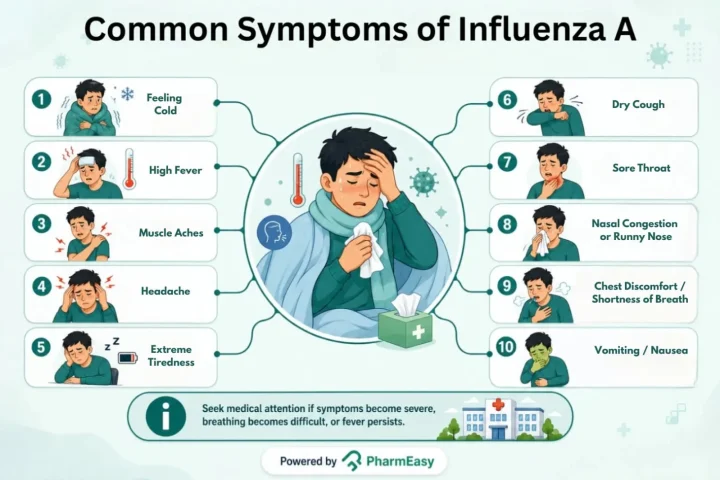
Influenza A typically presents with a sudden onset of symptoms, often making individuals feel acutely unwell within a short period. The most common influenza A symptoms in adults and children include4:
In addition to these respiratory symptoms, gastrointestinal symptoms such as nausea, vomiting, and diarrhoea may also occur, especially in children, though they are not always present4.
Note: Although often confused with the common cold, influenza (flu) is generally more severe and comes on more suddenly5. Therefore, accurate diagnosis is important for proper management.
Certain groups of people are more likely to develop serious complications from influenza A. These include:
The influenza vaccine shot can easily be taken in the arm, unlike other injections, that typically need to be taken in the buttock region12.
Dr. Nayana Shetty, MBBS, MD
The initial diagnosis of influenza A usually begins with a clinical evaluation, where doctors assess the patient’s symptoms and medical history7.
To confirm influenza A, the following diagnostic tests may be used:
Note: If you test influenza A positive, it means the virus has been detected in your body, and you may need rest, supportive care, or antiviral medications depending on symptom severity.
Also Read: What Is Hantavirus? Symptoms, Causes, & Effective Prevention
Most healthy people with mild flu symptoms recover with rest, fluids, and fever-reducing medicines. However, treatment may be necessary if influenza A symptoms in adults (and children) worsen or do not improve.
Note: They are usually not needed for mild cases in healthy people7. However, patients with mild cases in high-risk group (e.g., elderly, pregnant, chronic illness) may warrant antivirals.
Note: Aspirin should be avoided in children due to the risk of Reye’s syndrome9. It’s ideal to consult a doctor before.
Timing is one of the most important factors in antiviral treatment for influenza A. Antivirals such as oseltamivir work best when started early in the course of illness14.
Early consultation allows a doctor to assess whether antiviral treatment is appropriate and to start it within the most effective timeframe.
While many healthy people recover from influenza A with rest and supportive care, antiviral treatment is prioritised for those at higher risk of serious complications7. These groups include:
For these high-risk groups, a few important points apply:
If you or someone you care for falls into a high-risk group and develops flu-like symptoms, it is best to contact a doctor promptly rather than waiting to see if symptoms worsen.
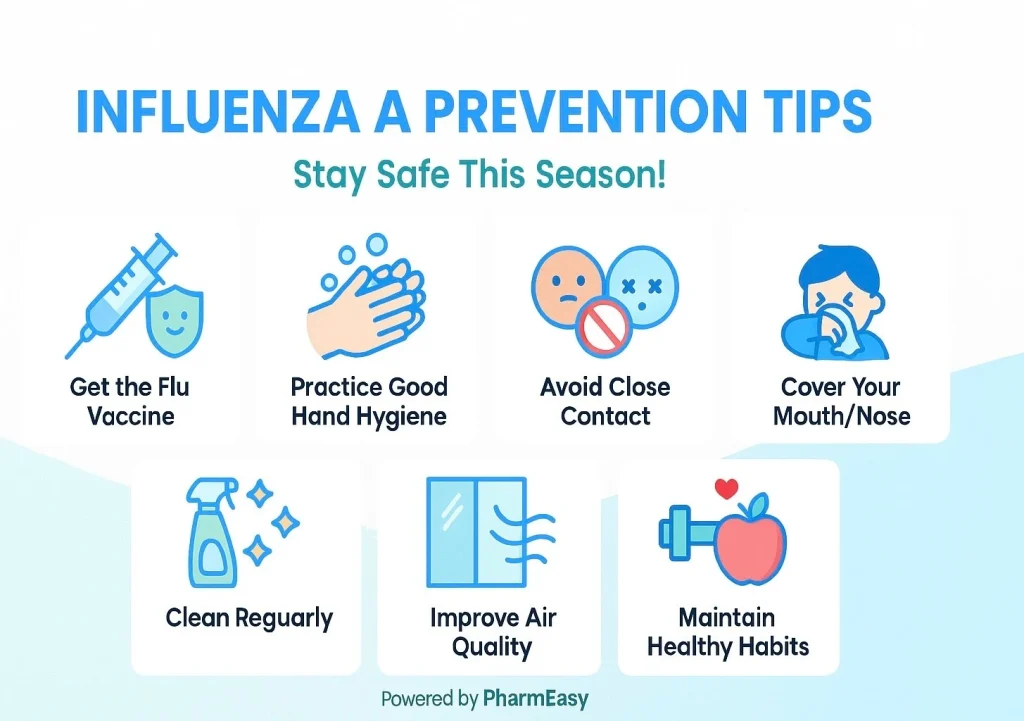
Being influenza A positive indicates an active infection that can be contagious, so isolation and proper hygiene are important to prevent spreading the virus to others. Here are effective ways to protect yourself and others:
Since the influenza virus tends to change and evolve each year, a new batch of vaccines is produced each year. Thus, each year when the vaccine is given, it actually protects against the virus currently spreading infection. It is like a new virus vaccine each year11.
Dr. Nayana Shetty, MBBS, MD
Post-exposure prophylaxis (PEP) means taking preventive medication after being exposed to an infection, to reduce the chance of falling ill15.
In the context of influenza A, antiviral medication such as oseltamivir may sometimes be considered after close contact with a confirmed influenza case, particularly for those at higher risk of complications.
Examples of situations where PEP may be considered include:
It is important to note that PEP is used selectively, based on clinical judgement. A doctor will weigh factors such as the person’s risk level, the nature of the exposure, and timing before recommending it. PEP is not a substitute for vaccination and good hygiene practices.
Also Read: Everything To Know About the Influenza Vaccine & Its Importance
Knowing when it is safe to return to school or work after influenza A helps protect others and reduce the spread of the virus in community settings9.
As a general guide, it is usually appropriate to return when:
A few additional points to keep in mind:
Preventing the spread of influenza in schools and workplaces benefits everyone, particularly those who may be at higher risk of complications.
While most people recover from influenza type A within a few days to two weeks, it’s important to seek medical care if symptoms worsen or new complications arise. You should see a doctor as soon as possible if you experience10:
Note: If you observe that your symptoms improve for a while but then return with fever and worse cough, it may indicate a secondary bacterial infection. Therefore, it is very important to contact a doctor in such cases.
High-risk individuals should be especially vigilant and contact a doctor early. Complications to watch for in influenza type A include3:
Also Read: What is Influenza (Flu) & Its Types
Understanding and effectively managing influenza A is vital to reducing its impact on individuals and communities. While many cases are mild, the flu can lead to serious complications, especially in high-risk groups. Therefore, timely diagnosis, appropriate treatment, and preventive measures like vaccination, hand hygiene, and staying home when sick can help avoid the spread of the virus significantly.
Additionally, raising awareness about symptoms, risk factors, and when to seek medical help empowers people to take proactive steps, ensures better health outcomes, and avoids severe illness or death from flu-related complications.
Also Read: H1N1 (Swine Flu): Causes, Symptoms, Treatment, and Prevention
Flu symptoms tend to be more sudden and severe than cold symptoms. For example, symptoms such as fever, body aches, and severe fatigue are typically more pronounced in the flu compared to the common cold5.
Yes. There are different subtypes (like H1N1, H3N2), and your immunity to one doesn’t protect you from others if you are infected with one subtype. That’s why yearly vaccination is important2.
Most people are contagious from a day before symptoms appear to about 5 to 7 days after becoming sick2. Children and those with weakened immune systems may be contagious longer.
Only influenza A viruses are known to cause pandemics due to their ability to undergo significant genetic changes and infect multiple species2.
Disclaimer: The information provided here is for educational/awareness purposes only and is not intended to be a substitute for medical treatment by a healthcare professional and should not be relied upon to diagnose or treat any medical condition. The reader should consult a registered medical practitioner to determine the appropriateness of the information and before consuming any medication. PharmEasy does not provide any guarantee or warranty (express or implied) regarding the accuracy, adequacy, completeness, legality, reliability or usefulness of the information; and disclaims any liability arising thereof.
Links and product recommendations in the information provided here are advertisements of third-party products available on the website. PharmEasy does not make any representation on the accuracy or suitability of such products/services. Advertisements do not influence the editorial decisions or content. The information in this blog is subject to change without notice. The authors and administrators reserve the right to modify, add, or remove content without notification. It is your responsibility to review this disclaimer regularly for any changes.


Comments

Leave your comment...
You may also like

























Comments