




High PDW Blood Test: Understanding What it Means for Your Health
By Dr. Shubham Pandey +2 more

Medically reviewed by Dr. Shubham Pandey
Last updated: Sep 16, 2026 Published on: Feb 26, 2024


Get,

to manage your symptom
Get your,

4 Cr+ families
benefitted

OTP sent to 9988776655



You’ve successfully subscribed to receive
doctor-approved tips on
Whatsapp

Get ready to feel your best.


Register to Avail the Offer
Send OTPBy continuing, you agree with our Privacy Policy and Terms and Conditions
Hi There,
Sign up on PharmEasy now!!


Trusted by 4 crore+ families

OTP sent to 9988776655
You have unlocked 25% off on medicines


Code: NU25

By Dr. Shubham Pandey +2 more
Table of Contents
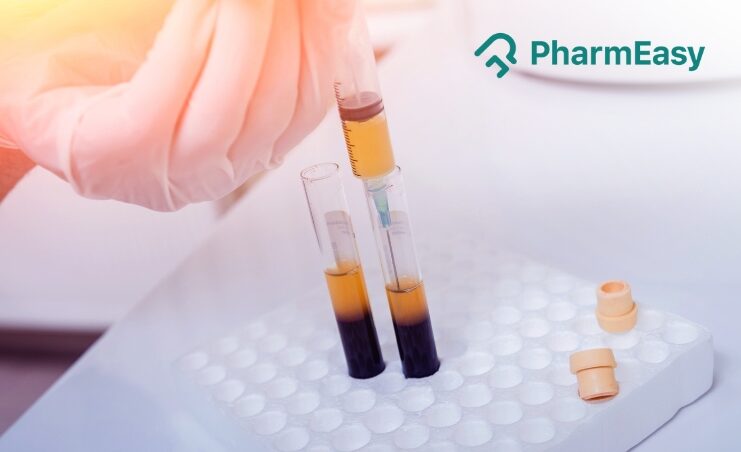
PDW stands for Platelet Distribution Width, a measure of platelet size variation in your blood1. This article aims to clarify the role of PDW blood tests in health care. In this post, we’ll talk about what causes its fluctuation and why it matters in diagnosis. We’ll also cover risks, and how to control high PDW and normal PDW ranges.
Did you know?
PDW shows how much platelet size varies in your blood. It comes under the complete blood count test, which studies2 the count, size, and spread of platelets.
They grow from big cells called megakaryocytes in a process named thrombopoiesis3. Once they are grown, platelets flow in the blood. Their job is to form clots and repair wounds.
Platelet size is not constant. The rate of making them changes, they age, and become active. When active, they grow bigger. So, PDW indirectly tells us about platelet activation.
Many things can affect PDW. Factors like age, gender, disease, and genes cause changes in platelet size and spread. Which results in either high or low PDW levels.
Here are a few factors that can increase PDW that are as follows.
High PDW warns about the risk of the following problems.
Studies4 have shown that elevated PDW values, particularly those over 16.15, may notify the obstetrician of the possibility of an early birth. You are advised to get in touch with your doctor and discuss regarding all the complications before hand to handle the pregnancy with care.
Dr. Siddharth Gupta, B.A.M.S, M.D
PDW can check how long-term diseases progress and how the body reacts to treatment for them. The longer-term diseases are listed below.
Tracks how the body reacts to cancer treatment and predicts the risk of cancer coming back or spreading.
Spots early signs of bleeding disorders, like von Willebrand disease or hemophilia.
I recently came across a study5 that was conducted on mean platelet volume (MPV) and PDW in individuals with thyroid disorders. According to the study, patients with Hashimoto’s thyroiditis had higher levels of MPV and PDW. These alterations may be linked to inflammation and cancer.
Dr. Rajeev Singh, BAMS
Various factors impact PDW levels which are as follows.
The normal PDW spread differs between laboratories but generally is from 15.1% to 17.9%.
Also Read: Low Red Cell Distribution Width in Blood (RDW): Interpreting Your Blood Test Results
To control high PDW, it’s vital to locate and manage the base causes.
Also Read: PDW Blood Test: Understanding Its Purpose and Results
The importance of understanding high PDW blood tests cannot be overstated. Knowledge of how these tests impact health can empower patients and healthcare professionals alike to take charge of their well-being. By using PDW blood tests to predict and monitor various health issues, doctors can provide better patient care while patients may better advocate for themselves.
In conclusion, it is key to not overlook high PDW. It acts as a sign of possible health concerns. Regular check-ups and monitoring can help to diagnose quickly and plan effective management. This may help you stay on the route to the best health.
Also Read: CRP Test vs ESR Test: Understanding the Differences and Significance
Inflammatory conditions, cancer, blood disorders, or lack of iron can lead to high PDW. Age, sex, and genes may also affect PDW levels.
The normal PDW count varies, but it’s usually between 15.1% and 17.9%.
High PDW could mean ongoing inflammation. Conditions causing inflammation can drive changes in platelet size and spread, leading to higher PDW.
If PDW stays high, your doctor should find out why. They can then start suitable therapy.
Yes. High PDW may signal a high risk of issues like heavy bleeding, blood clots, or poor reaction to medical treatments. Finding and addressing the cause may secure your overall health.
Disclaimer: The information provided here is for educational/awareness purposes only and is not intended to be a substitute for medical treatment by a healthcare professional and should not be relied upon to diagnose or treat any medical condition. The reader should consult a registered medical practitioner to determine the appropriateness of the information and before consuming any medication. PharmEasy does not provide any guarantee or warranty (express or implied) regarding the accuracy, adequacy, completeness, legality, reliability or usefulness of the information; and disclaims any liability arising thereof.
Links and product recommendations in the information provided here are advertisements of third-party products available on the website. PharmEasy does not make any representation on the accuracy or suitability of such products/services. Advertisements do not influence the editorial decisions or content. The information in this blog is subject to change without notice. The authors and administrators reserve the right to modify, add, or remove content without notification. It is your responsibility to review this disclaimer regularly for any changes.
 1
1 
Comments

Leave your comment...
You may also like























Comments