




What Are Electrolytes and Why Are They So Important for Your Body?
By Dr. Avinav Gupta +2 more

Medically reviewed by Dr. Avinav Gupta
Last updated: Sep 28, 2026 Published on: Aug 10, 2026


Get,

to manage your symptom
Get your,

4 Cr+ families
benefitted

OTP sent to 9988776655



You’ve successfully subscribed to receive
doctor-approved tips on
Whatsapp

Get ready to feel your best.


Register to Avail the Offer
Send OTPBy continuing, you agree with our Privacy Policy and Terms and Conditions
Hi There,
Sign up on PharmEasy now!!


Trusted by 4 crore+ families

OTP sent to 9988776655
You have unlocked 25% off on medicines


Code: NU25

By Dr. Avinav Gupta +2 more
Table of Contents
Have you ever wondered why you feel weak, get muscle cramps, or lose energy after sweating heavily? The answer may lie in tiny essential substances called electrolytes. Many everyday symptoms can be linked to electrolyte imbalance. But what exactly are electrolytes, and why does your body need them?
Electrolytes are minerals that carry an electrical charge in the blood and other body fluids1.

Understanding the role of electrolytes in the body, electrolyte imbalances, and ways to maintain healthy electrolyte levels is important because it can help with the early recognition and appropriate management of electrolyte-related disorders, supporting overall health and well-being. In this article, we will discuss all these topics.
Electrolytes are compounds that, when dissolved in bodily fluids, acquire an electrical charge. Various normal body processes, such as fluid balance, acid-base balance, nerve impulse transmission, muscle contraction, and cellular activity, depend on them. Because electrolyte concentrations are strictly controlled, even slight variations can have an impact on how the body functions2.
The major electrolytes in the body include sodium, potassium, chloride, bicarbonate, calcium, magnesium, and phosphorus2,3. These electrolytes are found in different body fluids and work together to support normal physiological processes. Their levels are maintained within a narrow normal range through coordinated regulation by the kidneys, hormones, and other body systems2.
Electrolyte normal ranges (adults)2:
Did you know?
Minerals known as electrolytes have an electrical charge and aid in the efficient operation of several vital body functions. They help with everything from nerve transmission to preserving fluid balance and normal heart functioning.

Electrolytes, especially sodium and chloride, help control the movement of water within the body. This fluid balance is important for maintaining proper hydration and normal body function1,2.
Electrolytes such as sodium and potassium help create electrical signals that allow nerve cells to communicate. These signals help the brain and nerves send messages throughout the body1,2.

Electrolytes, including calcium, potassium, and sodium, play an important role in muscle contraction and relaxation. They help muscles receive signals and contract properly, including the heart muscle1,2.

Electrolytes such as potassium, calcium, and magnesium help regulate the electrical activity of heart cells. Abnormal electrolyte levels can interfere with the heart’s rhythm and may cause potentially serious heart rhythm problems4.

Electrolytes, especially sodium, potassium, and magnesium, help regulate blood pressure. Abnormal electrolyte levels may contribute to blood pressure abnormalities or may be associated with conditions that affect blood pressure.
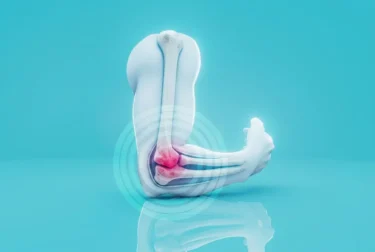
Calcium and phosphorus help maintain strong bones and teeth. Abnormal levels of these minerals may affect bone health, particularly when associated with underlying medical conditions.
An electrolyte imbalance happens when the levels of one or more electrolytes in your body become too high or too low. Since electrolytes help regulate many essential body functions, even a small imbalance can affect how your nerves, muscles, heart, and other organs work. The most common electrolyte imbalances involve sodium, potassium, calcium, and magnesium2,8.
Your body normally keeps electrolyte levels within a narrow normal range by balancing the amount you absorb from foods and fluids with the amount removed through the kidneys and other body processes. When this balance is disrupted, normal body functions may be disrupted. Depending on which electrolyte is affected and how severe the imbalance is, symptoms can range from mild to serious and may require prompt medical attention. In severe cases, electrolyte imbalances can lead to life-threatening complications2,5,8.
Diagnosis of Electrolyte Imbalance involves reviewing your medical history, including underlying diseases and medications taken, along with certain blood and urine tests:
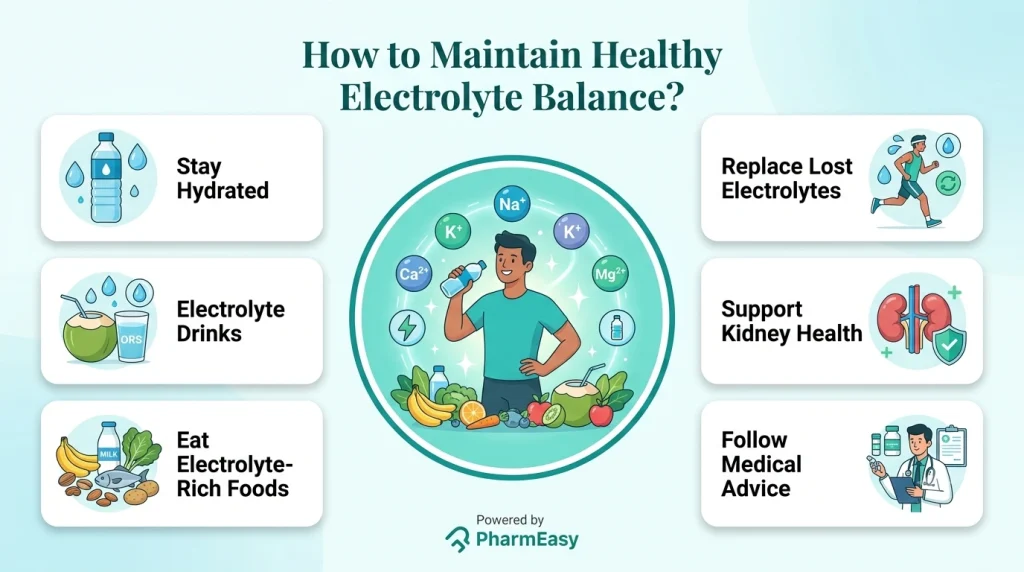
You can follow these tips for maintaining a healthy electrolyte balance:
Also Read: Polydipsia (Excessive Thirst): Causes, Symptoms, Treatment & More
Seek medical attention if you experience:
Electrolytes are more than just minerals; they are essential substances that help your body maintain balance every day. From keeping your muscles moving and nerves communicating to supporting a steady heartbeat, the right electrolyte levels are essential for your overall well-being. While the body usually regulates these minerals naturally, factors such as fluid loss, kidney problems, or certain medications can lead to an electrolyte imbalance. Staying hydrated and recognising warning signs early can help maintain healthy electrolyte levels. If symptoms such as severe weakness, confusion, or irregular heartbeat occur, seek prompt medical advice to help prevent complications.
Also Read: What Is Toxoplasmosis? Symptoms, Causes, Treatment and Prevention
No specific electrolyte drink has been proven to be the best for preventing leg cramps. Electrolyte replacement as advised by your doctor may help in some cases, especially when cramps are related to fluid and electrolyte loss during prolonged exercise or heavy sweating12.
The body usually maintains electrolyte balance by regulating the levels of minerals such as sodium, potassium, and chloride. Extra electrolyte intake may not be necessary for most people unless there is increased loss of fluids and electrolytes or a medical reason for supplementation as advised by the doctor2.
Electrolytes such as sodium, potassium, calcium, and magnesium are obtained from dietary sources such as potatoes, pulses, milk, fish, meat, nuts, seeds, etc., and are needed to support normal body functions. A balanced intake helps maintain the body’s electrolyte levels2,11.
Electrolyte replacement should be guided by a healthcare professional , based on the body’s needs, as both low and high electrolyte levels can affect normal body functions2. For mild fluid loss, natural drinks such as coconut water may help replace some electrolytes, but they should not replace ORS when medically indicated.
The way to restore electrolytes depends on which electrolyte is affected and how severe the imbalance is. Treatment focuses on correcting the imbalance and may require medical guidance in severe cases2.
1. Electrolytes: MedlinePlus Medical Encyclopedia. Accessed August 4, 2026. https://medlineplus.gov/ency/article/002350.htm
2. Shrimanker I, Bhattarai S. Electrolytes. In: StatPearls. StatPearls Publishing; 2026. Accessed August 4, 2026. http://www.ncbi.nlm.nih.gov/books/NBK541123/
3. Electrolyte test. nhs.uk. August 29, 2018. Accessed August 4, 2026. https://www.nhs.uk/tests-and-treatments/electrolyte-test/
4. Gettes LS. Electrolyte abnormalities underlying lethal and ventricular arrhythmias. Circulation. 1992;85(1 Suppl):I70-76. https://pubmed.ncbi.nlm.nih.gov/1728508/
5. Dhondup T, Qian Q. Electrolyte and Acid-Base Disorders in Chronic Kidney Disease and End-Stage Kidney Failure. Blood Purif. 2017;43(1-3):179-188. doi:10.1159/000452725 https://pubmed.ncbi.nlm.nih.gov/28114143/
6. Venance SL, Cannon SC, Fialho D, et al. The primary periodic paralyses: diagnosis, pathogenesis and treatment. Brain J Neurol. 2006;129(Pt 1):8-17. doi:10.1093/brain/awh639 https://pubmed.ncbi.nlm.nih.gov/16195244/
7. Electrolyte Panel: MedlinePlus Medical Test. Accessed May 28, 2026. https://medlineplus.gov/lab-tests/electrolyte-panel/
8. Fluid and Electrolyte Balance. Accessed August 4, 2026. https://medlineplus.gov/fluidandelectrolytebalance.html
9. Electrolyte_Imbalance.pdf. Accessed August 4, 2026. https://www.hee.nhs.uk/sites/default/files/documents/Electrolyte_Imbalance.pdf
10. Diercks DB, Shumaik GM, Harrigan RA, Brady WJ, Chan TC. Electrocardiographic manifestations: electrolyte abnormalities. J Emerg Med. 2004;27(2):153-160. doi:10.1016/j.jemermed.2004.04.006 https://pubmed.ncbi.nlm.nih.gov/15261358/
11. Schiefermeier-Mach N, Egg S, Erler J, et al. Electrolyte Intake and Major Food Sources of Sodium, Potassium, Calcium and Magnesium among a Population in Western Austria. Nutrients. 2020;12(7):1956. doi:10.3390/nu12071956 https://pubmed.ncbi.nlm.nih.gov/32630029/
12. Jung AP, Bishop PA, Al-Nawwas A, Dale RB. Influence of Hydration and Electrolyte Supplementation on Incidence and Time to Onset of Exercise-Associated Muscle Cramps. J Athl Train. 2005;40(2):71-75. https://pubmed.ncbi.nlm.nih.gov/15970952/
13. Ieggli CVS, Bohrer D, do Nascimento PC, de Carvalho LM, Garcia SC. Determination of sodium, potassium, calcium, magnesium, zinc, and iron in emulsified egg samples by flame atomic absorption spectrometry. Talanta. 2010;80(3):1282-1286. doi:10.1016/j.talanta.2009.09.024 https://pubmed.ncbi.nlm.nih.gov/20006088/
Disclaimer: The information provided here is for educational/awareness purposes only and is not intended to be a substitute for medical treatment by a healthcare professional and should not be relied upon to diagnose or treat any medical condition. The reader should consult a registered medical practitioner to determine the appropriateness of the information and before consuming any medication. PharmEasy does not provide any guarantee or warranty (express or implied) regarding the accuracy, adequacy, completeness, legality, reliability or usefulness of the information; and disclaims any liability arising thereof.
Links and product recommendations in the information provided here are advertisements of third-party products available on the website. PharmEasy does not make any representation on the accuracy or suitability of such products/services. Advertisements do not influence the editorial decisions or content. The information in this blog is subject to change without notice. The authors and administrators reserve the right to modify, add, or remove content without notification. It is your responsibility to review this disclaimer regularly for any changes.


Comments

Leave your comment...
You may also like

























Comments