




Facial Changes in Fatty Liver Disease: Causes, Diagnosis & Prevention
By Dr. Swara Soumitra Pendse +2 more

Medically reviewed by Dr. Swara Soumitra Pendse
Last updated: Oct 16, 2026 Published on: Aug 26, 2026


Get,

to manage your symptom
Get your,

4 Cr+ families
benefitted

OTP sent to 9988776655



You’ve successfully subscribed to receive
doctor-approved tips on
Whatsapp

Get ready to feel your best.


Register to Avail the Offer
Send OTPBy continuing, you agree with our Privacy Policy and Terms and Conditions
Hi There,
Sign up on PharmEasy now!!


Trusted by 4 crore+ families

OTP sent to 9988776655
You have unlocked 25% off on medicines


Code: NU25

By Dr. Swara Soumitra Pendse +2 more
Table of Contents
Have you noticed any dullness, tiredness or puffiness in your face when you look in the mirror, even when you were feeling normal all day? These symptoms are often ignored as being due to a sedentary lifestyle, such as lack of sleep, exercise and stress, however, they can sometimes be a sign of certain medical conditions. In this article, we will discuss how fatty liver can affect your face, what its causes and symptoms are, and when to seek medical help.

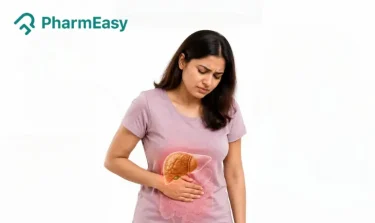
The liver is the chief organ that processes toxins and waste materials in the body, it also behaves as a storage house. In a healthy liver, there is little to no fat accumulation. However, when there is increased caloric intake or alcohol use, the liver turns this into fat and stores it. When excess fat is stored in the liver, it is termed fatty liver1. As fatty liver advances, it can lead to severe inflammation and hardening of liver tissue called cirrhosis. In patients with advanced liver diseases, including fatty liver, skin changes are often visible, even though they are non-specific. These changes can be seen on the hands, palms, neck or face2.
Liver facies is a term that is used to describe the facial features that are seen associated with the late stages of liver diseases like cirrhosis. It can include dullness, tiredness, yellowing of the skin, pigmentation on the face, and a puffy appearance of the face3,4.
Did You Know?
Causes of fatty liver symptoms on face include impaired liver function due to any of the below-listed reasons3:
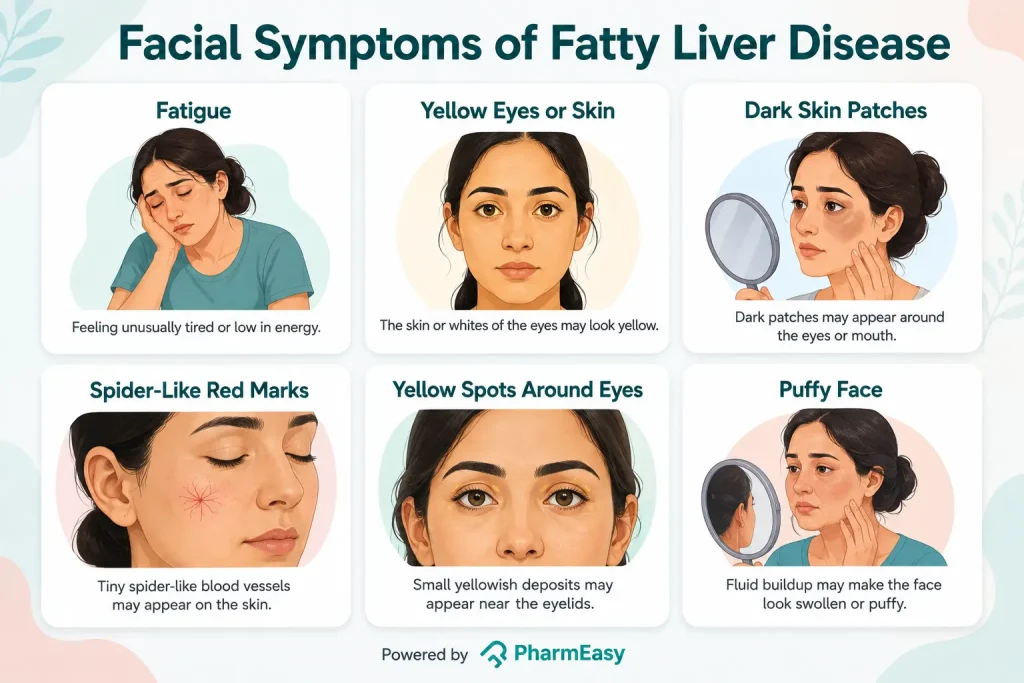
Fatty liver usually asymptomatic at the early stages. However, in later stages of the disease, symptoms can be manifested. Fatty liver symptoms on face in advanced disease can include jaundice, pigmentations, spider angiomas and xanthomas.
Diagnosis of fatty liver disease includes taking a proper medical history, physical evaluation and performing some tests14,15.
Treatment options for fatty liver rely more on lifestyle changes, weight management, dietary adjustments and managing underlying conditions.

In patients who are overweight, moderate exercise may be beneficial in managing fatty liver disease(150 minutes of moderate/ 75-100 minutes of vigorous physical activity every week along with strength/ resistance training)19. Being physically active will also contribute to counteracting the sarcopenia associated with liver disease even in the – target 5-10% of weight loss at least is also helpful in the management20. In people with fatty liver disease, alcohol consumption is also advised to be abstinent21.

Weight loss can be achieved by healthy diets, physical activities, some medicines and bariatric surgery19. At least 5-10%of body weight loss can help in the reduction of fat in the liver20. Your doctor will advise you to reduce the weight gradually(0.7-1.0 kg/week). along with a caloric restriction based on the physical activity & lifestyle can further aid in lowering inflammation of liver19,20.
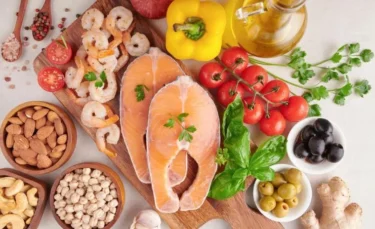
Your doctor will advise you to consume a balanced diet and avoid some types of foods. Fatty foods should be avoided; instead, unsaturated fats, particularly omega-3 fatty acids containing foods, are recommended. Foods which are less prone to increase blood glucose (low glycaemic index), including vegetables, are preferred compared to high glycaemic index foods such as white rice and potatoes. These can be consumed in moderation as long as a caloric deficit can be maintained. Sugar like fructose containing foods are advised to be avoided, which include sweetened beverages, tea and juices. Table sugar needs to be avoided21. Since processed foods are high in calories, saturated fats, carbohydrates and salts and low in fibre, vitamins and minerals, limiting such foods is also beneficial22.

In people with fatty liver disease, along with marked obesity, increased blood pressure, blood sugar and disturbed fat profiles are commonly present. These features are more prone to badly affect heart health as well. Proper screening and appropriate management of these underlying conditions help reduce disease and death related complications associated with the heart as well as improve fatty liver disease19.

Earlier, medicines directly targeting liver damage were limited. However, certain medicines have been approved later specifically for this condition, which include saroglitazar, resmiterom and some GLP-1 medicines. Management with Saroglitazar has shown improvements in liver enzymes, serum glucose and fats, while further evidence is needed to determine the effectiveness and safety of resmetirom in liver disease23,24.
GLP-1 receptor agonists can also be involved in the treatment by improving liver enzymes and preventing fat accumulation in the liver. A decreased body weight along with optimised blood sugar levels can also be contributed to the mechanism of improving fatty liver
disease25. Also, insulin-sensitising drugs such as metformin might be beneficial in people having diabetics along with fatty liver disease. Please consult your doctor for appropriate recommendations.
Also Read: Recognising Fatty Liver Warning Signs in Females
Maintaining healthy lifestyle choices can be helpful for overall health of the liver and preventing the progression of fatty liver disease. It can include the following:

Being physically active regularly can help avoid fatty liver disease. Aiming minimum of 150 minutes of physical activity per week is beneficial. strengthening activities can be picked up with a slow start and slow progress. However, if there are any health problems or injuries, discussing this with your doctor is advised20.

Limiting foods containing fat and sugars is advised, as this may lead to obesity and thereby to fatty liver disease. Vegetables and whole grains are suggested compared to white bread, rice or potatoes, as these can increase the sugar level in the blood. Similarly, sweetened drinks, tea or juices should also be avoided. Fatty and processed foods should be avoided21.

Maintaining a healthy weight can help in preventing fatty liver disease. However, a gradual weight loss is recommended20.

All consumption of alcohol might lead to alcoholic liver disease, so minimising usage can help in prevention21.
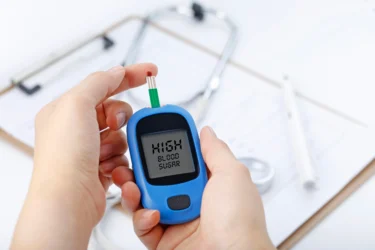
In people with high blood sugar levels or diabetes, chances of getting metabolic-associated fatty liver disease are higher. So, managing blood sugar levels can help in overall liver health and preventing the disease12.
Also Read: Best Exercises for Fatty Liver You Should Try
Doctor consultation is recommended in the following cases:
Liver Facies includes the facial symptoms that are seen in the late stage of liver disease, which can include fatigue, facial puffiness, jaundice, pigmentations, spider angioma and xanthomas. The causes for these changes are contributed to poor liver detox function, some hormonal imbalances, insulin resistance and abnormal fat levels in the body. A healthy lifestyle including regular exercise, maintaining a healthy diet and weight and avoiding alcohol can help in preventing as well as managing this condition.
Yes. Fatty liver can produce several skin changes, which include spider-like blood vessels (spider angioma), redness on the palms (palmar erythema), small blood vessels seen through the skin (paper-money skin) and yellow lesions around eyelids (xanthelasma)2.
Yes. In patients with advanced fatty liver disease, fluid retention can occur, which can result in swelling (oedema). So, a puffy face might result in later stages of fatty liver disease4,11.
Yes. A diffuse greyish-brown pigmentation over the sunlight exposed areas can be noted in fatty liver patients. This pigmentation is more noted around the eyes and mouth on the face3.
In advanced liver diseases, some people might face nutritional deficiencies such as zinc deficiency. This zinc deficiency can affect the skin around the mouth or eye regions on the face. This can develop eczema-like rashes or blistering skin lesions. However, these changes are more related to nutritional deficiency26.
Red face might not be a typical feature in fatty liver disease. However, in advanced liver disease (cirrhosis), lesions with a central red spot and small blood vessels radiating outwards (spider angiomas) might develop3.
Facial features that are seen in advanced stages of liver disease can include yellowing of the skin and eyes, spider angiomas, yellowish lesions deposited around the eyes (xanthelasma) and diffuse pigmentation around the eyes and mouth3.
Fatty liver might not deposit fat in the face. However, in an advanced disease stage, facial swelling might result due to fluid retention, but it is not due to excess fat4.
1. Australia H. Fatty liver. June 23, 2025. Accessed July 21, 2026. Available from: https://www.healthdirect.gov.au/fatty-liver
2. Dogra S, Jindal R. Cutaneous manifestations of common liver diseases. J Clin Exp Hepatol. 2011;1(3):177-184. doi:10.1016/S0973-6883(11)60235-1 Available from: https://pubmed.ncbi.nlm.nih.gov/25755383/
3. Bhandari A, Mahajan R. Skin Changes in Cirrhosis. J Clin Exp Hepatol. 2022;12(4):1215-1224. doi:10.1016/j.jceh.2021.12.013 Available from: https://pubmed.ncbi.nlm.nih.gov/35814509/
4. Maekawa H, Toda G. [Edema in liver disease]. Nihon Rinsho Jpn J Clin Med. 2005;63(1):80-84. Available from: https://pubmed.ncbi.nlm.nih.gov/15675322/
5. Symptoms & Causes of NAFLD & NASH – NIDDK. National Institute of Diabetes and Digestive and Kidney Diseases. Accessed July 31, 2026. Available from: https://www.niddk.nih.gov/health-information/liver-disease/nafld-nash/symptoms-causes
6. Steatotic Liver Disease. Accessed July 31, 2026. Available from: https://medlineplus.gov/steatoticliverdisease.html
7. Teng ML, Ng CH, Huang DQ, et al. Global incidence and prevalence of nonalcoholic fatty liver disease. Clin Mol Hepatol. 2023;29(Suppl):S32-S42. doi:10.3350/cmh.2022.0365 Available from: https://pubmed.ncbi.nlm.nih.gov/36517002/
8. Nogueira JP, Cusi K. Role of Insulin Resistance in the Development of Nonalcoholic Fatty Liver Disease in People With Type 2 Diabetes: From Bench to Patient Care. doi:10.2337/dsi23-0013 Available from: https://pubmed.ncbi.nlm.nih.gov/38385099/
9. Nagata C, Konish K, Tamura T, et al. Skin pigmentation is inversely associated with insulin resistance in healthy Japanese women. Diabetes Metab. 2016;42(5):368-371. doi:10.1016/j.diabet.2016.04.001 Available from: https://pubmed.ncbi.nlm.nih.gov/27161346/
10. CDC. Diabetes and Your Skin. Diabetes. May 21, 2024. Accessed July 31, 2026. Available from: https://www.cdc.gov/diabetes/signs-symptoms/diabetes-and-your-skin.html
11. Kattula SRST, Avula A, Baradhi KM. Anasarca. In: StatPearls. StatPearls Publishing; 2026. Accessed July 22, 2026. Available from: http://www.ncbi.nlm.nih.gov/books/NBK519013/
12. Fatty Liver Disease. Liver Foundation. Accessed July 31, 2026. Available from: https://liver.org.au/your-liver/liver-diseases/fatty-liver-disease/
13. Liu T, Xi T, Dong X, Xu D. Research progress on pathogenesis of skin pigmentation in chronic liver disease. Biomol Biomed. 2024;25(6):1218-1232. doi:10.17305/bb.2024.11085 Available from: https://pubmed.ncbi.nlm.nih.gov/39689154/
14. Diagnosis of NAFLD & NASH – NIDDK. National Institute of Diabetes and Digestive and Kidney Diseases. Accessed July 21, 2026. Available from: https://www.niddk.nih.gov/health-information/liver-disease/nafld-nash/diagnosis
15. Nonalcoholic fatty liver disease: MedlinePlus Medical Encyclopedia. Accessed July 21, 2026. Available from: https://medlineplus.gov/ency/article/007657.htm
16. Liver Function Tests: MedlinePlus Medical Test. Accessed July 31, 2026. Available from: https://medlineplus.gov/lab-tests/liver-function-tests/
17. Diagnosis of Cirrhosis – NIDDK. National Institute of Diabetes and Digestive and Kidney Diseases. Accessed July 31, 2026. Available from: https://www.niddk.nih.gov/health-information/liver-disease/cirrhosis/diagnosis
18. Ferraioli G, Soares Monteiro LB. Ultrasound-based techniques for the diagnosis of liver steatosis. World J Gastroenterol. 2019;25(40):6053-6062. doi:10.3748/wjg.v25.i40.6053 Available from: https://pubmed.ncbi.nlm.nih.gov/31686762/
19. Adams LA, Angulo P. Treatment of non‐alcoholic fatty liver disease. Postgrad Med J. 2006;82(967):315-322. doi:10.1136/pgmj.2005.042200 Available from: https://pubmed.ncbi.nlm.nih.gov/16679470/
20. Treatment for NAFLD & NASH – NIDDK. National Institute of Diabetes and Digestive and Kidney Diseases. Accessed July 22, 2026. Available from: https://www.niddk.nih.gov/health-information/liver-disease/nafld-nash/treatment
21. Eating, Diet, & Nutrition for NAFLD & NASH – NIDDK. National Institute of Diabetes and Digestive and Kidney Diseases. Accessed July 22, 2026. Available from: https://www.niddk.nih.gov/health-information/liver-disease/nafld-nash/eating-diet-nutrition
22. Henney AE, Gillespie CS, Alam U, Hydes TJ, Cuthbertson DJ. Ultra-Processed Food Intake Is Associated with Non-Alcoholic Fatty Liver Disease in Adults: A Systematic Review and Meta-Analysis. Nutrients. 2023;15(10):2266. doi:10.3390/nu15102266 Available from: https://pubmed.ncbi.nlm.nih.gov/37242149/
23. Effects of saroglitazar in the treatment of non-alcoholic fatty liver disease or non-alcoholic steatohepatitis: A systematic review and meta-analysis – ScienceDirect. Accessed August 17, 2026. Available from: https://www.sciencedirect.com/science/article/abs/pii/S2210740123000992
24. Shakeel L, Shaukat A, Akilimali A. Resmetirom: A Breakthrough in the Treatment of Metabolic Dysfunction–Associated Steatotic Liver Disease (MASLD). Health Sci Rep. 2025;8(6):e70920. doi:10.1002/hsr2.70920 Available from: https://pmc.ncbi.nlm.nih.gov/articles/PMC12174658/
25. Nevola R, Epifani R, Imbriani S, et al. GLP-1 Receptor Agonists in Non-Alcoholic Fatty Liver Disease: Current Evidence and Future Perspectives. Int J Mol Sci. 2023;24(2):1703. doi:10.3390/ijms24021703 Available from: https://pubmed.ncbi.nlm.nih.gov/36675217/
26. Shuaibi S, AlSejari N, Farhud S, Nguyen J, McIntyre C. Cutaneous Implications of Liver Cirrhosis: A Case of Acrodermatitis Enteropathica. Cureus. 17(4):e82734. doi:10.7759/cureus.82734 Available from: https://pmc.ncbi.nlm.nih.gov/articles/PMC12094836/
Disclaimer: The information provided here is for educational/awareness purposes only and is not intended to be a substitute for medical treatment by a healthcare professional and should not be relied upon to diagnose or treat any medical condition. The reader should consult a registered medical practitioner to determine the appropriateness of the information and before consuming any medication. PharmEasy does not provide any guarantee or warranty (express or implied) regarding the accuracy, adequacy, completeness, legality, reliability or usefulness of the information; and disclaims any liability arising thereof.
Links and product recommendations in the information provided here are advertisements of third-party products available on the website. PharmEasy does not make any representation on the accuracy or suitability of such products/services. Advertisements do not influence the editorial decisions or content. The information in this blog is subject to change without notice. The authors and administrators reserve the right to modify, add, or remove content without notification. It is your responsibility to review this disclaimer regularly for any changes.


Comments

Leave your comment...
You may also like




















Comments