



Eye Stroke: Symptoms, Causes, Treatment & Prevention
By Dr. Poonam Rai +2 more

Medically reviewed by Dr. Poonam Rai
Last updated: Oct 1, 2026 Published on: Aug 3, 2026


Get,

to manage your symptom
Get your,

4 Cr+ families
benefitted

OTP sent to 9988776655



You’ve successfully subscribed to receive
doctor-approved tips on
Whatsapp

Get ready to feel your best.


Register to Avail the Offer
Send OTPBy continuing, you agree with our Privacy Policy and Terms and Conditions
Hi There,
Sign up on PharmEasy now!!


Trusted by 4 crore+ families

OTP sent to 9988776655
You have unlocked 25% off on medicines


Code: NU25

By Dr. Poonam Rai +2 more
Table of Contents
Imagine waking up one morning to realise that the vision in one eye has suddenly become blurred or unclear. These vision changes may be a sign of an eye stroke, an eye condition that requires quick medical attention.
Eye stroke is a condition that occurs when there is a blockage in the blood vessel of the retina, a light-sensitive tissue behind the eyes1.

Understanding what causes eye strokes, their symptoms, and their treatment may help individuals in the early detection and effective management of this condition.
An eye stroke is a serious medical condition that affects the eye. It is similar to a stroke affecting the brain and occurs when the central retinal artery or vein, the blood vessels that supply and drain the retina (the light-sensitive tissue at the back of the eye), become blocked due to a blood clot or fatty deposit1,4. Retinal nerve damage could occur if blood supply is not restored promptly. An eye stroke is more frequently observed in people with conditions affecting the blood vessels1.
The retina receives oxygen and nutrients mainly through the central retinal artery and the choriocapillaris blood vessels. When the central retinal artery becomes blocked, the retina does not receive enough oxygen and nutrients. If blood flow is not restored promptly, the retinal cells can become damaged within a short time. This can lead to sudden, painless vision loss, known as an eye stroke, which requires immediate medical attention. Similarly, individuals with central retinal vein occlusion (blockage) may experience blurring or loss of vision in the affected eye.
If the blockage that causes the eye stroke is not treated promptly, there may be vision loss that may not be reversible, which is of serious concern5.
Loss of vision in one eye (full or part loss of vision) is a characteristic symptom of a stroke in eye2. Eye stroke symptoms include3,6:
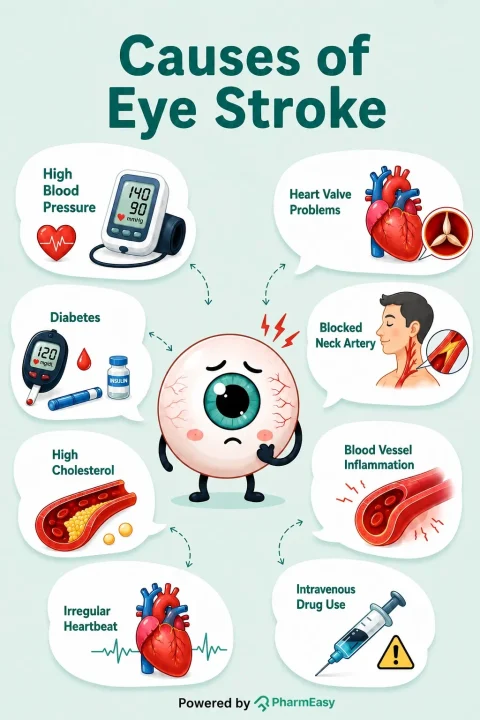
Stroke in eye may mainly occur due to disruption of the blood flow through the central retinal artery or vein due to its blockage by fat, calcium, or blood clot2,3,5. Eye stroke causes include2:
Eye stroke treatment includes various techniques to restore blood flow to the eye. However, treatment options are limited, and vision may not fully recover, especially when a large retinal area is involved. Time is critical, and treatment should be initiated as soon as possible. Studies suggest that treatment should be initiated within 2 to 4 hours of symptom onset2,5. Eye stroke treatment includes:
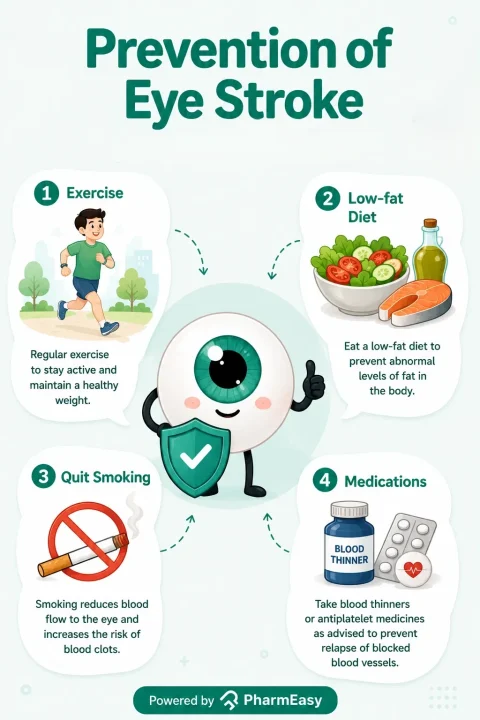
Measures to avoid an eye stroke include managing the conditions that affect the blood vessels, such as coronary artery disease2. This involves:
Also Read: Pain Behind Eye: Causes, Symptoms, Treatment, and Home Remedies
An eye stroke is a medical emergency, and you must seek prompt medical attention if you experience symptoms such as blurring or vision loss. If you are at risk of heart or blood vessel conditions, it is advised to routinely evaluate your vision as early detection can help in preserving your vision5.
Also Read: Could Yellow Eyes Be Serious? Causes, Symptoms & Treatment Guide
An eye stroke could happen suddenly without any warning. However, prompt intervention can play a significant role in treatment outcomes to protect the vision. Never ignore symptoms such as sudden vision loss, dark spots or blurring of vision, as they may require quick medical attention. Early diagnosis and adequate treatment could help to preserve the vision and detect any underlying medical condition that needs attention. If you or your dear ones experience any such eye stroke symptoms, seek swift emergency care, because when it comes to an eye stroke, every minute counts.
Also Read: What Is Eye Strain and How Can You Reduce It in the Digital Age
An eye stroke itself is not usually life-threatening. However, it may be a warning sign of underlying blood vessel disease and is associated with an increased risk of a brain stroke. Because both conditions share the same risk factors, prompt medical evaluation is essential6.
An eye stroke may cause permanent loss of vision, but the outcome depends on how severe the blockage is and how quickly treatment is started. Prompt treatment offers the best chance of preserving vision, although full recovery may not always be possible4,5.
Studies suggest a golden window for the treatment of eye stroke lies between 90 minutes and 4 hours from the beginning of symptoms however, full recovery may not always be possible8.
Stress alone may not directly cause an eye stroke; however, long-term stress may contribute to conditions such as high blood pressure and narrowing of blood vessels, which can increase the risk of an eye stroke9.
Eye stroke is quite rare, with data suggesting that around 1 in 10,000 people may experience it. It is also rarely reported in young individuals10.
An eye stroke does not directly lead to a brain stroke. However, it is associated with a higher risk of developing a brain stroke because both conditions share many of the same risk factors, such as high blood pressure and diabetes11.
Disclaimer: The information provided here is for educational/awareness purposes only and is not intended to be a substitute for medical treatment by a healthcare professional and should not be relied upon to diagnose or treat any medical condition. The reader should consult a registered medical practitioner to determine the appropriateness of the information and before consuming any medication. PharmEasy does not provide any guarantee or warranty (express or implied) regarding the accuracy, adequacy, completeness, legality, reliability or usefulness of the information; and disclaims any liability arising thereof.
Links and product recommendations in the information provided here are advertisements of third-party products available on the website. PharmEasy does not make any representation on the accuracy or suitability of such products/services. Advertisements do not influence the editorial decisions or content. The information in this blog is subject to change without notice. The authors and administrators reserve the right to modify, add, or remove content without notification. It is your responsibility to review this disclaimer regularly for any changes.


Comments

Leave your comment...
You may also like
























Comments