Last updated: Oct 19, 2026Published on: Jun 10, 2024
Table of Contents
Introduction
Pain behind the eyes is a symptom felt by many that can cause worry and unease. Sometimes it can affect vision or be a sign of other health issues. To handle it well, we must know the root causes and associated signs.
In this article, we will guide you through the causes, signs, management of eye pain and ways to keep your eyes healthy. We will answer common questions on this topic as well.
Causes of Pain Behind the Eye
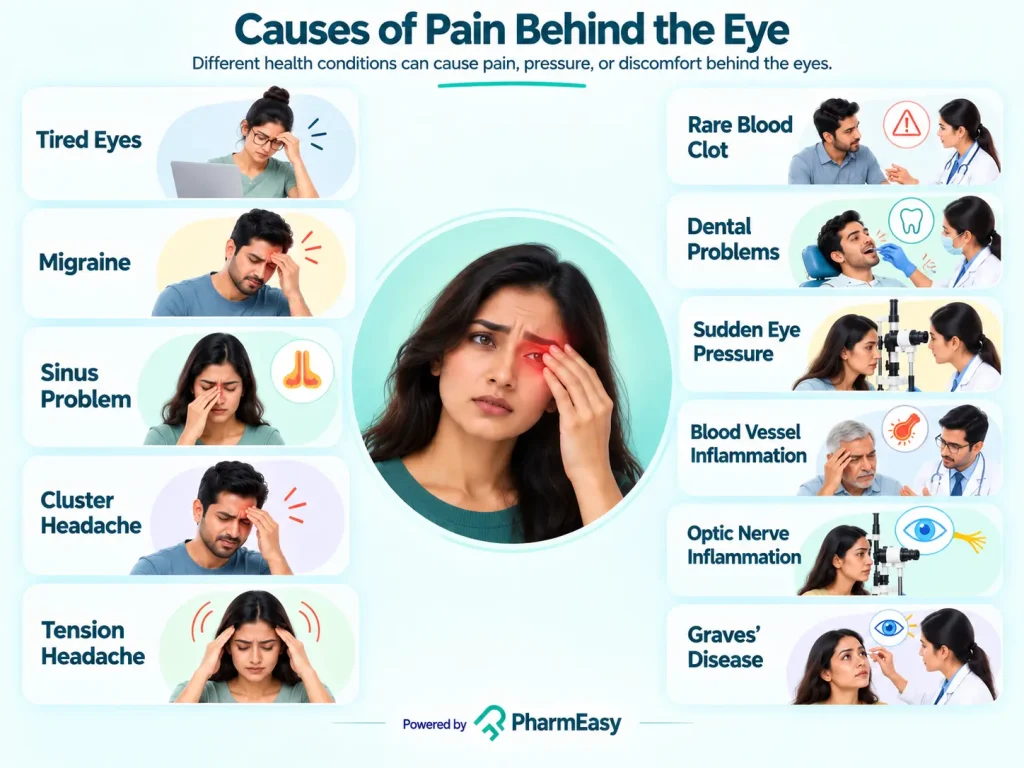
Many things can cause pain behind the eye. In this section, we will discuss some common causes. Some are not so serious, while others can be quite severe.
Advertisement
Eyestrain: Eyestrain is a common cause of eye pain. People who work for long hours on screens or do close work are often affected. Long hours in front of a screen can make you blink less and dry out your eyes, leading to discomfort1.
Migraine: Migraines cause strong headaches. They are characterized by sharp, throbbing pains, usually on one side of the head. The pain can sometimes shift behind the eyes, causing discomfort and sensitivity to light.
Sinus Infection: A sinus infection happens when the sinuses, spaces behind the nose, eyes, and cheeks, get inflamed or blocked. The swelling and extra mucus can put pressure on the upper part of the face, including behind the eyes1.
Cluster Headache: Cluster headache is a special kind of headache. It causes sudden, severe pain behind one eye. These headaches often come in clusters or cycles, with several episodes occurring within a short period.
Tension Headache: Tension headaches are the most common type of headache. They are known by their tight, aching pain. This pain can sometimes be felt behind the eyes, adding to the discomfort.
Cavernous Sinus Thrombosis (CST): Cavernous sinus thrombosis (CST) is a rare condition. It happens when a blood clot forms in the vein between the base of the brain and the eye sockets. This can cause pain and swelling behind the eyes2.
Dental Problems: Problems with the jaw, teeth, or bite can tense up muscles. This may lead to headaches and pain behind the eyes3.
Angle-closure Glaucoma: Angle-closure glaucoma is an eye problem. The iris blocks the fluid drain angle, causing pressure to build up fast. This can result in severe pain around and behind the eyes4.
Giant Cell Arteritis: Giant cell arteritis is a condition that causes inflammation. It affects the blood vessels in the scalp, temples, and at times, behind the eyes. This leads to severe pain5.
Optic Neuritis: Optic neuritis is an inflammation of the optic nerve, which attaches the eyes to the brain. This inflammation can cause pain and discomfort behind the eyes6.
Graves’ Disease: Graves’ disease is a disorder where the body’s immune system attacks itself. It can affect the eye muscles and cause the eyes to protrude, leading to pressure and pain behind the eyes7.
Another reason for pain behind the eye may be corneal abrasion. A corneal abrasion is like a tiny cut or scratch on the clear part at the front of your eye. It happens suddenly, so your eye doesn’t have time to protect itself. This can make your eye pain, sensitive to light, and watery, and it might get infected. Your doctor can guide you on better on your condition11.
Feels like pressure or tightness across the forehead
Cavernous Sinus Thrombosis (CST) Symptoms
Headache
Swelling and redness around the eyes
Eye movements cause pain
Loss of sight or double vision
Fever
Dental Problem Symptoms
Tooth or gum pain
Jaw discomfort or stiffness
A hard time chewing or biting
Headache and facial pain, possibly felt behind the eyes
Angle-closure Glaucoma Symptoms
Severe eye pain and redness
Less sharp or blurry vision
Seeing halos around lights
Nausea and throwing up
Sudden start, often in dark places
Giant Cell Arteritis Symptoms
New, severe headache
Scalp or temple tenderness
Jaw pain when chewing
Loss of sight or blurriness
Fever and fatigue
Optic Neuritis Symptoms
Pain behind the eye often worsens with eye movement
Sudden loss of sight in one eye
Loss of colour vision
Flashing lights with eye movement
Issues with side or ring vision
Graves’ Disease Symptoms
Bulging eyes
Eye pain and pressure
Puffy eyelids
Redness and inflammation
Vision loss or double vision
Feels like something is in the eye
Management Options for Pain Behind the Eye
The right management for eye pain depends on cause. Some management options are simple, like over-the-counter medicines. But some issues may need more intense care.
1. Management options for Eyestrain
Take a break from screens or close work every 20 minutes using the 20-20-20 rule (Take 20 second break every 20 minutes and look 20 feet away).
Make sure there’s enough light where you’re working8.
Change the display settings on digital gear.
Maintain a good posture and make your workspace help your body work.
Use eye drops/artificial tears prescribed by your doctor if you have dryness.
Wear glasses that match your eyesight needs or consider glasses that block blue light.
2. Management options for Migraine
Over-the-counter pain relievers like Non-Steroidal Anti-Inflammatory Drugs (NSAIDs) may help.
Doctor-prescribed drugs, including triptans, or ergot derivatives along with antiemetics9.
Avoid known triggers, like some foods, sunlight, loud sound or smells, disturbed sleep routine etc.
Manage stress with relaxation exercises or cognitive-behavioural therapy.
3. Management options for Sinus Infection
Antibiotics under medical guidance may be needed for bacterial infections.
Nasal sprays or solutions to clear the nasal passages.
Always remember the first step is consulting your ophthalmologist when you develop eye pain. They will examine and perform tests to find the root cause of the pain and then accordingly manage the conditions.
Alternative Management Options
Along with normal management for eye pain, there are other types of care and home remedies that may help. These may provide extra relief or help with doctor-prescribed medicines.
Alternative Therapies for Eye Pain
Acupuncture: In this type of care, thin needles are inserted at different points on the body. This is believed to promote repair and eases pain. Acupuncture may help people suffering from migraines and cluster headaches10.
Biofeedback: Here, you are taught how to control bodily responses. This can include heart rate and muscle tension. You may then better manage headaches and linked signs.
Relaxation techniques: These can include yoga, meditation, and deep breathing exercises. All help manage stress and reduce headache number and severity.
Lifestyle Changes and Home Remedies for Pain Behind the Eye
Changing habits around screen use can help ease pain because of eyestrain. Take breaks often and reduce glare.
Eat well, drink enough water, and get regular exercise. These help overall health and reduce the chance of headaches.
Use stress management techniques and maintain a good sleep routine. Take time to relax. These may avoid tension headaches and other stress-related pain.
Putting warm or cold compresses to the pained area may help lighten tension headache pain.
Steaming can help clear blocked sinuses and ease sinus-related pain.
Tips to Reduce the Risk of Pain Behind the Eye
You can take steps to reduce the risk of eye pain and related issues.
Advertisement
1. Tips for Avoiding Eyestrain
Take breaks often from screens and close work.
Change display settings to reduce glare and strain.
Make sure your workspace is well lit and body friendly.
Wear glasses that fit your vision needs or that block blue light.
2. Tips for Avoiding Migraines and Headaches
Find out and avoid possible triggers, like some foods or components of your environment.
Maintain a steady sleep schedule and make sure you rest enough.
Exercise regularly and use stress-management techniques.
Stay well-hydrated and eat a balanced diet. Ensure to eat small meals at short intervals.
Wear shades in sun to avoid direct sunlight.
3. Tips for Reducing the Risk of Sinus Infections
Wash your hands well to reduce infection risk.
Don’t smoke and avoid second-hand smoke, which can irritate the sinuses.
Use a humidifier in dry places to maintain enough moisture in the sinuses.
Try using a saline nasal spray or irrigation system to clear nasal passages and reduce congestion.
4. Tips for Maintaining Good Eye Health
Regular eye checks to watch for any changes in vision or eye health.
Wear sunglasses with UV protection to protect your eyes from harmful sunlight.
Limit screen time, take breaks, and change settings to minimise eyestrain.
Take good care of contact lenses and replace them as told to reduce the risk of eye infections.
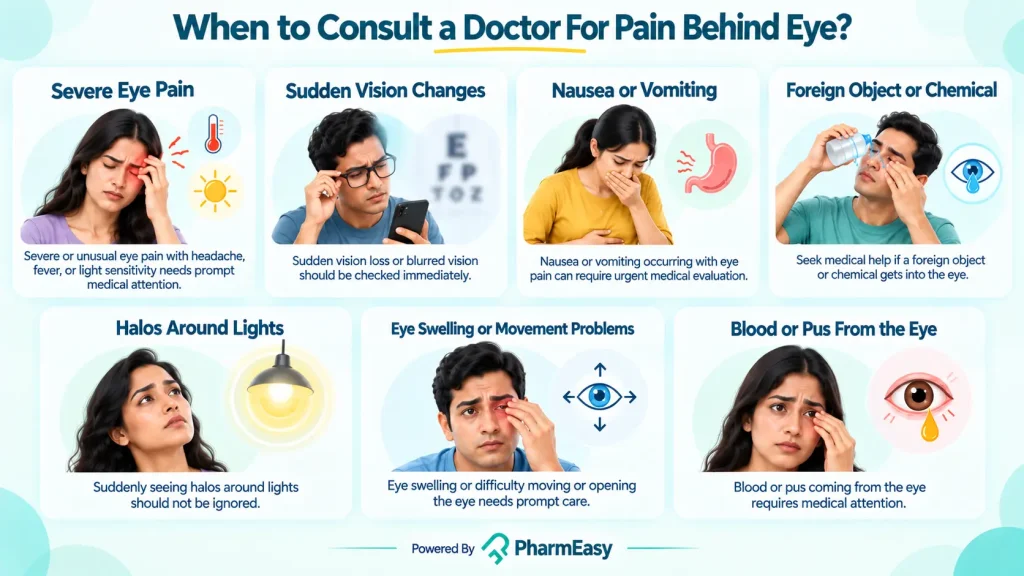
When to Consult a Doctor?
Get medical help right away if you are in any of these situations:
Severe or odd pain behind the eye comes with a headache, fever, or sensitivity to light.
Sudden changes in vision, such as loss of sight or blurriness.
Nausea or throwing up happens alongside eye pain.
A foreign object or chemical gets into the eye.
You suddenly start seeing halos around lights.
There’s swelling in or around the eyes or you can’t move the eye or keep it open.
You should see a healthcare worker or an eye doctor in these cases:
Pain behind the eye doesn’t go away after two to three days of care or management.
Eye pain follows recent eye surgery or an eye injection.
Eye pain happens with soft contact lens wear.
Those who have a weak immune system or earlier eye health issues.
Conclusion
Eye pain is a common problem that can have many causes. They include eyestrain, migraines, sinus infections, and more. A better understanding of the causes, signs, management options, and ways to avoid eye pain prepares you to manage your eye health and avoid dangers. Along with medical management as advised by the doctor, certain home care measures and other types of therapies may help ease eye pain. Steps such as regular eye exams, good eye care practices, and avoiding triggers may also reduce the risk of eye pain and related issues.
Do not delay consulting an ophthalmologist if you have eye pain that won’t go away or is severe. Seeing a medical expert on time and getting the right care is key to keeping your eyes healthy.
Frequently Asked Questions (FAQs)
What causes a feeling of pressure behind the eye?
There are many causes of pressure behind the eye. They include eyestrain, migraines, sinus infections, cluster headaches, dental issues, angle-closure glaucoma, giant cell arteritis, optic neuritis, and Graves’ disease.
How do I get rid of the pain behind my eye?
Getting rid of eye pain depends on what’s causing it. It could involve over-the-counter painkillers, doctor-prescribed medicines, other types of care, or home remedies. Ask your healthcare professional or ophthalmologist for the right diagnosis and advice on managing your case.
When should I be worried about eye pain?
What kind of headache is behind one eye?
Many things can cause headaches behind one eye, like cluster headaches or migraines. Cluster headaches usually cause sudden, severe pain behind one eye. Migraines can cause intense, pulsing pain on one side of the head, which may also shift behind the eye.
How can you avoid eye pain and related issues?
To avoid eye pain, maintain good eye health habits. These include regular eye checks, wearing sunglasses with UV protection, use and care of contact lenses, and taking breaks during a lot of screen time. For pain linked to migraines or headaches, know your triggers, stay well-hydrated, practice stress management, and maintain a stable sleep schedule. These practices may help avoid issues.
6. Yang X, Li X, Lai M, Wang J, Tan S, Chan HH lung. Pain Symptoms in Optic Neuritis. Front Pain Res. 2022;3:865032. doi:10.3389/fpain.2022.865032 https://pubmed.ncbi.nlm.nih.gov/35498555/
10. Urits I, Patel M, Putz ME, et al. Acupuncture and Its Role in the Treatment of Migraine Headaches. Neurol Ther. 2020;9(2):375-394. doi:10.1007/s40120-020-00216-1 https://pubmed.ncbi.nlm.nih.gov/33001385/
Disclaimer: The information provided here is for educational/awareness purposes only and is not intended to be a substitute for medical treatment by a healthcare professional and should not be relied upon to diagnose or treat any medical condition. The reader should consult a registered medical practitioner to determine the appropriateness of the information and before consuming any medication. PharmEasy does not provide any guarantee or warranty (express or implied) regarding the accuracy, adequacy, completeness, legality, reliability or usefulness of the information; and disclaims any liability arising thereof.
Links and product recommendations in the informationprovided here are advertisements of third-party products available on the website. PharmEasy does not make any representation on the accuracy or suitability of such products/services. Advertisements do not influence the editorial decisions or content. The information in this blog is subject to change without notice. The authors and administrators reserve the right to modify, add, or remove content without notification. It is your responsibility to review this disclaimer regularly for any changes.



















































Comments