



What Are Endorphins? Understanding the Body’s Natural Pain-Relieving Hormone
By Dr. Akash N. Shah +2 more

Medically reviewed by Dr. Akash N. Shah
Last updated: Sep 15, 2026 Published on: Jul 30, 2026


Get,

to manage your symptom
Get your,

4 Cr+ families
benefitted

OTP sent to 9988776655



You’ve successfully subscribed to receive
doctor-approved tips on
Whatsapp

Get ready to feel your best.


Register to Avail the Offer
Send OTPBy continuing, you agree with our Privacy Policy and Terms and Conditions
Hi There,
Sign up on PharmEasy now!!


Trusted by 4 crore+ families

OTP sent to 9988776655
You have unlocked 25% off on medicines


Code: NU25

By Dr. Akash N. Shah +2 more
Table of Contents
Have you ever noticed that you feel happier after a good workout, a warm hug or a heartfelt laughter? This is because your body has its own natural way of making you feel good or better. One of the important chemicals that help your body in this are endorphins, which are commonly known as “feel-good chemicals”1. This article will help you understand what endorphins are, how they work, why they are important, what happens if they are low and how to naturally boost their levels.
Endorphins are natural opioid peptides produced by the body and released in response to activities such as exercise, laughter, pain, stress, and excitement. They are mainly produced by the pituitary gland and hypothalamus and act within the brain and nervous system to help reduce pain, dampen stress responses, and contribute to feelings of well-being. Since they contribute towards pain-relief, endorphins are often called the body’s natural painkiller1.

Did You Know?
Endorphin hormones play different roles in our body. The following are some important functions of endorphin hormones:
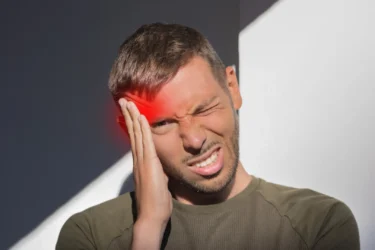
Endorphins are released when the body experiences pain or stress (physiological). They help reduce the pain by slowing down the transmission of pain signals to the brain. This natural pain-relieving effect allows your body to better cope with physical strain, injury, or temporary discomfort2.

Endorphins are released during stressful situations such as when you become upset, anxious, etc. These chemicals help reduce discomfort and create a sense of calm, making it easier for you to handle short-term stress3. Hence, they promote a feeling of well-being, helping your mind recover after challenging situations1.

Endorphins are released along with other happy hormones such as serotonin and dopamine during enjoyable activities such as laughing, dancing, or spending time with loved ones. This helps you feel more positive and hence improves your mood by creating feelings of happiness, relaxation, and emotional comfort1.

During physical activity, your body releases endorphins. These help you keep going and create a happy and energised feeling often experienced after exercise, known as the “runner’s high1.”

Recent studies2 suggest that certain immune cells (such as T cells, B cells, and macrophages) may produce endorphins when the body is fighting inflammation. These naturally released endorphins may help you by reducing pain while supporting your body’s immune response and healing process.

Endorphins play a role in regulating appetite and maintaining the body’s energy balance. Hence, they may affect your eating behaviour4.
Endorphins offer several health benefits. The common benefits include the following:
Differences in endorphin hormone levels can affect both your body and mind. Here’s what you may experience when your endorphin levels are reduced or increased:
When your body has low level of endorphins, you may not feel the usual mood-boosting and pain-relieving effects. Low endorphin levels are not necessarily the primary cause of health problems, but they can cause symptoms including low mood, increased stress, fatigue, irritability, poor sleep, and increased sensitivity to pain or physical discomfort1,3. As a result, you may find it difficult to enjoy everyday activities, feel more easily overwhelmed by everyday challenges, have less energy, get frustrated more quickly, struggle to sleep peacefully, or notice that little aches and pains are more painful than usual.
Naturally elevated endorphin levels are usually temporary . They are frequently observed following activities such as strenuous exercise, laughter, dancing, exciting experiences, or other joyful moments. During this moment, you may feel happier, calmer, energised, or less sensitive to minor pain1. Endorphin levels eventually return to normal as your body recovers.
Several factors can affect the production or release of endorphins in your body. The most common ones include:
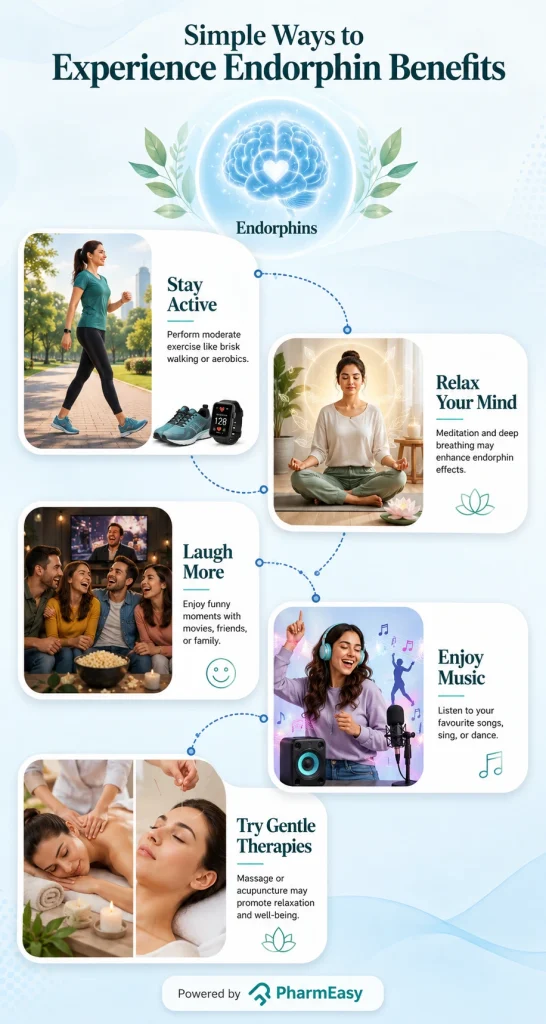
There are several ways by which you might experience Endorphin effects better. These include the following:
Also Read: Hyperandrogenism (Excess Androgen in Females): Symptoms, Causes, Diagnosis & Treatment
Everyone experiences changes in mood from time to time. However, it is important to consult a doctor if you experience:
Do not forget that natural endorphin production is not sufficient to manage chronic conditions3. Therefore, consulting a doctor is important, as he can identify the underlying cause of these symptoms and recommend appropriate treatment if needed.
Also Read: What Does Oxytocin Do? Everything You Need to Know About the Love Hormone
Endorphins may help as natural pain relievers that also contribute to emotional well-being. They help alleviate discomfort, boost mood, induce relaxation, and make it easier for you to deal with stress. While the body naturally creates endorphins, healthy lifestyle choices like regular exercise, adequate sleep, meaningful social interactions, and enjoyable activities are important for their release. If you are experiencing prolonged mood swings, pain, or other worrying symptoms, it is best to consult a doctor to diagnose the exact cause and receive the appropriate treatment.
Palatable foods, or foods that are enjoyable and satisfying to eat, may help stimulate the release of endorphins by activating the brain’s natural reward system8. Examples include dark chocolate9, spicy foods (containing capsaicin), etc10.
Note: The effect of these foods on endorphin release may vary from person to person and should not replace a healthy lifestyle.
Endorphins and dopamine are different chemicals in the brain. Endorphins mainly help reduce pain and promote a sense of well-being, while dopamine is involved in motivation, reward, and pleasure1,11.
Yes. Short-term stress can trigger the release of endorphins to help your body cope with discomfort, while long-term or chronic stress may affect their normal balance and reduce their positive effects over time3.
Yes. Endorphin levels may change with age due to natural changes in the brain, hormones, and overall health, although they can still be supported through regular exercise and a healthy lifestyle1,7.
Yes. Poor or insufficient sleep may affect your body’s natural endorphin activity5, which can leave you feeling more tired, irritable, and less able to cope with stress.
You can naturally experience the effects of endorphin release through activities such as regular exercise, laughing, listening to music, dancing, spending time with loved ones, and practicing relaxation techniques. Maintaining a healthy lifestyle with good sleep, a balanced diet, and regular physical activity may also support healthy endorphin production1,5.
1. Endorphins: The brain’s natural pain reliever. DOI: Available from: https://www.health.harvard.edu/mind-and-mood/endorphins-the-brains-natural-pain-reliever
2. Sprouse-Blum AS, Smith G, Sugai D, Parsa FD. Understanding endorphins and their importance in pain management. Hawaii Med J. 2010;69(3):70-71. Available from: https://pmc.ncbi.nlm.nih.gov/articles/PMC3104618/
3. Pilozzi A, Carro C, Huang X. Roles of β-Endorphin in Stress, Behavior, Neuroinflammation, and Brain Energy Metabolism. IJMS. 2020;22(1):338. doi:10.3390/ijms22010338. Available from: https://pubmed.ncbi.nlm.nih.gov/33396962/
4. Endorphins. Doi: Available from: https://www.ars.usda.gov/research/publications/publication/?seqNo115=165521
5. Phillips B, Cooper KR, Newsome HH, Dewey WL. Effect of Sleep Loss on β-Endorphin Activity, Epinephrine Levels, and Ventilatory Responsiveness: Southern Medical Journal. 1987;80(1):16-20. doi:10.1097/00007611-198701000-00004. Available from: https://pmc.ncbi.nlm.nih.gov/articles/PMC3299928/
6. Paramasivam A, Murugan R, Jeraud M, Dakkumadugula A, Periyasamy R, Arjunan S. Additives in Processed Foods as a Potential Source of Endocrine-Disrupting Chemicals: A Review. JoX. 2024;14(4):1697-1710. doi:10.3390/jox14040090. Available from: https://pubmed.ncbi.nlm.nih.gov/39584955/
7. Gambert SR, Garthwaite TL, Pontzer CH, Hagen TC. Age-related changes in central nervous system beta-endorphin and ACTH. Neuroendocrinology. 1980 Oct;31(4):252-5. doi: 10.1159/000123083. PMID: 6252495. Available from: https://pubmed.ncbi.nlm.nih.gov/6252495/
8. Benton D, Donohoe RT. The effects of nutrients on mood. Public Health Nutr. 1999;2(3a):403-409. doi:10.1017/S1368980099000555. Available from: https://pubmed.ncbi.nlm.nih.gov/10610080/
9. Garbarino S, Garbarino E, Lanteri P. Cyrcadian Rhythm, Mood, and Temporal Patterns of Eating Chocolate: A Scoping Review of Physiology, Findings, and Future Directions. Nutrients. 2022;14(15):3113. doi:10.3390/nu14153113. Available from: https://pubmed.ncbi.nlm.nih.gov/35956290/
10. Bosland PW. Hot stuff – do people living in hot climates like their food spicy hot or not? Temperature. 2016;3(1):41-42. doi:10.1080/23328940.2015.1130521. Available from: https://pmc.ncbi.nlm.nih.gov/articles/PMC4861186/
11. Dopamine. 2025. Doi: Available from: https://www.healthdirect.gov.au/dopamine
Disclaimer: The information provided here is for educational/awareness purposes only and is not intended to be a substitute for medical treatment by a healthcare professional and should not be relied upon to diagnose or treat any medical condition. The reader should consult a registered medical practitioner to determine the appropriateness of the information and before consuming any medication. PharmEasy does not provide any guarantee or warranty (express or implied) regarding the accuracy, adequacy, completeness, legality, reliability or usefulness of the information; and disclaims any liability arising thereof.
Links and product recommendations in the information provided here are advertisements of third-party products available on the website. PharmEasy does not make any representation on the accuracy or suitability of such products/services. Advertisements do not influence the editorial decisions or content. The information in this blog is subject to change without notice. The authors and administrators reserve the right to modify, add, or remove content without notification. It is your responsibility to review this disclaimer regularly for any changes.


Comments

Leave your comment...
You may also like



















Comments