Get,

Free Doctor Tips

to manage your symptom

Get your,

FREE Doctor Tips Now!!

4 Cr+ families

benefitted

Enter your Phone Number

+91

|

Enter a valid mobile number

Send OTP

Verify your mobile number

OTP sent to 9988776655

CONGRATULATIONS!!!

You’ve successfully subscribed to receive

doctor-approved tips on Whatsapp


Get ready to feel your best.

Hi There,

Download the PharmEasy App now!!

AND AVAIL

AD FREE reading experience
Get 25% OFF on medicines
Banner Image

Register to Avail the Offer

Send OTP

By continuing, you agree with our Privacy Policy and Terms and Conditions

Success Banner Image
Verify your mobile number

OTP sent to 9988776655

Comments

Subscribe
Notify of
guest
0 Comments
Inline Feedbacks
View all comments

Leave your comment here

Your email address will not be published. Required fields are marked *

25% OFF on medicines

Collect your coupon before the offer ends!!!

COLLECT

Thyroid Cancer: Symptoms, Causes, Types, Treatment & Prevention 

By Dr. Nisha Dahiya +2 more

Join Health Talk by PharmEasy on WhatsApp

Introduction

Most people think of the thyroid as a hormone-producing gland, but it can also develop cancer. Thyroid cancer often progresses slowly and may not cause symptoms at first, so knowing the warning signs and seeking timely medical advice and care can make a meaningful difference1

Although the word cancer can feel alarming, many thyroid cancers are manageable, especially when diagnosed early. This article explains what thyroid cancer is, the symptoms to watch for, causes and risk factors, how it is diagnosed, treatment options, and practical steps that may support thyroid health. 

Thyroid Cancer

Advertisement

What Is Thyroid Cancer?

what is thyroid cancer

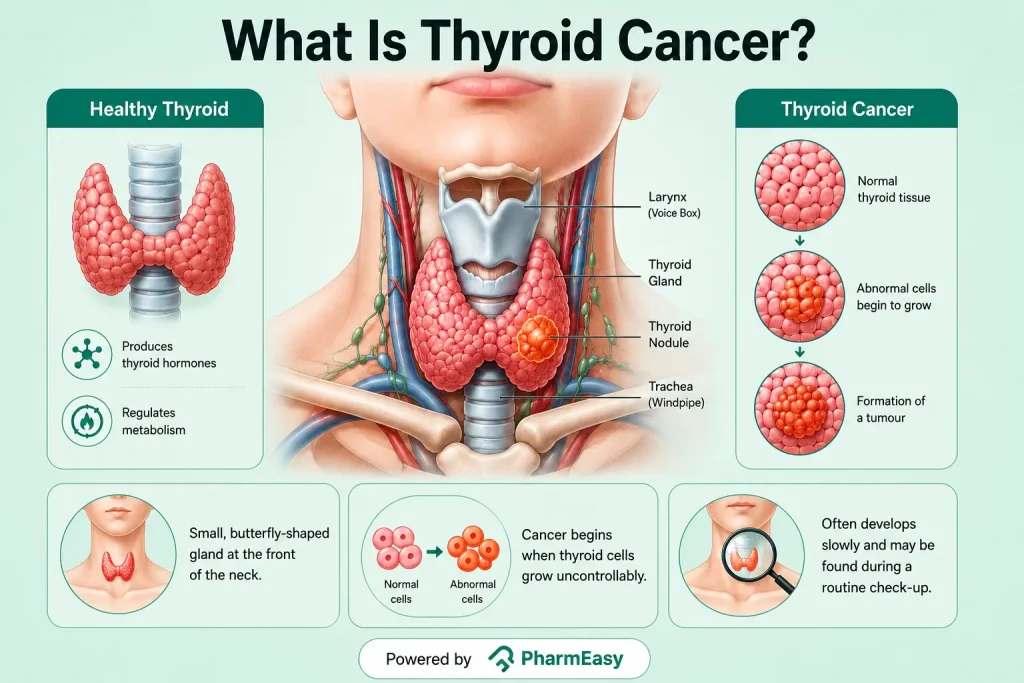
The thyroid is a small, butterfly-shaped gland at the front of the neck. It produces hormones that help regulate metabolism, heart rate, body temperature, and other important body functions2

Thyroid cancer develops when thyroid cells grow in an uncontrolled manner and form a tumour. Many thyroid cancers progress slowly, which is why they can remain unnoticed in the early stages and may only be discovered during a routine neck examination or an imaging test done for another reason.3 

However, thyroid cancer is relatively uncommon compared with many other cancers. According to the American Cancer Society, an estimated 45,240 new cases of thyroid cancer are expected to be diagnosed in the United States in 2026, accounting for about 2.1% of all new cancer cases4.

Did You Know?

  • The overall 5-year relative survival rate is approximately 98.3% (2016 to 2022), especially when thyroid cancer is diagnosed and treated early4
  • People younger than 55 years with a small thyroid cancer that has not spread beyond the thyroid gland generally have an excellent prognosis, and deaths from the disease are extremely rare2.
  • Larger, more aggressive, or spread-out cancers carry a higher risk of recurrence2.

Types of Thyroid Cancer

Thyroid cancer is classified by the type of thyroid cell involved. This matters because each type behaves differently and may need a different treatment approach2.

  • Papillary Thyroid Cancer: Papillary thyroid cancer is the most common type, making up 70%–80% of all thyroid cancers. It can occur at any age but is more common in younger adults. This type usually grows slowly and may spread to the lymph nodes in the neck2.
  • Follicular Thyroid Cancer: Follicular thyroid cancer makes up about 10%–15% of thyroid cancers. It also tends to grow slowly but is more likely than papillary thyroid cancer to spread through the blood, most commonly to the lungs or bones2.
  • Medullary Thyroid Cancer (MTC): Medullary thyroid cancer accounts for approximately 2% of all thyroid cancers. Unlike the more common types, it develops from specialised thyroid cells called C cells, which produce the hormone calcitonin. About 25% of cases are inherited and are associated with changes (mutations) in a certain gene, while the remaining 75% occur without a family history2.
  • Anaplastic Thyroid Cancer: Anaplastic thyroid cancer is very rare, occurring in less than 2% of thyroid cancer cases. It is the most aggressive form of thyroid cancer, grows rapidly, and is more difficult to treat than the other types2.

Causes of Thyroid Cancer

The exact cause of thyroid cancer is not always known. It can develop when changes in thyroid cell genes affect how the cells grow and divide. The following factors may increase risk, although having a risk factor does not mean a person will definitely develop thyroid cancer. 

Advertisement

Risk Factors for Thyroid Cancer

  • Radiation exposure: Radiation to the head or neck during childhood is one of the strongest known risk factors for thyroid cancer5
  • Family history and inherited genes: Having a close relative with thyroid cancer increases your risk. Some inherited genetic conditions (e.g., multiple endocrine neoplasia) are also linked to MTC2,5.
  • Female sex: Thyroid cancer is diagnosed more often in women than in men (almost three times more in women), although the exact reason is not fully understood5,6
  • Age: Thyroid cancer can occur at any age but is most commonly diagnosed in adults between 25 and 65 years of age6.
  • Obesity: Being overweight or obese has been associated with a higher risk of developing thyroid cancer7.
  • Iodine intake: Both too little and, in some cases, too much iodine in the diet may influence the risk of certain types of thyroid cancer, depending on the population and cancer subtype8.
  • Certain thyroid conditions: Some non-cancerous thyroid disorders, such as thyroid nodules or goitre, may be associated with a slightly higher risk of thyroid cancer9.

Note: It is important to remember that having one or more risk factors does not mean you will develop thyroid cancer. Likewise, many people diagnosed with thyroid cancer may have no known risk factors. 

Symptoms of Thyroid Cancer

Thyroid cancer may not cause symptoms in its early stages. When symptoms appear, they usually relate to a lump or pressure in the neck, voice changes, or problems with swallowing or breathing. 

Possible thyroid cancer symptoms include2:

  • A painless lump/swelling in the front of the neck 
  • A lump that gradually increases in size 
  • Difficulty swallowing 
  • Difficulty breathing or a feeling of pressure in the neck 
  • Persistent hoarseness or changes in the voice 
  • A constant tickle (or sensation of something stuck) in the throat 
  • Pain in the neck that may spread to the jaw or ear 
  • Swollen lymph nodes in the neck 

How Is Thyroid Cancer Diagnosed?

If your doctor suspects thyroid cancer, they will ask about symptoms, family history, and past radiation exposure. They will also examine the neck for thyroid nodules or enlarged lymph nodes. Depending on the findings, they may recommend one or more of the following tests5:

  • Thyroid Function Blood Tests: Blood tests such as thyroid-stimulating hormone and thyroglobulin are often the first step in evaluating a thyroid nodule. 
  • Thyroid Ultrasound: A high-resolution ultrasound is the primary imaging test used to evaluate thyroid nodules. It helps determine the size, number, and appearance of the nodules and identifies features that may suggest cancer. Ultrasound also helps assess nearby lymph nodes and guides further testing, if needed. 
  • Fine-Needle Aspiration Biopsy (FNAB): If a thyroid nodule appears suspicious on ultrasound or is large enough to require further evaluation, your doctor may perform an FNAB. During this minimally invasive procedure, a thin needle is used to remove a small sample of cells from the nodule, which is then examined under a microscope. This test tells us whether a thyroid nodule is likely to be cancerous. 
  • In selected cases, additional tests may be recommended, such as: 
    • Radioactive iodine (radionuclide) scan: Used mainly when thyroid hormone levels indicate an overactive thyroid to determine whether a nodule is producing excess hormone. 
    • CT or MRI scan: May be used if the cancer is suspected to have spread beyond the thyroid or to evaluate large tumours. 
    • Molecular testing: Sometimes performed when biopsy results are inconclusive to help estimate the likelihood of cancer and guide treatment decisions. 

Treatment of Thyroid Cancer

Treatment depends on the type of thyroid cancer, its size, whether it has spread, your age, and your overall health. Your doctor will consider these factors to recommend the most appropriate treatment plan. Common thyroid cancer treatment/management options include5:

  • Surgery: Surgery is the primary treatment for most thyroid cancers. Depending on the size and extent of the cancer, your surgeon may remove part of the thyroid gland (lobectomy) or the entire thyroid gland (total thyroidectomy). They may also remove nearby lymph nodes if the cancer has spread. 
  • Radioactive Iodine (RAI) Therapy: After surgery, some people may receive radioactive iodine treatment to destroy any remaining thyroid tissue or cancer cells. This treatment is most commonly used for selected cases of papillary and follicular thyroid cancers. 
  • Thyroid Hormone Therapy: If all or part of the thyroid gland is removed, your doctor will suggest thyroid hormone replacement medication. In addition to replacing the hormones your body needs, these medications also help reduce the risk of the cancer returning. 
  • Targeted Therapy: Some advanced forms of thyroid cancer with specific genetic changes may be treated with targeted medications. These medications aim to block cancer growth while causing less damage to healthy cells (unlike traditional chemotherapy). 
  • Radiation Therapy: External beam radiation may be recommended if the cancer cannot be completely removed with surgery, has spread to nearby tissues, or returns after treatment. 
  • Chemotherapy: Chemotherapy is not routinely recommended for thyroid cancer. It is usually reserved for rare, advanced, or aggressive cancers that do not respond to standard treatments. 

Complications of Thyroid Cancer

Although most thyroid cancers are highly manageable, complications can occur, especially if the cancer is advanced or left untreated. These may include5:
  • Spread of the cancer to nearby tissues, such as the windpipe, food pipe, or nerves. 
  • Spread to distant organs, most commonly the lungs and bones.
  • Hoarseness or voice changes after thyroid surgery due to nerve injury.
  • Low calcium levels after surgery if the parathyroid glands are affected.
  • The need for lifelong thyroid hormone replacement after removal of the thyroid gland.

Prevention Tips for Thyroid Cancer

prevention tips for thyroid cancer

There is no guaranteed way to prevent thyroid cancer. However, the following steps may help reduce risk or support earlier detection6:

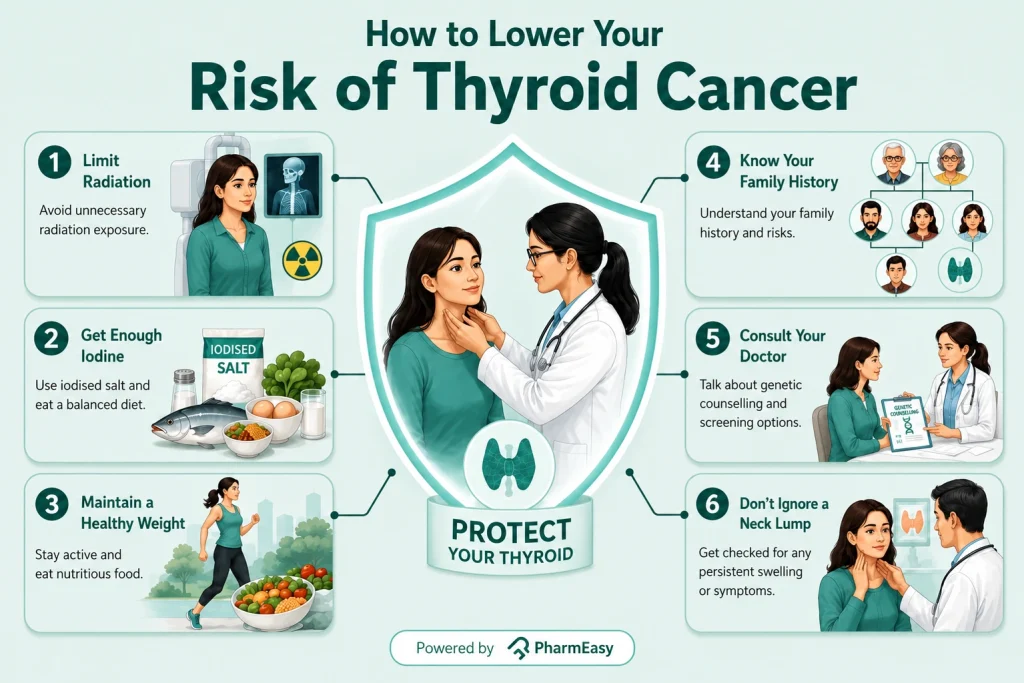
  • Avoid unnecessary radiation exposure, especially to the head and neck during childhood. Medical imaging should be done only when recommended by a doctor. 
  • Maintain adequate iodine intake by using iodised salt and eating a balanced diet, as iodine deficiency has been linked to certain types of thyroid cancer. 
  • Maintain a healthy weight through regular physical activity and a nutritious diet, as obesity has been associated with an increased risk of thyroid cancer. 
  • Know your family history. If you have a strong family history of thyroid cancer or other inherited conditions, speak to your doctor about genetic counselling and appropriate screening. 
  • Seek medical evaluation for a persistent or growing neck lump, swelling, or throat symptom. Early assessment can help identify the cause and guide timely treatment. 

Also Read: Best Iodine-Rich Foods to Support Thyroid Health Naturally

When Should You Consult a Doctor?

Consult a doctor if you notice any of the following symptoms, especially if they persist or worsen2,5:

  • A new lump/swelling in the front of your neck 
  • A thyroid nodule that is increasing in size 
  • Persistent hoarseness or changes in your voice 
  • Difficulty swallowing or breathing 
  • Neck pain that does not go away or spreads to the jaw or ear 
  • Swollen lymph nodes in the neck that persist for several weeks 
  • A strong family history of thyroid cancer or inherited conditions such as multiple endocrine neoplasia 

Also Read: Early Warning Signs of Cancer You Should Know

Conclusion

Thyroid cancer can be concerning, but many cases are manageable, particularly when diagnosed early and treated appropriately. 

Knowing the symptoms, understanding personal risk factors, and seeking medical advice for a new neck lump, persistent hoarseness, or swallowing or breathing difficulty can support earlier diagnosis and better care. 

With timely treatment and regular follow-up, most people with thyroid cancer can live long, healthy lives. 

Frequently Asked Questions (FAQs)

Is thyroid cancer curable?

Most thyroid cancers, especially papillary and follicular thyroid cancers, are treatable when diagnosed early. Most people have an excellent long-term prognosis with appropriate treatment and regular follow-up2.

What is the final stage of thyroid cancer?

The most advanced stage is Stage IV, where the cancer has spread beyond the thyroid to nearby tissues or distant organs such as the lungs or bones2,5,10. However, even in advanced stages, guided treatment can help control the disease and improve quality of life for the patient.

Does thyroid cancer cause weight loss?

Weight loss is not a common early symptom of thyroid cancer. However, unexplained weight loss may occur in advanced cases or due to other medical conditions and should be evaluated by a doctor5.

Is thyroid cancer genetic?

Most thyroid cancers are not inherited. However, some cases (particularly MTC) can run in families due to inherited genetic mutations2. If you have a strong family history of thyroid cancer, speak with your doctor about genetic counselling and testing. 

References

1. Forma A, Kłodnicka K, Pająk W, et al. Thyroid Cancer: Epidemiology, Classification, Risk Factors, Diagnostic and Prognostic Markers, and Current Treatment Strategies. Int J Mol Sci. 2025;26(11):5173. doi:10.3390/ijms26115173 https://pubmed.ncbi.nlm.nih.gov/40507982/

2. Thyroid Cancer. American Thyroid Association. Accessed July 6, 2026. https://www.thyroid.org/. Accessed July 6, 2026. https://www.thyroid.org/thyroid-cancer/ 

3. What Is Thyroid Cancer? Types of Thyroid Cancer. Accessed July 6, 2026. https://www.cancer.org/cancer/types/thyroid-cancer/about/what-is-thyroid-cancer.html 

4. Cancer of the Thyroid. Cancer Stat Facts. SEER. Accessed July 6, 2026. https://seer.cancer.gov/statfacts/html/thyro.html 

5. Lee K, Anastasopoulou C, Chandran C, Cassaro S. Thyroid Cancer. StatPearls. Accessed July 6, 2026. http://www.ncbi.nlm.nih.gov/books/NBK459299/ 

6. Castro ME de, Cunha LL, Ward LS. Narrative overview of possible preventive measures for differentiated thyroid carcinomas. Heliyon. 2024;11(1):e41284. doi:10.1016/j.heliyon.2024.e41284 https://pubmed.ncbi.nlm.nih.gov/39811343/

7. Franchini F, Palatucci G, Colao A, Ungaro P, Macchia PE, Nettore IC. Obesity and Thyroid Cancer Risk: An Update. Int J Environ Res Public Health. 2022;19(3):1116. doi:10.3390/ijerph19031116 https://pubmed.ncbi.nlm.nih.gov/35162142/

8. Zhang X, Zhang F, Li Q, Feng C, Teng W. Iodine nutrition and papillary thyroid cancer. Front Nutr. 2022;9:1022650. doi:10.3389/fnut.2022.1022650 https://www.frontiersin.org/journals/nutrition/articles/10.3389/fnut.2022.1022650/full

9. Kitahara CM, Kӧrmendiné Farkas D, Jørgensen JOL, Cronin-Fenton D, Sørensen HT. Benign Thyroid Diseases and Risk of Thyroid Cancer: A Nationwide Cohort Study. J Clin Endocrinol Metab. 2018;103(6):2216-2224. doi:10.1210/jc.2017-02599 https://pubmed.ncbi.nlm.nih.gov/29590402/

10. Cancer Staging. American Cancer Society. Accessed July 6, 2026. https://www.cancer.org/cancer/diagnosis-staging/staging.htm

Disclaimer: The information provided here is for educational/awareness purposes only and is not intended to be a substitute for medical treatment by a healthcare professional and should not be relied upon to diagnose or treat any medical condition. The reader should consult a registered medical practitioner to determine the appropriateness of the information and before consuming any medication. PharmEasy does not provide any guarantee or warranty (express or implied) regarding the accuracy, adequacy, completeness, legality, reliability or usefulness of the information; and disclaims any liability arising thereof.

Links and product recommendations in the information provided here are advertisements of third-party products available on the website. PharmEasy does not make any representation on the accuracy or suitability of such products/services. Advertisements do not influence the editorial decisions or content. The information in this blog is subject to change without notice. The authors and administrators reserve the right to modify, add, or remove content without notification. It is your responsibility to review this disclaimer regularly for any changes.

Advertisement

Comments

Leave your comment...