



Complete Pregnancy Test List Trimester-By-Trimester for Indian Mothers
By Dr. Charmi Shah +2 more

Medically reviewed by Dr. Charmi Shah
Last updated: Aug 21, 2026 Published on: May 21, 2026


Get,

to manage your symptom
Get your,

4 Cr+ families
benefitted

OTP sent to 9988776655



You’ve successfully subscribed to receive
doctor-approved tips on
Whatsapp

Get ready to feel your best.


Register to Avail the Offer
Send OTPBy continuing, you agree with our Privacy Policy and Terms and Conditions
Hi There,
Sign up on PharmEasy now!!


Trusted by 4 crore+ families

OTP sent to 9988776655
You have unlocked 25% off on medicines


Code: NU25

By Dr. Charmi Shah +2 more
Table of Contents
Pregnancy is a beautiful journey to motherhood; however, it brings along many physical and emotional changes in the expecting mother which can impact the developing baby as well. During this period regular health monitoring plays a key role in ensuring the safety and health of both the mother and the baby. Here is where pregnancy profile tests play a major role.
These are medical tests done during pregnancy that assist doctors in monitoring the baby’s growth, evaluating the mother’s health, and detecting potential issues early on. From blood tests to scans, each test provides useful information for a safe and healthy pregnancy1.

When pregnant mothers learn about several pregnancy tests, they often get anxious. However, these tests are normal and are conducted to protect both the mother and the baby. Early diagnosis of health risks allows doctors to give timely care and avoid complications.
In this guide, we will explain what a pregnancy profile test is and why it is important and provide a complete trimester-by-trimester pregnancy test list for Indian mothers.
Pregnancy profile testing includes a set of medical tests and screenings recommended at various stages of pregnancy. These are done to monitor the health of both the mother and the baby throughout pregnancy. Because pregnancy affects different sections of the body, doctors combine multiple tests instead of performing just one1. These may include blood tests, urine tests, ultrasound scans, genetic screenings, and infection screenings, which are considered as the routine pregnancy tests2.
Pregnancy profile tests are usually divided according to the trimester, and each might contain multiple tests1. Grouping these tests together can help doctors gain a more thorough picture of the pregnancy. Some tests analyse the mother’s nutritional state, while others detect infections or evaluate the baby’s growth2. In some pregnancies, additional tests may also be advised if the mother has diabetes, high blood pressure, thyroid disorders, etc3.
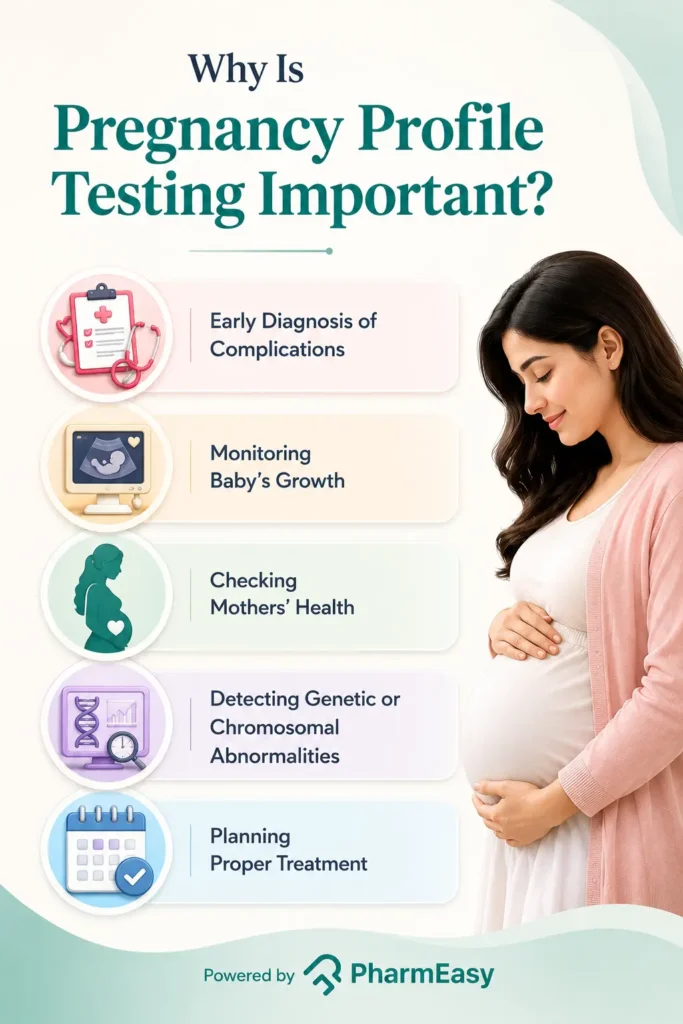
Pregnancy profile tests are important because they help ensure safety and well-being of both the mother and the baby throughout pregnancy. The following says why these tests matter:
Pregnancy profile tests are done during the three trimesters to monitor the mother’s and baby’s health, identify issues early, and help ensure a safe and healthy pregnancy.
Here is a pregnancy profile test list usually taken in each trimester.
During the first trimester, tests are mostly used to confirm pregnancy, assess the mother’s overall health, and identify possible risks or health issues. This period includes the following tests:
| Test | Why It’s Done | |
|---|---|---|
| 1. | Urine or Blood Pregnancy Test | This test confirms a pregnancy. It detects human chorionic gonadotropin (hCG) in the blood, which is produced by the placenta1,5. |
| 2. | Infection Screening Test | This test helps screen different infections that could affect the mother or baby during pregnancy. It includes the screening of infections such as HIV, syphilis, rubella, hepatitis, etc 2. |
| 3. | Complete Blood Count (CBC) with Iron Test | This test measures red blood cells (RBCs), white blood cells (WBCs), haemoglobin (Hb), platelets, and iron levels in the blood. It helps detect anaemia, infections, and other blood-related problems early in pregnancy6. |
| 4. | Blood Type and Rh Factor | This test checks your blood group and Rh factor (a protein in the blood). It helps doctors see if the mother’s and baby’s blood match properly6. |
| 5. | Blood Sugar Test (Haemoglobin A1C) | This test measures the level of glucose/sugar in your blood and helps identify conditions like gestational diabetes6. This test is particularly important in women belonging to high risk category (overweight, PCOS, family history of diabetes, etc.) |
| 6. | Thyroid Test (TSH) | This test measures the level of thyroid-stimulating hormone. It helps detect thyroid problems during pregnancy or monitor pre-existing thyroid problems7. Doctors use pregnancy-specific TSH ranges to correctly understand the test results during pregnancy. |
| 7. | Folate Test | This test measures the level of folate in the blood which is important to prevent risks of birth defects like neural tube defects in the developing baby8. Folic acid supplementation should ideally begin 3 months before conception. |
| 8. | Vitamin D Test | This test measures the level of vitamin D in the blood and helps identify vitamin D deficiency2. |
| 9. | Dating Scan | This is an ultrasound that confirms the pregnancy, checks the baby’s heartbeat and growth, and estimates the due date. It also helps detect twins and early pregnancy complications like ectopic pregnancy1,9. |
| 10. | Combined First Trimester Screening (Double Marker with NT) | This includes the measuring of two components called hCG and Pregnancy-Associated Plasma Protein A (PAPP-A), which are produced by the placenta, and an ultrasound, nuchal translucency scan (NT scan). These help assess the risk of genetic conditions such as Down syndrome in the developing baby1,10. |
| 11. | Non-Invasive Prenatal Testing (NIPT) | This is a screening test that measures the floating DNA in the mother’s blood which comes from the placenta (or baby). This helps assess the risk of chromosomal or genetic disorders such as Down syndrome (performed from 10 weeks)1. Although this is not a mandatory test, it is usually advised in high risk pregnancies such as those with advanced maternal age. |
Second trimester tests mainly monitor the baby’s growth and screen for developmental abnormalities or pregnancy complications. This includes the following tests:
| Test | Why It’s Done | |
|---|---|---|
| 1. | Glucose Tolerance Test | This test measures the levels of sugar in the mother’s blood. It also assesses the signs of diabetes which can happen during pregnancy11 . (performed between 24–28 weeks) |
| 2. | Haemoglobin Test | This test measures the level of RBCs in blood. A low level of these cells can indicate anaemia during pregnancy11. |
| 3. | Iron Test | This test measures the level of iron in the blood and helps detect conditions like anaemia12. |
| 4. | Urine Test | This test determines the amount of blood sugar or protein in the urine. It helps determine conditions like diabetes or preeclampsia during pregnancy11. |
| 5. | Anatomy/Anomaly Ultrasound | This is a scanning test (ultrasound) which monitors the baby’s growth and development by assessing different body parts (heart, limbs, kidney, etc.) and placental size and location. It helps identify structural abnormalities (e.g., anencephaly- missing of brain and skull parts, open spina bifida-incorrect formation of spine and spinal cord, bilateral renal agenesis- poorly develop kidneys, etc.)1,2,11,13. |
| 6. | Maternal Serum Screening (Triple/Quadruple/Penta Marker Test) | These tests measure certain proteins formed in the mother’s body during pregnancy, such as oestriol, hCG, PAPP-A, inhibin A and alpha-fetoprotein (AFP), which helps in assessing the risk of genetic disorders such as Down syndrome, Edward syndrome and neural tube defects1,10. |
| 7. | Prenatal Diagnostic Tests | This includes tests such as amniocentesis and chorionic villus sampling. They are confirmatory tests done in women when a risk for genetic disorders is detected with other tests. |
| 8. | Amniocentesis | This test uses amniotic fluid from the amniotic sac (a sac that contains fluid surrounding the baby) to determine genetic conditions (e.g., Down syndrome), certain infections and certain birth defects (neural tube defect) in the baby11,14. |
| 9. | Chorionic Villus Sampling | This test collects a specific tissue (chorionic villi) in the placenta and checks for genetic or chromosomal conditions in the baby. The test is done under ultrasound guidance14. |
The third-trimester test mainly focuses on baby’s complete development and mother’s health for delivery. This period includes the following tests:
| Test | Why It’s Done | |
|---|---|---|
| 1. | Growth Scan | This scan monitors the baby’s growth, including the baby’s size and estimated weight, the fluid around the baby and the position of the placenta, to ensure healthy pregnanc1,15. |
| 2. | Group B Streptococcus (GBS) Screen | This test collects a vaginal or rectal sample and looks for Group B Streptococcus bacteria in the mother, which can sometimes pass to the baby during delivery and cause serious infection2,16. This test is not routinely performed in India. |
Other than this, there is no specific routine testing recommendation for all pregnant women in their third trimester. Additional tests or ultrasounds may be performed if the woman has diabetes, high blood pressure, or other pregnancy concerns16.
Note: While most tests included in a pregnancy profile are common, some may vary depending on the mother’s health, medical history, age, and doctor’s advice. Along with trimester-wise pregnancy tests, regular pregnancy check-ups also include monitoring of blood pressure, weight, urine protein, and vaccinations to help keep both the mother and the baby safe. Any test findings must always be interpreted by an expert doctor, and additional tests or follow-up may be required for an accurate diagnosis and effective pregnancy care.
The pregnancy profile blood tests and scans should start as soon as the pregnancy is confirmed. Different tests are performed at various times because each trimester has its own set of health requirements. Some tests are conducted frequently, while others are only advised for high-risk pregnancies1,2. However, it is recommended to have at least 4 checkups during the pregnancy period20. Usually, pregnancy checkups are scheduled:
Women over the age of 35, those carrying twins, and those with medical issues such as diabetes, thyroid disorders, hypertension, or a history of miscarriage may require more frequent monitoring and checkups20. Regular testing helps doctors track pregnancy progress and manage complications early.
Pregnancy test results might sometimes appear confusing for pregnant women. However, recognising the basic meaning of normal and abnormal results might alleviate undue feelings of stress.
While different tests are done for different purposes, below is what the normal and abnormal findings of some common tests may indicate:
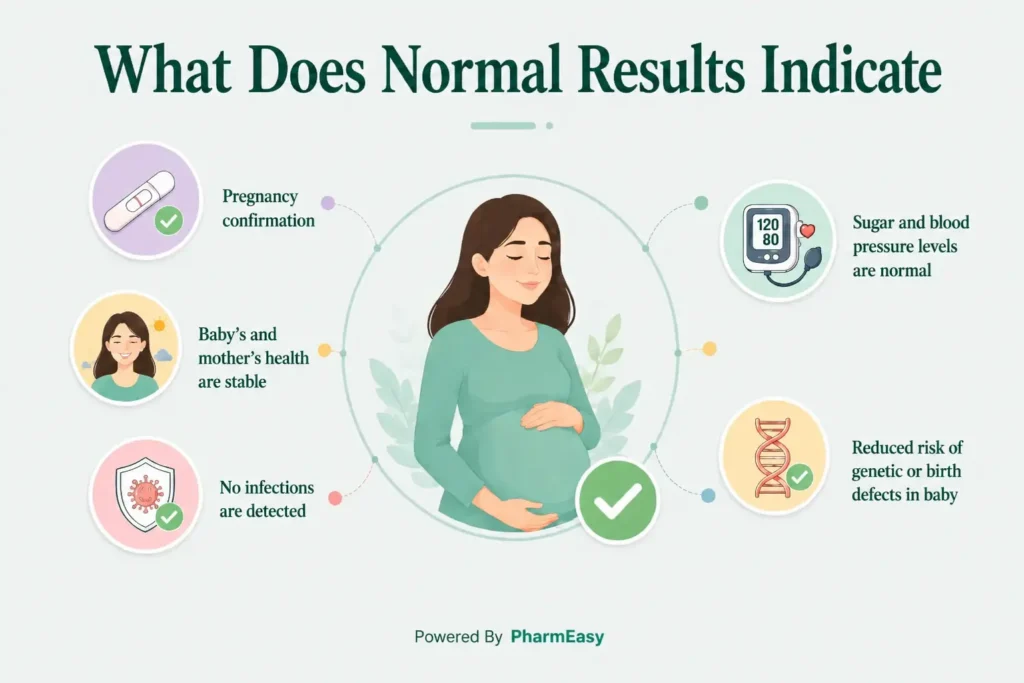
Usually indicate:
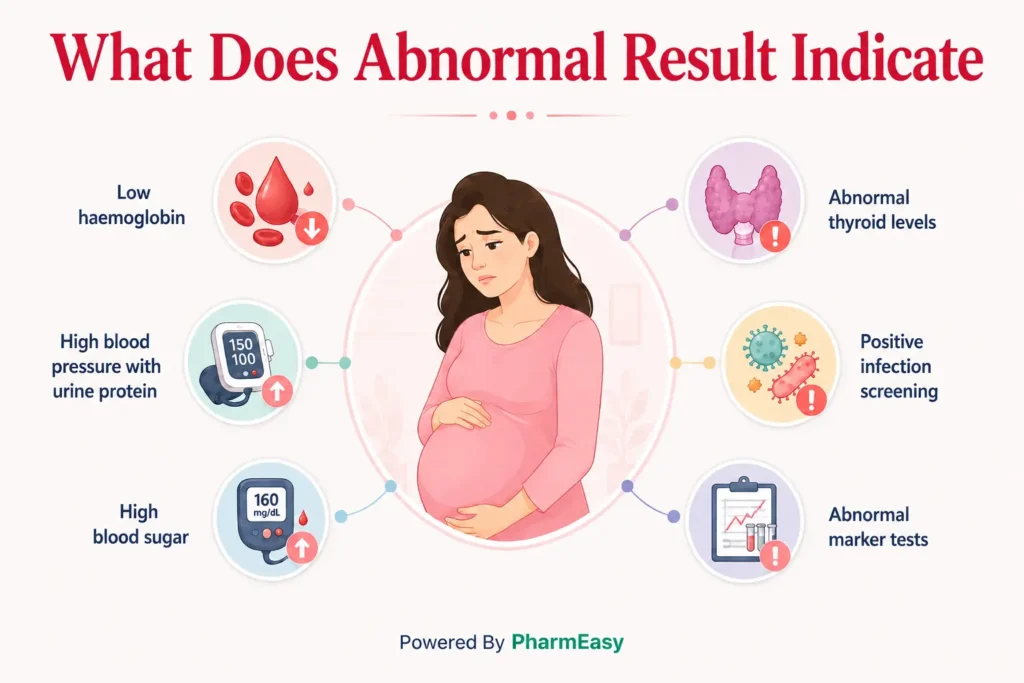
Abnormal results do not always mean something is seriously wrong. In many cases, additional testing may be required to confirm findings.
Note: Pregnancy test results should always be interpreted by a doctor. Normal results may not ensure the absence of complications, and abnormal results do not always indicate a serious problem. Additional testing, follow-up visits, or further examination may be required for an accurate diagnosis and appropriate pregnancy care.
Also Read: Your Best Guide on How to Increase Haemoglobin Naturally During Pregnancy
Regular pregnancy testing offers several important benefits for both mother and baby. It:
Immediate medical attention is necessary if you experience the following:
Note: Pregnancy can bring many changes to the body, and some discomfort is common. However, if you notice any of the symptoms listed above, it is important to contact your doctor or seek medical care without delay. Early medical attention can help protect the health and safety of both the mother and the baby.
Pregnancy profile tests are an important aspect of pregnancy care that help monitor the health of mother and the developing baby. They assist early detection of problems and timely treatment. Regular antenatal check-ups and timely investigations can help in improving outcomes in both mother and the baby.
Fasting is not necessary for most normal pregnant blood tests, such as the CBC, blood group, or infection screening. However, fasting may be required for specific tests, such as blood sugar or glucose tolerance testing and thyroid tests, as recommended by your doctor7,23.
Pregnancy profile tests are generally safe and are widely recommended during pregnancy. They include simple blood tests, urine tests, and ultrasound scans that are safe for both the mother and the baby6,10,16. However, some advanced tests such as amniocentesis may have some risks, but these are not required for everyone, only for some women coming under a higher pregnancy risk category1. Therefore, such test should only be performed when advised by a doctor.
Pregnancy tests are done at various stages (typically by trimester), with additional testing planned based on the mother’s health and risk factors. If there are issues or high-risk conditions, your doctor might suggest more frequent monitoring1.
No, a CBC result cannot detect pregnancy. Pregnancy is confirmed by tests that detect the hCG hormone in blood or urine, not by CBC results1. CBC can help detect several conditions like anaemia, blood disorders, infections, etc., that can occur during pregnancy6.
Early pregnancy can show several signs, such as:
Missed period: Often the earliest and most noticeable sign.
Nausea or morning sickness: Feeling sick, especially in the morning.
Breast changes: Tenderness, swelling, or enlargement
Frequent urination: Needing to pass urine more often than usual, especially at night
Fatigue: Feeling unusually tired even with normal rest24.
1. Pregnancy – tests and scans. 2022. doi:https://www.betterhealth.vic.gov.au/health/servicesandsupport/pregnancy-tests-and-scans
2. Routine antenatal tests. 2023. doi:https://www.healthdirect.gov.au/routine-antenatal-tests
3. Revathi J, Ts M, M P. Prevalence of Medical Disorders During Pregnancy in India: A Comprehensive Observational Study to Assess the Prevalence of Hypertension, Diabetes, and Thyroid Disorders During Pregnancy in Indian Women. Cureus. Published online June 20, 2025. doi:10.7759/cureus.86441 https://pmc.ncbi.nlm.nih.gov/articles/PMC12276767/
4. Assessment of Nutrient Needs. doi:https://www.ncbi.nlm.nih.gov/books/NBK235239/
5. Pregnancy Test. 2025. doi:https://medlineplus.gov/lab-tests/pregnancy-test/
6. Prenatal Panel. 2024. doi:https://medlineplus.gov/lab-tests/prenatal-panel/
7. TSH (Thyroid-stimulating hormone) Test. 2024. doi:https://medlineplus.gov/lab-tests/tsh-thyroid-stimulating-hormone-test/
8. Folate and pregnancy. 2025. doi:https://www.pregnancybirthbaby.org.au/folate-and-pregnancy
9. Murugan VA, Murphy BO, Dupuis C, Goldstein A, Kim YH. Role of ultrasound in the evaluation of first-trimester pregnancies in the acute setting. Ultrasonography. 2020;39(2):178-189. doi:10.14366/usg.19043 https://pubmed.ncbi.nlm.nih.gov/32036643/
10. Maines J, Langaker MD. Prenatal Genetic Screening. 2025. doi:https://www.ncbi.nlm.nih.gov/books/NBK557702/
11. Prenatal care in your second trimester. 2024. doi:https://medlineplus.gov/ency/patientinstructions/000557.htm
12. Table 1Recommendations of Other Groups. doi:https://www.ncbi.nlm.nih.gov/books/NBK606260/table/ch1.tab1/
13. 20-week screening scan. 2024. doi:https://www.nhs.uk/pregnancy/your-pregnancy-care/20-week-scan/
14. Carlson LM, Vora NL. Prenatal Diagnosis. Obstetrics and Gynecology Clinics of North America. 2017;44(2):245-256. doi:10.1016/j.ogc.2017.02.004 https://pubmed.ncbi.nlm.nih.gov/28499534/
15. Emam D, Corbella G, Poziello C, et al. Usefulness and timing of the third-trimester ultrasound scan: a review of guidelines and underlying evidence. Arch Gynecol Obstet. 2025;312(5):1445-1459. doi:10.1007/s00404-025-08172-7 https://pubmed.ncbi.nlm.nih.gov/40924092/
16. Prenatal care in your third trimester. 2024. doi:https://medlineplus.gov/ency/patientinstructions/000558.htm
17. Landess M, Christman M, Mikes BA. Fetal Movement. doi:https://www.ncbi.nlm.nih.gov/books/NBK470566/
18. Alfirevic Z, Stampalija T, Dowswell T. Fetal and umbilical Doppler ultrasound in high-risk pregnancies. Cochrane Pregnancy and Childbirth Group, ed. Cochrane Database of Systematic Reviews. 2017;2017(6). doi:10.1002/14651858.CD007529.pub4 https://pmc.ncbi.nlm.nih.gov/articles/PMC6481396/
19. Nonstress Test. 2024. doi:https://medlineplus.gov/lab-tests/nonstress-test/
20. High risk factors of pregnancy and their management at an ANC clinic. doi:https://pmsma.mohfw.gov.in/wp-content/uploads/2016/10/High-Risk-Conditions-in-preg-modified-Final.pdf
21. High Blood Pressure in Pregnancy. 2024. doi:https://medlineplus.gov/highbloodpressureinpregnancy.html
22. Urgent Maternal Warning Signs and Symptoms. 2024. doi https://www.cdc.gov/hearher/maternal-warning-signs/index.html
23. Virjee S, Robinson S, Johnston DG. Screening for Diabetes in Pregnancy. J R Soc Med. 2001;94(10):502-509. doi:10.1177/014107680109401003 https://pmc.ncbi.nlm.nih.gov/articles/PMC1282202/
24. Pregnancy – signs and symptoms. 2022. doi:https://www.betterhealth.vic.gov.au/health/healthyliving/pregnancy-signs-and-symptoms#signs-of-pregnancy
Disclaimer: The information provided here is for educational/awareness purposes only and is not intended to be a substitute for medical treatment by a healthcare professional and should not be relied upon to diagnose or treat any medical condition. The reader should consult a registered medical practitioner to determine the appropriateness of the information and before consuming any medication. PharmEasy does not provide any guarantee or warranty (express or implied) regarding the accuracy, adequacy, completeness, legality, reliability or usefulness of the information; and disclaims any liability arising thereof.
Links and product recommendations in the information provided here are advertisements of third-party products available on the website. PharmEasy does not make any representation on the accuracy or suitability of such products/services. Advertisements do not influence the editorial decisions or content. The information in this blog is subject to change without notice. The authors and administrators reserve the right to modify, add, or remove content without notification. It is your responsibility to review this disclaimer regularly for any changes.


Comments

Leave your comment...
You may also like

























Comments