




Semen Retention: Meaning, Benefits, Side Effects and More!
By Dr. Charmi Shah +2 more

Medically reviewed by Dr. Charmi Shah
Last updated: May 14, 2026 Published on: Mar 9, 2026


Get,

to manage your symptom
Get your,

4 Cr+ families
benefitted

OTP sent to 9988776655



You’ve successfully subscribed to receive
doctor-approved tips on
Whatsapp

Get ready to feel your best.


Register to Avail the Offer
Send OTPBy continuing, you agree with our Privacy Policy and Terms and Conditions
Hi There,
Sign up on PharmEasy now!!


Trusted by 4 crore+ families

OTP sent to 9988776655
You have unlocked 25% off on medicines


Code: NU25

By Dr. Charmi Shah +2 more
Table of Contents
Semen retention has become popular among young men, especially in social media, where it is connected to more energy, focus, confidence, and personal growth. It is simply the practice of avoiding ejaculation, either by abstaining from sex or controlling orgasm1.
Now it is seen as a modern trend, but semen retention has its roots in ancient traditions which believed saving sexual energy may improve physical strength and mental clarity1. Many men try it to enhance motivation, discipline, and overall performance.
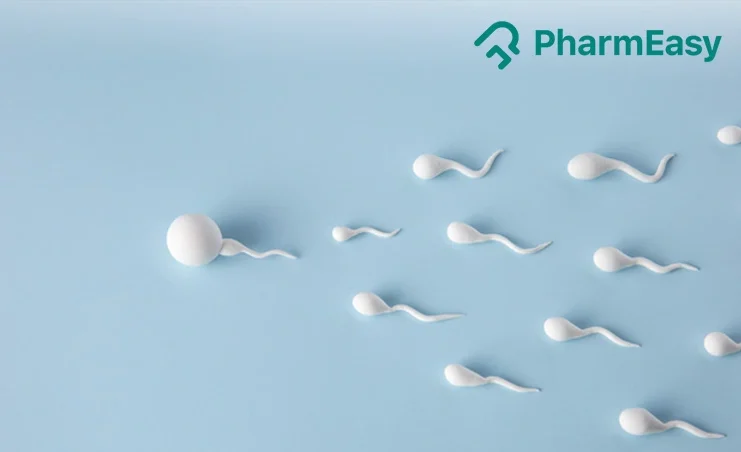
Like any other approach or choice, it may have potential benefits but also possible side effects. In this article we will discuss more on semen retention.
Semen retention is the practice of avoiding ejaculation, either through abstaining from sexual activity or by controlling orgasm during intimacy1. It’s not just about avoiding sex it’s also about controlling sexual urges and saving sexual energy.
Semen retention is commonly understood in three ways:
Now that we’ve discussed what is semen retention, let’s see what science actually says about this.
Semen retention has become popular for the claims of its positive effects like increased sperm quality, higher testosterone, better focus, etc. But is there any scientific backing to this?
Well, according to some studies, semen retention or an increase in abstinence period can lead to higher semen volume2. This is because the seminal vesicles get more time to secrete fluids between ejaculation. Also, longer abstinence period may bring a transient rise in testosterone level. However, sustained hormonal benefits are not found.
Some studies also suggest that longer periods without ejaculation can increase the total sperm count2. This may be because more days without ejaculation may allow sperm to accumulate, causing an increase in total sperm count. However, it is important to note that increase in total sperm count alone cannot make a great impact on fertility; sperm movement (progressive motility) and sperm DNA health are more important.
Following are some myths on abstaining from ejaculation.

This is not true, because semen retention causes the accumulation of old sperm in the epididymis, which lose their energy. When these aged sperm are released during ejaculation, they can reduce overall semen quality2.
Some studies also suggest that consecutive ejaculation can reduce sperm DNA fragmentation in people with sperm DNA damage. High levels of sperm damage are linked to greater chances of miscarriage. In fact, having daily ejaculation for four days in a row (according to the study) may help reduce sperm DNA damage in men with higher proportion of sperm with damaged DNA, without negatively affecting sperm quality3.
Though longer abstinence periods are linked with higher semen volume and sperm concentration, it can negatively affect sperm motility, especially forward movement (progressive motility). Although the exact reasons are not known, this may be due to sperm ageing, energy depletion, exposure to harmful substances, and increased heat damage in the epididymis (a coiled tube where the sperm are stored and matured)2.
Thus, prolonged abstinence may cause a reduction in fertility by reducing motility and DNA integrity (poor sperm quality)2. This may increase the chances of not getting pregnant rather than increasing fertility.

This is not true. Not being involved in sexual activity for semen retention doesn’t guarantee peace or happiness. According to some studies, being sexually active is said to improve quality of life and mental health, especially in elderly4.

A prominent myth about semen retention or abstaining is that it may increase the performance level in sportsmen. But this is not true. Sexual activity usually takes very little energy compared to the energy required to perform a sport. Therefore, there is no connection between abstaining and energy levels. In fact, the stress or frustration caused by long abstinence may affect performance more than the energy spent during sex5.
Semen retention is generally considered safe for most healthy men, when practised in moderation. It is known to improve semen volume and sperm concentration2. It may also aid in destroying aged sperm retained in the body by apoptosis (cell death) in the epididymis6.
However, reducing the abstaining period is always recommended. This is because longer abstinence can cause oxidative damage in the epididymis, which in turn creates reduced sperm motility, damage to sperm membrane and DNA, and even lower chances of successful fertilisation7. Although, it is important to note that the correlation between abstinence duration and fertility is a complicated one with a lot of other factors playing a role here. The optimal abstinence duration for fertility purposes is generally individualized, however, WHO recommends that men should abstain from ejaculation for 2 to 7 days before semen analysis, which reinforces the idea of moderation2.
Moreover, according to some studies, suppressing the natural sexual urge might also affect you emotionally and mentally, causing mood changes, frustration and distress8.
Therefore, semen retention is usually healthy with a moderate abstinence period of about 2-5 days, but extreme practices or unrealistic expectations should be avoided.
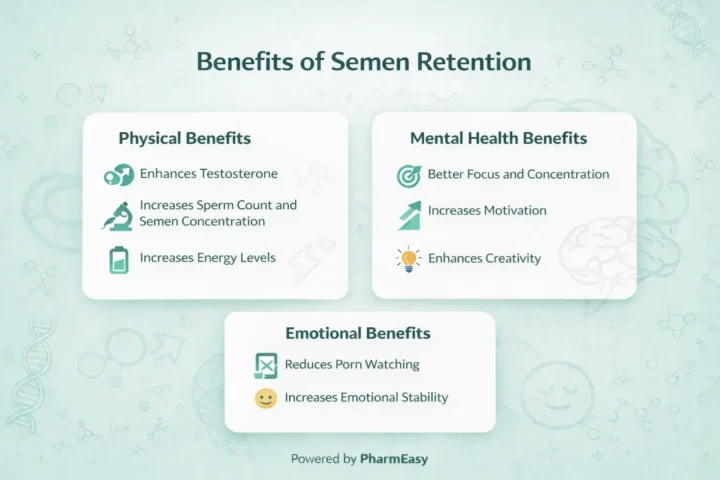
Semen retention is said to have some benefits, however not all are scientifically proven. Following are some proposed benefits of semen retention.
Note: Reports of increased energy, creativity, motivation, mental clarity and emotional stability are anecdotal (personal experiences) and subjective rather than being supported by evidence-based medical research.
Semen retention can cause some side effects as well, such as the following:
Also Read: Male Infertility: Causes, Symptoms, Treatment & More
Semen retention may cause several adverse reactions. Following are some signs that you shouldn’t ignore.
Semen retention may offer some physical, mental, and emotional benefits in some individuals, if practised moderately. However, extreme or prolonged abstinence may lead to side effects like reduced sperm quality, mood changes, and sexual tension. Therefore, a balanced approach, awareness of your body, and realistic expectations are key to practising it safely.
Also Read: HPV in Men: What It Is, Causes, Symptoms & Treatment
Daily semen release or shorter abstaining may cause reduced sperm concentration and semen volume2. It might also improve mood and reduce sexual tension.
Not ejaculating for a long time might reduce sperm motility and cause sperm DNA damage, thereby reducing the sperm quality. It can even reduce the chances of getting pregnant2,7. It can also affect mental health by inducing anxiety and depression, causing sexual tension9.
Not ejaculating for 30 days may slightly increase semen volume and total sperm count, and some men report improved self-discipline, focus, and mental clarity. However, many claimed benefits like boosted testosterone or super energy, are not strongly supported by science.
Some studies have found an increase in the level of testosterone during the 7th day of not ejaculating. This suggests that there may be a transient increase in testosterone, most noticeable after about a week, 10 however sustained hormonal benefits are not found.
Semen retention is known to have benefits like improving semen volume, sperm count and a transient elevation in testosterone2. It is also said to have other positive effects such as improving energy, motivation and providing better focus however, the mental and emotional benefits are not proven scientifically and require more research.
Disclaimer: The information provided here is for educational/awareness purposes only and is not intended to be a substitute for medical treatment by a healthcare professional and should not be relied upon to diagnose or treat any medical condition. The reader should consult a registered medical practitioner to determine the appropriateness of the information and before consuming any medication. PharmEasy does not provide any guarantee or warranty (express or implied) regarding the accuracy, adequacy, completeness, legality, reliability or usefulness of the information; and disclaims any liability arising thereof.
Links and product recommendations in the information provided here are advertisements of third-party products available on the website. PharmEasy does not make any representation on the accuracy or suitability of such products/services. Advertisements do not influence the editorial decisions or content. The information in this blog is subject to change without notice. The authors and administrators reserve the right to modify, add, or remove content without notification. It is your responsibility to review this disclaimer regularly for any changes.


Comments

Leave your comment...
You may also like





















Comments