Last updated: Sep 16, 2026Published on: Feb 13, 2024
Table of Contents
Introduction
Static hair commonly affects many people, especially during the winter season. The dryness and frizziness in the hair during this season are daunting. In this article, we will guide you on how to manage this issue naturally. We will explore why static hair happens and discuss quick fixes and tips. Product recommendations will be laid out, along with lifestyle changes and clothing choices that may help you. We will also answer some frequently asked questions regarding this topic.
Understanding Static Hair
Static hair is when electric charge builds up on your hair strands, making them stand on end. This may be caused by dryness, friction, environmental conditions, using unsuitable hair products or styling tools, and certain clothing materials1,2.
Static vs. frizzy hair
Both static and frizzy hair arise from lack of moisture. This messes with your hair’s natural balance of charges. But they differ a bit. In static hair, hair strands push each other away because they’re all positively charged. However, frizzy hair is usually caused when dry hair absorbs moisture when the weather is humid3,4.
Advertisement
Causes of Static Hair
Dryness: Dry hair is prone to the build-up of static electricity. Hence, it is vital to keep your hair well-hydrated, especially during the dry winter weather.
Environmental factors: The dry, cold air in winters can give you static hair. Consider using a humidifier inside your home or wearing a hat when you step out into the cold to protect your hair.
Hair products and tools: Choosing unsuitable hair products or tools can cause static hair. For example, shampoos with a higher pH may lead to an increase in static hair5.
Clothing materials: Clothing items made from synthetic fabrics can generate increased electricity, which may lead to static hair. Wearing clothes made of natural fibres like cotton or silk may help reduce static6,7.
How to Get Rid of Static Hair Naturally?
Now that you know the causes of static hair, we will discuss how to tame these flyaways and restore that shiny smoothness to your hair.
1. Quick fixes
Using dryer sheets: Dryer sheets may help reduce static hair. Gently rubbing a dryer sheet on your hair or brush can reduce static, leaving your hair smooth.
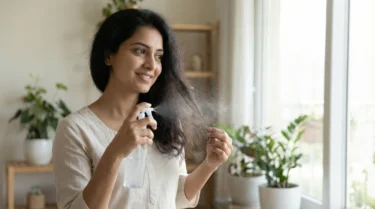
Spritzing water on hair: A good spritz of water on your hair helps neutralise static by restoring moisture balance.
Moisturising with natural oils: Natural oils like coconut, argan, or olive oil may help reduce static by locking in moisture2.
2. Utilising proper hair care products
The battle against static hair includes picking the right products to use for your hair.
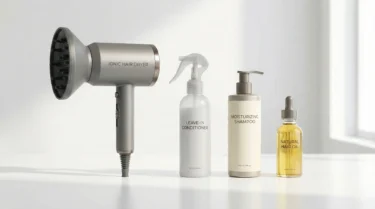
Ionic hair dryers: Ionic hair dryers may help lessen static by releasing negative ions. They also help dry your hair faster, which may help avoid over-drying2.
Leave-in conditioners: Leave-in conditioners hydrate your hair further and may help fight static. Look for those made specifically to battle static electricity in the hair2.
Moisturising shampoos and conditioners: Shampoos and conditioners that give extra moisture to your hair may help avoid static hair. Some shampoos and conditioners may also contain lubricating and antistatic substances that can help neutralise static hair. Choose the ones that target static issues or dry hair8,9.
Natural hair oils: Applying natural oils on your hair is good as the oils hydrate your hair. Including them in your hair care routine may help reduce static hair2.
3. Avoiding plastic combs and brushes
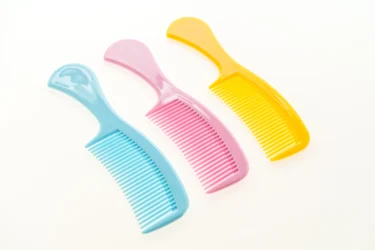
Image Source: freepik.com
Brushes and combs made of plastic or hard rubber can cause more static. Choose wooden or natural fibre brushes or combs instead2.
4. Caring for your hair while sleeping
Your nighttime habits can affect your hair’s static level.
Satin or silk pillowcases: Switch your cotton pillowcase to a satin or silk one. These may help reduce friction and avoid static buildup on your hair while your sleep10.
Loose braids or buns: Tying your hair into loose braids or buns before bed may help. It reduces friction between your hair and pillow, thus lessening the static10.
5. Adjusting your hair washing routine
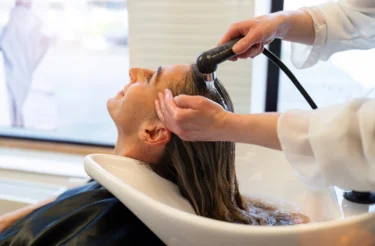
Washing your hair too often may remove its natural oils. This causes dryness and static. Try shampooing less and doing deep conditioning instead.
6. Embracing non-heat styling methods
Image Source: freepik.com
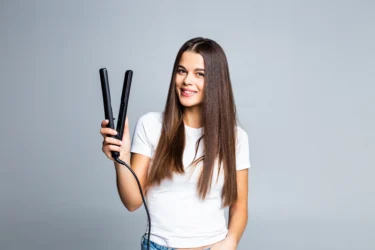
Styling tools that use heat, like straighteners and curling irons, can dry out your hair and cause static. So, opt for no-heat methods of styling or use heat protectants when you need to style with heat.
Clothing Choices and Static Hair
Your wardrobe can affect static hair. Here are a few ways to help with static hair.
1. Select materials that reduce static
Choose clothes made of natural fibres like cotton, linen, or silk. These materials are breathable and don’t cause much static.
Clothes made of cotton or linen may help you fight static hair. Their breathable nature and low static electricity make them a good choice. Other breathable alternatives like silk may help create a barrier against synthetic materials that cause static.
2. Avoid synthetic clothing
Clothing materials like polyester or nylon can lead to static hair. To avoid this, wear natural fibre clothes or mix and match with synthetics.
Besides the solutions we discussed, healthy eating and proper hair care may help you avoid static hair.
1. Eating a balanced diet
Eating well and adequate hydration may help support hair health and reduce the likelihood of static.
Role of vitamins and minerals for hair health: Vitamins, such as vitamin A, C, and E, and minerals, such as zinc and iron, are key to strong, shiny, static-free hair. Eating various fruits, vegetables, whole grain foods, and lean proteins may help you achieve this10.
The impact of hydration on static hair: Drinking plenty of water may help you avoid dryness of the hair and scalp and reduce the chance of static buildup.
2. Maintaining a healthy hair care routine
Maintain regular hair care habits to reduce static hair, for example, get regular trims and protect your hair from harsh weather.
Regular trims: Regular trims keep your hair healthy and free from split ends as split ends can worsen static hair10.
Protecting hair from the elements: Covering your head in cold, dry weather may help you avoid static hair10.
Always remember, if home care measures are not helping your static hair, you can consult your dermatologist for further advice. It is always helpful to keep your doctor in the loop.
Static hair might seem hard to deal with, but with the right natural methods, products, and lifestyle choices, it may be manageable. Understanding the causes of static hair helps you choose the most effective solution for your hair. Try different approaches and observe what works best for you. If static hair continues despite your efforts, seek guidance from a doctor.
How can one choose the right hair care products to prevent static hair?
Choose hair care items meant to fight static. These include leave-in conditioners, moisturising shampoos, and hydrating hair masks. Look for products with natural oils and ingredients that lock in moisture and reduce static.
Is there a way to avoid static hair while straightening?
Using heat-styling tools like straighteners can lead to static hair. However, there are ways to lessen this. Use a heat protectant spray before straightening. Go for straighteners coated with ceramic or tourmaline. These materials may help reduce static in your hair.
Can dry shampoo contribute to static hair?
Dry shampoo may lead to static hair, depending on its ingredients. If your hair becomes static after using dry shampoo, try a different brand or reduce its use.
What precautions can one take to reduce static hair during winter?
To lessen static hair during winter, use a humidifier indoors, wear headgear outdoors, and use moisturising products regularly. Opting for clothing and bedding made of natural fibre also may help.
Zi Y, Liu J, Fang S, Li M, Huang Q, Peng X. Establishment of Heat-Damaged Model for Hair. J Cosmet Dermatol. 2025 Aug;24(8):e70360. doi: 10.1111/jocd.70360. Available from: https://pmc.ncbi.nlm.nih.gov/articles/PMC12308778/
Gavazzoni Dias MF, de Almeida AM, Cecato PM, Adriano AR, Pichler J. The Shampoo pH can Affect the Hair: Myth or Reality? Int J Trichology. 2014 Jul;6(3):95-9. doi: 10.4103/0974-7753.139078. Available from: https://pmc.ncbi.nlm.nih.gov/articles/PMC4158629/
Sher L. Effects of electrostatic potentials generated on the surface of the skin by wearing synthetic and semisynthetic fabrics on physical condition, mood and behavior: role of acupuncture points. Med Hypotheses. 2000 Mar;54(3):511-2. doi: 10.1054/mehy.1999.0854. Available from: https://pubmed.ncbi.nlm.nih.gov/10783500/
Aldalbahi A, El-Naggar ME, El-Newehy MH, Rahaman M, Hatshan MR, Khattab TA. Effects of Technical Textiles and Synthetic Nanofibers on Environmental Pollution. Polymers (Basel). 2021 Jan 3;13(1):155. doi: 10.3390/polym13010155. Available from: https://pmc.ncbi.nlm.nih.gov/articles/PMC7794755/
D’Souza P, Rathi SK. Shampoo and Conditioners: What a Dermatologist Should Know? Indian J Dermatol. 2015 May-Jun;60(3):248-54. doi: 10.4103/0019-5154.156355. Available from: https://pmc.ncbi.nlm.nih.gov/articles/PMC4458934/
Disclaimer: The information provided here is for educational/awareness purposes only and is not intended to be a substitute for medical treatment by a healthcare professional and should not be relied upon to diagnose or treat any medical condition. The reader should consult a registered medical practitioner to determine the appropriateness of the information and before consuming any medication. PharmEasy does not provide any guarantee or warranty (express or implied) regarding the accuracy, adequacy, completeness, legality, reliability or usefulness of the information; and disclaims any liability arising thereof.
Links and product recommendations in the informationprovided here are advertisements of third-party products available on the website. PharmEasy does not make any representation on the accuracy or suitability of such products/services. Advertisements do not influence the editorial decisions or content. The information in this blog is subject to change without notice. The authors and administrators reserve the right to modify, add, or remove content without notification. It is your responsibility to review this disclaimer regularly for any changes.





































Comments