




Surge In Eye Infections During Monsoons
By Dr. Nikita Toshi +2 more

Medically reviewed by Dr. Avinav Gupta
Last updated: Jul 9, 2026 Published on: Jul 19, 2023


Get,

to manage your symptom
Get your,

4 Cr+ families
benefitted

OTP sent to 9988776655



You’ve successfully subscribed to receive
doctor-approved tips on
Whatsapp

Get ready to feel your best.


Register to Avail the Offer
Send OTPBy continuing, you agree with our Privacy Policy and Terms and Conditions
Hi There,
Sign up on PharmEasy now!!


Trusted by 4 crore+ families

OTP sent to 9988776655
You have unlocked 25% off on medicines


Code: NU25

By Dr. Nikita Toshi +2 more
Table of Contents
Monsoon is a time for rejuvenation, especially after the oppressive summer months. Frolicking in the rain is a fun activity, but it can also be detrimental to health since the rate of viral and bacterial infections is high during this time. An increase in cases of eye infections is also common during monsoon season. These are usually a combination of eye infections and allergies.
Monsoon is often referred to as the flu season of the year because every year it arrives, the change in temperature and humidity is said to foster the growth of infection-causing microbes. Taking sound measures to improve living conditions is, therefore, a necessary step in maintaining health and hygiene. It is crucial to stay cautious while enjoying the beauty of this season so as to cut down the risk of gut infections, water-borne diseases, and even eye infections.

In this article, we discuss common eye infections during the rainy season.
The monsoon season creates conditions that can increase the risk of certain eye infections. Higher humidity and frequent rainfall may promote the growth of bacteria and fungi, while viral infections such as conjunctivitis spread more easily through direct contact with infected secretions, contaminated surfaces, and poor hand hygiene. Rainwater mixed with dust, pollutants, or contaminated water can also irritate the eyes, which may increase the risk of infection. Practising good hand hygiene, avoiding touching or rubbing the eyes, and not sharing personal items like towels can help reduce the risk of eye infections during this season.
Most of the cases of pink eye during monsoons this year are reported to be due to viral conjunctivitis. Viral conjunctivitis is an infection that leads to inflammation of the thin membrane that lines the inner surface of the eyelids and the white section of the eyeball1. This thin membrane is referred to as the conjunctiva, and it acts as a shield against infections, keeping the eye moist. The conjunctiva can sometimes become infected, and when the source of the infection is a virus, which is known as viral conjunctivitis1.
Viral conjunctivitis is highly contagious and can easily spread from an infected person to others if precautions are not followed.
The current outbreak of viral conjunctivitis in the Indian subcontinent has a whole spectrum – from mild to moderate to severe. it should not be taken lightly. Any redness associated with pain or excessive lid swelling, should be taken seriously.
Dr. Gitanjali Sharma Bose ,MBBS MS Ophthalmology
Bacterial conjunctivitis is caused when bacteria inflame and infect the conjunctiva. Target groups such as older adults, children, those who wear contact lenses and people suffering from weak immunity are at a higher risk of developing bacterial conjunctivitis2.
The bacteria can enter the eyes when the person touches contaminated droplets or when they come into contact with someone who has also developed bacterial conjunctivitis.
A stye is a red bump that forms on the edge of the eyelids. It is similar to an acute pimple, and it is very painful. When the small oil glands located within the eyelid skin or the eyelash follicle become clogged and infected, the stye is formed3. A stye is medically referred to as a hordeolum, and there are two types: external and internal stye9.External styes are very common and form on the outer part of the lower or upper eyelid. It is usually caused by an infection in the eyelash follicle9.
The internal stye, as the name suggests, is formed on one of the inner eyelids and it is caused by an infection within the inner eyelid gland producing oils that keep the eyelid moist9. Although it is more common to get a stye on one eyelid, sometimes a person can get it on both eyelids as well.
Triggered by allergens, this condition can occur during any season of the year, but some allergies worsen during monsoons.
Dry eyes are a condition that occurs when tears are incapable of lubricating the eyes adequately. Dry eyes often have the tendency to burn or sting the eyes5. This can happen when you are in an air-conditioned room, when you are flying on an aeroplane, riding a bike, or staring at the screen for long hours.
Certain factors can increase the risk of developing eye infections during the monsoon season. These include:
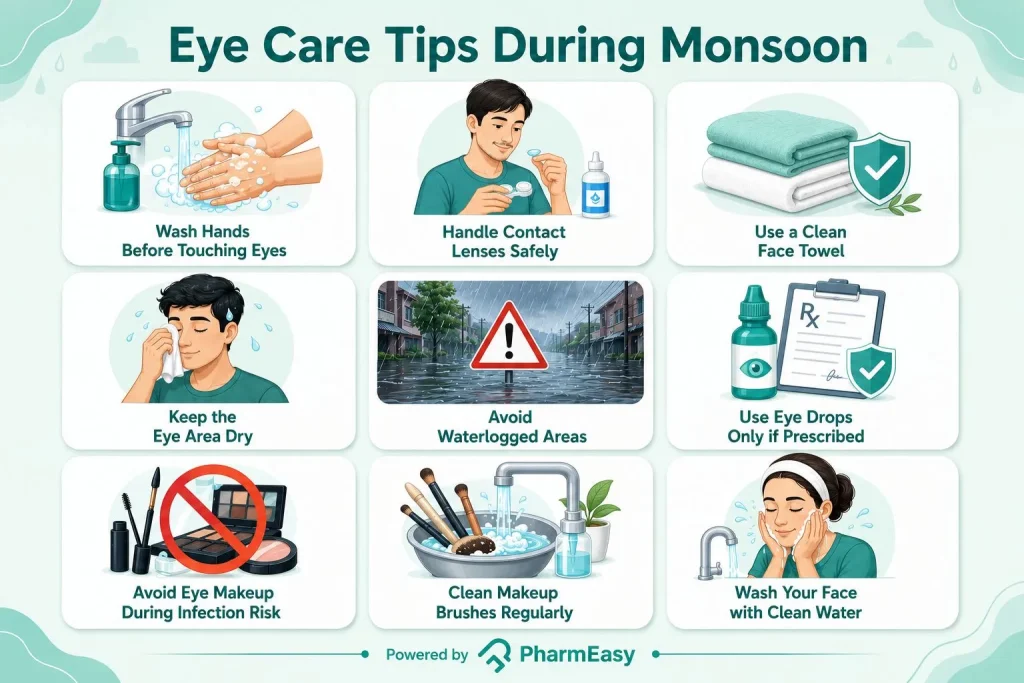
The best way to maintain your eye health is by following a few eye care measures, which are simple but effective. These are listed below:
Also Read: How to Clean Your Eyes Safely and Maintain Healthy Eyes
Wearing contact lenses during the monsoon requires extra care, as high humidity and exposure to contaminated water significantly increase the risk of serious eye infections, including corneal infections.
The tips below may help you to keep your eyes safe:
Avoid swimming in public pools during monsoon. Contact lens use should also be minimised. Follow strict hand hygiene. Monsoon is the time when viral infections are at their peak.
Dr. Gitanjali Sharma Bose ,MBBS, MS Ophthalmology
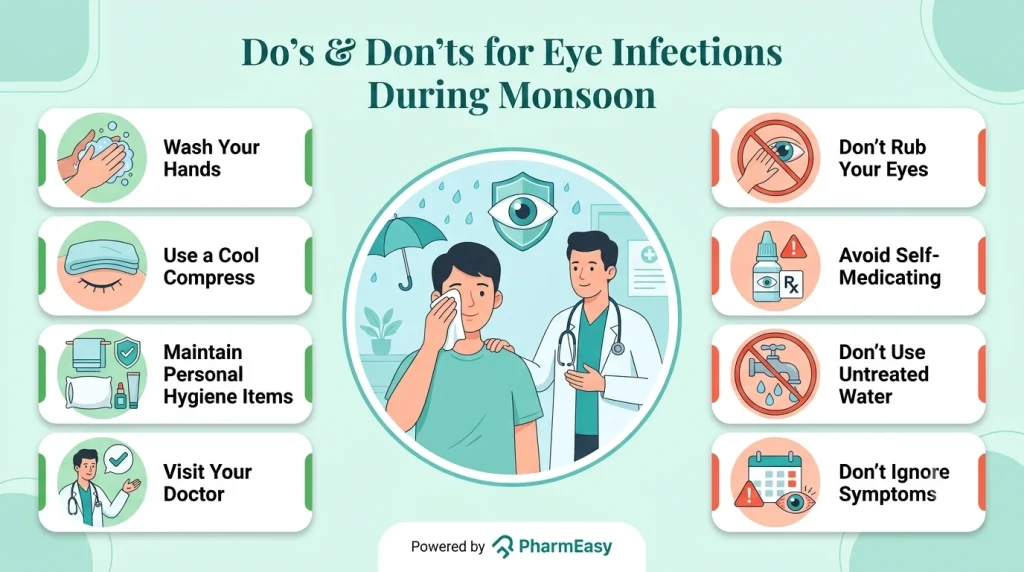
While mild eye irritation can occur during the monsoon, you should consult an ophthalmologist promptly if you experience any of the following warning signs:
Note: Avoid self-medicating with antibiotic or steroid eye drops, as the appropriate treatment depends on the underlying cause of the eye problem.
Eye flu cases are on the rise due to monsoons. With good hygiene and the above-stated measures, one may reduce the risk of catching viral eye infections. Now that you are aware of other possible eye problems, which are also common during monsoons, never self-medicate. To be uber careful, make sure you take precautionary measures and try to steer clear of eye infections in monsoon and consult an eye doctor (ophthalmologist) the moment you experience any discomfort.
Rain itself does not cause conjunctivitis. However, exposure to contaminated water, poor hand hygiene, and the increased spread of viruses and bacteria during the monsoon may raise the risk of eye infections.
Some mild viral eye infections and uncomplicated bacterial conjunctivitis may resolve on their own. However, symptoms such as significant pain, worsening redness, reduced vision, light sensitivity, contact lens use, or persistent symptoms should be evaluated promptly by an ophthalmologist, as treatment may be required.
No. Rainwater may contain dust, pollutants, and microorganisms that can irritate the eyes or increase the risk of infection, so it should not be used to wash the eyes.
Maintain good hand hygiene, avoid rubbing your eyes, use clean contact lenses and personal items, wear protective eyewear when needed, and seek medical advice if you develop redness, pain, or vision changes.
Disclaimer: The information provided here is for educational/awareness purposes only and is not intended to be a substitute for medical treatment by a healthcare professional and should not be relied upon to diagnose or treat any medical condition. The reader should consult a registered medical practitioner to determine the appropriateness of the information and before consuming any medication. PharmEasy does not provide any guarantee or warranty (express or implied) regarding the accuracy, adequacy, completeness, legality, reliability or usefulness of the information; and disclaims any liability arising thereof.
Links and product recommendations in the information provided here are advertisements of third-party products available on the website. PharmEasy does not make any representation on the accuracy or suitability of such products/services. Advertisements do not influence the editorial decisions or content. The information in this blog is subject to change without notice. The authors and administrators reserve the right to modify, add, or remove content without notification. It is your responsibility to review this disclaimer regularly for any change
 3
3  0
0Comments

Leave your comment...
You may also like
























Comments