




Kokilaksha: Uses, Benefits, Side Effects & More
By Dr Siddharth Gupta +2 more

Medically reviewed by Dr Siddharth Gupta
Last updated: Sep 15, 2026 Published on: Mar 16, 2022


Get,

to manage your symptom
Get your,

4 Cr+ families
benefitted

OTP sent to 9988776655



You’ve successfully subscribed to receive
doctor-approved tips on
Whatsapp

Get ready to feel your best.


Register to Avail the Offer
Send OTPBy continuing, you agree with our Privacy Policy and Terms and Conditions
Hi There,
Sign up on PharmEasy now!!


Trusted by 4 crore+ families

OTP sent to 9988776655
You have unlocked 25% off on medicines


Code: NU25

By Dr Siddharth Gupta +2 more
Table of Contents
Kokilaksha, also known as Astercantha longifolia, Hygrophila spinosa T. Anders or Hygrophila auriculata (Schumach.) Heine belongs to the family Acanthaceae1,2,3. It is commonly known by other names like Talmakhana in Hindi, Iksura in Sanskrit, Nirmuli in Malayalam, Ekharo in Gujarati, and Golmidi in Tamil3. The plant is an Ayurvedic herb used to make medicines for several gastrointestinal, kidney, reproductive, liver, and bone disorders. Kokilaksha is native to India and also to other places like Srilanka, Malaysia, Nepal and Myanmar1,2.
Kokilaksha means ‘having eyes like Kokila (the Indian cuckoo)’. It grows on moist lands near paddy fields, ditches or water tanks2.
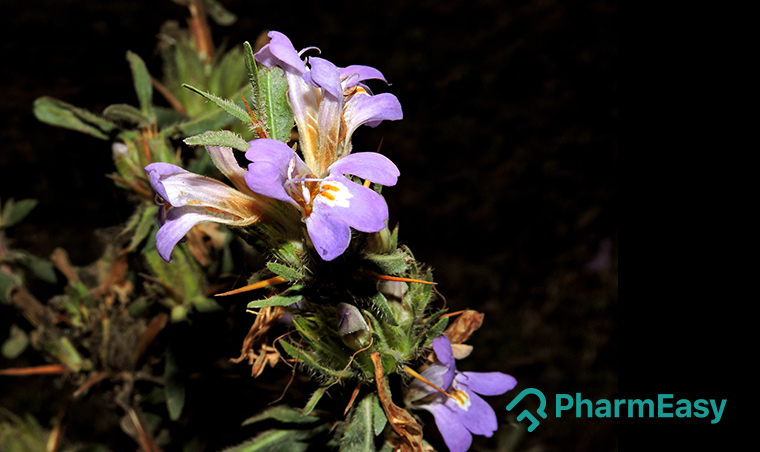
Kokilaksha is very beneficial in treating various illnesses because of its indigenous medicinal properties. The whole plant is very beneficial in the preparation of various formulations. The plant is therapeutically useful due to the presence of various phytoconstituents2.
Some of the therapeutic uses of the plant are as follows.

The seeds of the Kokilaksha plant can be used to treat infertility in men. The seeds act as an aphrodisiac. It can increase the levels of serum testosterone and sperm count4.
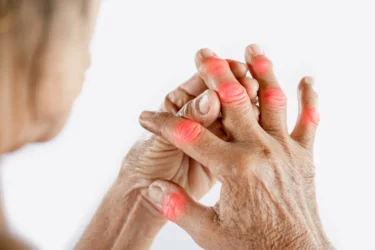
Rheumatoid arthritis is a chronic inflammatory disease that affects middle-aged women more than men worldwide. Kokilaksha ksheeravasti is found to reduce the symptoms of RA considerably due to its anti-inflammatory property. It significantly reduces erythrocyte sedimentation rate (ESR) and improves haemoglobin content5.

The extract of the leaves and roots of Kokilaksha shows significant antibacterial properties against Escherichia coli, Klebsiella pneumoniae, Pseudomonas aeruginosa, Staphylococcus epidermidis, Bacillus cereus and Bacillus subtilis6.
Let me introduce an exciting finding that supports the traditional use of Kokilaksha. The researchers1 studied Kokilaksha to check if it could help with diarrhoea and dysentery. They used different extracts from the plant’s leaves and gave these extracts to animals at different doses and found that as the dose increased, the movement of food through the animals’ digestive system might be decreased. This suggests that Kokilaksha extracts may help cope with diarrhoea and dysentery, just like people have traditionally believed.
Dr. Rajeev Singh, BAMS
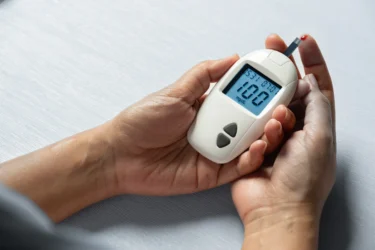
Diabetes mellitus causes elevated blood glucose levels leading to an increase in the number of oxygen-free radicals. These oxygen-free radicals are responsible for various complications in people with diabetes. Kokilaksha extracts possess significant anti-diabetic properties that can reverse the effects of these radicals. This activity is mainly due to its anti-oxidative property that is helpful in scavenging the free radicals7.
I read a fascinating study where researchers12 studied Kokilaksha to see if it might help fight a type of bone cancer called osteosarcoma. They found that Kokilaksha may be able to fight against cancer cells. This is really exciting because it suggests that it might be a natural way to deal with osteosarcoma. Still further research is required to confirm its effectiveness in humans.
Dr. Siddharth Gupta, B.A.M.S, M.D (Ayu)
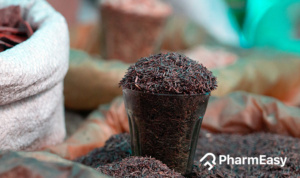
The powdered seeds of Kokilaksha are used in the following ways:
Your Ayurvedic physician will prescribe you the form and dosage as per your health condition.
I find it intriguing how Kokilakshka seeds have their special characteristics. People have been using their seeds for a long time to potentially help with blood-related diseases. They have a taste that’s bitter and acrid and they might be used as a tonic and sedative13.
Dr. Smita Barode, B.A.M.S, M.S.
Also Read: Shankhpushpi – Benefits, Side Effects, Precautions & More!
There are minimal to negligible side effects of Kokilaksha2,8.
It has been observed that Kokilaksha (H. auriculata) seeds are adulterated with Ruellia tuberosa seeds, which may compromise the quality of formulations. The seeds of R. tuberosa, being easily available and economically feasible, are mixed with the seeds of Kokilaksha and sold in the market. So, care has to be taken before using Kokilaksha to make medications11.
Also Read: 12 Foods That Are Necessary For A Healthy Liver!
Kokilaksha is a remarkable Ayurvedic herb with a wide range of therapeutic benefits, from managing male infertility and rheumatoid arthritis to exhibiting antibacterial and anti-diabetic properties. With minimal to negligible side effects, it stands out as a valuable natural remedy rooted in traditional medicine. However, one must be cautious about adulteration of its seeds with Ruellia tuberosa, which can compromise the quality of formulations. As always, it is best to consult a qualified Ayurvedic physician before use to ensure the right form and dosage for your specific health condition.
Also Read: Black Cohosh: Uses, Benefits, Side Effects and More!
Yes, Kokilaksha Kashayam is an excellent medication to treat male infertility. This medication acts as an aphrodisiac, which increases sperm production (semen) and improves sexual stamina9.
Kokilaksha Kashayam can be used to treat male infertility and diabetes. The formulation can improve the sperm count and the viscosity of the semen when prescribed in case of male infertility7,9.
Kokilaksha Ksheeravasti can reduce the signs and symptoms of RA and enhance the general health of patients. Kokilaksha Ksheeravasti can also reduce ESR and improve the percentage of haemoglobin5.
The extract of the Kokilaksha plant root possesses hepatoprotective activity to protect the liver tissues from elevated liver enzymes. The antioxidant property of the plant roots can decrease the levels of liver enzymes significantly2.
Yes, the antimotility property of Kokilaksha leaves can reduce gastrointestinal motility and can control the symptoms of diarrhoea and dysentery. This has been clinically proven in humans2.
The chloroform extracts of the Kokilaksha leaves have demonstrated an antipyretic effect in laboratory studies. It can significantly reduce the body temperature in case of fever. However, more research is necessary to prove its benefits in humans2.
Yes, Kokilaksha is an excellent diuretic as it improves urine production and excretion of ions like sodium, potassium, and chloride. It has been in use since ancient times in Ayurveda, and its diuretic property has been proven in laboratory settings2.
No, there is no documented evidence of the uses of Kokilaksha in managing weight loss. For further recommendations, please consult your Ayurvedic doctor.
Please do not take Kokilaksha without consulting your Ayurvedic physician while you are pregnant.
No, there is no documented evidence of uses of Kokilaksha as a hair tonic. For further recommendations, please consult your Ayurvedic physician.
There is no documented evidence of Kokilaksha being used to treat acidity. Hence, please consult your Ayurvedic physician for advice.
1. Nikam, D., Mundada, S. and Mishra, D., 2012. Kokilaksha: A Potential Ayurvedic Herb. [online] International Journal of Research in Ayurveda and Pharmacy. Available at: https://www.researchgate.net/publication/286888832
2. Kshirsagar, A., Ingale, K. and Thorve, V., 2010. Hygrophila spinosa: A comprehensive review. [online] pubmed.gov. Available at: https://pubmed.ncbi.nlm.nih.gov/22228957/ [Accessed 23 February 2022].
3. Hasabe TS, Dhole AR. A potential herbal plant – Asteracantha longifolia. Int J Res. Innov Appl Sci [Internet]. 2018 [cited 2022 Feb 9];III:2454–6194. Available from: https://www.rsisinternational.org/journals/ijrias/DigitalLibrary/Vol.3&Issue3/07-08.pdf
4. Vyas NY, Raval MA. Aphrodisiac and spermatogenic potential of alkaloidal fraction of Hygrophila spinosa T. Ander in rats. J Ethnopharmacol. 2016 Dec 24;194:947–53. Available from: https://www.sciencedirect.com/science/article/abs/pii/S0378874116315823
5. Survase MR, G VK, R S. A clinical study of Kokilaksha Ksheervasti in rheumatoid arthritis w.r.t. Vatashonita. Int J Ayurvedic Med [Internet]. 2014 Dec [cited 2022 Feb 9];5(4):321–8. Available from: https://ijam.co.in/index.php/ijam/article/view/05452014
6. Nair A. In vitro antimicrobial activities of Hygrophila schulli (Buch.-Ham) leaf and root extracts against clinically important human pathogens. Biomed Pharmacol J [Internet]. 2013 [cited 2022 Feb 9];6(2). Available from: https://biomedpharmajournal.org/vol6no2/in-vitro-antimicrobial-activities-of-hygrophila-schulli-buch-ham-leaf-and-root-extracts-against-clinically-important-human-pathogens/
7. Vijayakumar M, Govindarajan R, Rao GMM, Rao Ch V, Shirwaikar A, Mehrotra S, et al. Action of Hygrophila auriculata against streptozotocin-induced oxidative stress. J Ethnopharmacol. 2006 Apr;104(3):356–61. Available from: https://www.sciencedirect.com/science/article/abs/pii/S0378874105006604
8. Rathi B, Rathi R, Wardha S. Quantitative analysis of medicinal plants used by the traditional healers of Karanja block of Wardha district for treating musculoskeletal disorders. Int J Ayurvedic Med [Internet]. 2020 [cited 2022 Feb 10];11(2):175–83. Available from: https://www.ijam.co.in/index.php/ijam/article/view/1417
9. Jiji V, Priyanka R, Asha ST, Asha Shreedhar. Ayurvedic management of male infertility due to oligospermia and varicocele: a case study. Int J Ayurveda Pharm Res [Internet]. 2020 Dec [cited 2022 Feb 10];8(12). Available from: https://ijapr.in/index.php/ijapr/article/view/1727
10. Divya PS, Paraddi KS. A comprehensive review on bhakshya (eatables). Ayurpub [Internet]. 2020 Sep [cited 2022 Feb 10];V(5):1585–95. Available from:https://www.ayurpub.com/wp-content/uploads/2020/10/1586-1595.pdf
11. Kannan R, Babu UV, Prasannakumar CN, Sumanth MV, Sandeep O. Seeds of Ruellia tuberosa L. as a new adulterant for the seeds of Hygrophila auriculata (Schumach.) Heine. Ornamental and Medicinal Plants [Internet]. 2020 [cited 2022 Feb 9];4(1-2):1–3. Available from: https://www.researchgate.net/profile/Kannan-R/publication/341286563_Seeds_of_Ruellia_tuberosa_L_as_a_new_adulterant_for_the_seeds_of_Hygrophila_auriculata_Schumach_Heine/links/5eb91ad092851cd50da8b465/Seeds-of-Ruellia-tuberosa-L-as-a-new-adulterant-for-the-seeds-of-Hygrophila-auriculata-Schumach-Heine.pdf
12. Anisha EP, Seema P, Manjunatha PM. In vitro anticancer activity of Kokilaksha (Hygrophila spinosa T Ander.) in osteosarcoma cell lines. Int J Health Sci Res. 2022;12(10):19-29. doi:10.52403/ijhsr.20221003. https://www.ijhsr.org/IJHSR_Vol.12_Issue.10_Oct2022/IJHSR-Abstract03.html
13. Chauhan NS, Dixit VK. Asteracantha longifolia (L.) Nees, Acanthaceae: chemistry, traditional, medicinal uses and its pharmacological activities – a review. Rev Bras Farmacogn. 2010;20(5):812-817. doi:10.1590/S0102-695X2010005000024. https://www.scielo.br/j/rbfar/a/wd9mftV9RVxrCgY7sbFJwWr/?lang=en
Disclaimer: The information provided here is for educational/awareness purposes only and is not intended to be a substitute for medical treatment by a healthcare professional and should not be relied upon to diagnose or treat any medical condition. The reader should consult a registered medical practitioner to determine the appropriateness of the information and before consuming any medication. PharmEasy does not provide any guarantee or warranty (express or implied) regarding the accuracy, adequacy, completeness, legality, reliability or usefulness of the information; and disclaims any liability arising thereof.
Links and product recommendations in the information provided here are advertisements of third-party products available on the website. PharmEasy does not make any representation on the accuracy or suitability of such products/services. Advertisements do not influence the editorial decisions or content. The information in this blog is subject to change without notice. The authors and administrators reserve the right to modify, add, or remove content without notification. It is your responsibility to review this disclaimer regularly for any changes.
 5
5 
Comments

Leave your comment...
You may also like






















Comments