Last updated: Sep 28, 2026Published on: Mar 16, 2022
Table of Contents
Introduction
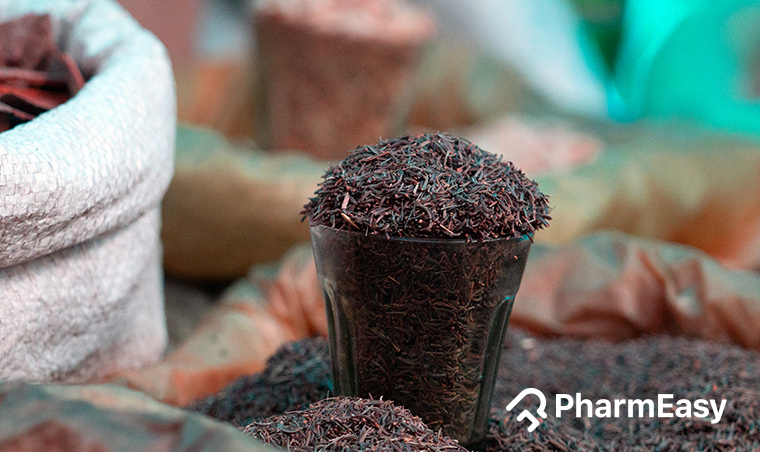
A member of the Asteraceae family, Kalijiri or black cumin (scientifically known as Centratherum anthelminticum or Vernonia anthelmintica) is a tall, sturdy leafy plant with wide distributions across the country.
Renowned for its wide use in culinary practices, Kalijiri has been acknowledged as a prominent medicinal plant with its acceptance reported in traditional medicinal systems like Ayurveda and Unani for the management of diverse physiological conditions such as cough, diarrhoea, asthma, kidney troubles and inflammation.
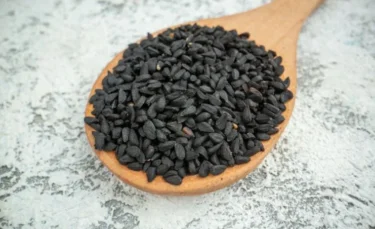
Characterized by a bitter taste, black cumin seeds are known to possess numerous therapeutic as well as pharmacological activities1,2,3.
Advertisement
Chemical Composition of Kalijiri
With respect to the chemical composition, this plant is mainly composed of glycosides, carbohydrates, phenolic compounds and sterols4,5,6. The seeds of this plant comprise fixed oil (18%), volatile oil (0.02%) and flavonoids that are known to control the neuropharmacological plant activity7,8.
Potential Uses of Kalijiri
Kalijiri is a vital source of various compounds and is used extensively in the management of cough, fever and diarrhoea1.
In accordance with Ayurveda, Kalijiri seeds play a critical role in managing ulcers, skin disease and leucoderma9.
The seeds are also used for dealing with asthma, kidney troubles and inflammation9,10.
Benefits of Kalijiri
1. Anti-inflammatory Benefits of Kalijiri
The anti-inflammatory activity of the petroleum ether and alcoholic extracts of the Kalijiri seeds in rat models has been well documented1,9.
Studies show that Kalijiri has anti-inflammatory and anti-arthritic benefits. Due to these properties, it may be useful in managing various inflammatory conditions17.
Significant hypoglycaemic effects were observed in streptozotocin and alloxan-induced diabetic rat models that were exposed to the ethanolic extract of the Kalijiri seeds9,11
Management of diabetic rats using Kalijiri seeds was deemed fruitful owing to reduced complications like thirst, fatigue, and irritation over the standard drug, glibenclamide12.
3. Anthelmintic Benefits of Kalijiri
Image Source: freepik.com
Kalijiri seeds have demonstrated great anthelmintic activity in terms of expelling distinct parasitic worms out of the body and subsequently leading to significant results in deworming among children and adults12.
4. Anticancer Benefits of Kalijiri
Image Source: freepik.com
The chloroform fraction and acetone extracts of the Kalijiri seeds have shown antiproliferative properties and cytotoxic effects along with inhibition of the tumour necrosis factor through activation of the nuclear factor-kappa B response1,9.
5. Antimicrobial Benefits of Kalijiri
Image Source: freepik.com
Significant inhibitory effects of methanolic as well as acetone extracts of the Kalijiri seeds were observed against various gram-positive and gram-negative bacterial and fungal agents9,12.
Advertisement
Kalijiri has many medicinal properties. It includes properties like analgesic, antipyretic, anti-microbial, etc. Some studies reported that when Kalijiri is used with anti-anxiety compounds like diazepam, it may be able to reduce anxiety more significantly18.
6. Benefits of Kalijiri Due to Antifilarial Activity
The alcoholic and aqueous extracts of the Kalijiri seeds have demonstrated antifilarial activities against the parasitic roundworm Setaria cervi1,8,12.
7. Benefits of Kalijiri Due to Antioxidant Activity
Image Source: freepik.com
Significant antioxidant activity has been demonstrated by the methanolic and aqueous extracts of the Kalijiri seeds against the 2,2-diphenyl-1-picryl-hydrazyl-hydrate and (2,2′-azino-bis(3-ethylbenzothiazoline-6-sulfonic acid)) radicals1,12.
Research indicated that the antioxidant property of the seeds was controlled by the phenolic compounds present within the seeds, as highlighted by a significant correlation between the two12.
8. Benefits of Kalijiri Due to Immunomodulatory Activity
Image Source: freepik.com
Suppression of Rh‐incompatibility of pregnant females was observed through the oral administration of the Kalijiri seeds, which presented with no harmful steroids10.
9. Benefits of Kalijiri Due to Melanogenesis Activity
Flavonoids from the Kalijiri seeds have been found to stimulate melanogenesis in human epidermal melanocytes.9 Subsequently, these flavonoids proved effective against vitiligo, also known as leukoderma, which is characterized by the impaired function of melanocytes12.
10. Benefits of Kalijiri For Wound Healing
Image Source: freepik.com
Histological studies have demonstrated the wound-healing activity of the Kalijiri seeds which were found to exhibit reduced scar formation and enhanced healing properties in terms of angiogenesis (i.e. formation of new blood vessels)12.
11. Benefits of Kalijiri Due to Larvicidal Activity
Image Source: freepik.com
The petroleum ether extract of the Kalijiri fruit and leaves is known to exhibit significant larvicidal activity in efforts to control the Anopheles mosquito larvae12.
12. Benefits of Kalijiri for Skin
Image Source: freepik.com
Skin formulations in the form of a topical ointment have been developed from a variety of plant extracts, including the Kalijiri seeds. This ointment has been used to manage chronic skin conditions like eczema, lichen planus and psoriasis13.
Seeds: Kalijiri seeds ground into powder can be used externally. Ethanol extract of the seedshas exhibited smooth muscle stimulant and spermicidal activity8,14The decoction of seeds is used to manage gonorrhoea, dysentery and helminths. It also aids with symptoms of indigestion and promotes weight loss through the use of methi seeds and Ajwain. The paste of the seeds, on the other hand, is externally applied to help in the healing of scorpion stings10.
Roots: Roots of Kalijiri have proved effective in managing stomach aches, ulcers and cough14.
Flowers: The purgative flowers of Kalijiri help in normalising bowel movements and subsequently aid in dealing with indigestion14.
Leaves: Extracted juice from the leaves help in managing phlegmatic discharges from nostrils10. Extract from the Kalijiri leaves possess wound healing properties due to the presence of flavonoids12.
Your Ayurvedic physician will prescribe you the form and dosage as per your health condition.
Side Effects of Kalijiri
Limited scientific literature is available pertaining to the side effects of Kalijri. Hence, further research studies are warranted to examine the long-term side effects of this medicinal plant15. Data collected up to this point has indicated that the crude extracts of the Kalijiri seeds are safe to use as far as acute dosing is concerned15.
Precautions to Take with Kalijiri
Keep the following points in mind:
Oral administration of the Kalijiri seeds have revealed suppression of Rh”incompatibility in pregnant females, highlighting the immunomodulatory activity of Kalijiri with no report of harmful steroids and its overall safe use10.
No scientific literature is available regarding the safe consumption of Kalijiri during breastfeeding. Consultation with a doctor would be advisable with regards to its use and dosage.
Kalijiri is a powerful medicinal herb with a wide range of benefits including anti-inflammatory, antidiabetic, antimicrobial, antioxidant, and wound healing properties. Incorporating it through seeds, roots, leaves, or flowers can support management of various health conditions. However, pregnant and breastfeeding women should exercise caution and consult a doctor before use. Knowing the right form and dosage of Kalijiri and choosing suitable preparations matters. A balanced approach along with proper medical guidance can help you make the most of Kalijiri’s benefits and support long-term health.
What are the benefits of using Kalijiri, Methi and Ajwain?
The Ayurvedic formulation of Kalijiri, Methi and Ajwain has notable benefits in terms of managing indigestion, cholesterol levels, arthritis, and diabetes. It also has diuretic activity with regards to increasing the rates of urine flow and sodium excretion to help with fluid retention12,16.
Can Kalijiri help in managing diabetes?
Yes, Kalijiri seeds can help in managing diabetes. Significant hypoglycaemic effects have been documented among rat models that were exposed to the ethanolic extract of the seeds11. However, further research is warranted to strongly confirm the benefits of the Kalijiri seeds in the overall management of diabetes.
Can fever be managed using Kalijiri seeds?
Yes, Kalijiri seeds serve as an effective source in managing fever due to their antipyretic property that has been well observed and documented in the petroleum ether and alcoholic extracts of its seeds1.
Are Kalijiri seeds good for health?
Yes, Kalijiri seeds are extremely good for your health due to their multi-faceted properties such as anthelmintic nature, benefits in numerous skin conditions, reducing blood sugar levels and, in turn, promoting weight loss and helping manage diabetes, and purgative nature to help with the bowel movement11,12,13.
References
Looi CY, Arya A, Cheah FK, Muharram B, Leong KH, Mohamad K, et.al. Induction of Apoptosis in Human Breast Cancer Cells via Caspase Pathway by Vernodalin Isolated from Centratherum anthelminticum (L.) Seeds. PLoS ONE. 2013;8(2). https://pubmed.ncbi.nlm.nih.gov/23437193/
Arya A, Achoui M, Cheah SC, Abdelwahab SI, Narrima P, Mohan S, et.al. Chloroform fraction of Centratherum anthelminticum (L.) seed inhibits tumor necrosis factor alpha and exhibits pleotropic bioactivities: Inhibitory role in human tumor cells. Evidence-Based Complementary and Alternative Medicine. (2012). https://pmc.ncbi.nlm.nih.gov/articles/PMC3303680/
Srivastava A, Bartarya R, Tonk S, Srivastava SS & Kumari KM. Larvicidal activity of an indigenous plant, Centratherum anthelminticum. Journal of Environmental Biology. 2008;29(5):669-672. https://pubmed.ncbi.nlm.nih.gov/19295062/
Dogra N, Kumar S & Kumar D. Vernonia anthelmintica (L.) Willd.: An ethnomedicinal, phytochemical, pharmacological and toxicological review. Journal of Ethnopharmacology. 2020;256:112777. https://pubmed.ncbi.nlm.nih.gov/32205258/
Chandanshive A, Dhokare S, Shah S & Patil S. Phyto and Physicochemical screening of Methi Ajwain Churna. International Journal of Advanced Research in Biological Sciences. 2020;7(6):34-43. https://ijarbs.com/pdfcopy/2020/june2020/ijarbs4.pdf
Manvar MN, Desai TR. In-vitro anti-inflammatory and anti-arthritic activities of fruits of Vernonia anthelmintica Willd. (Asteraceae). 2015;186-188. Published online 2015 Feb 5. https://indianjournals.com/article/ajpr-4-4-004
Disclaimer:The information provided here is for educational/awareness purposes only and is not intended to be a substitute for medical treatment by a healthcare professional and should not be relied upon to diagnose or treat any medical condition. The reader should consult a registered medical practitioner to determine the appropriateness of the information and before consuming any medication. PharmEasy does not provide any guarantee or warranty (express or implied) regarding the accuracy, adequacy, completeness, legality, reliability or usefulness of the information; and disclaims any liability arising thereof.
Links and product recommendations in the information provided here are advertisements of third-party products available on the website. PharmEasy does not make any representation on the accuracy or suitability of such products/services. Advertisements do not influence the editorial decisions or content. The information in this blog is subject to change without notice. The authors and administrators reserve the right to modify, add, or remove content without notification. It is your responsibility to review this disclaimer regularly for any changes.
























 12
12 























Comments