




Everything You Need to Know About the Hepatitis A Vaccine
By Dr. Vishesh Bharucha +2 more

Medically reviewed by Dr. Avinav Gupta
Last updated: Sep 8, 2026 Published on: Jun 10, 2025


Get,

to manage your symptom
Get your,

4 Cr+ families
benefitted

OTP sent to 9988776655



You’ve successfully subscribed to receive
doctor-approved tips on
Whatsapp

Get ready to feel your best.


Register to Avail the Offer
Send OTPBy continuing, you agree with our Privacy Policy and Terms and Conditions
Hi There,
Sign up on PharmEasy now!!


Trusted by 4 crore+ families

OTP sent to 9988776655
You have unlocked 25% off on medicines


Code: NU25

By Dr. Vishesh Bharucha +2 more
Table of Contents
Hepatitis A is a contagious liver infection caused by the hepatitis A virus (HAV), which primarily spreads through feco-oral route, and contaminated food, water or close contact with an infected person. It remains a significant public health concern, especially in areas with inadequate sanitation and limited access to clean water1.
Most people recover fully and develop a long-lasting immunity against the HAV once they have been affected. However, in rare cases, hepatitis A can lead to severe complications, including liver failure (more common in older adults with underlying conditions). Fortunately, a safe and effective vaccine is available that offers reliable protection against this preventable disease2. In this article, we will discuss the hepatitis A vaccine for adults and children, its benefits, and why it’s important for public health.
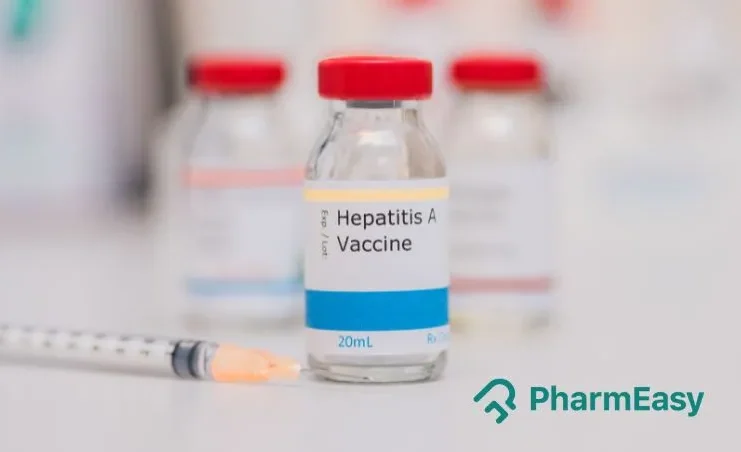
The hepatitis A vaccine uses an inactivated HAV virus to safely stimulate the body’s immune system and provide long-term protection (possibly life long after two doses) against infection3.
When a vaccine is given, the white blood cells (WBCs) that fight an infection recognise the vaccine’s antigen (specific virus protein) and trigger specific WBCs (B and T cells). The B cells then multiply and create antibodies (proteins) and the T cells help in immune regulation and memory for protection against the virus when encountered in the future4.
Bonus: The vaccine also contains aluminium that boosts the immune response by keeping the antigen at the injection site longer and stimulating immune cells to release signals that enhance protection4.
The hepatitis A vaccine plays a crucial role in offering protection from the harmful effects of the HAV. Key hepatitis A vaccine uses include:
Hepatitis A Vaccine (HAV) is not part of India’s National Immunization Schedule currently however the Indian Academy of Paediatrics (IAP) has recommended to include it in NIS due to the disease burden12,13,14.
Dr. Nayana Shetty, MBBS, MD
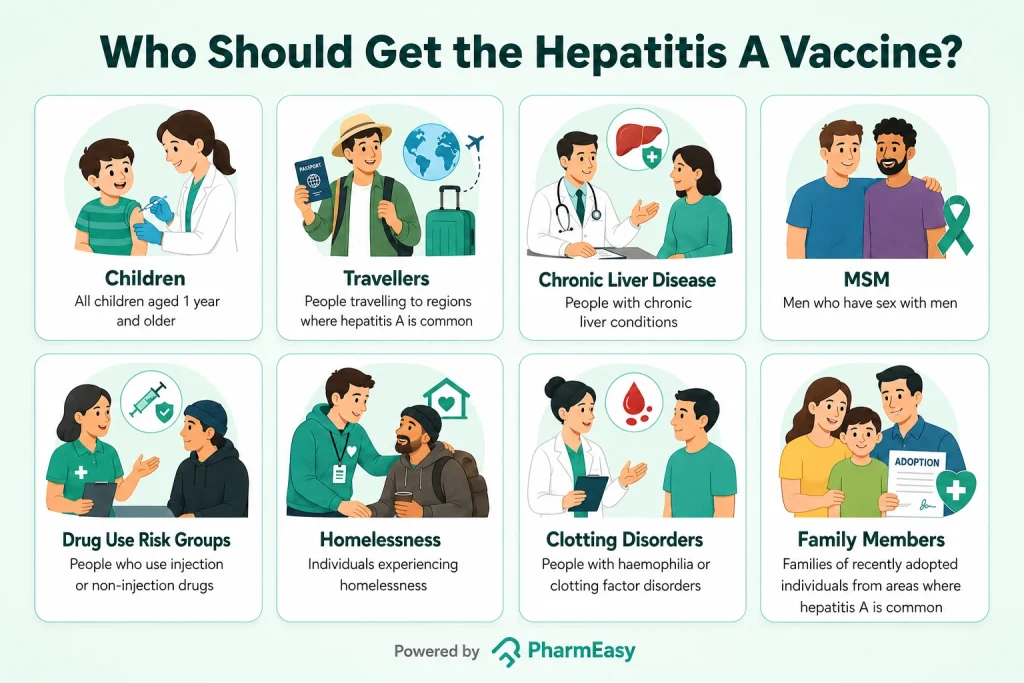
The hepatitis A vaccine is generally recommended for individuals at increased risk of infection or complications. The following groups of people are especially advised to get vaccinated against the HAV:
There are several types of hepatitis A vaccines available in the market currently that provide effective protection against HAV. These include both single-antigen vaccines and combination vaccines6:
These vaccines protect only against the HAV. These are approved for individuals aged 1 year and older and include:
Only inactivated vaccines are in use currently; no live-attenuated Hep A vaccines are licensed in most countries, including the U.S. Both of these are also inactivated vaccines and require a two-dose schedule for long-term protection.
This vaccine (inactivated) protects against both hepatitis A and hepatitis B viruses. They are approved for use in individuals aged 18 years and older and include:
It is important to note that this vaccine is not a replacement for single-antigen vaccines and used when protection against both Hepatitis A and B is needed.
Since both vaccines are equally effective, your doctor can help determine the most suitable option based on age, health status, and risk of exposure.
Choosing a combination vaccine can offer practical advantages: it may reduce the total number of injections compared with receiving separate hepatitis A and hepatitis B vaccines, while providing protection against two serious liver infections through a single vaccination schedule. . It may be especially useful for travellers, adults who need protection against both infections, and people at occupational risk of exposure to either virus.
Importantly, the combination vaccine is not a replacement for single-antigen vaccines as it’s used specifically when protection against both hepatitis A and B is needed. Both the combination vaccine and the single-antigen hepatitis A vaccine provide effective protection against hepatitis A when administered according to the recommended schedule. Your doctor can help determine the most suitable option based on your age, health status, vaccination history, and risk of exposure.
The cost of the hepatitis A vaccine can vary depending on the brand, type, and where it is administered. The table below provides a general comparison of commonly used vaccine brands15.
| Brand | Manufacturer | Vaccine Type | Approximate Price Range |
| Havrix® | GlaxoSmithKline | Single-antigen (inactivated) | Varies by provider |
| Avaxim® | Sanofi | Single-antigen (inactivated) | Varies by provider |
| Twinrix® | GlaxoSmithKline | Combination (Hep A + B, inactivated) | Varies by provider |
Note: Vaccine prices are not fixed and can change over time. They vary by city, healthcare provider, pharmacy, and whether the vaccine is given at a private clinic or a public health facility. The figures available online or elsewhere should be treated only as a rough guide. For current and accurate pricing, it is best to consult your healthcare provider, local pharmacy, or vaccination centre before making a decision.
The hepatitis A vaccine for adults and children is typically given as part of a two-dose schedule for full protection. Here’s what you need to know about the hepatitis A vaccine dose schedule4.
Single-antigen hepatitis A vaccines are given in two doses4:
Combination hepatitis A vaccines are given in three doses:
For optimal effectiveness of the vaccine, you should follow your doctor’s suggestion for the hepatitis A vaccine dose schedule.
| Vaccine Type | Schedule | Doses & Timing |
| Single-Antigen Hepatitis A | Standard | 2 doses at least 6 months apart. Depending on the product, the interval is 6–12 months (Havrix) or 6–18 months (Vaqta). |
| Combination (Hepatitis A + B) | Standard | 0 month, 1 month, 6 months |
| Combination (Hepatitis A + B) | Accelerated | Day 0, Day 7, Day 21–30, with a booster at 12 months |
A single dose offers good early protection, but completing the full schedule is important for long-lasting immunity3,9. The first dose primes the immune system, while the later dose (or doses) strengthens and prolongs the protective response, helping ensure immunity that may last for many years. Missing the second dose may leave protection incomplete over the long term. Importantly, a delayed dose does not require restarting the series, so if you have missed a scheduled dose, you can simply complete it later under your doctor’s guidance5
Note: The optimal hepatitis A vaccine age to start immunisation is 12 months, ensuring early protection during childhood. That being said, there is no upper limit for the hepatitis A vaccine age, and adults at risk can be vaccinated safely at any time.
Also Read: Everything To Know About the Influenza Vaccine & Its Importance
The hepatitis A vaccine is administered as an intramuscular injection, typically into the thigh for infants and toddlers (under 3 years) and into the upper arm for children aged 3 years and older and adults4.
It is typically given at clinics, travel health centres, hospitals, or public health departments8. If you’re unsure about when or where to get vaccinated, consult your doctor for guidance and support.
The vaccine has a well-established record of safety and effectiveness:
Post-exposure prophylaxis (PEP) refers to protective measures taken after a person has recently been exposed to the hepatitis A virus, with the aim of preventing infection before it takes hold. In many cases, the hepatitis A vaccine itself can be used as PEP16.
PEP may be considered in situations such as:
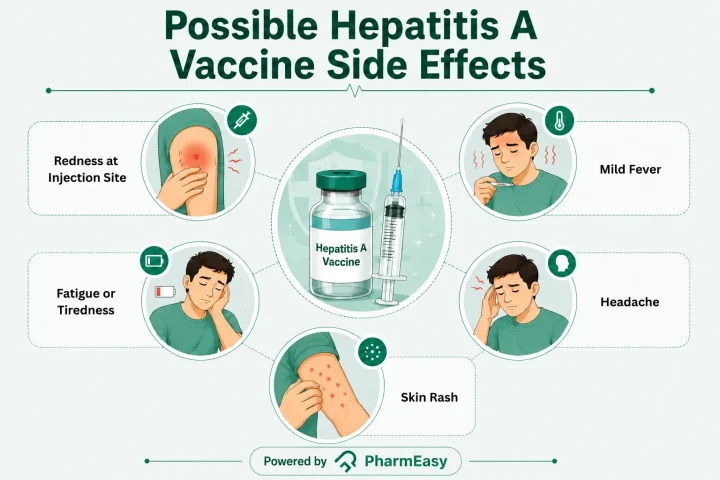
This vaccine is generally well tolerated, with most hepatitis A vaccine symptoms being mild and short-lived. Some common but mild hepatitis A vaccine side effects include4:
These hepatitis A vaccine side effects typically get better on their own in a few days.
Serious side effects such as anaphylaxis (difficulty breathing, swelling of the face or throat, or hives) may also occur, although extremely rare10.
Hepatitis A vaccine prevents infection from hepatitis A virus. This infection is typically contracted through contaminated food and can lead to loose motions and jaundice along with high fever.
Dr. Nayana Shetty, MBBS, MD
While most people experience no or only mild hepatitis A vaccine after effects, you should seek medical attention if you notice:
If in doubt, always consult your doctor for reassurance and appropriate care regarding the hepatitis A vaccine’s effects.
Hepatitis A vaccine plays a vital role in preventing acute hepatitis A, which can lead to severe liver problems, especially in older adults or those with pre-existing liver disease. This vaccination is especially important for young children, travellers to high-risk regions, MSM, IV drug abusers and individuals with chronic liver conditions. By getting vaccinated, you not only protect yourself but also help stop the spread of the virus in the community.
The vaccine is safe, effective, and well-tolerated, providing long-term protection and helping lower the incidence of hepatitis A cases worldwide. The hepatitis A vaccine after effects are also usually mild and resolve within a few days without any treatment.
So, if are not vaccinated or in the high-risk group , talk to your doctor about hepatitis A vaccination; it’s a simple and reliable step toward safeguarding your liver health!
Also Read: HPV Vaccine: What is It, When to Be Taken, Importance & Side Effects
Yes. The hepatitis A vaccine can be given at the same time as other vaccines, using different injection sites4,5. It does not interfere with the effectiveness of other immunisations.
You should receive the first dose as soon as travel is planned, ideally at least 4 weeks before departure, to allow your body time to develop protective antibodies4.
Protective antibodies typically begin to form within 2 to 4 weeks after the first dose, but full protection is not guaranteed until after 4 weeks4.
Yes. Pregnant women who are at increased risk of hepatitis A infection, such as international travellers, drug users, those with chronic liver disease, or women in close contact with international adoptees, should receive the hepatitis A vaccine. Although the vaccine’s safety in pregnancy hasn’t been fully established, it is made from inactivated virus, so the theoretical risk to the foetus is considered very low. Your doctor should guide the decision to vaccinate, and this decision should be based on the potential risk of exposure and severity of illness11.
Disclaimer: The information provided here is for educational/awareness purposes only and is not intended to be a substitute for medical treatment by a healthcare professional and should not be relied upon to diagnose or treat any medical condition. The reader should consult a registered medical practitioner to determine the appropriateness of the information and before consuming any medication. PharmEasy does not provide any guarantee or warranty (express or implied) regarding the accuracy, adequacy, completeness, legality, reliability or usefulness of the information; and disclaims any liability arising thereof.
Links and product recommendations in the information provided here are advertisements of third-party products available on the website. PharmEasy does not make any representation on the accuracy or suitability of such products/services. Advertisements do not influence the editorial decisions or content. The information in this blog is subject to change without notice. The authors and administrators reserve the right to modify, add, or remove content without notification. It is your responsibility to review this disclaimer regularly for any changes.


Comments

Leave your comment...
You may also like
























Comments