




CRP Test Range for COVID-19: Understanding Results and Implications
By Dr. Shubham Pandey +2 more

Medically reviewed by Dr. Shubham Pandey
Last updated: Sep 15, 2026 Published on: Apr 10, 2024


Get,

to manage your symptom
Get your,

4 Cr+ families
benefitted

OTP sent to 9988776655



You’ve successfully subscribed to receive
doctor-approved tips on
Whatsapp

Get ready to feel your best.


Register to Avail the Offer
Send OTPBy continuing, you agree with our Privacy Policy and Terms and Conditions
Hi There,
Sign up on PharmEasy now!!


Trusted by 4 crore+ families

OTP sent to 9988776655
You have unlocked 25% off on medicines


Code: NU25

By Dr. Shubham Pandey +2 more
Table of Contents
C-reactive protein (CRP) is a protein produced by the liver as a response to inflammation in the body. The CRP test is an essential diagnostic tool that helps healthcare providers determine if there is inflammation present, which can be indicative of numerous conditions, ranging from infections, autoimmune disorders, or even cancer. In the COVID-19 pandemic, the CRP test gained immense significance as an important marker to help identify severe cases and monitor patient recovery1.
This article aims to provide you with vital information on the CRP test range for patients with COVID-19, how to interpret the results, and the implications of elevated CRP levels. We will also discuss symptoms and possible causes of high CRP levels, touch on the differences between standard CRP and high-sensitivity CRP tests, talk about the most likely cause of elevated CRP levels related to COVID-19, and explore risks and precautions associated with CRP testing. Furthermore, we will also address frequently asked questions related to CRP and COVID-195.
Did You Know?
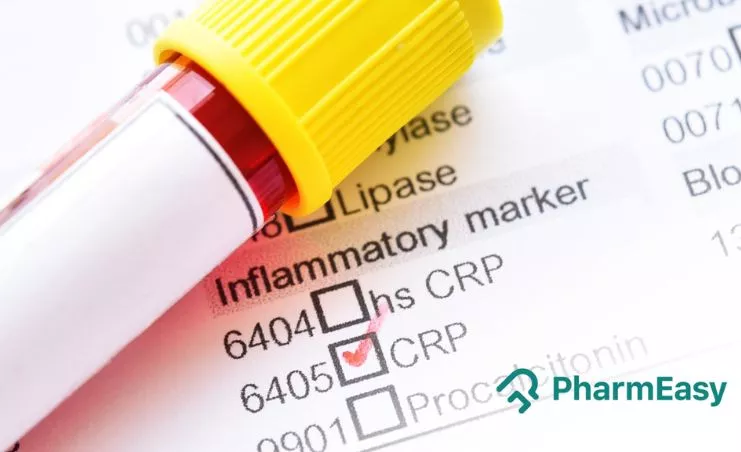
The CRP test is a blood test used to measure the level of C-reactive protein in the body, which serves as an early indication of inflammation and infection2.
Getting a CRP test means giving a blood sample. This is usually done through a vein. The blood then goes to a laboratory for testing. There technicians will measure the amount of CRP in your serum.

When you do a CRP test, blood is usually collected from your arm. A clean needle is used, often with a tourniquet to see the veins better. Once the needle is in the vein and the needed amount of blood is collected in a test tube. After that, the needle is removed, and a gauze or cotton ball is used to stop the bleeding. The blood sample is then tagged and stored in the right conditions ready to be sent for testing.
Keep in mind that you don’t need to fast or stop drinking before a CRP test. However, if a high-sensitivity CRP (hs-CRP) is ordered along with other blood tests like fasting blood sugar, lipid profile, etc., you may need to fast for 9 to 12 hours before.

In the laboratory, certain methods and tools are used to find out the CRP levels in the collected blood. Test results are given in milligrams per deciliter (mg/dL). Laboratory technicians must follow set rules to make sure the tests are right and can be trusted11.
High-sensitivity CRP (hs-CRP) is a form of the normal CRP test. It can detect even small changes in CRP levels in your blood. This test is useful when looking at someone’s chance of getting heart disease and other heart problems.
The hs-CRP test is used for the following indications:
Both tests look at the same thing in the blood, but the hs-CRP test detects even small changes in CRP levels. These are typically at lower levels than the normal CRP test. This improved sensitivity gives information on one’s risk of getting heart disease. It can also help track how well they are responding to steps taken to lower this risk.
Elevated CRP levels may be due to various factors, both with and without COVID-19. Knowing the likely causes of high CRP levels is key when reading test results and coming up with a management plan that fits.
People with high CRP levels due to inflammation often feel2:
Along with the general signs of inflammation, COVID-19 patients with high CRP levels may also have specific symptoms, like4:
Besides a COVID-19 infection, high CRP levels can be due to4:
High CRP levels in earlier stages of COVID-19 may also help detect the risk of lung problems. These levels can assess the severity of the disease and how it is going17.
Dr. Rajeev Singh, BAMS
Knowing how to read CRP test results involves knowing what normal, elevated, and very high CRP ranges are and what they mean.
The normal CRP range is less than 0.3 mg/dL and if it is between 0.3 to 1 mg/dL it is considered as a very minor elevation. This often means no serious inflammation or infection is there. Keep in mind that some long-term conditions, like diabetes, may cause small increases in CRP levels without meaning an active inflammation.
An elevated CRP range is more than or equal to 1 mg/dL. 1 to 10 mg/dL is considered moderate elevation, and more than 10 mg/dL is severe elevation. This signals at a sudden inflammation from an infection (like bacterial pneumonia) or ongoing inflammation due to a serious disease, like lupus or rheumatoid arthritis.
CRP levels over 10 mg/dL are seen as very high and can be linked to severe COVID-19 infections3. Patients with these high CRP levels are more likely to have severe breathing issues or multi-organ failure. They need intense care and close watching.
I read a study which mentioned that CRP can be a good predictor of how serious COVID-19 is when someone first comes to the hospital, even more than other factors in the body. The research found that when CRP levels were around 41.3, it meant there was a higher chance of the illness being severe16.
Dr. Siddharth Gupta, B.A.M.S, M.D
High CRP levels in COVID-19 patients can be due to several factors. Understanding the most probable cause for the high CRP levels is key for deciding the right management plan12.
Also Read: What Are Intranasal Vaccines All About?
While the CRP test can offer useful clues about a patient’s inflammation status, it’s key to know its limits and the need to look at the entire clinical picture while interpreting test results6.
The main limit of the CRP test is its nonspecific nature. A high CRP level does not automatically confirm the presence of a specific condition or infection. Instead, it only shows there’s inflammation in the body, which could be due to many causes. In such cases, further checks, like more blood tests and imaging studies, may be needed to pinpoint the real cause of the inflammation.
Because the CRP test alone can’t make a confirmed diagnosis, it’s key to look at the patient’s clinical signs, symptoms, and health history when reading test results. For COVID-19 patients, mixing CRP test results with other laboratory findings (like full blood count, liver and kidney function tests, and inflammation markers) and imaging studies (like chest X-ray or CT scan) can offer a fuller understanding of the patient’s condition. This can guide the management path in a better way10.
After getting the CRP test results, the next steps involve reading the findings in light of the patient’s overall clinical picture and putting into place the right management or monitoring path.
Based on the CRP test results and the severity of the patient’s COVID-19 symptoms, healthcare providers may suggest more tests (like full blood count and chest imaging) to know the reach of the infection and potential problems. Management options may range from providing support and relief for symptoms for mild to medium cases, to hospital stays, and intense care for patients with serious breathing trouble or organ failure9.
CRP levels can be a useful tool to track a patient’s recovery from COVID-19. Regular testing can help track the progress or end of the infection and guide changes in management or supportive care as needed. It’s key for patients to follow their healthcare provider’s advice about follow-up testing and ongoing care throughout their recovery process7.
Also Read: CRP Test vs ESR Test: Understanding the Differences and Significance
As COVID-19 affected communities worldwide, the CRP test has shown to be a vital diagnostic tool that can help healthcare providers detect serious cases and watch patient recovery. Understanding the CRP test range and what high levels mean in the context of COVID-19 can empower patients and healthcare providers to make good choices about management plans15.
While the CRP test alone can’t give a confirmed diagnosis, it is an important part of a full clinical examination, guiding healthcare professionals in their management of COVID-19 patients. Interpreting the test results in the correct way mixed with a detailed examination of the patient’s health history and presenting symptoms may lead to improved results14.
A high CRP level shows there’s inflammation in the body, which could be because of infections, autoimmune diseases, physical injuries, or other long-term illnesses. A healthcare professional will look at the patient’s clinical mood and extra tests to help know the root cause of the high CRP level.
A CRP test result of more than 10 mg/dL is concerning, as it may show serious inflammation, usually linked with acute bacterial infections or serious cases of COVID-19 infections. More exams and quick medical care are needed in such cases.
A lot of infections can trigger high CRP levels, such as bacterial pneumonia, sepsis, urinary tract infections, and viral or fungal infections2.
CRP levels in COVID-19 patients can change based on disease severity. Patients with mild symptoms may have only slightly high CRP levels, while those with serious or critical COVID-19 cases may have CRP levels more than 10 mg/dL. These levels may vary from other conditions, depending on the root cause of inflammation.
A CRP level over 10 mg/dL is widely seen as showing severe COVID-19 cases, needing close watching and immediate medical care.
High-sensitivity CRP (hs-CRP) tests can detect CRP levels as low as 0.05 mg/dL, offering a more accurate measure of the patient’s inflammation response and risk of heart disease. After recovering from COVID-19, hs-CRP levels may still be checked to know the patient’s cardiac risk or watch the end of inflammation2.
A CRP level of more than 10 mg/dL in the light of COVID-19 is seen as alarming, as it may point to a severe infection, calling for urgent medical care and monitoring5.
Disclaimer: The information provided here is for educational/awareness purposes only and is not intended to be a substitute for medical treatment by a healthcare professional and should not be relied upon to diagnose or treat any medical condition. The reader should consult a registered medical practitioner to determine the appropriateness of the information and before consuming any medication. PharmEasy does not provide any guarantee or warranty (express or implied) regarding the accuracy, adequacy, completeness, legality, reliability or usefulness of the information; and disclaims any liability arising thereof.
Links and product recommendations in the information provided here are advertisements of third-party products available on the website. PharmEasy does not make any representation on the accuracy or suitability of such products/services. Advertisements do not influence the editorial decisions or content. The information in this blog is subject to change without notice. The authors and administrators reserve the right to modify, add, or remove content without notification. It is your responsibility to review this disclaimer regularly for any changes.


Comments

Leave your comment...
You may also like
























Comments