




Dog Deworming: What Is It, Types, Symptoms & Prevention Tips
By Dr. Ramani Jairam +2 more

Medically reviewed by Dr. Ramani Jairam
Last updated: Aug 21, 2026 Published on: Jul 13, 2026


Get,

to manage your symptom
Get your,

4 Cr+ families
benefitted

OTP sent to 9988776655



You’ve successfully subscribed to receive
doctor-approved tips on
Whatsapp

Get ready to feel your best.


Register to Avail the Offer
Send OTPBy continuing, you agree with our Privacy Policy and Terms and Conditions
Hi There,
Sign up on PharmEasy now!!


Trusted by 4 crore+ families

OTP sent to 9988776655
You have unlocked 25% off on medicines


Code: NU25

By Dr. Ramani Jairam +2 more
Table of Contents
Have you ever felt like your dog is losing weight, sliding on the floor, or exhibiting symptoms of an upset stomach? It could be worms! Intestinal worms are a common condition in dogs and can harm their health if left unnoticed1. Following a correct dog deworming routine protects your pet from serious issues while keeping them healthy and active. This article covers everything you need to know about dog deworming, including types of worms, symptoms, schedules, treatment, and prevention tips.

Deworming in dogs is the process of giving antihelmintic drugs that kill or remove parasitic worms and eggs from a dog’s body2. These worms normally live in the intestines, but there are also some types which live in other organs like the heart, lungs, or blood vessels and cause harm3,4.
Regular deworming helps:
A variety of parasitic worms can infect dogs. The following are the most common types:
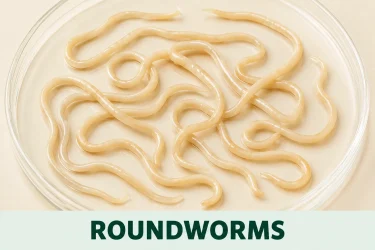
These are the most common types of parasites found in dogs. They are long, spaghetti-like/ tubular parasites that live in the intestines. The roundworm-related infections are more common during winter. Compared to dogs, puppies are seen as more prone to such infections3.
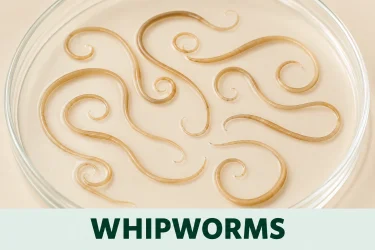
These are the worms with a thin, whip-like shape. These attach to the lining of a dog’s big intestine and feed on small amounts of blood and tissue. These usually do not cause any serious harm to the dogs; however, sometimes, they can also cause severe health issues3.
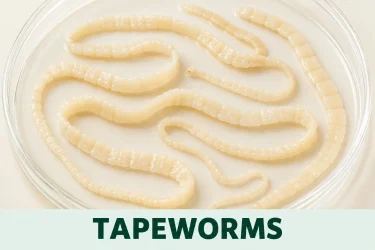
These are the long, flat worms that look like strips of tape. Adult forms live in the small intestine of the dogs and usually do not cause any serious issues. Infection is often noticed when small, rice-like segments of the worm are found around the dog’s tail, in its faeces, or on its bedding3.
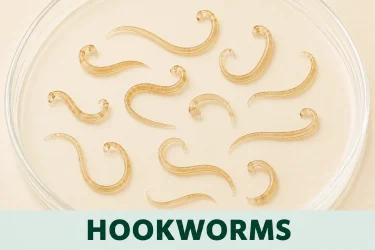
These worms are hook-like structures infecting the dog’s intestine. After entering the dog’s body, the larvae move to the small intestine, attach to its wall, and grow into adult worms. Hookworm infections are common during summer and autumn. Puppies are at an increased risk of developing such infections, which can become serious if left untreated3.
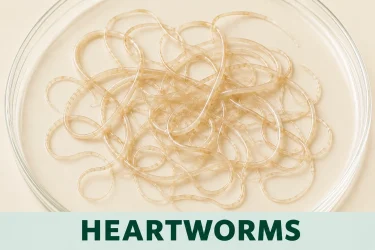
These intestinal parasites are seen in the heart, lungs, and even blood vessels of the dogs. They get transmitted when mosquitoes pick up heartworm larvae from an infected dog and pass them to another dog when they bite. The larvae then travel to the heart and grow into adult worms. If left untreated, they can cause severe complications like lung disease or heart failure in dogs4.
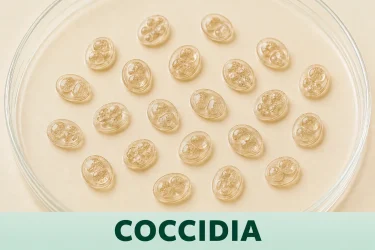
These are tiny, single-celled parasites. The common type of this parasite that infects the dogs is Cystoisospora. The infection can cause damage to the intestinal lining, causing several issues like loss of appetite, weakness, dehydration, etc. This infection is highly contagious, and the most prone ones are puppies, due to their weak immunity3.
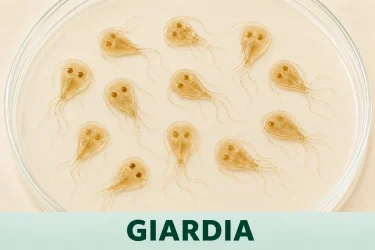
These are single-celled parasites. If these reach the body, they can interfere with nutrient absorption, as they can damage the intestinal lining. They show the same symptoms as a coccidia infection3.
The dogs can get worms in different ways, such as:
The following symptoms can help you tell if your dog has worms:
In severe cases they may have symptoms such as:
The dog deworming schedule is different for puppies and adults:
The deworming schedule in puppies includes the following:
The deworming schedule in adult dogs includes the following:
Note: This information provided is only for educational purposes and should not replace expert veterinary advice. Deworming schedules might vary depending on a dog’s age, breed, health, environment, and parasite risk. Always contact a certified veterinarian before beginning or changing your pet’s deworming routine as the intestinal parasitic infections might sometimes need medications along with deworming.
Also, note that coccidia and giardia are common intestinal parasites, but they are protozoa rather than worms. Routine deworming medications do not treat these infections, and they might require specific medications prescribed by a veterinarian. Therefore, under suspected conditions please consult a veterinarian.
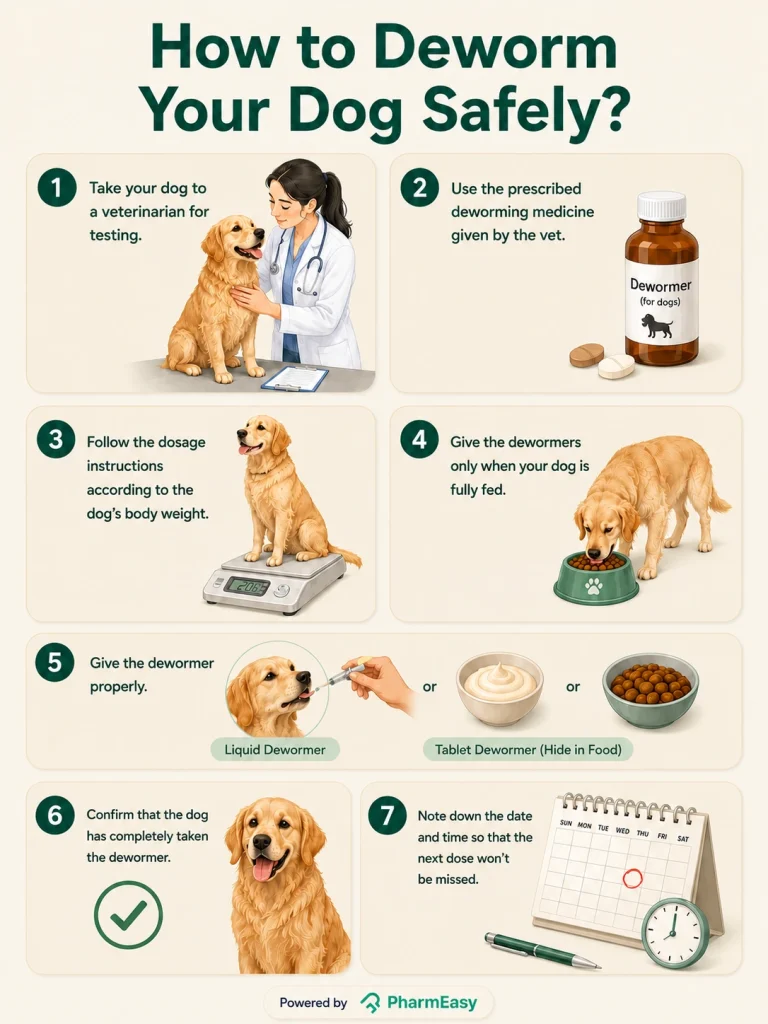
The following steps explain how to deworm a dog safely:
Note: The deworming procedure varies depending on your dog’s age, weight, health status, and type of worm infestation. Always follow the veterinarian’s directions and prescription label. Do not provide deworming medications without veterinarian supervision, as inappropriate dosing can be ineffective or cause adverse effects.
While deworming medications are generally safe, some dogs may develop mild side effects. The following are some common side effects of deworming a dog:
Note: If the side effects do not resolve within the timeframe specified by your veterinarian, consult them promptly to prevent potential complications.
The following are some tips by which you can keep your dogs away from getting worms:
The following are some symptoms you should consider in your dogs to seek immediate care:
Also Read: Dog Skin Infection: Causes, Symptoms, Treatment & Home Care
Deworming is an important aspect of proper dog care. Regular parasite control helps dogs avoid stomach disorders and other major health concerns. You can keep your dog healthy, comfortable, and protected from harmful worms throughout its life by adhering to an appropriate deworming plan, practising proper hygiene, and getting veterinary assistance as needed.
Also Read: Dog Tear Stains: Causes, Treatment & Natural Removal Tips
You may naturally lower your dog’s worm risk by practising proper hygiene, cleaning their living space on a regular basis, and keeping them away from consuming raw meat, waste, or contaminated soil. A balanced diet and clean water help to support a healthy immune system, which reduces susceptibility to infection3,10
Yes, some intestinal worms, such as hookworms and tapeworms, can spread from dogs to humans by contact with contaminated soil, faeces, or fleas. Good hygiene and regular deworming of pets significantly lower this danger3.
Most adult dogs require deworming every three months, depending on their lifestyle and exposure risk. Puppies need more frequent deworming, usually every two weeks until 12 weeks of age and then monthly until 6 months7.
The majority of deworming side effects in dogs are minor and typically last 24 to 48 hours. Symptoms such as vomiting, diarrhoea, decreased appetite, drooling, or moderate fatigue usually subside after a day or two as the body responds to the medicine. It is also usual to find dead worms in the stool following treatment. However, if side effects last more than two days, it is advised to see a veterinarian8.
Yes, for most healthy adult dogs, deworming every three months is considered a standard preventive measure. However, the exact frequency should be determined by a veterinarian based on the dog’s risk factors and health status8.
1. Intestinal Parasites in Dogs. 2026. doi: https://www.aphis.usda.gov/sites/default/files/ac-aid-intestinal-parasites-in-dogs.pdf
2. Sherlock C, Holland CV, Keegan JD. Caring for Canines: A Survey of Dog Ownership and Parasite Control Practices in Ireland. Veterinary Sciences. 2023;10(2):90. doi:10.3390/vetsci10020090 https://www.mdpi.com/2306-7381/10/2/90
3. Intestinal parasites in cats and dogs. doi: https://www.avma.org/resources-tools/pet-owners/petcare/intestinal-parasites-cats-and-dogs
4. Keep the Worms Out of Your Pet’s Heart! The Facts about Heartworm Disease. 2022. doi: https://www.fda.gov/animal-veterinary/animal-health-literacy/keep-worms-out-your-pets-heart-facts-about-heartworm-disease
5. Suganya G, Porteen K, Sekar M, Sangaran A. Prevalence and molecular characterization of zoonotic helminths in dogs. J Parasit Dis. 2019;43(1):96-102. doi:10.1007/s12639-018-1066-z https://pubmed.ncbi.nlm.nih.gov/30956452/
6. Heartworm in Dogs. doi: https://www.heartwormsociety.org/heartworms-in-dogs
7. Stull JW, Carr AP, Chomel BB, Berghaus RD, Hird DW. Small animal deworming protocols, client education, and veterinarian perception of zoonotic parasites in western Canada. Can Vet J. 2007;48(3):269-276. doi:10.4141/cjas68-037 https://pmc.ncbi.nlm.nih.gov/articles/PMC1800965/
8. The Complete Beginner’s Guide to Deworming Dogs and Cats at Home. doi: https://www.acdra.org/post/guide-deworming-dogs-cats-at-home
9. Label: TAPEWORM DEWORMER FOR DOGS- praziquantel tablet. doi: https://dailymed.nlm.nih.gov/dailymed/drugInfo.cfm?setid=94812721-1153-49f7-b574-ef4c24ebc70d
10. Dogs. 2026. doi: https://www.cdc.gov/healthy-pets/about/dogs.html
Disclaimer: The information provided here is for educational/awareness purposes only and is not intended to be a substitute for medical treatment by a healthcare professional and should not be relied upon to diagnose or treat any medical condition. The reader should consult a registered medical practitioner to determine the appropriateness of the information and before consuming any medication. PharmEasy does not provide any guarantee or warranty (express or implied) regarding the accuracy, adequacy, completeness, legality, reliability or usefulness of the information; and disclaims any liability arising thereof.
Links and product recommendations in the information provided here are advertisements of third-party products available on the website. PharmEasy does not make any representation on the accuracy or suitability of such products/services. Advertisements do not influence the editorial decisions or content. The information in this blog is subject to change without notice. The authors and administrators reserve the right to modify, add, or remove content without notification. It is your responsibility to review this disclaimer regularly for any changes.


Comments

Leave your comment...
You may also like

























Comments