
Get,

Free Doctor Tips

to manage your symptom

Get your,

FREE Doctor Tips Now!!

4 Cr+ families

benefitted

Enter your Phone Number

+91

|

Enter a valid mobile number

Send OTP

Verify your mobile number

OTP sent to 9988776655

CONGRATULATIONS!!!

You’ve successfully subscribed to receive

doctor-approved tips on Whatsapp


Get ready to feel your best.

Hi There,

Download the PharmEasy App now!!

AND AVAIL

AD FREE reading experience
Get 25% OFF on medicines
Banner Image

Register to Avail the Offer

Send OTP

By continuing, you agree with our Privacy Policy and Terms and Conditions

Success Banner Image
Verify your mobile number

OTP sent to 9988776655

Comments

Subscribe
Notify of
guest
0 Comments
Inline Feedbacks
View all comments

Leave your comment here

Your email address will not be published. Required fields are marked *

25% OFF on medicines

Collect your coupon before the offer ends!!!

COLLECT

Why Do Dogs Vomit? Causes, Types, Treatment & Home Remedies

By Dr. Ramani Jairam +2 more

Join Health Talk by PharmEasy on WhatsApp

Introduction

One minute, your dog is happily wagging their tail, and the next, they are vomiting on your carpet. As a pet parent, this moment can instantly trigger worry, panic, and a hundred questions: Did they eat something bad? Is it serious? Should I rush to the vet?  

The truth is, vomiting in dogs is surprisingly common. Research shows that only 28% of vomiting cases in dogs lead to a veterinary visit, meaning many pet parents initially try to monitor or manage the issue at home1. However, frequent or persistent vomiting may sometimes point to infections or other serious health conditions that should never be ignored1,2.  

In this blog, we’ll break down everything you need to know about dog vomiting, from its common causes and different types, warning signs, treatment options, to safe home remedies. Whether your pup has vomited once or keeps throwing up repeatedly, this guide will help you stay calm, informed, and prepared to care for your beloved pet. 

Advertisement

Why Do Dogs Vomit?

Vomiting means forcefully throwing up the contents of the stomach through the mouth3.

Dogs vomit as a natural protective response when something irritates their stomach or digestive system. Just like humans, a dog’s body tries to get rid of anything that may be harmful, indigestible, or upsetting to the gut. Vomiting can happen for many reasons, some mild and temporary, others more serious2.

Types of Dog Vomit

Dog vomiting can be classified into different types based on how suddenly it occurs and how long it lasts4:

  • Acute (Sudden) Vomiting: Acute vomiting refers to a sudden episode of vomiting that appears unexpectedly and lasts for a short period. Although many cases are mild, sudden and severe vomiting may sometimes indicate a more serious underlying illness or complication, and should not be ignored. 
  • Chronic Vomiting: Chronic vomiting refers to vomiting that happens repeatedly over a long period, usually lasting more than 3 to 4 weeks. It may occur along with symptoms such as loss of appetite, abdominal pain, weakness, dehydration, fever, weight loss, or blood in the vomit.  

Dog Vomit Colour Chart

The colour and contents of the vomit may provide clues about your dog’s health and help answer questions like ‘why my dog is vomiting’ and the possible ‘causes of dog vomiting.’ Some common colour types include5:
  • Yellow or Green Vomit: Usually contains bile (stomach acid) and is often foamy.  
  • Brown Vomit: May contain partially digested or undigested food.  
  • Red or Bloody Vomit: Fresh blood may appear bright red, while partially digested blood may look dark brown or like coffee grounds.  
  • Vomit with Grass: Dogs sometimes eat grass when they feel nauseous or have an upset stomach. 

Causes of Dog Vomiting

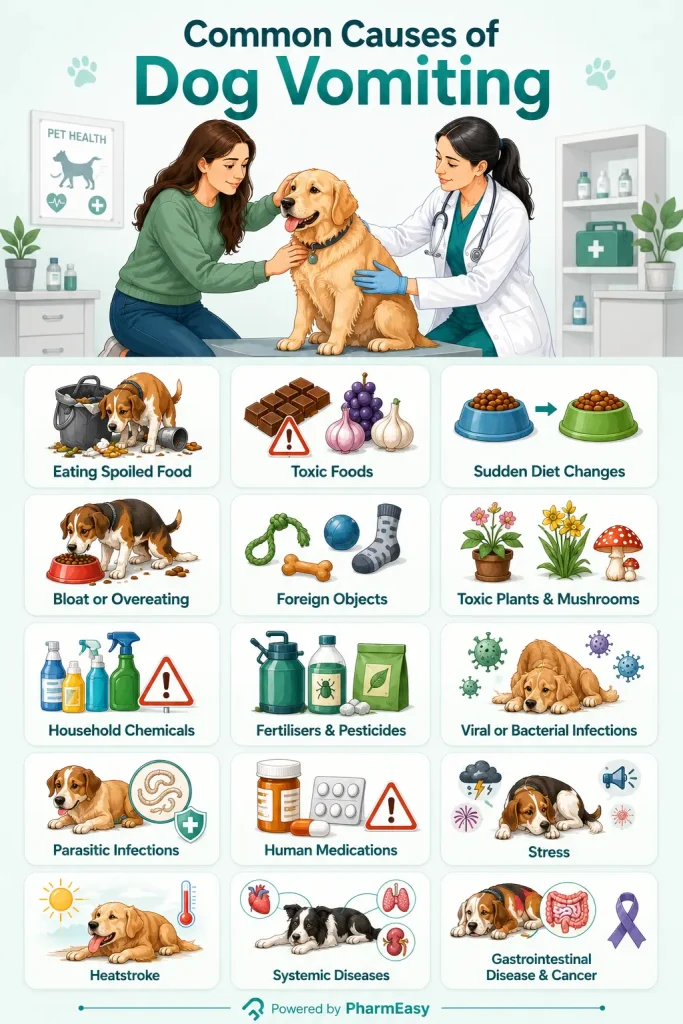
Causes of Dog Vomiting

Vomiting can occur due to many different reasons, ranging from mild stomach irritation to serious underlying diseases. Common reasons for dog vomiting include4

  • Dietary indiscretion: Eating spoiled food, garbage, or inedible objects out of curiosity, hunger, or nutritional deficiency. 
  • Toxic foods: Chocolate, grapes, raisins, onions, garlic, alcohol, coffee, and certain seeds can lead to vomiting. 
  • Sudden diet changes or food allergies: Switching foods quickly or food intolerance can irritate the stomach. 
  • Bloat or overeating: Eating too quickly or consuming large amounts of food can upset the stomach. 
  • Foreign objects: Swallowing toys, strings, yarn, or similar items can irritate or block the digestive tract. 
  • Toxic plants and mushrooms: Plants such as tulips, daffodils, azaleas, and poisonous mushrooms may cause severe stomach problems. 
  • Household chemicals: Cleaning products, paints, sprays, and fumes may upset the stomach or cause poisoning. 
  • Fertilisers and garden chemicals: Exposure to fertilizers, antifreeze, pesticides, and rodent poisons can be harmful. 
  • Viral, bacterial, or fungal infections: Certain infections affecting the digestive system may cause vomiting. 
  • Parasitic infections: Stomach and intestinal parasites can disturb digestion and trigger vomiting. 
  • Human medications: Certain medicines meant for humans can be toxic and may trigger vomiting. 
  • Stress: Severe exercise, emotional stress, or environmental stress may also trigger vomiting. 
  • Heatstroke: Overheating, especially in hot environments, may lead to vomiting. 
  • Systemic diseases: Kidney, liver, thyroid, pancreatic, and metabolic disorders can contribute to vomiting4.
  • Gastrointestinal diseases: Conditions such as inflammatory bowel disease (a chronic inflammation of the digestive tract), chronic enteropathy (a long-term inflammatory intestinal disorder), or intestinal blockage may lead to repeated vomiting4,6 
  • Cancer: Tumours affecting the stomach or digestive tract can cause chronic vomiting4

Symptoms of Dog Vomiting

Frequent vomiting may be accompanied by other signs, especially in stomach-related disorders such as gastritis. These include4:

Advertisement
  • Loss of appetite 
  • Dullness, depression, or lethargy 
  • Changes in urine frequency 
  • Increased or decreased thirst 
  • Diarrhoea 
  • Abdominal pain 
  • Weight loss 
  • Dehydration 
  • Pale or white gums and conjunctiva 
  • Blood in the vomit or faeces 
  • Increased body temperature (depending on the underlying cause) 
  • Increased heart rate (tachycardia) and rapid breathing (tachypnoea) 
  • Increased pulse rate 
  • Weakness or collapse 
  • Severe cases may lead to a coma-like condition 

Diagnosis of Dog Vomiting

To identify the cause of dog vomiting, the veterinarian may evaluate the dog’s medical history, clinical signs, laboratory tests, and imaging findings4.

Medical History

The veterinarian may ask about4:

  • Intake of foreign objects, chemicals, poisons, spoiled food, or medications. 
  • Frequency of vomiting and the appearance of the vomit, including bile, food, foam, blood, grass, bones, or other materials. 
  • Recent travel, motion sickness, intense exercise, or stressful situations. 
  • Pregnancy, spaying history (surgical sterilisation of female animal), or uterine infections. 
  • Previous illnesses, kidney or liver disease, vaccination status, and deworming history. 

Laboratory Tests

Certain tests may help identify infections or parasites, including: 

  • Blood tests: These include: 
    • Venous blood gas analysis to assess hydration and acid-base balance 
    • Complete blood count (CBC) to detect infection or inflammation4
    • Serum biochemistry profile to evaluate liver function, blood glucose, calcium levels, electrolytes, and overall organ function4,7 
    • Canine pancreatic lipase testing to help diagnose pancreatitis7 
    • Blood smear examination to identify blood-borne infections 
    • Serum tests such as the latex agglutination test (LAT) and microscopic agglutination test (MAT) to diagnose leptospirosis 
    • Parvovirus antigen test for suspected parvoviral enteritis4 
  • Faecal examination: To detect intestinal parasites4.
  • Urinalysis: To evaluate urinary tract disorders, hydration status, and kidney function4.

Imaging Techniques

Imaging methods may be used to examine the stomach and digestive tract: 
  • Contrast radiographs (X-rays): Help detect blockages or abdominal problems. 
  • Ultrasonography: Used to evaluate stomach thickness, movement, and possible perforations4
  • Contrast fluoroscopy: Helps assess gastrointestinal motility and identify obstructions or abnormal movement within the digestive tract. 
  • Computed tomography (CT): Provides detailed cross-sectional imaging to detect masses, foreign bodies, or structural abnormalities. 
  • Magnetic resonance imaging (MRI): Particularly useful for evaluating neurological causes of vomiting, such as brain abnormalities8
  • Endoscopy with biopsy: Allows visualisation of the gastrointestinal mucosa and collection of gastric or intestinal biopsy samples. 
  • Electrocardiography (ECG): May be used in cases with electrolyte disturbances or cardiac abnormalities such as bradycardia or dysrhythmias4.

Treatment of Dog Vomiting

Many of you pet parents would be unsure about what to do if your dog vomits. 

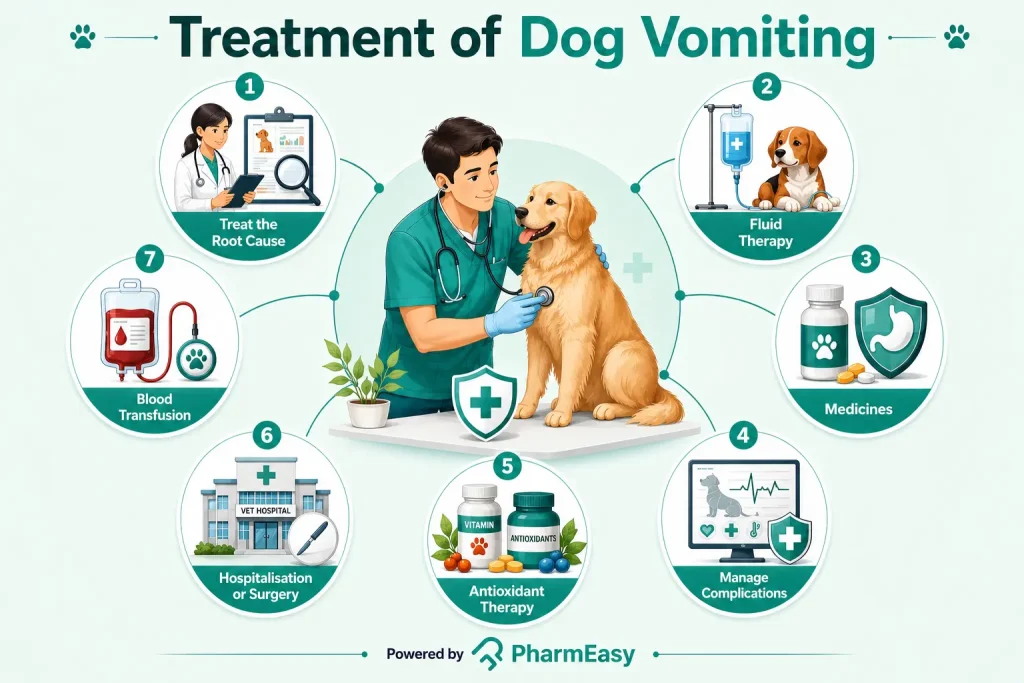
Actually, dog vomiting treatment depends on the cause and severity of vomiting. The main goals are to control vomiting, treat the underlying cause, and avoid dehydration: 

  • Treating the root cause: The underlying problem, such as infection, toxins, dietary issues, or gastric disorders, should be identified and managed. 
  • Fluid therapy: Fluids are commonly given to prevent dehydration, maintain blood circulation, and support recovery4.
  • Medicines: Drugs may help reduce stomach acidity and irritation. Other medicines may also be used to control nausea and vomiting and to protect the stomach lining from ulcers or further damage. Additionally, broad-spectrum antibiotics may be used after stabilisation if bacterial infection is suspected. In cases where vomiting is associated with neurological disorders or seizures, anti-seizure medications may also be prescribed5,8 However, these medications should only be given under veterinary supervision and with a proper prescription. 
  • Correcting secondary problems: Treatment may also focus on dehydration, anaemia, weakness, and weight loss. 
  • Antioxidant therapy: Vitamins and antioxidants such as Vitamin C, Vitamin E, selenium, zinc, and N-acetyl cysteine may help reduce oxidative damage and support stomach healing. 
  • Hospitalisation or surgery: Severe cases may require hospitalisation, injectable medications, or surgery, especially if there is blockage, poisoning, or serious illness. 
  • Blood transfusion: In cases involving severe blood loss or shock, blood transfusion may be required4

Home Remedies for Dog Vomiting

If vomiting happens only once and your dog otherwise seems active and normal, you may monitor them at home for a short time before visiting the veterinarian. Some home remedies for dog vomiting include: 

  • Temporary food withdrawal: Food may be stopped for a short period to allow the stomach to rest and reduce irritation4
  • Bland diet: Offer small, frequent portions of easily digestible low-fat foods such as plain boiled rice with cooked chicken breast or white fish. Avoid rich, spicy, or fatty foods. Once vomiting stops, normal food can be gradually reintroduced over 2 to 3 days. 
  • Keep them hydrated: Ensure access to plenty of fresh water to replace lost fluids. Encourage small amounts of water frequently throughout the day to prevent dehydration. 
  • Rest: Allow plenty of rest and avoid strenuous activities or long walks to support recovery and reduce stress on the body5

How to Prevent Dog Vomiting?

While dog vomiting cannot always be prevented, a few simple measures can help reduce the risk of stomach upset and digestive problems4:

  • Feed a balanced and easily digestible diet. 
  • Avoid rich, fatty, or spoiled foods. 
  • Keep garbage, toxic foods, medicines, chemicals, and small objects out of reach. 
  • Feed smaller meals and prevent eating too quickly. 
  • Avoid sudden changes in food. 
  • Provide plenty of fresh drinking water to avoid dehydration. 
  • Reduce stress and avoid excessive exercise immediately after meals. 
  • Keep up with regular vaccination and deworming schedules. 

When to See a Veterinarian?

If your dog vomits once but is otherwise acting normal, eating, and staying active, you may monitor them at home. However, contact your vet if you notice any of these signs5:

  • Vomiting repeatedly 
  • Blood in the vomit 
  • Bloody diarrhoea 
  • Diarrhoea (that lasts more than 2 to 3 days) 
  • Low energy or unusual tiredness 
  • Pain or swelling in the belly 
  • Collapse, fainting, or confusion 
  • Signs of dehydration, such as sticky gums or sunken eyes 
  • Constant dry heaving (unproductive vomiting) or a bloated stomach (can be a serious emergency) 

Conclusion

Vomiting is a common problem in dogs and can happen for many reasons, ranging from mild stomach upset to serious health conditions. Occasional dog vomiting may not always be dangerous, especially if your dog is otherwise active and behaving normally. However, repeated vomiting or vomiting along with symptoms such as blood, diarrhoea, weakness, dehydration, or abdominal pain should never be ignored. 

Therefore, understanding the possible causes, types, symptoms, and warning signs of vomiting can help pet parents respond quickly and appropriately. Simple home care measures may help in mild cases, but persistent or severe vomiting always requires veterinary attention.  

Frequently Asked Questions (FAQs)

How can I stop my dog from vomiting?

If your dog vomits once and otherwise seems normal, you can give the stomach some rest, provide fresh water, and offer a bland diet in small amounts. Avoid fatty foods, treats, or sudden diet changes4,5. If vomiting continues, contact your veterinarian. 

What is the immediate remedy to stop vomiting in dogs?

The immediate steps include temporarily withholding food, keeping your dog hydrated with small amounts of water, and allowing plenty of rest4,5. Do not give any medicines without veterinary advice.

What to do if a dog vomits frequently?

Frequent vomiting should not be ignored. Monitor for other symptoms such as diarrhoea, blood in the vomit, weakness, dehydration, or abdominal pain, and consult a veterinarian to identify the underlying cause4.

How to know if dog vomiting is serious? 

Vomiting may be serious if it happens repeatedly or is accompanied by blood, bloating, severe weakness, diarrhoea, dehydration, collapse, abdominal pain, or loss of appetite4,5. These signs may indicate an emergency and require immediate veterinary care. 

References

1. Pugh CA, Bronsvoort BM de C, Handel IG, et al. Incidence rates and risk factor analyses for owner reported vomiting and diarrhoea in Labrador Retrievers – findings from the Dogslife Cohort. Prev Vet Med. 2017;140:19-29. doi:10.1016/j.prevetmed.2017.02.014  https://pmc.ncbi.nlm.nih.gov/articles/PMC5424887/

2. Elwood C, Devauchelle P, Elliott J, et al. Emesis in dogs: a review. J Small Anim Pract. 2010;51(1):4-22. doi:10.1111/j.1748-5827.2009.00820.x https://pubmed.ncbi.nlm.nih.gov/20137004/

3. Definition of vomiting – NCI Dictionary of Cancer Terms – NCI. February 2, 2011. Accessed May 11, 2026. https://www.cancer.gov/publications/dictionaries/cancer-terms/def/vomiting 

4. Dixit S, Patel P, Yadav S, Patel S, Verma N. Vomiting in Dogs -A Review. Published online October 21, 2022. https://www.researchgate.net/publication/364598700_Vomiting_in_Dogs_-A_Review

5. Vomiting in dogs. Accessed May 11, 2026. https://www.pdsa.org.uk/pet-help-and-advice/pet-health-hub/symptoms/vomiting-in-dogs 

6. Furukawa R, Takahashi K, Hara Y, et al. Clinical characteristics of dogs presenting with vomiting as a gastrointestinal sign of chronic enteropathy. Vet Anim Sci. 2022;17:100255. doi:10.1016/j.vas.2022.100255 https://pubmed.ncbi.nlm.nih.gov/35769538/

7. Holzmann B, Werner M, Unterer S, Dörfelt R. Utility of diagnostic tests in vomiting dogs presented to an internal medicine emergency service. Front Vet Sci. 2023;10:1063080. doi:10.3389/fvets.2023.1063080 https://www.frontiersin.org/journals/veterinary-science/articles/10.3389/fvets.2023.1063080/full

8. Joo JB, Kim K, Ro WB, Lee CM. Diagnosis and management of presumptive cyclic vomiting syndrome in a dog: first report in veterinary medicine. BMC Vet Res. 2025;22:25. doi:10.1186/s12917-025-05106-y https://pubmed.ncbi.nlm.nih.gov/41361810/

Disclaimer: The information provided here is for educational/awareness purposes only and is not intended to be a substitute for medical treatment by a healthcare professional and should not be relied upon to diagnose or treat any medical condition. The reader should consult a registered medical practitioner to determine the appropriateness of the information and before consuming any medication. PharmEasy does not provide any guarantee or warranty (express or implied) regarding the accuracy, adequacy, completeness, legality, reliability or usefulness of the information; and disclaims any liability arising thereof.

Links and product recommendations in the information provided here are advertisements of third-party products available on the website. PharmEasy does not make any representation on the accuracy or suitability of such products/services. Advertisements do not influence the editorial decisions or content. The information in this blog is subject to change without notice. The authors and administrators reserve the right to modify, add, or remove content without notification. It is your responsibility to review this disclaimer regularly for any changes.

Advertisement

Comments

Leave your comment...