




Black Coffee with Ghee: Benefits, How to Make It & Side Effects
By Dr. Malavika Athavale +2 more

Medically reviewed by Dr. Malavika Athavale
Last updated: May 25, 2026 Published on: May 25, 2026


Get,

to manage your symptom
Get your,

4 Cr+ families
benefitted

OTP sent to 9988776655



You’ve successfully subscribed to receive
doctor-approved tips on
Whatsapp

Get ready to feel your best.


Register to Avail the Offer
Send OTPBy continuing, you agree with our Privacy Policy and Terms and Conditions
Hi There,
Sign up on PharmEasy now!!


Trusted by 4 crore+ families

OTP sent to 9988776655
You have unlocked 25% off on medicines


Code: NU25

By Dr. Malavika Athavale +2 more
Table of Contents
Coffee has always been a go-to morning drink, but lately, adding ghee to black coffee has become a growing wellness trend. From fitness enthusiasts to people following ketogenic or low-carbohydrate diets, many are swapping regular milk and sugar for a spoonful of ghee in coffee.
While some people drink black coffee with ghee for weight loss support, others simply enjoy its rich taste and long-lasting satiety. However, like any dietary trend, it is important to understand both its potential benefits and possible side effects before making it a regular part of your routine.

In this blog, we will explore black coffee with ghee benefits, how to make it at home, and the possible side affects you should know before adding it to your daily routine.
Black coffee with ghee is inspired by the concept of ‘bulletproof coffee.’ In this concept, fats (like butter, ghee, etc.) are added to coffee to create a creamy, filling beverage1.
Ghee, a form of clarified butter widely used in Indian households, is rich in healthy fats and fat-soluble vitamins2.
When mixed with black coffee, it becomes ghee coffee and creates a smooth drink that some people believe helps reduce hunger cravings and keeps them energised for longer1.
Many people check ghee coffee calories before adding it to their daily diet, as the calorie content depends on the amount of ghee used.
Black coffee has negligible calorie content3. However, when ghee is added, the calorie content increases significantly. On average2:
This means ghee in coffee can provide anywhere between 45 and 135 calories, depending on the amount of ghee added. However, the exact calorie content may vary depending on the brand of ghee used, the serving size, and the type of coffee.
Many people are now adding ghee to their black coffee because it is believed to offer several health and wellness benefits. Some of these include:

The healthy fats in ghee may help provide steady energy and reduce the sudden energy crash that some people experience after regular coffee1,4.

Some studies suggest that high-fat coffee drinks (like ghee coffee) may increase feelings of fullness and reduce hunger for a few hours, which may help with appetite control4.

Coffee naturally contains caffeine, which can help improve alertness and concentration. However, studies show that adding ghee may not provide extra cognitive benefits compared to regular black coffee1,4.

Ghee contains fats along with vitamins like vitamin A, which are important for overall health when consumed in moderation2,4.
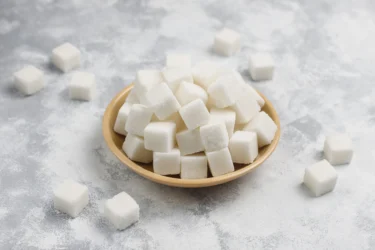
Some people replace sugary coffee drinks with ghee coffee, which may help lower added sugar intake in their daily diet.

Ghee coffee is low in carbohydrates and rich in fats, which is why it is popular among ketogenic and low-carbohydrate diet followers4. Due to its relatively lower calorie content (than other sweetened beverages), low sugar spikes, and better appetite control, many people consume black coffee with ghee for weight loss as part of a low-carb or calorie-conscious diet routine.

Ghee contains healthy fats that may help support digestion and maintain a healthy gut. It may also help keep the digestive system functioning smoothly and support better nutrient absorption2.

Coffee contains natural compounds that may help reduce inflammation in the body. Certain nutrients and healthy fats present in ghee may also help support the body’s natural immune system2. This may support overall wellness and help the body recover from everyday stress and fatigue.
Important: While ghee coffee has become popular for energy and appetite control, scientific evidence supporting many of the claimed ghee coffee benefits is still limited. More studies are needed to confirm its long-term effects and benefits.
Both ghee coffee and butter coffee are popular high-fat coffee drinks, but they differ in ingredients, taste, and nutritional properties5.
| Feature | Ghee Coffee | Butter Coffee |
| Main Ingredient | Made with ghee (clarified butter) | Made with regular butter |
| Lactose | Contains a negligible amount | Contains small amounts of lactose |
| Popular Use | Common in Indian households and wellness diets | Popular in Bulletproof coffee recipes |
Some people prefer ghee coffee over butter coffee because ghee is lactose-free which may be better for the gut and digestion. Also, its richer flavour may be preferrable.
The ghee coffee recipe is quick and easy to make at home. It can be made quickly at home using just a few simple ingredients.

Many people prefer drinking ghee coffee in the morning as it may help provide energy and keep them feeling full for longer6.
However, since coffee contains caffeine, drinking it late in the evening or at night may affect sleep in some individuals7.
Note: The best time to drink ghee coffee can vary from person to person depending on their caffeine tolerance, eating habits, and dietary needs. It is important to listen to your body and consume it in moderation. Always consult a clinician before starting the same.
Before making ghee coffee a regular part of your routine, it is important to keep a few things in mind and consume it in moderation.
While ghee coffee is enjoyed by many people, consuming it in excess may cause some mild side effects in certain individuals.
Note: Individual reactions can vary depending on dietary habits, caffeine tolerance, and overall health. If you have any medical conditions/dietary restrictions, it is best to consult a doctor before consuming it regularly.
Also Read: ABC Juice (Apple, Beetroot & Carrot): What It Is, Benefits, Side Effects & More
Black coffee with ghee has become a popular wellness drink among people looking for a quick energy boost and a more filling coffee option. Many people enjoy ghee coffee for its rich taste, smooth texture, and its ability to keep them feeling full for longer.
However, ghee coffee may not suit everyone, especially when consumed in large amounts. Since it is high in fat and calories, it is best enjoyed in moderation as part of a balanced lifestyle. Individual responses can vary depending on dietary habits, caffeine tolerance, and overall health.
While some early studies and wellness trends suggest possible benefits, scientific evidence is still limited, and more research is needed to fully understand its long-term effects. If you have any medical conditions or dietary restrictions, consult a doctor before making it a regular part of your routine.
Some people drink ghee coffee daily as part of their routine. However, since it is high in fat and calories, it is best consumed in moderation and as part of a balanced diet.
There is no fixed number that suits everyone. Most people limit it to 3 to 5 cups a day, depending on their caffeine tolerance, calorie intake, and dietary needs.6
Ghee coffee has a creamy, rich, and slightly buttery taste. Its flavour can vary depending on the type of coffee and the amount of ghee used.
Ghee coffee alone does not directly lead to weight loss. Some people include it in low-carb or calorie-controlled diets because it may help them feel full for longer.4 However, results can vary from person to person.
Ghee contains healthy fats and fat-soluble vitamins that are important for overall health.2 However, there is no scientific evidence to prove that drinking ghee coffee directly improves skin health.
1. Crampton K, Jackson G, Streight H, Little J. Investigating the Effects of a High-fat Coffee Beverage Containing Medium-Chain Triglyceride Oil and Ghee on Cognitive Function and Measures of Satiety. Curr Dev Nutr. 2021;5(Suppl 2):902. doi:10.1093/cdn/nzab049_015 https://pmc.ncbi.nlm.nih.gov/articles/PMC8181361/
2. Health benefits of ghee: Review of Ayurveda and modern science perspectives – PMC. Accessed May 20, 2026. https://pmc.ncbi.nlm.nih.gov/articles/PMC10789628/
3. Keirns B, Elliott D, Sciarrillo C, Koemel N, Poindexter K, Emerson S. Effect of Black Coffee on Fasting Metabolic Markers and an Abbreviated Fat Tolerance Test. Curr Dev Nutr. 2020;4(Suppl 2):639. doi:10.1093/cdn/nzaa049_032 https://pubmed.ncbi.nlm.nih.gov/33487304/
4. Goldman D, Lambert K, Quarshie M, Craddock J. Assessing the Validity of Bulletproof Coffee’s Claims. Beverages. 2023;9:101. doi:10.3390/beverages9040101 https://www.researchgate.net/publication/376410000_Assessing_the_Validity_of_Bulletproof_Coffee’s_Claims
5. Portnoi PA, MacDonald A. The lactose and galactose content of milk fats and suitability for galactosaemia. Mol Genet Metab Rep. 2015;5:42-43. doi:10.1016/j.ymgmr.2015.10.001 https://pmc.ncbi.nlm.nih.gov/articles/PMC5471386/
6. When it comes to the health benefits of coffee, timing may count | NHLBI, NIH. February 12, 2025. Accessed May 20, 2026. https://www.nhlbi.nih.gov/news/2025/when-it-comes-health-benefits-coffee-timing-may-count
7. Drake C, Roehrs T, Shambroom J, Roth T. Caffeine Effects on Sleep Taken 0, 3, or 6 Hours before Going to Bed. J Clin Sleep Med JCSM Off Publ Am Acad Sleep Med. 2013;9(11):1195-1200. doi:10.5664/jcsm.3170 https://pubmed.ncbi.nlm.nih.gov/24235903/
8. Thomson CL, Garcia AL, Edwards CA. Prevalence of gastrointestinal symptoms in the UK adult population and perceived effects of foods. Eur J Nutr. 2025;64(6):265. doi:10.1007/s00394-025-03780-0 https://pubmed.ncbi.nlm.nih.gov/40848137/
9. Chaudhary NS, Grandner MA, Jackson NJ, Chakravorty S. Caffeine consumption, insomnia, and sleep duration: Results from a nationally representative sample. Nutr Burbank Los Angel Cty Calif. 2016;32(11-12):1193-1199. doi:10.1016/j.nut.2016.04.005 https://pubmed.ncbi.nlm.nih.gov/27377580/
10. Effects of Coffee on the Gastro-Intestinal Tract: A Narrative Review and Literature Update – PMC. Accessed May 20, 2026. https://pmc.ncbi.nlm.nih.gov/articles/PMC8778943/
11. Facts about saturated fats: MedlinePlus Medical Encyclopedia. Accessed May 20, 2026. https://medlineplus.gov/ency/patientinstructions/000838.htm
Disclaimer: The information provided here is for educational/awareness purposes only and is not intended to be a substitute for medical treatment by a healthcare professional and should not be relied upon to diagnose or treat any medical condition. The reader should consult a registered medical practitioner to determine the appropriateness of the information and before consuming any medication. PharmEasy does not provide any guarantee or warranty (express or implied) regarding the accuracy, adequacy, completeness, legality, reliability or usefulness of the information; and disclaims any liability arising thereof.
Links and product recommendations in the information provided here are advertisements of third-party products available on the website. PharmEasy does not make any representation on the accuracy or suitability of such products/services. Advertisements do not influence the editorial decisions or content. The information in this blog is subject to change without notice. The authors and administrators reserve the right to modify, add, or remove content without notification. It is your responsibility to review this disclaimer regularly for any changes.


Comments

Leave your comment...
You may also like

























Comments