




PCOS Is Now PMOS? Here’s What Every Woman Should Know
By Dr. Charmi Shah +2 more

Medically reviewed by Dr. Charmi Shah
Last updated: Aug 21, 2026 Published on: May 20, 2026


Get,

to manage your symptom
Get your,

4 Cr+ families
benefitted

OTP sent to 9988776655



You’ve successfully subscribed to receive
doctor-approved tips on
Whatsapp

Get ready to feel your best.


Register to Avail the Offer
Send OTPBy continuing, you agree with our Privacy Policy and Terms and Conditions
Hi There,
Sign up on PharmEasy now!!


Trusted by 4 crore+ families

OTP sent to 9988776655
You have unlocked 25% off on medicines


Code: NU25

By Dr. Charmi Shah +2 more
Table of Contents
Polycystic ovary syndrome, or PCOS, has long been one of the most widely discussed hormonal diseases impacting women around the world. In this regard, a new term, that is polyendocrine metabolic ovary syndrome (PMOS), has recently gained popularity, leaving many to wonder “whether PCOS has truly been renamed”, “what is PMOS” or “what does this mean for me?”
The increased conversations over PMOS come from specialists who feel the disease influences far more than just the ovaries. Because PCOS can affect several aspects of the body, like metabolism, weight, heart health, fertility, etc., some researchers feel the current name, that is PCOS, does not fully describe the condition1,2. This proposed change in terminology has caused curiosity and confusion among many women trying to understand their condition.
Do not worry if these terms are confusing you; we are here to clear your confusion. In this article, we will not only talk in detail about this condition but also discuss the shift from PCOS to PMOS in simple terms and why this change matters for women’s health, especially in Indians.
For many years, PCOS was mainly viewed as a condition affecting the ovaries and menstrual cycles. However, experts later recognised that it affects much more than just reproductive health.
Many women with PCOS suffer from hormonal imbalance, insulin resistance, weight gain, acne, reproductive issues, and an increased risk of diabetes, heart disease, and mental health problems1. Some women diagnosed with PCOS may not even have ovarian cysts3; therefore the name is somewhat misleading. As a result, the term PMOS has gained popularity in medical discussions.
The term “polyendocrine metabolic” refers to a disorder that affects more than simply the ovaries. It includes hormonal imbalances, along with metabolic issues, possible cardiovascular disease and ovarian disorders, indicating that PCOS is a multisystem disease. This larger understanding is why the disorder has now been called as PMOS. Removing the word “cysts” improves the name’s accuracy, as not all women with the disorder have ovarian cysts2.
The change from PCOS to PMOS highlights that the condition affects many parts of the body and needs broader diagnosis, monitoring, and treatment2. However, it is important to note that PCOS is still the commonly used medical term. PMOS is one of the proposed new names currently discussed and the main idea behind this discussion is to help people understand that the condition affects overall health, not just fertility or the ovaries.
International medical organisations like the European Society of Human Reproduction and Embryology (ESHRE) and the American Society for Reproductive Medicine (ASRM) still officially use the term “PCOS.”
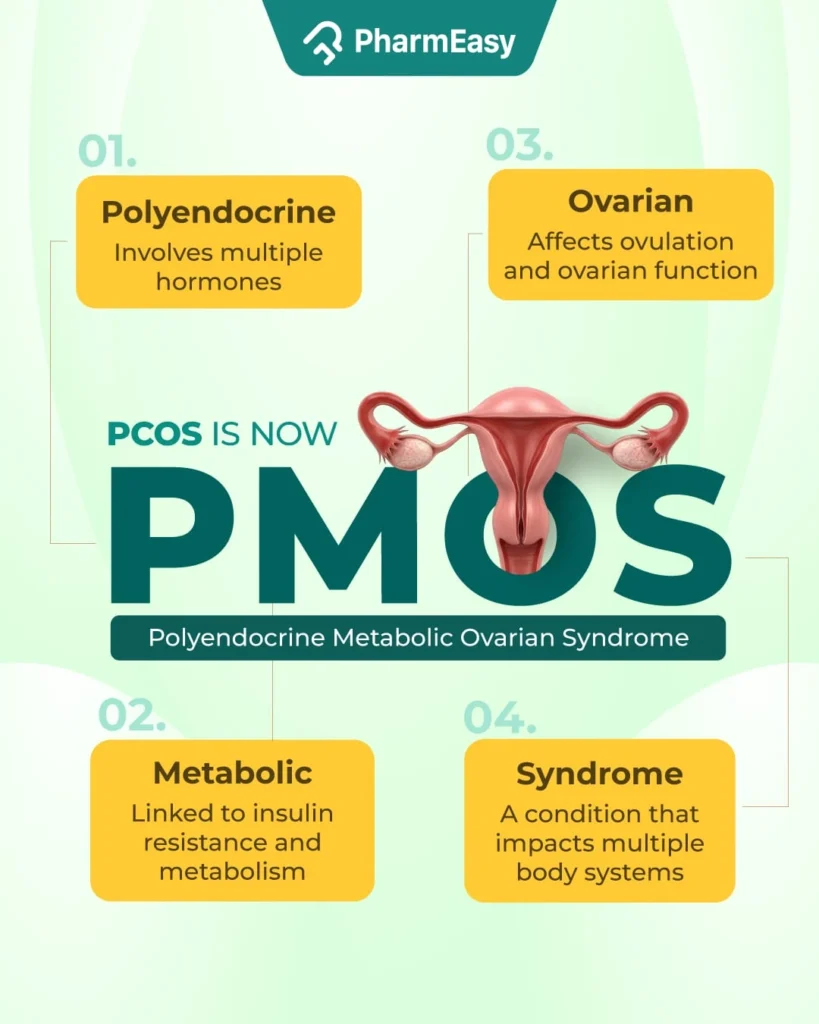
As mentioned before, PMOS is the new name proposed for PCOS. It describes the same condition but gives a better understanding of how it affects the whole body, including hormones, metabolism, and ovarian health, not just ovarian cysts1,2. In simple words we can describe PMOS as the following:
Hence, PMOS describes a condition where hormonal imbalance and metabolic disturbances affect several parts of the body at the same time.
Note: Presence of insulin resistance and obesity increase the risk of other cardio-metabolic issues mentioned above, however, not all women with PCOS have obesity or ovarian cysts. Presentation can differ from person to person.
The symptoms of PMOS can vary from woman to woman. Some women may only suffer minor symptoms, while others may develop more serious hormonal, metabolic, or mental health problems. The common symptoms include:
The shift from PCOS to PMOS changes the way doctors, researchers, and even patients understand the condition. Earlier, PCOS was often viewed mainly as a gynaecological or fertility-related disorder. Treatment mainly focused on irregular periods, ovarian cysts, or pregnancy concerns3.
However, PMOS can affect a women’s body in several ways:
Now, with the introduction of the new name, the systemic nature (broader involvement) of the condition is being highlighted. It emphasizes the fact that the condition not only impacts the ovaries but is closely linked to metabolism, hormones, and overall health and can cause long-term health risks that may have been missed earlier, such as the following2:
The name PMOS also helps get through the confusion because many women with this condition do not actually have cysts in their ovaries, contrary to the name “Polycystic Ovarian Disease-PCOS”3. A broader name helps doctors explain the condition better and provide more complete care for women with this condition.
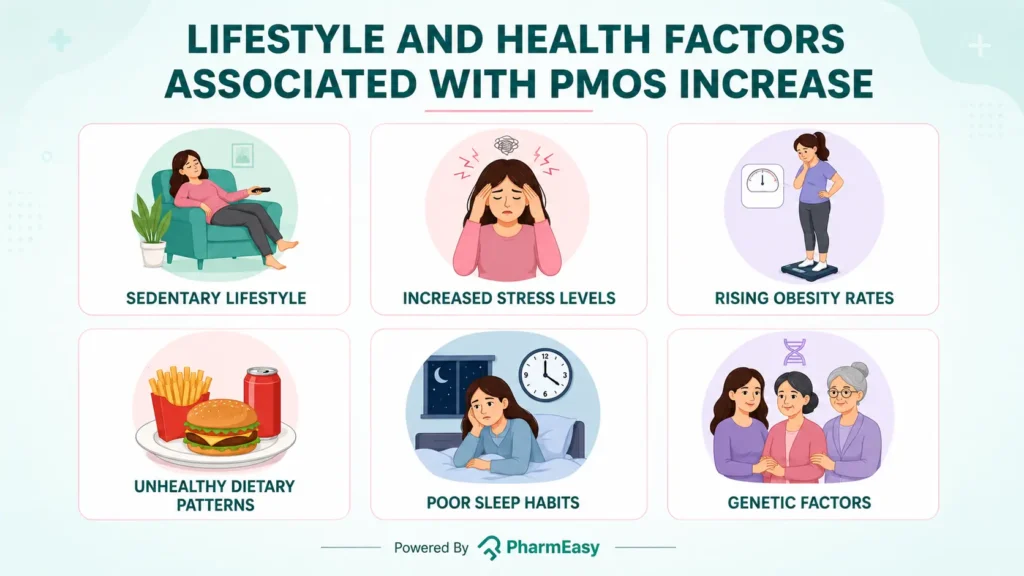
The PMOS discussion is especially important in India because its occurrence is rapidly rising among Indian women, including youngsters. It is found to affect around 7.2% to 19.6% of Indian women (based on certain diagnostic criteria)6.
Several factors may contribute to this increase, such as:
According to some studies, Indian women with PMOS may experience symptoms earlier and may have increased hair growth, insulin resistance, abdominal obesity, and ovarian changes. They may also experience more reproductive issues and lower pregnancy rates with in vitro fertilisation (IVF- a fertility treatment) than women from other backgrounds8.
Some research also suggests that Indian women may develop metabolic problems even at lower BMI levels compared to Western women9. This highlights the importance of early screening for metabolic problems such as insulin resistance, obesity, diabetes risk, and cardiovascular complications.
The shift from PCOS to PMOS helps eliminate the misconception that the disorder is solely related to fertility/reproduction. It helps them understand how interconnected hormonal and metabolic health are, which influences overall well-being2.
This understanding is particularly crucial for Indian women because the nation already has a high incidence of diabetes and metabolic diseases10. Recognising PMOS as a multisystem disorder may lead to earlier lifestyle adjustments, treatments and preventive care.
The idea behind PMOS is to better understand the condition as a whole-body disorder, which may help improve diagnosis and treatment. However, this does not mean there are new treatments yet, but it may help improve future care and treatment approaches2.
Here is how PMOS can improve diagnosis and care:
Diagnosis for PMOS can include the following:
Note: Although terms like PMOS are being discussed for nomenclature purposes, the diagnostic criteria for PCOS have not officially changed. Doctors still commonly diagnose the condition using the Rotterdam criteria (commonly used guidelines for diagnosing PCOS based on symptoms like irregular ovulation, high androgen levels, and polycystic ovaries seen on ultrasound scans).
Proper management in PMOS can help control symptoms and reduce long-term health risks associated with it. With increased emphasis now on the metabolic risks, management of metabolic health is also being considered as an important aspect of treatment.
Common management options include:

Healthy eating, regular exercise, and weight management can improve insulin sensitivity and hormonal balance.

Doctors may prescribe medicines like metformin to help regulate blood sugar and improve metabolism. GLP-1 agonists like semaglutide are now being increasingly studied and used in some women with PMOS who have obesity and insulin resistance, as they may help with weight loss and blood sugar control11. However, they need to be selected on an individual basis as deemed suitable by the doctor and must be monitored throughout.

Doctors may recommend ovulation-supporting therapies for women trying to conceive. Letrozole is now commonly used as the first-line treatment option to help improve ovulation and pregnancy chances in many women with PMOS-related fertility problems.
Doctors may prescribe birth control pills or hormone-regulating medications, which may help manage irregular periods and androgen levels.

Doctors may advise counselling, stress management techniques, or psychiatric treatments for emotional support for PMOS-associated anxiety, depression or eating disorders1.
Note: This information is intended only for educational purposes. PMOS (formerly known as PCOS) is a complex disease that requires individualised treatment. It is not meant to substitute professional medical advice, diagnosis, or treatment. Always seek advice from a qualified physician before making any health decisions. As the studies advance, more targeted treatment options may be developed in the future.
Experts are questioning the term PCOS because it fails to adequately describe how the disorder impacts hormones, metabolism, and overall health. The word PMOS indicates that it is a multisystem condition rather than just an ovarian or reproductive issue. This awareness can contribute to earlier diagnosis, improved screening, and better care. It also enables women to work for the prevention and better management of the associated long-term health concerns.
Also Read: Bilateral PCOD: Causes, Symptoms, Diagnosis & Treatment
PMOS is not a different condition from PCOS; it refers to the same problem. PMOS is a new name suggested for PCOS that better describes how it affects hormones, metabolism, and the ovaries. It provides an improved understanding of the condition as a complete body disorder2.
PCOS is being renamed to PMOS because the previous name mostly focused on ovarian cysts and did not completely explain the disorder. Since it impacts hormones, metabolism, and overall health, in addition to the ovaries, the experts have proposed PMOS/ other metabolic-focused terminology to better reflect this larger, multisystem aspect2.
Currently, PMOS is primarily managed through lifestyle modifications such as healthy eating, regular exercise, and weight control, which enhance hormone and insulin balance. Doctors may also prescribe medications or therapies to help regulate periods, improve insulin resistance, and treat symptoms such as acne or excessive hair growth. If needed, fertility treatments and mental health support are also provided based on individual symptoms1. However, there may be better treatments in the future as more focus is given to hormonal, metabolic, and heart health instead of only reproductive health, following the shift from PCOS to PMOS2.
1. Shukla A, Rasquin LI, Anastasopoulou C. Polycystic Ovarian Syndrome. 2025. Available from: https://www.ncbi.nlm.nih.gov/books/NBK459251/
2. Teede HJ, Khomami MB, Morman R, et al. Polyendocrine metabolic ovarian syndrome, the new name for polycystic ovary syndrome: a multistep global consensus process. The Lancet. Published online May 2026:S0140673626007178. doi:10.1016/S0140-6736(26)00717-8. Available from: https://pubmed.ncbi.nlm.nih.gov/42119588/
3. Polycystic ovary syndrome. 2026. Available from: https://www.who.int/news-room/fact-sheets/detail/polycystic-ovary-syndrome
4. Husebye ES, Anderson MS, Kämpe O. Autoimmune Polyendocrine Syndromes. Ingelfinger JR, ed. N Engl J Med. 2018;378(12):1132-1141. doi:10.1056/NEJMra1713301. Available from: https://pubmed.ncbi.nlm.nih.gov/29562162/
5. Polycystic Ovary Syndrome-med. 2024. Available from: https://medlineplus.gov/polycysticovarysyndrome.html
6. Ganie MA, Chowdhury S, Malhotra N, et al. Prevalence, Phenotypes, and Comorbidities of Polycystic Ovary Syndrome Among Indian Women. JAMA Netw Open. 2024;7(10):e2440583. doi:10.1001/jamanetworkopen.2024.40583. Available from: https://pmc.ncbi.nlm.nih.gov/articles/PMC11581580/
7. Sharma A, Sarwal Y, Devi NK, Saraswathy KN. Polycystic Ovary Syndrome prevalence and associated sociodemographic risk factors: a study among young adults in Delhi NCR, India. Reprod Health. 2025;22(1):61. doi:10.1186/s12978-025-02019-9. Available from: https://pubmed.ncbi.nlm.nih.gov/40296029/
8. Rao V, Cowan S, Armour M, et al. A Global Survey of Ethnic Indian Women Living with Polycystic Ovary Syndrome: Co-Morbidities, Concerns, Diagnosis Experiences, Quality of Life, and Use of Treatment Methods. IJERPH. 2022;19(23):15850. doi:10.3390/ijerph192315850. Available from: https://pubmed.ncbi.nlm.nih.gov/36497927/
9. Gupta RD, Haider MR, Roy S, et al. Association Between Abdominal Obesity, Body Mass Index, and Hypertension in India: Evidence From a Large Nationally Representative Data. J of Clinical Hypertension. 2025;27(3):e70034. doi:10.1111/jch.70034. Available from: https://pmc.ncbi.nlm.nih.gov/articles/PMC11917740/
10. Anjana RM, Unnikrishnan R, Deepa M, et al. Metabolic non-communicable disease health report of India: the ICMR-INDIAB national cross-sectional study (ICMR-INDIAB-17). The Lancet Diabetes & Endocrinology. 2023;11(7):474-489. doi:10.1016/S2213-8587(23)00119-5. Available from: https://pubmed.ncbi.nlm.nih.gov/37301218/
11. Carmina E, Longo RA. Semaglutide Treatment of Excessive Body Weight in Obese PCOS Patients Unresponsive to Lifestyle Programs. JCM. 2023;12(18):5921. doi:10.3390/jcm12185921. Available from: https://pubmed.ncbi.nlm.nih.gov/37762862/
Disclaimer: The information provided here is for educational/awareness purposes only and is not intended to be a substitute for medical treatment by a healthcare professional and should not be relied upon to diagnose or treat any medical condition. The reader should consult a registered medical practitioner to determine the appropriateness of the information and before consuming any medication. PharmEasy does not provide any guarantee or warranty (express or implied) regarding the accuracy, adequacy, completeness, legality, reliability or usefulness of the information; and disclaims any liability arising thereof.
Links and product recommendations in the information provided here are advertisements of third-party products available on the website. PharmEasy does not make any representation on the accuracy or suitability of such products/services. Advertisements do not influence the editorial decisions or content. The information in this blog is subject to change without notice. The authors and administrators reserve the right to modify, add, or remove content without notification. It is your responsibility to review this disclaimer regularly for any changes.


Comments

Leave your comment...
You may also like

























Comments