




Badam Pisin (Almond Gum): Uses, Benefits, Side Effects & More
By Dr. Raghuveer +2 more

Medically reviewed by Dr. Raghuveer
Last updated: Oct 16, 2026 Published on: Mar 12, 2026


Get,

to manage your symptom
Get your,

4 Cr+ families
benefitted

OTP sent to 9988776655



You’ve successfully subscribed to receive
doctor-approved tips on
Whatsapp

Get ready to feel your best.


Register to Avail the Offer
Send OTPBy continuing, you agree with our Privacy Policy and Terms and Conditions
Hi There,
Sign up on PharmEasy now!!


Trusted by 4 crore+ families

OTP sent to 9988776655
You have unlocked 25% off on medicines


Code: NU25

By Dr. Raghuveer +2 more
Table of Contents
Since ancient times, people in India have used plants as both food and medicine. Today, these natural ingredients are becoming popular again in modern wellness trends. The World Health Organization reports that about 21,000 plants are used for medicinal purposes worldwide, and around 2,500 of them are found in India1. Different plant parts such as leaves, roots, bark, fruits, seeds, flowers, and gum are used to support health.
Natural plant gums have been used for long as food additives and traditional medicines. They are also an important forest product that support the livelihoods of tribal and rural communities2. Badam Pisin, also known as almond gum, is a dried natural substance that comes from the trunk and branches of sweet almond trees3. In Ayurveda, it is valued for its cooling property, which helps reduce body heat, especially during summer. In many Indian kitchens, it is added to drinks and desserts. Almond gum primarily contains carbohydrates along with a small amount of protein. It is also used in food preservation, pharmaceuticals and has some industrial applications4.
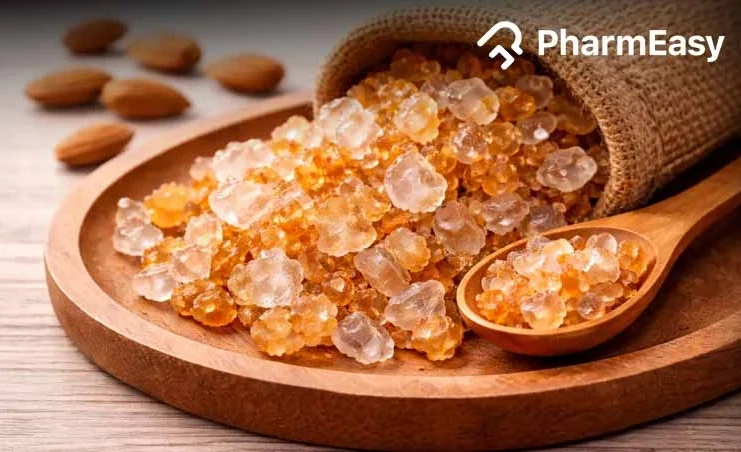
While it has a long history of traditional use, many of its health benefits are still being studied. In this blog, we will discuss the nutritional content, possible benefits, and safety considerations of Badam Pisin.
Badam Pisin, also known as almond gum, is a natural dried substance obtained from the trunk and branches of almond trees. These trees mainly grow in Mediterranean countries such as Syria, Lebanon, Turkey, Jordan, Tunisia, Algeria, Morocco, and Libya. They are also cultivated in the United States of America, one of the largest producers of almonds.
Almond gum comes from the almond tree scientifically called Prunus dulcis, which belongs to the Rosaceae family. When the bark of the tree is injured, it releases a thick liquid to protect itself. This liquid dries and forms almond gum. Similar natural gums are also obtained from Acacia trees. Almond gum is used in food and pharmaceutical industries, especially in confectionery and beverages, for flavour protection and to improve mixing properties in food products3.
Did You Know?
Badam Pisin is mainly made up of carbohydrates. Scientific studies show that more than 90% of its dry weight consists of carbohydrates, while protein is present in small amounts and fat is very low. This indicates that Badam Pisin is not a rich source of fat or protein but is largely composed of plant-based complex sugars.
Key Nutritional Components of Badam Pisin:
The carbohydrate portion mainly consists of arabinose and galactose in a high ratio, forming complex polysaccharides such as arabinogalactan. Smaller amounts of xylitol and uronic acid are also present, along with traces of other simple sugars. Because of this structure, Badam Pisin can absorb water and develop a gel-like texture.
However, the exact nutritional composition may vary depending on factors such as the growing conditions of the tree, soil type, climate, age of the tree, and processing methods after collection. Therefore, while Badam Pisin is mainly a carbohydrate-rich natural gum with some minerals, its precise nutrient levels can differ based on environmental and handling factors3.
Badam Pisin has been used traditionally for health, skincare, and in food preparation. Preliminary scientific studies have explored its biological and functional properties, and some lab-based studies report its health benefits. These include:

Badam Pisin contains natural polysaccharides that have a high water-holding capacity, meaning they can absorb and retain large amounts of water7. When soaked, it swells into a soft gel-like substance that helps increase fluid content in foods and beverages5. This may help support hydration, provide a cooling effect during hot weather, and help maintain energy levels.

Due to its polysaccharide content, Badam Pisin may have a prebiotic potential. It may help promote the growth of healthy gut bacteria and support a balanced intestinal environment5,7. This can make digestion easier and may help prevent bloating and constipation8, however studies in this regard are limited.

Almond gum or badam pisin may have immune-boosting effects possibly due to its antioxidant content, reducing harmful free radicals and oxidative stress. Moreover, its anti-inflammatory and prebiotic potential may help support the body’s normal immune function9,10.
Almond gum may show antimicrobial properties against specific microorganisms. It can help prevent the growth of certain bacteria, making it beneficial for preserving food and possibly supporting gut health5. However, it should not be considered a substitute for medically prescribed antibiotics.

Some preliminary evidence suggests its role in regulating metabolic processes, supporting overall health and digestion. As it absorbs water and forms a gel-like texture when soaked, it may create a feeling of fullness, which can help reduce unnecessary cravings. Also, since it is low in calories and contains fibre, it may help support weight management5.

Badam Pisin (almond gum) may help keep the skin soft and moisturized. It can form a light protective water barrier that helps the skin retain moisture and feel soothed. Because of this, it is sometimes used in creams, lotions, and gels to improve skin hydration5.

Badam Pisin may help contribute to faster tissue recovery in skin wounds. Animal studies have shown that applying almond gum on dermal wounds supported tissue repair and recovery, making it useful in natural wound care, however, clinical evidence in humans is still limited.
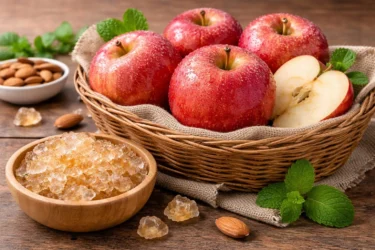
Badam Pisin has been studies as a natural edible coating for fruits. like apples. Some research suggests that almond gum can help increase their shelf life by forming a natural, non-toxic protective barrier, although effectiveness also depends on other factors like storage conditions and fruit type11.
It works as a thickening and stabilizing agent in foods and medicines, enhancing texture, consistency, and quality naturally12.
Badam Pisin is a versatile natural substance with several food and pharmaceutical applications4. It has multiple potential health benefits, although scientific backing in this regard is still limited and further large-scale human trials are needed to verify these claims.
Although generally safe, Badam Pisin (almond gum) may lead to certain unwanted effects in some people, particularly if it is not soaked properly or consumed in large amounts.
Being aware of these side effects may allow people to use Badam Pisin more safely and prevent discomfort.
Badam Pisin can be consumed in various ways to support strength, digestion, and hydration. Knowing the proper preparation and portion helps maximise its benefits while avoiding side effects.
Following these steps ensures safe and effective use of Badam Pisin in daily diets.
When using Badam Pisin, it is important to follow these precautions to ensure safety and effectiveness:
By following these precautions, you can enjoy the health benefits of Badam Pisin while minimizing any potential risks.
Also Read: Sal Tree (Shorea robusta): Uses, Benefits, Side Effects and More
Badam Pisin, a natural plant gum, forms a gel when soaked or ingested, which may slow the absorption of oral medications if taken together. To reduce this effect, it is recommended to wait 1-2 hours between medication and Badam Pisin intake. Although no specific interactions with Ayurvedic products are reported, caution is advised with fibre-rich supplements or medications affecting blood sugar.
Badam Pisin, a traditional plant gum, is valued for its cooling properties and digestive benefits. When prepared properly by soaking and consumed in moderate amounts, it can support hydration, digestion, and overall well-being. Its use is intended to complement a balanced diet rather than replace meals or essential nutrients. Observing preparation guidelines and portion control ensures that the natural benefits of Badam Pisin are enjoyed safely, making it a useful addition to drinks, desserts, or dietary routines.
Also Read: 21 Healthy Benefits Of Almonds: Facts And FAQs
Consuming Badam Pisin daily may support hydration, digestion, and mild nutritional intake due to its soluble fibre and minerals6. Moderate intake is recommended to avoid bloating or digestive discomfort.
Badam Pisin, or almond gum, is harvested from the trunk of almond trees. It is cleaned, dried, and sometimes powdered5. Soaking in water before consumption transforms it into a soft, jelly-like substance suitable for drinks or desserts.
For weight gain, soaked Badam Pisin can be added to milk, smoothies, or desserts. It provides hydration, mild calories, and minerals5,6. Combining it with a nutrient-rich diet supports safe and gradual weight gain.
People with diabetes may consume Badam Pisin in moderation. It is low in sugar and contains soluble fibre, which may help regulate blood glucose. Portion control is important to prevent any digestive or metabolic effects. However, your doctor can guide you best on this based on your overall health and glycaemic control.
Disclaimer: The information provided here is for educational/awareness purposes only and is not intended to be a substitute for medical treatment by a healthcare professional and should not be relied upon to diagnose or treat any medical condition. The reader should consult a registered medical practitioner to determine the appropriateness of the information and before consuming any medication. PharmEasy does not provide any guarantee or warranty (express or implied) regarding the accuracy, adequacy, completeness, legality, reliability or usefulness of the information and disclaims any liability arising thereof.
Links and product recommendations in the information provided here are advertisements of third-party products available on the website. PharmEasy does not make any representation on the accuracy or suitability of such products/services. Advertisements do not influence the editorial decisions or content. The information in this blog is subject to change without notice. The authors and administrators reserve the right to modify, add, or remove content without notification. It is your responsibility to review this disclaimer regularly for any changes.


Comments

Leave your comment...
You may also like




















Comments