
Introduction
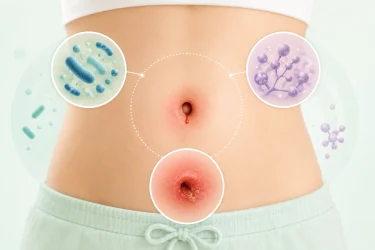
The belly button serves as a vital link during pregnancy, delivering nutrients from the mother to the growing baby. For most people, it’s hassle-free but it can cause issues for a few, like belly button bleeding. In this article, we will discuss why this occurs, its signs, and how to deal and avoid it.
In the beginning of the article, we will dissect the main causes of belly button bleeding such as infections, cysts, primary umbilical endometriosis, portal hypertension, and issues related to pregnancy. After that, we will look at the symptoms linked to each cause. Next we will discuss how doctors diagnose these issues and the custom management options they offer. Lastly, we will discuss how to avoid it and when to go see a doctor.
Friendly Reminder: The information shared here is for educational purposes only and the reader should consult a registered medical practitioner before implementing any changes to their health routine.
Advertisement
Did You Know?
- Bellybutton bleeding in adults is rare and can be caused by various factors, including umbilical hernia and endometriosis1.
- Other potential causes of spontaneous Bellybutton bleeding in adults include infection, foreign body material, and pathologies associated with embryologic structures1.
- Bellybutton bleeding can be recurrent1.
- Complete resolution of symptoms and bleeding can be achieved with surgical repair and excision of the umbilical hernia1.
Causes of Belly Button Bleeding
Belly button bleeding can be caused due to many reasons, big and small. So, it’s key that you understand them. This can help you opt for the best action and find medical help when needed.
1. Infections
Infections often result in belly button bleeding. The belly button is moist and warm, making it a great place for bacteria and fungi to multiply13. This can lead to infections. In this section, we look at three types of infections which include bacterial infections, yeast infections, and Omphalitis, that might result in belly button bleeding.
- Bacterial infections: Our skin has many types of bacteria. These can cause an infection, mainly cellulitis, when they grow uncontrollably. Infected belly buttons may discharge pus or blood due to excessive growth of bacteria.
- Yeast infections: When the candida fungus grows too much, it causes yeast infection resulting in Candidiasis in the belly button. Damp and dark body parts can have these infections leading to a red-tinted discharge.
- Omphalitis: It is the infection (usually bacterial) of the umbilicus3 and its surrounding tissues that can occur during the neonatal period. Sometimes the newborn babies with omphalitis may experience slight belly button bleeding. It’s important to take care of the umbilicus stump to avoid omphalitis.
2. Cysts
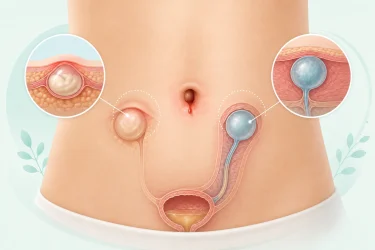
Cysts are sacs filled with fluid that can form on any part of the body, even the belly button. Urachal cysts and epidermoid cysts are two kinds of cysts linked to bleeding from the belly button.
- Urachal cysts: Sometimes a remnant connection between the belly button and bladder from fetal life can develop into urachal cysts4. These cysts might become infected, resulting in bloody discharge from the belly button5,7.
- Epidermoid cysts: These cysts are sebaceous cysts, subepidermal nodule with keratin material12. They are located on the face, neck, and trunk and can also be seen in the belly button region. If these cysts get infected, they might release pus or blood.
3. Primary Umbilical Endometriosis
Primary umbilical endometriosis is a rare disorder. It’s where tissue like the uterus lining may show up in the belly button. Only about 0.4% to 1% of women with endometriosis have it. It might result in dark reddish-brown discharge from the belly button along with other symptoms8,10.
4. Portal Hypertension
Portal hypertension takes place when blood pressure in the portal vein increases. This vein carries blood from the intestines to the liver. Diseases like cirrhosis and hepatitis C can lead to portal hypertension. This condition might result in belly button bleeding due to various complications11.
Advertisement
5. Pregnancy
During pregnancy, the uterus grows and stretches the skin and muscles of the abdomen. This can happen around the belly button, leading to stretching or tearing of the skin. When this happens, the belly button might bleed.
Symptoms of Belly Button Bleeding
Belly button bleeding signs depend on what is causing it. Knowing these signs helps you act quickly and solve problems before they get worse. In this section, we list the symptoms linked to each cause of bleeding.
1. Infection-related Symptoms
Infections in the belly button such as bacterial and yeast infections show up as follows:
- A red, swollen, and painful area
- A bad-smelling discharge that might be white, yellow, green, gray, or even brown in colour
- Signs like fever
In the case of omphalitis, parents might notice fever, poor feeding habits, and listlessness in their newborns. There may be minor bleeding from the umbilical stump as well.
2. Cyst-related Symptoms
Both urachal and epidermoid cysts in the belly button area can lead to the following5,7:
- A lump or swelling near the belly button
- Pain or discomfort, especially if the cyst is infected
In addition, urachal cysts can cause belly pain and pain while urinating, whereas an infected epidermoid cyst might have a blackhead and release thick, yellow, and foul-smelling discharge.
3. Primary Umbilical Endometriosis Symptoms
Patients suffering from primary umbilical endometriosis typically experience the following9.
- Pain and bleeding in cycles
- Dark reddish-brown discharge from the belly button
4. Portal Hypertension Symptoms
People facing complications due to portal hypertension might notice the following11.
- Veins that seem to bloat up in the belly and belly button area
- Abdominal pain or discomfort
5. Pregnancy-related Symptoms
Symptoms linked to bleeding of the belly button during pregnancy include the following.
- Small amount of blood from skin stretched or irritated around the belly button
- Discharge caused by clothes or accidental scratching
- Pain or discomfort
Diagnosis and Management of Belly Button Bleeding
Correct diagnosis and management are key to addressing and solving belly button bleeding. In this section, we will discuss how doctors diagnose the issue and the probable management options based on the root cause.
- Infections: For infections, doctors mostly start with a physical check-up. They might swab the area to collect samples for laboratory testing. These tests help identify if the infection is bacterial or fungal which helps guide how to manage it.
- Cysts: To find out if cysts are the cause, your healthcare professional may use ultrasound, MRI, or CT scans. This will help them locate urachal or epidermoid cysts in the belly button region4,6.
- Primary Umbilical Endometriosis: Your healthcare professional might use ultrasound, CT scans, or MRI scans to diagnose primary umbilical endometriosis. They might also run a biopsy or laparoscopy to be sure.
- Portal Hypertension: Blood tests could help detect if portal hypertension is the reason for belly button bleeding. Doctors could also use imaging techniques such as CT scans, ultrasounds, or MRI scans11.
- Pregnancy-related Causes: For pregnant women, diagnosis of belly button bleeding due to pregnancy starts with a physical check-up. A review of prenatal care history and monitoring of the affected area usually follow.
Management Options
Once the cause of belly button bleeding is known, custom management plans can be suggested.
- Managing Infections: Managing infections can be done by taking antibiotics or antifungal medications. It depends on the type of infection. Good hygiene and self-care are also vital to avoid issues of reoccurrence.
- Managing Cysts: Surgery is typically the key method for removing urachal and epidermoid cysts from the belly button area. This ensures that any infection is also managed4,6.
- Managing Primary Umbilical Endometriosis: Surgery, hormonal therapy, or both may be suggested for those found to have primary umbilical endometriosis10.
- Managing Portal Hypertension: Drugs to manage portal hypertension are available. A few changes in lifestyle like lowering alcohol use, healthy diet, and regular medical checks might also be needed.
- Managing Pregnancy-related Causes: In pregnant women dealing with belly button bleeding, monitoring closely and prenatal care are vital. These help detect and deal with any possible problems.
Tips To Reduce The Risk
Taking early steps may help a lot in reducing the risk of issues related to the belly button. The following tips may be tried:
- Keep it clean: Regular washing of the belly button with warm water and soap may help keep infections away.
- Avoid picking or scratching your belly button: This can stop irritation and potential harm to the delicate skin around the navel area.
- Care for the umbilical cord stump in newborns: Taking good care of the umbilical cord stump and keeping it clean helps avoid infections and supports recovery.
When to See a Doctor?
Get medical advice if you notice any of the following.
- Signs of infection: Red, swollen, warm, and painful area with bad-smelling discharge.
- Severe pain or discomfort in your belly button area.
- Blood that keeps showing for no clear reason and doesn’t stop on its own.
Also Read: Coconut Oil in the Belly Button: Benefits, Uses, Myths & Safety
Conclusion
Belly button bleeding can be scary but understanding its main causes and being prepared can help ensure appropriate management. Whether the reason is an infection, cyst, primary umbilical endometriosis, portal hypertension, or pregnancy-related, asking for medical advice is key for a quick diagnosis and effective management.
Keep in mind, good hygiene and caring well for the belly button area can go a long way in avoiding such issues. Make a note of the causes, symptoms, and managements we discussed today and be quick about keeping an eye on your belly button’s health.
Frequently Asked Questions (FAQs)
Is belly button bleeding normal in newborns? A little belly button bleeding in newborns is generally normal as the umbilical cord stump recovers. However, if it increases or seems infected, it’s important to consult with a pediatrician right away.
When should I be concerned about bleeding from my belly button? If bleeding from your belly button doesn’t stop, can’t be explained, or comes with other symptoms like redness, swelling, and foul-smelling discharge, it should be a cause for worry. Get help from a healthcare professional for the best diagnosis and quick management.
How can I prevent belly button infections? Cleaning your belly button regularly with warm water and soap, keeping the area dry, and maintaining good hygiene in general can help avoid belly button infections.
How long does it take for the umbilical cord stump to fall off in newborns? The umbilical cord stump normally dries out and falls off within 5-15 days after birth. This might be different from one newborn to another.
Can belly button bleeding be a sign of a more serious medical condition? While some cases of belly button bleeding are small and easily manageable, others might suggest severe medical conditions like primary umbilical endometriosis or portal hypertension. It’s vital to ask for medical advice if blood keeps showing without any clear reason to detect and handle any potential issues.
References
- Kim YH, Wegehaupt AK, Wingo MT. A woman with recurrent umbilical bleeding: a case report. J Med Case Rep. 2022;16(1):444. doi:10.1186/s13256-022-03675-2 https://link.springer.com/article/10.1186/s13256-022-03675-2
- Sarma DP, Teruya B. ‘Lint ball’ omphalitis, a rare cause of umbilical discharge in an adult woman: a case report. Cases J. 2009;2:7785. doi:10.4076/1757-1626-2-7785 https://link.springer.com/article/10.4076/1757-1626-2-7785
- Painter K, Anand S, Philip K. Omphalitis. In: StatPearls [Internet]. Treasure Island (FL): StatPearls Publishing; 2022 [updated 2022 Sep 12; cited 2026 Aug 31]. Available from: https://www.ncbi.nlm.nih.gov/books/NBK513338/
- Naiditch JA, Radhakrishnan J, Chin AC. Current diagnosis and management of urachal remnants. J Pediatr Surg. 2013;48(10):2148-52. doi:10.1016/j.jpedsurg.2013.02.069 https://pubmed.ncbi.nlm.nih.gov/24094971/
- Ekwueme KC, Parr NJ. Infected urachal cyst in an adult: a case report and review of the literature. Cases J. 2009;2:6422. doi:10.4076/1757-1626-2-6422 https://www.ncbi.nlm.nih.gov/pmc/articles/PMC4939676
- Sghaier A, Lamloum E, Debaibi M, Sridi A, Chouchene A. Surgical management of benign noninfected urachal cysts in adult patients: two case reports. J Med Case Rep. 2023;17(1):214. doi:10.1186/s13256-023-03944-8 https://pubmed.ncbi.nlm.nih.gov/37221572/
- Kwok CM. Infected urachal cyst in an adult: a laparoscopic approach. Case Rep Gastroenterol. 2016;10(2):269-74. doi:10.1159/000446642 https://pubmed.ncbi.nlm.nih.gov/27462196/
- Rosina P, Pugliarello S, Colato C, Girolomoni G. Endometriosis of umbilical cicatrix: case report and review of the literature. Acta Dermatovenerol Croat. 2008;16(4):218-21. https://pubmed.ncbi.nlm.nih.gov/19111147/
- Ismael H, Ragoza Y, Harden A, Cox S. Spontaneous endometriosis associated with an umbilical hernia: a case report and review of the literature. Int J Surg Case Rep. 2016;29:70-3. doi:10.1016/j.ijscr.2016.10.058 https://www.sciencedirect.com/science/article/pii/S2210261216304953
- Van den Nouland D, Kaur M. Primary umbilical endometriosis: a case report. Facts Views Vis Obgyn. 2017;9(2):115-9. https://www.ncbi.nlm.nih.gov/pmc/articles/PMC5707772
- Zachariah SK, Krishnankutty SL, Raja N. Laparoscopic management of massive spontaneous external haemorrhage from the umbilical varix due to recanalisation of the paraumbilical vein in a patient with ‘Child’s Class A’ liver cirrhosis. J Minim Access Surg. 2012;8(2):54-6. doi:10.4103/0972-9941.95536 http://www.ncbi.nlm.nih.gov/pmc/articles/PMC3353614
- Zito PM, Scharf R. Epidermoid Cyst. In: StatPearls [Internet]. Treasure Island (FL): StatPearls Publishing; 2023 [updated 2023 Aug 8; cited 2026 Aug 31]. Available from: https://www.ncbi.nlm.nih.gov/books/NBK499974/
- Prescott SL, Larcombe DL, Logan AC, West C, Burks W, Caraballo L, Levin M, Etten EV, Horwitz P, Kozyrskyj A, Campbell DE. The skin microbiome: impact of modern environments on skin ecology, barrier integrity, and systemic immune programming. World Allergy Organ J. 2017;10(1):29. doi:10.1186/s40413-017-0160-5 https://www.ncbi.nlm.nih.gov/pmc/articles/PMC5568566
Disclaimer: The information provided here is for educational/awareness purposes only and is not intended to be a substitute for medical treatment by a healthcare professional and should not be relied upon to diagnose or treat any medical condition. The reader should consult a registered medical practitioner to determine the appropriateness of the information and before consuming any medication. PharmEasy does not provide any guarantee or warranty (express or implied) regarding the accuracy, adequacy, completeness, legality, reliability or usefulness of the information; and disclaims any liability arising thereof.
Links and product recommendations in the information provided here are advertisements of third-party products available on the website. PharmEasy does not make any representation on the accuracy or suitability of such products/services. Advertisements do not influence the editorial decisions or content. The information in this blog is subject to change without notice. The authors and administrators reserve the right to modify, add, or remove content without notification. It is your responsibility to review this disclaimer regularly for any change











































Comments