




CRP Blood Test Cancer: Understanding its Significance in Diagnosis and Treatment
By Dr. Nayana Shetty +2 more

Medically reviewed by Dr. Nayana Shetty
Last updated: Sep 29, 2026 Published on: Apr 10, 2024


Get,

to manage your symptom
Get your,

4 Cr+ families
benefitted

OTP sent to 9988776655



You’ve successfully subscribed to receive
doctor-approved tips on
Whatsapp

Get ready to feel your best.


Register to Avail the Offer
Send OTPBy continuing, you agree with our Privacy Policy and Terms and Conditions
Hi There,
Sign up on PharmEasy now!!


Trusted by 4 crore+ families

OTP sent to 9988776655
You have unlocked 25% off on medicines


Code: NU25

By Dr. Nayana Shetty +2 more
Table of Contents
Cancer diagnostic and care methods have made huge strides in recent years. Being able to detect cancer early is key. It boosts survival chances and the likelihood of better results from therapy. One test that has gained interest of late is the CRP (or C-reactive protein) blood test.
In this article, we’re going to try to understand the CRP blood test. We’ll find out how important it is to detect and manage cancer. We’ll look into the difference between CRP and hs-CRP tests. Additionally, we will learn how to read the test results and what kind of health problems an increase in CRP levels could indicate. We’ll also cover the test process, how CRP levels change during cancer therapy, and answers some frequently asked questions regarding this topic.
Did you know?
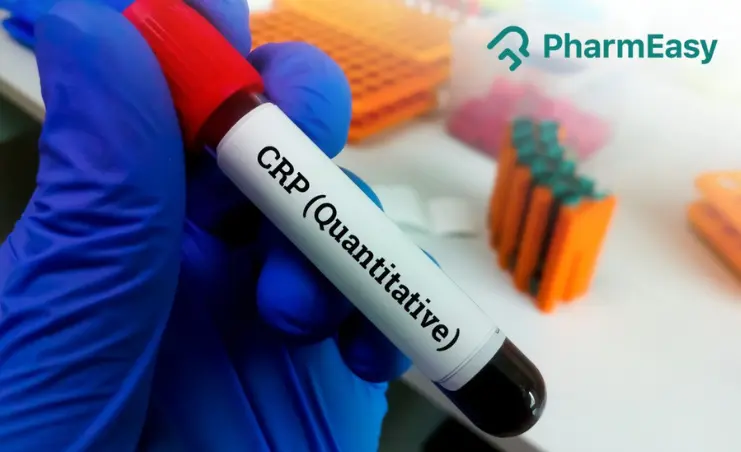
C-reactive protein (CRP) is a protein that the liver makes when there is inflammation in the body. CRP increases our immune system’s activities by helping it get rid of dead cells and foreign bodies1.
A CRP and a high-sensitivity CRP (hs-CRP) test measure the same CRP protein in your blood. However, the hs-CRP test can detect even small changes in CRP. This makes it more sensitive than a regular CRP test1, and this comes in handy when we need to find out if a person is at risk of heart problems.
How often we use CRP tests to diagnose cancer depends on certain factors. These include what symptoms a patient has, and their medical history. Generally speaking, CRP tests can be very useful to health workers trying to diagnose cancer.
After getting back a patient’s CRP test results, health workers need to look at everything else related to the patient’s health. They then decide how the results relate to a possible diagnosis of cancer.
A rise in CRP levels means the presence of inflammation in the body. Remember that cancer might not always be the cause. Many other health conditions can also lead to high levels of CRP.

An hs-CRP test can show you who’s at greater risk of getting heart disease or having a heart attack or stroke. On the whole, people with high hs-CRP levels are seen as being more at risk of these conditions4. However, it’s really important to look at all other risk factors. A complete approach is needed to see what the risk is to a person’s heart.

Lots of different infections, such as bacterial, viral, and fungal ones, can make CRP levels go up quickly5. For example, pneumonia can cause CRP levels to go way up6. So can other chest infections caused by the flu, adenovirus, and loads of other germs.
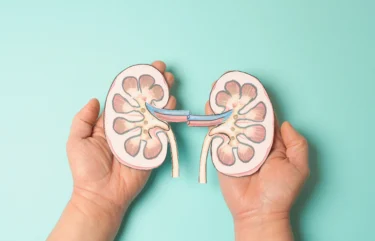
Besides cancer and infections, many other diseases are linked to high CRP levels. These include autoimmune disorders like rheumatoid arthritis, lupus, and bowel inflammation7. They also include long-term kidney disease, liver disease, and obesity.
Other than cancer CRP is a useful indicator for predicting bad outcomes in COVID-19 patients. For those with COVID-19, high CRP levels when admitted to the hospital often show how severe the illness might become and can predict whether the outcome will be unfavorable9.
Dr. Rajeev Singh, BAMS
Knowing just what a CRP test involves can help ease any worries you might have. It can also make sure that your results are as accurate as possible.
Getting ready for a CRP test is easy. You don’t need to change anything about how you eat or live before the test. Just keep on doing what you normally do.
During a CRP test, a health worker will collect some blood from a vein. A healthcare professional, like a nurse or laboratory technician, will take the blood sample by pushing a small needle into a vein in the arm.
As safe as it is, there are some minor risks and a bit of discomfort linked to having your blood taken for a CRP test.
Also Read: CRP Test vs ESR Test: Understanding the Differences and Significance
By watching how CRP levels change while cancer is being managed, we can gather useful knowledge about how well the therapy is working. It may also guide the personalization of management plans.
As therapy goes on and the inflammation goes down, we expect CRP levels to fall as well. Tracking these changes helps health workers gauge whether the current management plan is working.
Studies found that the level of CRP in the blood may predict how well a patient would respond to chemotherapy treatment. If CRP levels remained high during treatment, it suggested that the treatment might not be effective, which is called refractoriness8.
Dr. Siddharth Gupta, B.A.M.S, M.D(Ayu)
In recent years, the idea of personalized medicine has taken hold. The belief is that management plans should be made to fit the needs and characteristics of each patient.
Also Read: Burkitt Lymphoma: What It Is, Symptoms, Causes and Treatment
Cancer is a serious health issue all over the world. Early detection and management are key to improving the outlook for patients. Very recent advances in medicine have brought attention to the possible importance of markers of inflammation like CRP in finding and dealing with cancer.
While a test for CRP can’t confirm or deny a diagnosis of cancer by itself, it can offer valuable insights into how much inflammation there is in the body. When used along with other tests CRP levels can help doctors and nurses work out what might be causing a patient’s symptoms. They can also guide decisions about management.
As we all learn more about how CRP and cancer are linked, it’s so important for healthcare providers and patients alike to stay in the loop about the latest research and developments. By keeping well-informed and putting new knowledge into day-to-day clinical practice, we can strive for the best results for those affected by cancer.
Also Read: What Type of Cancer Causes Low Hemoglobin Levels?
A high CRP level in cancer patients suggests inflammation in the body. This may be due to what the tumor is doing, or the side effects from therapy. However, other things – such as infections or autoimmune disorders – can also cause CRP levels to rise. So, CRP levels must always be seen in the bigger clinical picture. This helps decide what they mean in the context of cancer.
A CRP test by itself isn’t very good for diagnosing cancer. It only measures how much swelling is in the body, and there could be lots of reasons for this. But, when combined with other tests, other clinical findings, and information that is specific to a patient, CRP levels can offer valuable insights. And that can help healthcare providers diagnose and manage cancer more effectively.
No, a CRP test can’t detect which type of cancer there is. This is because it only measures inflammation in the body. To diagnose a specific type of cancer, healthcare providers have to use other tools. These could be imaging tests, biopsies, and other laboratory tests that are specific to each type of cancer.
No, the CRP test isn’t used on its own to diagnose cancer. Instead, it’s an extra tool that can help healthcare providers see if there’s inflammation in the body. This could be due to cancer or other health conditions. The CRP test should be seen alongside other clinical information. That will determine why a patient has certain symptoms and then help guide their management plan.
How often someone with cancer has a CRP test depends on lots of things. These include the specific type of cancer, the stage of the disease, and what the patient needs or what’s happening in their life. Healthcare providers will usually decide when to do CRP tests based on these factors. They also take into account how the patient is reacting to therapy and their overall clinical status.
Disclaimer: The information provided here is for educational/awareness purposes only and is not intended to be a substitute for medical treatment by a healthcare professional and should not be relied upon to diagnose or treat any medical condition. The reader should consult a registered medical practitioner to determine the appropriateness of the information and before consuming any medication. PharmEasy does not provide any guarantee or warranty (express or implied) regarding the accuracy, adequacy, completeness, legality, reliability or usefulness of the information; and disclaims any liability arising thereof.
Links and product recommendations in the information provided here are advertisements of third-party products available on the website. PharmEasy does not make any representation on the accuracy or suitability of such products/services. Advertisements do not influence the editorial decisions or content. The information in this blog is subject to change without notice. The authors and administrators reserve the right to modify, add, or remove content without notification. It is your responsibility to review this disclaimer regularly for any changes.
 1
1 
Comments

Leave your comment...
You may also like
























Comments