
High heels are often associated with style, confidence, and elegance, and many women choose heels to complete their look. While wearing heels occasionally may not cause significant harm, frequent or prolonged use can gradually affect different parts of the body, starting from the feet and moving upward.
Over time, the altered posture and uneven weight distribution caused by high heels can place extra strain on joints, muscles, and tendons. Understanding how heels influence the body can help you make more informed footwear choices.

The feet bear the entire weight of our body and their joints and ligaments are prone to wear and tear. High heels can add pressure to the feet by altering the way of walking, shifting the weight forwards and causing strain on the ball of the feet and increasing risk of injuries. They can cause severe discomfort and pain in the heels, toes, arch and soul of the feet1. Moreover, it is found that continuous wearing can lead to deformities in the feet such as hallux valgus (deviation of the big toe towards other toes)2.

The ankle joint is greatly affected by high heels. High heels can cause shortening of calf muscles and stiffening of Achilles tendon (the tendon in the ankle that connects the calf muscle and heel bone) with regular usage3. This can affect natural movement and causes pain when regular footwear is worn. Constant pressure on the tendon can strain the tendon, causing inflammation and increasing the risk of injuries. Moreover, the continuous strain on the ankles, makes them more susceptible to arthritis4,5.

High heels can have a significant impact on the knees causing pain and discomfort along with changes in walking pattern. Walking with high heels can lead to excessive pressure and wearing of knee cartilage (the cushioning in our joints) and reduction in the inner joint space of knees. The change in knee alignment and increased strain on the knee joint with continuous use of heels can cause pain, stiffness, and increase the risk of knee osteoarthritis6.

High heels can cause constant strain on hip muscles leaving them in a contracted state causing pain and altered posture. Due to the changed walking patterns with heels, the range of motion at hip joint is reduced, causing a change in posture with forward shifting of pelvic bone. Constant use can lead to weakening of hip muscles causing discomfort and may affect balance7.

Heels can limit the natural motion of our feet, shifting the center of gravity forwards thereby causing postural changes for compensation that can lead to spinal discomfort. Wearing high heels may also compress the vertebrae, strain the back muscles, and lead to back pain8.
Discomfort caused by high heels tends to develop gradually, which is why many people overlook early warning signs. Mild pain or stiffness after wearing heels is often dismissed as normal especially when it subsides after rest. Women may at times bear the discomfort as a price for the aesthetic appeal they offer1. Over time however, repeated stress on the feet and joints can lead to persistent issues.
Another reason heel-related problems go unnoticed is that symptoms may not appear immediately while wearing the shoes. Pain, tightness, or numbness often become more noticeable after the heels are removed or when other footwear are worn, making it harder to link the discomfort directly to footwear. In addition, many people adapt their walking style subconsciously to stay balanced in heels, masking strain until it begins to interfere with daily activities.
Because these changes happen slowly, individuals may continue wearing heels despite ongoing stress on muscles, tendons, and joints, increasing the risk of long-term discomfort or injury.
Occasional discomfort after wearing high heels may be common, but persistent or worsening symptoms are not normal and should not be ignored. Continuing to wear heels despite ongoing pain can increase the risk of long-term foot and joint problems.
You should consider stopping heel use and seeking medical advice if you experience:
If these symptoms continue even after reducing heel use, it is advisable to consult an orthopaedic specialist or podiatrist. Early evaluation can help identify underlying issues such as tendon tightness, joint stress, or nerve involvement and prevent further complications.
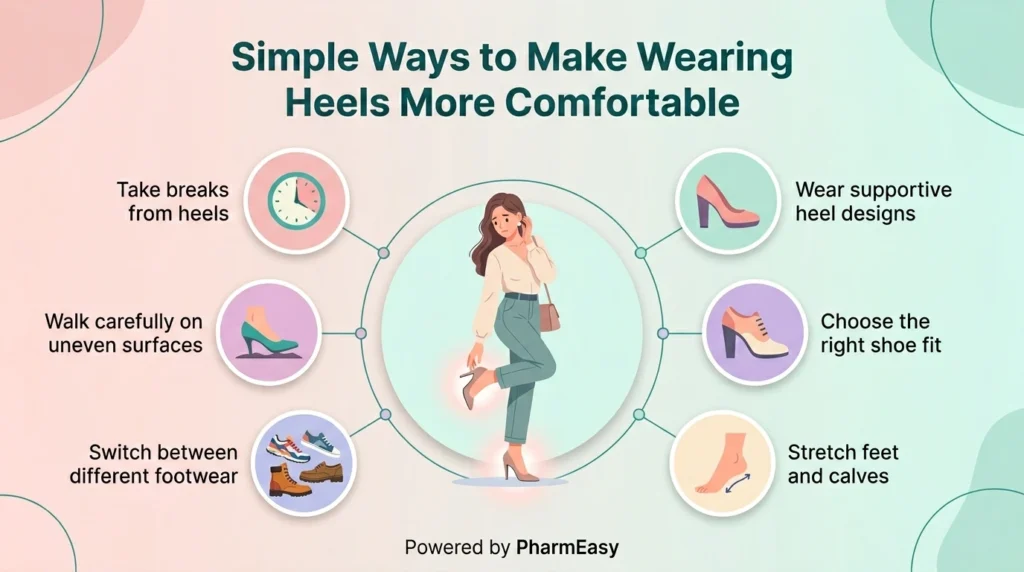
Wearing heels for extended periods places sustained pressure on the feet and joints. Taking breaks or switching to supportive footwear during the day allows muscles and tendons to relax and recover, reducing cumulative strain.
Heels with a wider base, cushioned insoles, and proper arch support offer better stability and distribute weight more evenly. Such designs can help reduce pressure on the forefoot and improve overall balance while walking. A heel height of about 3.5-4.5cm is generally considered appropriate to wear9.
Ill-fitting heels or narrow toe boxes can compress the toes and surrounding nerves. Selecting shoes that fit well and allow adequate toe movement can help minimise discomfort, numbness, and pressure-related pain.
Gentle stretching of the calves, ankles, and feet after wearing heels can relieve muscle tightness and improve flexibility. Regular stretching may also reduce stiffness when transitioning back to flat footwear.
Avoid wearing heels every day and alternate with comfortable shoes on consecutive days whenever possible. Rotating between heels and comfortable, supportive shoes helps distribute stress across different muscle groups and reduces overuse injuries.
Uneven or slippery surfaces can increase strain and affect balance while wearing heels. Choosing stable ground and slowing down while walking can help reduce the risk of falls and joint stress.
Also Read: Sprained Ankle: What Is It, Causes, Symptoms & More
While high heels can be a part of your wardrobe, wearing them daily may increase the risk of foot, joint, and back problems over time. Choosing supportive footwear for routine use and limiting heels to occasional wear can help reduce strain on the body and support long-term musculoskeletal health.
From a health perspective, a low heel height of about 2–4 cm (1–1.5 inches) is generally considered the safest. This height provides slight elevation without significantly altering posture or placing excessive stress on the feet, ankles, and spine. Extremely flat footwear and very high heels can both disrupt natural foot mechanics, so moderate elevation with good arch support is usually the most comfortable option for everyday wear.
Wearing heels does not permanently change body shape, but frequent use can influence posture and muscle balance over time. High heels push the pelvis forward, tighten the calf muscles, and increase the curve of the lower back. With prolonged and regular wear, these changes may affect walking patterns and muscle flexibility, although most effects are reversible when heel use is reduced.
High heels are often discouraged because they shift body weight forward, placing increased pressure on the forefoot and altering natural alignment. This can strain the ankles, knees, hips, and lower back. Long-term or daily use may increase the risk of foot pain, joint stress, tendon tightness, and posture-related discomfort, particularly in individuals with existing musculoskeletal issues.
After knee replacement surgery, wearing high heels is usually not recommended, especially in the early recovery phase. Heels can place extra stress on the knee joint and affect balance, increasing the risk of strain or injury. If heel use is considered later on, it should be limited to low, stable heels and only after clearance from an orthopaedic specialist or physiotherapist.
Pregnant women are generally advised to avoid wearing high heels. During pregnancy, changes in body weight, posture, and balance increase the risk of falls. Heels can further strain the lower back and feet, which are already under added stress. Comfortable, supportive footwear with a low heel and good grip is usually a safer choice throughout pregnancy.
Heels with a wider base, such as block heels or wedges, generally offer better stability than narrow stilettos. Shoes with cushioning, arch support, and ankle straps can also reduce strain. However, no heel is entirely risk-free if worn for long durations.
Yes, narrow or high heels can compress nerves in the forefoot due to increased pressure and restricted toe space. This may lead to symptoms such as tingling, numbness, or burning sensations, particularly after prolonged standing or walking.
Yes, discomfort due conditions such as flat feet, plantar fasciitis, or arthritis may worsen with continued heel use. Elevated heels can increase pressure on sensitive areas and aggravate pain, making supportive footwear a better option for individuals with known foot problems.
Occasional heel use is unlikely to cause lasting harm in individuals without existing foot or joint issues. Problems are more commonly associated with daily or prolonged wear. Allowing adequate recovery time between wearing heels helps reduce stress on muscles and joints.
Disclaimer: The information provided here is for educational/awareness purposes only and is not intended to be a substitute for medical treatment by a healthcare professional and should not be relied upon to diagnose or treat any medical condition. The reader should consult a registered medical practitioner to determine the appropriateness of the information and before consuming any medication. PharmEasy does not provide any guarantee or warranty (express or implied) regarding the accuracy, adequacy, completeness, legality, reliability or usefulness of the information; and disclaims any liability arising thereof.
Links and product recommendations in the information provided here are advertisements of third-party products available on the website. PharmEasy does not make any representation on the accuracy or suitability of such products/services. Advertisements do not influence the editorial decisions or content. The information in this blog is subject to change without notice. The authors and administrators reserve the right to modify, add, or remove content without notification. It is your responsibility to review this disclaimer regularly for any changes.
 1
1 
Women are undoubtedly the backbone of the family. However, it is often seen that women pay more attention to their family’s requirements and ignore their own. However, we often forget that women are built differently and have special healthcare needs. Hence, they need to make smart dietary choices to meet their daily recommended intake1. Besides all macronutrients, there are some vitamins particularly important the female body. In this blog, we’ll have a look at these and share some dietary suggestions that will help boost these vitamins for women.

The B vitamin folic acid plays a key role especially for pregnant women or those planning to conceive. This vitamin may help in avoiding the risk of birth defects and preterm birth. It also helps in red blood cell production, lowering the risk of anaemia. Women planning pregnancy should take 400 mcg/day preconception and in early pregnancy2,3. Women with prior neural tube defect pregnancy may need a higher dose (4 mg/day). Although natural sources of folic acid include green leafy vegetables like spinach, legumes, broccoli, nuts and seeds, folic acid supplementation is necessary during pregnancy.
Every woman who could become pregnant should get 400 micrograms (400 mcg) of folic acid every day. The B vitamin folic acid helps prevent birth defects. If a woman has enough folic acid in her body before and while she is pregnant, her baby is less likely to have a major birth defect of the brain or spine like spina bifida.
Dr Ashish Bajaj, M.B.B.S., M.D. in Clinical Pharmacology and Toxicology

This vitamin is essential for making healthy red blood cells and its deficiency can lead to anaemia. Pernicious anaemia occurs when the body is unable to absorb this vitamin. Vitamin B12 also helps the body in keeping nerves healthy and in DNA synthesis. Vitamin B12 is found in animal products (meat, fish, eggs, dairy), and fortified foods. Vegetarian women are at higher risk of deficiency. Taking supplements might resolve this problem4.
Although all vitamins are essential and serve unique and important functions in the body, many health experts would agree that the three most important nutrients are vitamin D, B12, and iron as women are more prone to anaemia and osteoporosis.
Dr. M.G. Kartheeka, MBBS, MD(Pediatrics)

Bone health is often compromised in women. Especially post menopause, women become deficient in the hormone oestrogen that leads to a loss of the calcium content from bones. Vitamin D is essential for our body, as it helps to absorb calcium and thus its levels should be adequate to ensure stronger bones5. Vitamin D is found in dairy products in small amounts, but mostly, our skin produces it from the sun1. Despite sun exposure, Vitamin D deficiency is also seen in Indian women. Soak in some early morning sun for 30 minutes to get your daily dose of vitamin D. The recommended dose for Vitamin D supplementation is 600IU. Your healthcare practitioner may recommend a higher amount if you have significant Vitamin D deficiency6.

It helps the body make collagen, which is essential for the skin, cartilage, tendons, ligaments, and blood vessels. It helps in healing wounds and repairing teeth and bones. It boosts iron absorption, important for women with heavy menstrual bleeding who are prone to anaemia7. It is found in citrus fruits like oranges, lemon, sweet lime, amla, and Brussels sprouts.

This vitamin is required for healthy teeth and soft tissues. Additionally, it is also essential for vision, immunity, skin, and reproductive health. Although this vitamin helps avoid risk of night blindness in mother and baby, excess of vitamin A (retinol form, not beta-carotene) in pregnancy can cause birth defects8. Discuss with your gynaecologist if you are on these supplements and planning to get pregnant. It is found in all yellow-green vegetables like mangoes, papayas, spinach, apricots, and carrots as well as egg yolk, milk9.
Also Read: Best Estrogen Rich Foods to Support Estrogen Levels Naturally

This vitamin is essential for blood coagulation and bone health. Our intestines also produce vitamin K required by our body. In women, this vitamin plays an essential role during pregnancy and childbirth by avoiding the risk of haemorrhage. It is found in green leafy vegetables (spinach, kale, broccoli). Therefore, adding these foods to your menu can fulfil your requirements abundantly10.
Although all these vitamins are essential for women, iron is one mineral whose role cannot be missed when talking of women’s health. Iron is very important for women as it helps maintain their menstrual cycles and hormonal balance. Its deficiency can cause anaemia, especially in women with heavy menstrual bleeding. Iron intake is crucial during pregnancy for proper foetal development and avoiding birth complications11. Iron is found in red meat, poultry, fish, green leafy vegetables, legumes (better absorbed with Vitamin C)12. The daily iron requirement for non-pregnant women is 18mg while WHO recommends 30–60 mg elemental iron daily during pregnancy2.
Note: Self-supplementation can be harmful; always consult a doctor before starting high-dose vitamins.
Commonly searched products containing multivitamins:
Also Read: How to Stop Bad Period Smell: Research-Based Tips and Home Remedies
Although all vitamins are essential and serve unique and important functions in the body, the above mentioned vitamins are especially important for women’s health as they are helpful with high-risk conditions (in women) like anaemia and osteoporosis. These may be needed during pregnancy also to prevent certain risks to the mother and the baby. Nonetheless, eating healthy is the first step in staying healthy. Cutting down on junk food and adding fresh fruits, vegetables, and nuts to your diet can help prevent nutrient deficiencies and embark your journey towards a healthy life.
Also Read: 10 Best Intimate Tips For Women To Keep Them Healthy
1. CDC. Healthy Eating Tips [Internet]. Nutrition. CDC; 2024. Available from: https://www.cdc.gov/nutrition/features/healthy-eating-tips.html
2. World Health Organization. Daily Iron and Folic Acid Supplementation during Pregnancy [Internet]. www.who.int. 2023. Available from: https://www.who.int/tools/elena/interventions/daily-iron-pregnancy
3. Folic Acid and Birth Defect prevention: MedlinePlus Medical Encyclopedia [Internet]. medlineplus.gov. Available from: https://medlineplus.gov/ency/article/002092.htm
4. National Institutes of Health. Office of Dietary Supplements – Vitamin B12 [Internet]. Nih.gov. National Institutes of Health; 2024. Available from: https://ods.od.nih.gov/factsheets/VitaminB12-HealthProfessional/
5. Khadilkar A, Mandlik R. Epidemiology and treatment of osteoporosis in women: an Indian perspective. International Journal of Women’s Health [Internet]. 2015 Oct;841. Available from: https://www.ncbi.nlm.nih.gov/pmc/articles/PMC4621228/
6. National Institutes of Health. Vitamin D [Internet]. National Institutes of Health. 2022. Available from: https://ods.od.nih.gov/factsheets/VitaminD-Consumer/
7. Medline Plus. Vitamin C: MedlinePlus Medical Encyclopaedia [Internet]. Medlineplus.gov. 2023. Available from: https://medlineplus.gov/ency/article/002404.htm
8. MedlinePlus. Vitamin A: MedlinePlus Medical Encyclopedia [Internet]. Medlineplus.gov. 2023. Available from: https://medlineplus.gov/ency/article/002400.htm
9. National Institutes of Health. Office of Dietary Supplements – Vitamin a [Internet]. National Institutes Of Health. 2022. Available from: https://ods.od.nih.gov/factsheets/VitaminA-Consumer/
10. Mathews N, Catherine. Vitamin K Deficiency: Diagnosis and Management. Annals of Laboratory Medicine. 2025 Apr 24. Available from: https://pmc.ncbi.nlm.nih.gov/articles/PMC12187499/
11. National Institutes of Health. Iron: Fact Sheet for Health Professionals [Internet]. National Institutes of Health. 2024. Available from: https://ods.od.nih.gov/factsheets/Iron-HealthProfessional
12. Better Health Channel. Iron and Iron Deficiency [Internet]. Vic.gov.au. 2022. Available from: https://www.betterhealth.vic.gov.au/health/conditionsandtreatments/iron
Disclaimer: The information provided here is for educational/awareness purposes only and is not intended to be a substitute for medical treatment by a healthcare professional and should not be relied upon to diagnose or treat any medical condition. The reader should consult a registered medical practitioner to determine the appropriateness of the information and before consuming any medication. PharmEasy does not provide any guarantee or warranty (express or implied) regarding the accuracy, adequacy, completeness, legality, reliability, or usefulness of the information; and disclaims any liability arising thereof.
Links and product recommendations in the information provided here are advertisements of third-party products available on the website. PharmEasy does not make any representation on the accuracy or suitability of such products/services. Advertisements do not influence the editorial decisions or content. The information in this blog is subject to change without notice. The authors and administrators reserve the right to modify, add, or remove content without notification. It is your responsibility to review this disclaimer regularly for any changes.
4


