
Introduction
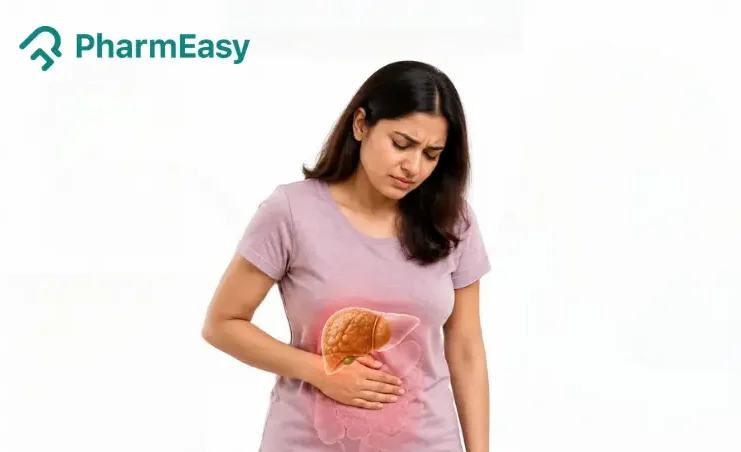
Do you often feel unusually tired, unwell, or uncomfortable in your upper abdomen without knowing why? Many women may link these changes to stress or hormonal fluctuations. However, they can also be signs of fatty liver disease, especially when risk factors such as weight gain, diabetes, high cholesterol, polyendocrine metabolic ovarian syndrome (PMOS), or menopause are present1. This blog explains the common symptoms of fatty liver in women, why they may happen, and when to speak with a doctor.
What Is Fatty Liver Disease?
Fatty liver disease means there is excess accumulation of fat within liver cells, exceeding 5%–10% of total liver weight, a condition called steatosis2,3. The liver produces bile, which helps digest fats and supports the absorption of fat-soluble substances, stores energy, and metabolises waste products from the body2. Excess fat accumulation can cause inflammation of the liver and may lead to swelling of the liver cells due to fat deposition, scarring (also known as liver fibrosis), or long-term liver damage in the form of cirrhosis if it is not managed3.
Advertisement
Types of Fatty Liver Disease
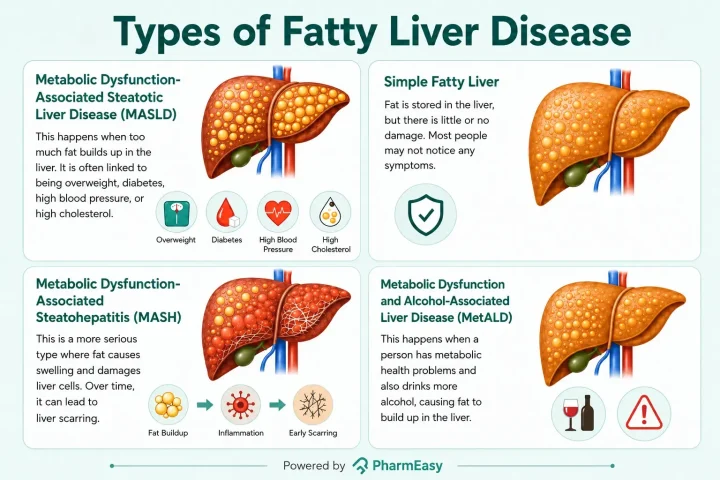
Fatty liver disease is renamed steatotic liver disease. The common forms are:
- Metabolic Dysfunction Associated Steatotic Liver Disease (MASLD): MASLD is the term for non-alcoholic fatty liver disease. It happens when there is excess accumulation of fat within liver cells and is linked to metabolic risk factors such as overweight, type 2 diabetes, high blood pressure, or abnormal cholesterol levels. MASLD can include:
- Simple fatty liver: Fat is present in the liver, but there is little or no inflammation or liver cell injury. Many people at this stage may remain asymptomatic and is often difficult to diagnose
- Metabolic dysfunction-associated steatohepatitis (MASH): This is a more serious form in which fat in the liver is linked with swelling and liver cell injury. Over time, it may lead to liver scarring, cirrhosis, and, in some people, liver cancer.
- Metabolic dysfunction and alcohol-associated liver disease (MetALD): This is a fatty liver disease that occurs in people with metabolic health problems who consume more alcohol than the amount allowed for MASLD. It can have features of both metabolic and alcohol-related liver disease4.
Fatty Liver in Women
Fatty liver can affect both women and men. In women, the risk may increase with hormonal changes after menopause and with conditions such as PMOS, which can be linked to insulin resistance and weight gain. If fatty liver is not managed, it can progress in some people to liver inflammation, injury to the liver cells, or liver failure5.
Symptoms of Fatty Liver in Women
Fatty liver disease often has no clear symptoms, and hence it is important to screen for MASLD6. When symptoms do occur, they may be mild and easy to confuse with other health issues. Symptoms may very rarely include:
- Feeling very tired or low on energy
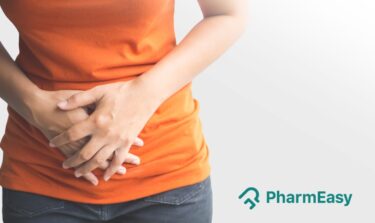
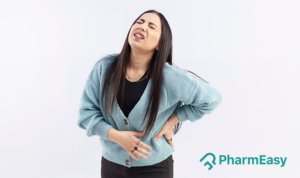
- Pain or discomfort in the upper right side of the abdomen1
Symptoms that may suggest more serious liver damage/end stage liver disease, requiring urgent medical care, include:
- Jaundice (yellowing of the skin and the whites of the eyes)
- Swelling in the abdomen- usually in the form of ascites, where large quantities of fluid collect in the abdominal cavity
- Bruising (often appearing as blue, purple, or black patches)
- Dark urine
- Irritated or itchy skin
- Vomiting blood or passing black stools3
- Comatose state or altered behaviour7
- Decreased urine production
Risk Factors for Fatty Liver in Women
Several factors can increase a woman’s risk of developing fatty liver disease. These include:
- Overweight/Obesity: Excess body weight, especially fat around the abdomen “truncal obesity”, increases the risk of fat building up in the liver along with adjacent vital organs5,8.
- Insulin resistance: Inherently, the body’s cells efficiently utilise circulating insulin. When insulin resistance occurs, the cells resist the effects of insulin. It can raise blood sugar and increase fat storage in the liver.
- Type 2 diabetes: High blood sugar levels and insulin resistance make people with diabetes more likely to develop fatty liver disease5.
- Abnormal blood fat levels: High cholesterol or triglyceride levels can contribute to fat buildup in the liver9.
- PMOS: A hormonal condition that affects women’s reproductive health and is often associated with insulin resistance and weight gain, increasing the risk of fatty liver disease.
- Menopause: A phase where menstrual periods stop due to a natural decline in hormone levels, including oestrogen. Reduced oestrogen levels after menopause may increase the risk of developing fatty liver disease5.
- Metabolic syndrome: This is a group of health problems, including high blood pressure, high blood sugar, abnormal cholesterol levels, and excess belly fat, that together raise the risk of fatty liver disease9.
- Sedentary lifestyle: 9 Lack of regular physical activity can contribute to weight gain and metabolic problems that affect liver health.
- Unhealthy diet: Frequent consumption of alcohol, sugary drinks, processed foods, and foods high in saturated fats can increase liver fat10.
- Sarcopenia: Loss of muscle mass and strength can contribute to insulin resistance and hence indirectly to MASLD5. Staying physically active, particularly through strength or resistance exercises, can help maintain muscle strength.
How is Fatty Liver Diagnosed?
Doctors diagnose fatty liver disease based on a person’s medical history, symptoms, and other associated risk factors such as concomitant alcohol use or chronic viral hepatitis, physical examination, and test results. They may recommend:
Advertisement
- Medical history and physical examination: Information about symptoms, diet, alcohol use, activity level, medicines, and health conditions such as PMOS, diabetes, or high blood pressure. They may also check for signs such as jaundice, abdominal swelling, or an enlarged liver3,5.
- Liver function tests (LFTs): These blood tests check liver enzymes and other markers. Abnormal results may suggest liver irritation or damage, but some people with fatty liver can still have normal liver test results, which would indicate a quiescent stage of MASLD3,11.
- Liver ultrasound (USG): This test uses sound waves to create images of the liver and will help quantify fat buildup. A special test known as transient elastography/vibration controlled transient elastography may also be used to measure liver stiffness and accurately quantify and grade the liver fat3,5,12
- Other imaging tests: Imaging tests such as MRI and CT scans provide detailed images of the liver and will quantify fat accumulation or other changes in liver tissue3,5,13.
- Liver biopsy: In selected cases, where there is a diagnostic dilemma, a very small sample of liver tissue is extracted by undergoing a small, painless, imaging-guided procedure to check for cellular-level changes, such as fat accumulation, swelling, and scarring. This is usually considered when other tests do not give enough information5,14.
Treatment Options for Fatty Liver in Women
Treatment mainly focuses on healthy lifestyle changes and managing related health conditions. The goal is to reduce fat in the liver, lower the chance of scarring, and improve overall health. It is recommended to start the following:
1. Weight Management
If you are overweight, gradual and steady weight loss can reduce liver fat. Even modest weight loss (target of 0.7-1 kg/ week while maintaining a sustainable diet) may help, and larger sustained weight loss may improve liver swelling and scarring in some people5,9.
2. Healthy Eating
Inherently, a staple Indian diet lacks protein; hence, incorporating adequate protein helps counteract the quantity of fat and carbohydrate intake, in turn leading to a balanced meal. A balanced diet with vegetables, fruits, whole grains, pulses or lean proteins, and healthy fats can support liver health. It is helpful to abstain from alcohol- there is no “safe limit” of alcohol it is not recommended in small quantities, sugary drinks, sweets, fried foods, processed foods, and foods high in saturated fat. Quitting smoking is also important for overall health9.
3.Regular Physical Activity
Activities such as brisk walking, cycling, swimming, along with strength exercises can help improve blood sugar control, blood pressure, cholesterol levels, and weight. Many guidelines suggest aiming for about 150 minutes of moderate activity or 75 minutes of intense physical activity each week, if your doctor says it is safe for you9.
4. Managing Underlying Health Conditions
Managing conditions such as type 2 diabetes, high cholesterol, high blood pressure, and PMOS can help reduce the risk of fatty liver progression5,9.
5. Regular Monitoring
Follow-up tests may be recommended to track liver health and check for any signs of progression.
When to Consult a Doctor?
Speak with a doctor if you have:
- Routine check-ups are important, as most patients, especially women, will remain asymptomatic well into later stages of the disease
- Patients at risk for MASLD should undergo early screening to establish a diagnosis
- Persistent tiredness without a clear cause
- Pain or discomfort in the upper right side of the abdomen
- Unexplained weight gain or persistent bloating1
- Diabetes, obesity, PCOS, high blood pressure, high cholesterol, or a family history of liver disease and want to check your liver health5,11
- Warning signs such as yellowing of the skin or eyes, swelling of the abdomen or legs, severe abdominal pain, vomiting blood, black stools, repeated vomiting, or loss of appetite11
- USG showing fatty liver, abnormal values on LFTs
Conclusion
Fatty liver disease in women often has no symptoms at first, but it can become serious if it is not managed. Knowing your risk factors, maintaining a healthy weight, eating a balanced diet, staying active, and abstaining from alcohol can help protect your liver. Regular check-ups are especially important for women with diabetes, PCOS, obesity, high blood pressure, or high cholesterol.
Also Read: Best Exercises for Fatty Liver You Should Try
Frequently Asked Questions (FAQs)
Can women have fatty liver without any symptoms?Yes, fatty liver can be asymptomatic (without any specific symptoms) in both men and women during the early stages. However, when symptoms occur, women may experience fatigue, a general feeling of being unwell, or abdominal discomfort1,11.
Does PMOS increase the risk of fatty liver disease?Yes, PMOS can increase the risk of fatty liver, as it is associated with insulin resistance, weight gain, hormonal changes, etc5.
Can menopause increase the risk of fatty liver?Yes, menopause can increase the risk of fatty liver disease, as the decline in oestrogen levels during this phase is associated with increased fat accumulation in the liver5.
What foods should women with fatty liver avoid?Women with fatty liver should limit foods high in sugar, unhealthy fats, and refined carbohydrates, as they can increase fat buildup in the liver. Examples include sugary drinks, sweets, processed foods, and fried foods9.
Are fatty liver symptoms different in females than in males?Fatty liver symptoms in females are generally similar to those in males, but many people may not experience symptoms in the early stages11. However, women may have certain risk factors, such as menopause and PMOS, that can increase their likelihood of developing fatty liver disease5.
Can fatty liver cause weight gain or bloating?Fatty liver disease may cause bloating or a feeling of fullness in some people. However, weight gain is generally a risk factor for fatty liver, rather than a direct symptom of the condition5.
References
- Non-alcoholic fatty liver disease (NAFLD). NHS. 2025. Accessed July 24, 2026. https://www.nhs.uk/conditions/non-alcoholic-fatty-liver-disease/
- Kalra A, Yetiskul E, Wehrle CJ, Tuma F. Physiology, Liver. In: StatPearls. StatPearls Publishing; 2023. Accessed August 17, 2026. http://www.ncbi.nlm.nih.gov/books/NBK535438/
- Fatty liver — symptoms, causes and treatment | healthdirect. 2025. Accessed July 24, 2026. https://www.healthdirect.gov.au/fatty-liver
- Gao B, Arab JP, Liangpunsakul S, et al. Metabolic dysfunction and alcohol-associated liver disease (MetALD). eGastroenterology. 2025;3(4):e100319. doi:10.1136/egastro-2025-100319. https://pubmed.ncbi.nlm.nih.gov/41459093/
- Eng PC, Forlano R, Tan T, Manousou P, Dhillo WS, Izzi-Engbeaya C. Non-alcoholic fatty liver disease in women – Current knowledge and emerging concepts. JHEP Rep. 2023;5(10):100835. doi:10.1016/j.jhepr.2023.100835. https://pubmed.ncbi.nlm.nih.gov/37771547/
- Steatotic Liver Disease | Fatty Liver Disease. MedlinePlus. Accessed July 24, 2026. https://medlineplus.gov/steatoticliverdisease.html
- Mandiga P, Kommu S, Bollu PC. Hepatic encephalopathy. In: StatPearls. StatPearls Publishing; 2025. Accessed August 17, 2026. http://www.ncbi.nlm.nih.gov/books/NBK430869/
- Too much belly fat, even for people with a healthy BMI, raises heart risks | American Heart Association. Accessed July 24, 2026. https://www.heart.org/en/news/2021/04/22/too-much-belly-fat-even-for-people-with-a-healthy-bmi-raises-heart-risks
- What is Fatty Liver and How Is It Linked to Metabolic Health? | Singapore Heart Foundation. Accessed July 24, 2026. https://www.myheart.org.sg/heart-news/what-is-fatty-liver-and-how-is-it-linked-to-metabolic-health/
- Preventable liver disease is rising: What you eat — and avoid — counts – Harvard Health. Accessed July 24, 2026. https://www.health.harvard.edu/blog/preventable-liver-disease-is-rising-what-you-eat-and-avoid-counts-202304032908
- Liver Function Tests: MedlinePlus Medical Test. Accessed July 24, 2026. https://medlineplus.gov/lab-tests/liver-function-tests/
- Skoczylas K, Pawełas A. Ultrasound imaging of the liver and bile ducts – expectations of a clinician. J Ultrason. 2015;15(62):292-306. doi:10.15557/JoU.2015.0026. https://pubmed.ncbi.nlm.nih.gov/26673784/
- Zhang YN, Fowler KJ, Hamilton G, et al. Liver fat imaging—a clinical overview of ultrasound, CT, and MR imaging. Br J Radiol. 2018;91(1089):20170959. doi:10.1259/bjr.20170959. https://pubmed.ncbi.nlm.nih.gov/29722568/
- Antunes C, Azadfard M, Hoilat GJ, Gupta M. Fatty Liver. In: StatPearls. StatPearls Publishing; 2026. Accessed July 24, 2026. http://www.ncbi.nlm.nih.gov/books/NBK441992/
Disclaimer: The information provided here is for educational/awareness purposes only and is not intended to be a substitute for medical treatment by a healthcare professional and should not be relied upon to diagnose or treat any medical condition. The reader should consult a registered medical practitioner to determine the appropriateness of the information and before consuming any medication. PharmEasy does not provide any guarantee or warranty (express or implied) regarding the accuracy, adequacy, completeness, legality, reliability or usefulness of the information; and disclaims any liability arising thereof.
Links and product recommendations in the information provided here are advertisements of third-party products available on the website. PharmEasy does not make any representation on the accuracy or suitability of such products/services. Advertisements do not influence the editorial decisions or content. The information in this blog is subject to change without notice. The authors and administrators reserve the right to modify, add, or remove content without notification. It is your responsibility to review this disclaimer regularly for any changes.


































Comments