




Testicular Cancer: Symptoms, Causes, Diagnosis, Treatment & Prevention
By Dr. Aniket Hase +2 more

Medically reviewed by Dr. Aniket Hase
Last updated: Aug 28, 2026 Published on: Aug 14, 2026


Get,

to manage your symptom
Get your,

4 Cr+ families
benefitted

OTP sent to 9988776655



You’ve successfully subscribed to receive
doctor-approved tips on
Whatsapp

Get ready to feel your best.


Register to Avail the Offer
Send OTPBy continuing, you agree with our Privacy Policy and Terms and Conditions
Hi There,
Sign up on PharmEasy now!!


Trusted by 4 crore+ families

OTP sent to 9988776655
You have unlocked 25% off on medicines


Code: NU25

By Dr. Aniket Hase +2 more
Table of Contents
A small, painless lump or enlargement in a testicle is sometimes overlooked because it may not seem serious or cause discomfort. However, not all health problems are painful, and early evaluation of unusual changes can make a significant difference. Although testicular cancer is rare, it is one of the most treatable cancers when found early.
This article discusses how understanding testicular cancer, including its types, possible causes and risk factors, symptoms, diagnosis, and treatment options, can support early detection and effective care.

Testicular cancer is a cancer that starts in the tissues of one or both testicles. The testicles are male reproductive glands located in the scrotum, the pouch of skin below the penis. They make sperm and the hormone testosterone1,2. Testicular cancer can occur at any age, but it is most often diagnosed in younger and middle-aged adults. Most cases begin in germ cells, which are the cells that make sperm2.
Rates of testicular cancer have increased in recent decades. The condition is important because both the disease and its treatment can affect a person’s long-term health, fertility, and quality of life. With early diagnosis and care from a specialist team, testicular cancer is usually highly treatable3.
Did you know?
Testicular cancers are mainly of two types, namely2:
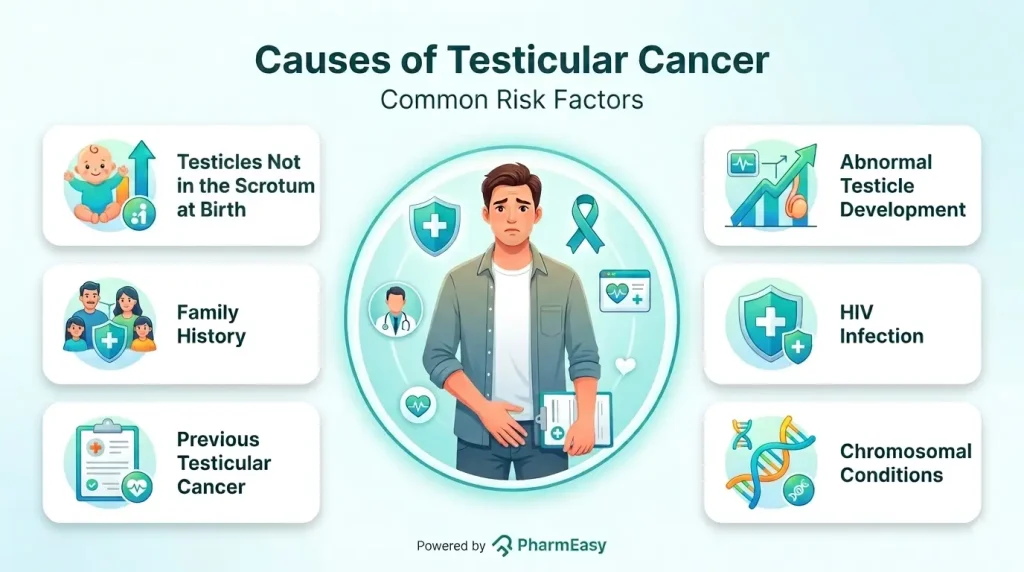
The exact cause of testicular cancer is often unknown. However, certain factors can increase a person’s risk. Risk factors for testicular cancer include2,4:
Some people with testicular cancer do not notice symptoms at first. When symptoms or signs of testicular cancer are present, they may include:
Testicular cancer diagnosis includes:
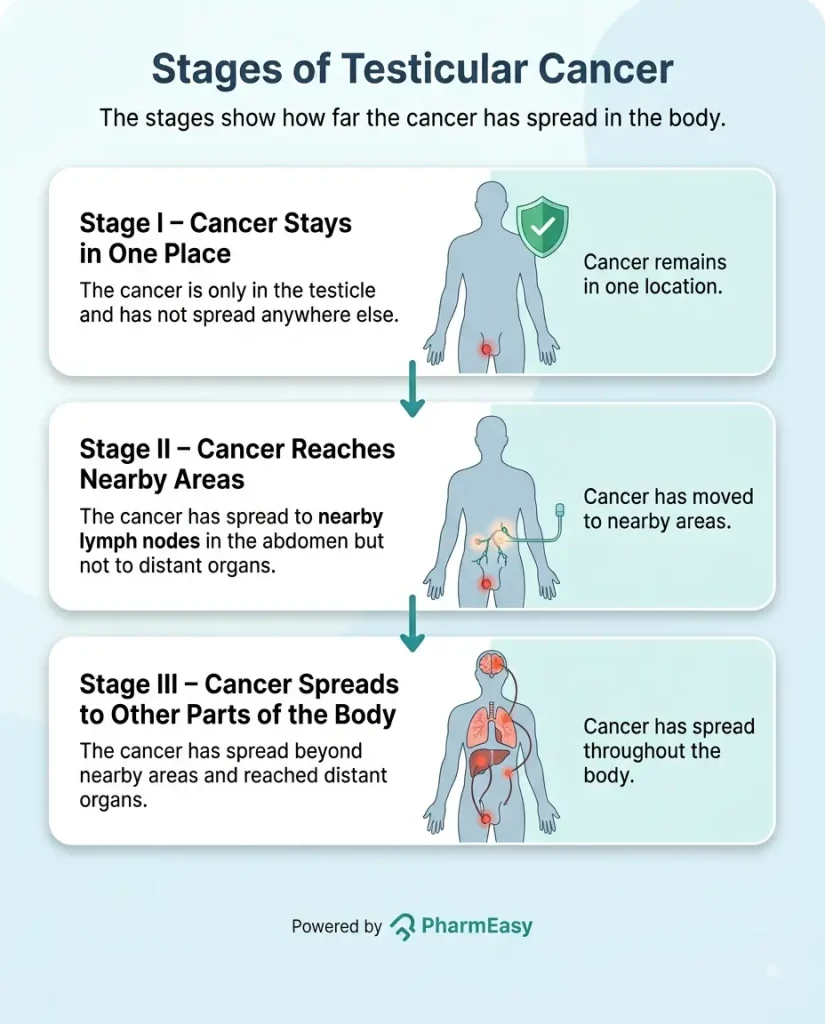
The stages of testicular cancer describe how far the cancer has spread. Knowing the stage helps doctors recommend treatment and helps patients understand their options. Stages of testicular cancer include2,3:
Testicular cancer treatment depends on the type of cancer, stage, and your overall health. Your doctor will recommend the most suitable treatment based on these factors.
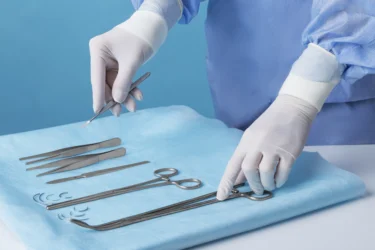
Surgery to remove the affected testicle, called a radical inguinal orchiectomy, is the main treatment for most people with testicular cancer. In some cases, nearby lymph nodes may also be removed1,2,7.
High-energy radiation may be used to destroy cancer cells, mainly for some cases of seminoma1,2,7.

Chemotherapy medicines may be used to kill cancer cells, especially if the cancer has spread beyond the testicle1,2,7.

After surgery, some people may not need more treatment straight away. Instead, they may have regular checkups, blood tests, and scans to look for any signs that the cancer has returned. If possible, sperm banking should be arranged before surgery in patients who may wish to have children in the future as cancer itself, and treatments involved may affect fertility1,7.
Testicular cancer and its treatment can sometimes cause short-term or long-term effects. These depend on the type and stage of cancer, the treatment used, and the person’s overall health. Possible effects include2:
Finding testicular cancer early can help doctors start treatment sooner. Being aware of changes in the testicles and seeking medical advice when unusual symptoms appear are important steps for early detection1,2.
Also Read: Prostate Cancer: Causes, Early Signs, Treatment Options & How to Lower Your Risk
Consult a doctor if you notice any unusual changes in your testicles, such as a lump, swelling, change in size or feel, pain, discomfort, or a feeling of heaviness in the scrotum. Although these symptoms may be caused by conditions other than testicular cancer, it is important to get them checked to identify the cause and receive appropriate care1,2.
Testicular cancer is uncommon but can often be treated successfully, especially when it is diagnosed early. Being aware of changes such as a lump, swelling, pain, or changes in the size and feel of the testicles can help identify possible warning signs. If you notice any unusual changes, do not delay seeking medical advice, as early evaluation can lead to timely initiation of treatment. Regular awareness and understanding of the symptoms are important steps in protecting testicular health.
Yes. Testicular cancer can happen without pain. A painless lump or swelling in a testicle is one of the most common warning signs. Some people may also notice that a testicle feels larger, firmer, or different from usual, even without discomfort2.
Yes. Testicular cancer or its treatments can affect fertility in some people. Surgery, chemotherapy, and radiation therapy may reduce sperm production or make it harder to father a child. Before treatment starts, patients who may want children in the future can ask their doctor about sperm banking2.
Yes. Testicular cancer can return after treatment, although many people remain cancer-free after successful treatment. Regular follow-up visits, blood tests, and scans help doctors look for any signs that the cancer has come back and manage them early9.
There is no strong evidence that stress directly causes testicular cancer. The exact cause is often unknown, but risk is higher in some people, including those with an undescended testicle, a previous history of testicular cancer, or a close family history of the disease2,3.
1. Testicular Cancer. Accessed August 6, 2026. https://medlineplus.gov/testicularcancer.html
2. Testicular cancer: MedlinePlus Medical Encyclopedia. Accessed August 6, 2026. https://medlineplus.gov/ency/article/001288.htm
3. Gaddam SJ, Bicer F, Chesnut GT. Testicular Cancer. In: StatPearls. StatPearls Publishing; 2026. Accessed August 6, 2026. http://www.ncbi.nlm.nih.gov/books/NBK563159/
4. Causes of testicular cancer. nhs.uk. April 22, 2024. Accessed August 6, 2026. https://www.nhs.uk/conditions/testicular-cancer/causes/
5. What is testicular cancer? University College London Hospitals NHS Foundation Trust. Accessed August 6, 2026. https://www.uclh.nhs.uk/our-services/find-service/cancer-services/testicular-cancer-1/what-testicular-cancer
6. Case L. Testicular cancer – be aware of the symptoms and how to check yourself. NHS Shropshire, Telford and Wrekin. April 23, 2024. Accessed August 6, 2026. https://www.shropshiretelfordandwrekin.nhs.uk/news/testicular-cancer-be-aware-of-the-symptoms-and-how-to-check-yourself/
7. Sievert D. What Is Testicular Cancer? UCLA Medical School. April 25, 2023. Accessed August 6, 2026. https://medschool.ucla.edu/news-article/testicular-cancer-symptoms-treatment-and-causes
8. Diagnosing testicular cancer. University College London Hospitals NHS Foundation Trust. Accessed August 6, 2026. https://www.uclh.nhs.uk/our-services/find-service/cancer-services/testicular-cancer-1/diagnosing-testicular-cancer
9. Baniel J, Foster RS, Gonin R, Messemer JE, Donohue JP, Einhorn LH. Late relapse of testicular cancer. J Clin Oncol Off J Am Soc Clin Oncol. 1995;13(5):1170-1176. doi:10.1200/JCO.1995.13.5.1170 https://pubmed.ncbi.nlm.nih.gov/7537800/
10. Meyts ERD, Znaor A, Skakkebæk NE, Gatta G, Gurney J, Schüz J. Testicular cancer. In: World Cancer Report: Cancer Research for Cancer Prevention. International Agency for Research on Cancer; 2020. Accessed August 6, 2026. https://www.ncbi.nlm.nih.gov/books/NBK606475/
Disclaimer: The information provided here is for educational/awareness purposes only and is not intended to be a substitute for medical treatment by a healthcare professional and should not be relied upon to diagnose or treat any medical condition. The reader should consult a registered medical practitioner to determine the appropriateness of the information and before consuming any medication. PharmEasy does not provide any guarantee or warranty (express or implied) regarding the accuracy, adequacy, completeness, legality, reliability or usefulness of the information; and disclaims any liability arising thereof.
Links and product recommendations in the information provided here are advertisements of third-party products available on the website. PharmEasy does not make any representation on the accuracy or suitability of such products/services. Advertisements do not influence the editorial decisions or content. The information in this blog is subject to change without notice. The authors and administrators reserve the right to modify, add, or remove content without notification. It is your responsibility to review this disclaimer regularly for any changes.


Comments

Leave your comment...
You may also like























Comments