Last updated: Aug 20, 2026Published on: Jul 14, 2026
Table of Contents
Introduction
A runny nose seems like a minor problem, but for many parents, it can become a major concern, especially when a baby or toddler is affected.
A runny nose, also known as rhinorrhea, occurs when the nasal passages produce excess discharge or mucus. Often, runny nose is a symptom of viral infections like the common cold or flu, or allergies. In some cases, it may occur due to other medical conditions1.
Runny nose or a cold may lead to disturbed sleep, difficulty feeding, or symptoms such as fussiness and coughing, which often causes parents to wonder whether it is just a cold or something more serious2.
Advertisement
In this blog, we will explore why runny noses are so common in babies and toddlers, causes of runny nose in different age groups, and how to treat runny nose in babies. We will also discuss some safe home remedies for cough and runny nose in babies.
Why Are Runny Noses So Common in Babies and Toddlers?
Arunny nose is one of the first symptoms of a common cold. It is very common for babies and toddlers to have frequent colds. In fact, it is normal for a child to have 8 to 10 colds a year before the age of two2.
Let us understand why it is common in babies and toddlers:
Developing immune system: The common cold, which causes a runny nose, is caused by certain viruses that may infect the throat, sinuses, and nose. Babies and toddlers are more prone to catch these viruses since their immune system is still developing and learning to fight new infections2.
Narrow nasal passages: Newborns are obligatory nasal breathers, meaning they mainly breathe through their noses. This leads to stridor, a congested breathing due to narrow nasal passages3.
Frequent exposure to viruses: Children can catch viruses from parents, siblings, other family members, caregivers, or playmates. Those who have older siblings or attend daycare are exposed to more viruses and therefore tend to have more colds2.
Hand-to-mouth contact: Babies and toddlers constantly touch their mouth, nose and eyes, without washing their hands. This allows germs to spread easily2,4.
When a child first gets a cold, the body starts developing immunity to the virus. Over time, as children are exposed to more viruses, the immunity becomes stronger and they begin to get fewer colds.
Frequent colds are usually not a sign of a weak immune system. They simply indicate that a child has been exposed to many different viruses2,4.
Advertisement
Runny Nose Causes by Age Group
It is very important to understand what causes a runny and congested nose in order to get the right treatment. Below are some common causes of a runny nose in children of different age groups.
1. Runny Nose in Babies (0-12 Months)
Common causes of a runny nose in babies are:
Viral infections: Common viral infections such as influenza, rhinoviruses, and respiratory syncytial viruses can lead to the common cold, wherein increased mucus production occurs to help keep germs out of the lungs of the baby. This, in turn, could trickle down the throat or end up in the nose, giving a runny nose5,6.
Allergies: Babies who are allergic to pollen, dust, smoke or animal hair usually feel stifled and develop runny noses when they come in contact with something they are allergic to7.
Crying: When babies cry, their tears come out from the tear glands, which drain into the nose. This mixes up with mucus and leads to a runny nose.
Cold weather: When it is cold, the nose warms the air before it reaches the lungs. This increases blood flow inside the nose and leads to more mucus production, causing a runny nose2.
Irritants: Exposure to cigarette smoke, strong perfumes, cleaning products, dust, or dry indoor air can irritate the nasal passages and increase mucus production7.
Congenital causes: In rare cases, babies born with conditions like congenital syphilis may develop a persistent runny nose within the first week after birth8.
2. Runny Nose in Toddlers (1-3 Years)
A runny nose in toddlers could be caused by:
Viral infections: A common cause of a runny nose in toddlers is again viral infections, as they are frequently exposed to cold viruses through daycare, preschool, and playgroups. These can cause nasal congestion, sneezing, and a runny nose2,9.
Environmental irritants: Tobacco smoke, air pollution, fragrances, and chemical fumes can irritate the nose9.
Allergens: Allergies to pollen, dust mites, mould, or pet dander can cause a persistent runny nose, sneezing, and itchy eyes. It could be seasonal or year-round9.
Ear Infections: Middle ear infection is common in toddlers, frequently associated with a cold. Fluid builds up behind the eardrum, which can cause pain, headache, fever, etc. Associated symptoms like runny nose or sore throat may also be seen5,10.
Foreign object insertion: Toddlers may accidentally insert small objects into their nostrils. This often causes a persistent runny nose from typically only one side (site of foreign body insertion), which may be foul-smelling or blood-stained. Such cases require prompt medical evaluation and should not be managed at home11.
3. Runny Nose in Older Children
Older children might have a runny nose because of any of the following:
Viral Infections: Viral infections affecting the upper respiratory tract are common in children and can cause runny noses2.
Sinus infections: Sinusitis is an infection that causes swelling of the sinuses. It can cause a runny nose and a blocked nose. A child may take 10 days to get better from acute sinusitis, while chronic sinusitis can take 12 weeks or longer12.
Allergies: Some allergies in children can occur when the body reacts to normally harmless substances like pollen, dust, certain foods, insect bites, or animals. Allergic rhinitis could also be triggered by cold weather, chemicals, pollution, dust, or smoke. Symptoms may be mild or, in some cases, severe.These can all lead to a congested and runny nose13,14.
Nasal polyps or structural nasal problems: These are soft growths inside the nose. Although harmless, they can block a child’s nose and also lead to a runny nose15.
Nasal Trauma: Sometimes, a clear nasal discharge may occur after nasal injury such as a nasal fracture. This condition, known as Cerebrospinal fluid (CSF) rhinorrhea, is the leakage of CSF from the child’s nose due to trauma or defect. This requires prompt evaluation by a pediatrician16.
Symptoms Associated with a Runny Nose
Runny nose rarely occurs as a stand-alone symptom. Usually, when it is associated with infections or allergy, some other common symptoms may also occur along. These include2,17:
Sore throat
Sneezing
Coughing
Body ache
Lethargy
Nausea
Watery eyes
Itchy nose
Headaches
Excessive crying and fussiness, disturbed sleep and feeding in babies.
It is important for parents to note the colour and smell of the child’s nasal discharge as this may sometimes provide useful clues about the underlying cause. It could indicate:
Viral Infections: This starts with anasal discharge that is usually clear at first. As the illness progresses, the mucus may become white, yellow, or green18.
Allergic rhinitis: In some children with allergic rhinitis, fungi present in the air can enter the sinuses and trigger allergic fungal sinusitis (AFS). This leads to sticky mucus, which can be light brown to dark green19.
Foreign Body Obstruction: Sometimes, a small object stuck inside the nose can remain unnoticed and gradually become coated with minerals, forming a hard mass called a rhinolith. This can cause a persistent, foul-smelling nasal discharge20.
CSF Rhinorrhea: This typically presents as a clear, watery discharge from one nostril that increases on bending and coughing, with a history of trauma to the face or nose. There may be an associated salty taste21.
Any suspicion of discharge that may be due to a traumatic event or foreign body needs to be evaluated and managed properly by a pediatrician.
Treatment Options for Runny Nose
The treatment of runny nose depends upon the cause. A viral infection or cold usually resolves by itself, and antibiotics are not prescribed. However, how to stop a runny nose is certainly a concern for the parents. To make the child feel better, the following treatments can be suggested by a doctor:
Saline nose drops or spray: Saline drops help loosen thick mucus in the baby’s nose. This helps to clear congestion and eases breathing. For younger babies, saline drops followed by gentle suction with a bulb syringe can clear the nostrils before a feed or sleep17.
Medicated nose drops: These contain antihistamines or corticosteroids, which help to relieve nasal congestion. However, they provide only temporary relief. Also, these products are not recommended for children under 6 years of age unless specifically prescribed by a professional2.
Oral Medications:
Decongestants: These are over-the-counter medicines (OTC’s) that help to clear the mucus and dry up the nasal passage. These provide relief from a runny nose.
Antihistaminics: In some cases of allergic rhinitis, antihistamines may also be given to ease the allergies.
Antibiotics: If a persistent runny nose occurs due to conditions like sinusitis or ear infections, antibiotics may be needed for management17,21.
Pain relief: In case of fever and body aches, acetaminophen, as per the paediatrician’s recommendation, can be given2.
Surgical management: In case of any congenital defects or traumatic injuries, surgical management may be required21.
Note: None of these medications should be given without a doctor’s prescription.
Runny nose can be very uncomfortable, and a child can easily become irritable. Here are some home remedies that may provide relief from a runny nose:
1. Humidification
Dry air can worsen a runny nose. Using a cool-mist humidifier helps keep nasal passages moist and reduces irritation22.
2. Hydration
Staying hydrated helps thin the mucus, making it easier to clear the nose and reducing congestion. It is best to offer water, clear soups, or other age-appropriate fluids to children with a runny nose23.
3. Head Elevation
Image Source: freepik.com
Elevating the child’s head while sleeping can help mucus drain better and reduce nasal congestion23.
4. Steam Inhalation
Image Source: freepik.com
Steam helps loosen mucus and soothes irritated nasal passages. The child and the parent can breathe steam in a closed bathroom after running a hot shower. For toddlers, this can provide quick relief from a blocked or runny nose23.
5. Adequate Rest
Image Source: freepik.com
Rest supports the immune system in fighting viral infections. Keep the child comfortably warm, avoid cold drafts, and ensure a calm environment to help with faster recovery23.
Mistakes That Can Make a Runny Nose Worse
Some things can actually make a runny nose worse, and it’s important that parents be mindful of these. A few mistakes to avoid are:
Using OTC nasal sprays without doctor consultation and continuing for more than 2-3 days, as this may worsen the congestion2.
Not following the dosage instructions for any medicine or consulting a paediatrician in case of worsening of symptoms2.
Blowing nose too hard, which could force the germs back into the sinuses and also lead to pain and bleeding from the nose24.
Not resting enough, as this can often worsen the condition and make the child irritable.
Inadequate fluid intake, as dehydration can occur, especially if a viral infection is suspected.
How to Prevent Frequent Runny Noses?
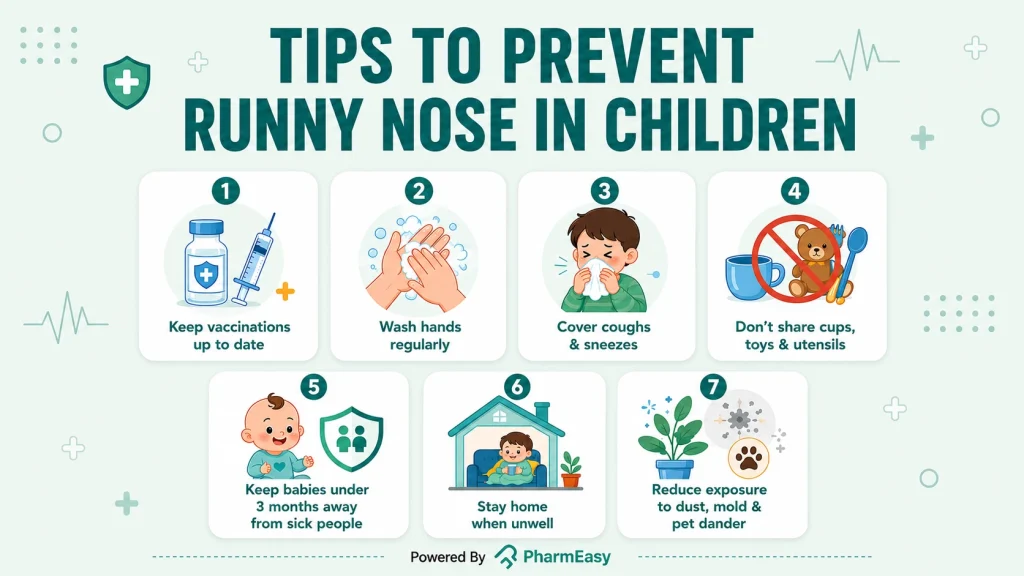
A runny nose is often caused by viral infections, so it cannot always be prevented. However, these simple habits can help reduce the spread of germs and lower a child’s chances of getting sick2,7:
Stay up to date with routine vaccinations
Wash hands frequently with soap and water, especially before eating and after coughing and sneezing
Teach children to cover their mouth while sneezing or coughing
Avoid sharing personal items like toys, cups, bottles, utensils, towels, and tissues
Babies under 3 months old should be kept away from people who have a cold
Keep the child at home when unwell
Avoiding exposure to allergens like dust, mold, mites, and pet dander can help reduce incidences of runny nose
When to Consult a Doctor?
Babies younger than 3 months can have difficulty breathing and feeding when their nose is blocked. One should consult a doctorimmediately if the baby has2:
Babies and children of any age should be seen by a doctor if runny nose or cold seems to be getting worse or causing serious symptoms. Seek medical advice if any of the following warning signs occur2:
Difficulty in breathing
A high fever, or a fever that lasts for more than 2-3 days
Severe ear pain
Persistent irritability, or excessive crying
Blue or pale lips, face, or fingertips
Extreme sleepiness, difficulty waking up, confusion, or unusual drowsiness
A runny nose or cold symptoms lasting longer than 10-14 days
Also, in case of any trauma to the head, face, or nose or foreign body obstruction in the nostril, an immediate evaluation by a pediatrician is always recommended.
A runny nose is very common in babies and young children and is usually caused by a simple viral infection or sometimes allergies. In most cases, it is not serious and improves on its own with basic home care, such as keeping the child well hydrated, using saline drops, and ensuring adequate rest and comfort. However, it is important to avoid self-medication, understand the signs that indicate the need for medical attention, and follow the doctor’s instructions sincerely to prevent the risk of any complications in the child.
Frequently Asked Questions (FAQs)
When to worry about a toddler’s runny nose?
A toddler’s runny nose becomes a concern if it lasts more than 14 days and is accompanied by a high fever, trouble breathing, ear pain, or poor appetite2.
Should I give baby medicine for a runny nose?
Saline drops, suction, hydration, and rest are usually very safe options for babies. Medication can be given only on a doctor’s recommendation23.
How long should a runny nose last in a baby?
A runny nose is usually because of a viral infection (common cold). Colds usually last about a week, but in some cases, they can continue for up to two weeks2.
Can a baby have a runny nose but no fever?
A baby can easily have a runny nose without a fever. Nasal discharge in infants is very common and can be caused by the common cold, allergies, or environmental irritants12.
Why is my baby’s runny nose not going away?
Sometimes a baby’s runny nose keeps coming back because they are catching one viral cold after another, especially if they are around other children, like in the day care3. In some cases, allergies, irritants, and inflammation could also be a reason for a persistent runny nose13,14,15.
References
Chirico G, Quartarone G, Mallefet P. Nasal congestion in infants and children: a literature review on efficacy and safety of non-pharmacological treatments. Minerva Pediatr. 2014 Dec;66(6):549-57. PMID: 25336097. Available from: https://pubmed.ncbi.nlm.nih.gov/25336097/
Başal Y, Akcan AB, Polat YD, Günel C, Eryilmaz A, Başak S. Rarely Seen Nasal Congenital Problems Causing Neonatal Upper Respiratory Obstruction: A Case Series. Pediatr Rep. 2016 Mar 31;8(1):6456. doi: 10.4081/pr.2016.6456. PMID: 27114819; PMCID: PMC4821219. Available from: https://pmc.ncbi.nlm.nih.gov/articles/PMC4821219/
McGann KA, Long SS. Respiratory Tract Symptom Complexes. Principles and Practice of Pediatric Infectious Diseases. 2018:164–172.e2. doi: 10.1016/B978-0-323-40181-4.00021-9. Epub 2017 Jul 18. PMCID: PMC7173486. Available from: https://pmc.ncbi.nlm.nih.gov/articles/PMC7173486/
Biagini JM, LeMasters GK, Ryan PH, Levin L, Reponen T, Bernstein DI, Villareal M, Khurana Hershey GK, Burkle J, Lockey J. Environmental risk factors of rhinitis in early infancy. Pediatr Allergy Immunol. 2006 Jun;17(4):278-84. doi: 10.1111/j.1399-3038.2006.00386.x. PMID: 16771781; PMCID: PMC2233943. Available from: https://pubmed.ncbi.nlm.nih.gov/16771781/
Ji Y, Liu Y, Yang N. Pediatric rhinitis risk factors. Exp Ther Med. 2016 Oct;12(4):2383-2386. doi: 10.3892/etm.2016.3684. Epub 2016 Sep 7. PMID: 27698737; PMCID: PMC5038586. Available from: https://pmc.ncbi.nlm.nih.gov/articles/PMC5038586/
Asiri M, Al-Khulban MS, Al-Sayed G. Foreign Body in the Nasal Cavity: A Case Report. Cureus. 2023 Dec 12;15(12):e50373. doi: 10.7759/cureus.50373. PMID: 38213370; PMCID: PMC10782271. Available from: https://pmc.ncbi.nlm.nih.gov/articles/PMC10782271/
Wu AC, Dahlin A, Wang AL. The Role of Environmental Risk Factors on the Development of Childhood Allergic Rhinitis. Children (Basel). 2021 Aug 17;8(8):708. doi: 10.3390/children8080708. PMID: 34438599; PMCID: PMC8391414. Available from: https://pubmed.ncbi.nlm.nih.gov/34438599/
Long SS. Respiratory Tract Symptom Complexes. Principles and Practice of Pediatric Infectious Disease. 2008:170–9. doi: 10.1016/B978-0-7020-3468-8.50029-8. Epub 2020 Jun 22. PMCID: PMC7310934. Available from: https://pmc.ncbi.nlm.nih.gov/articles/PMC7310934/
Shahid SK. Rhinosinusitis in children. ISRN Otolaryngol. 2012 Dec 5;2012:851831. doi: 10.5402/2012/851831. PMID: 23762621; PMCID: PMC3671714. Available from: https://pmc.ncbi.nlm.nih.gov/articles/PMC3671714/
Brehmer, D., & Riemann, R. (2010). The Rhinolith—A Possible Differential Diagnosis of a Unilateral Nasal Obstruction. Case Reports in Medicine, 2010, 845671. https://doi.org/10.1155/2010/845671
Disclaimer: The information provided here is for educational/awareness purposes only and is not intended to be a substitute for medical treatment by a healthcare professional and should not be relied upon to diagnose or treat any medical condition. The reader should consult a registered medical practitioner to determine the appropriateness of the information and before consuming any medication. PharmEasy does not provide any guarantee or warranty (express or implied) regarding the accuracy, adequacy, completeness, legality, reliability or usefulness of the information; and disclaims any liability arising thereof.
Links and product recommendations in the informationprovided here are advertisements of third-party products available on the website. PharmEasy does not make any representation on the accuracy or suitability of such products/services. Advertisements do not influence the editorial decisions or content. The information in this blog is subject to change without notice. The authors and administrators reserve the right to modify, add, or remove content without notification. It is your responsibility to review this disclaimer regularly for any changes.












































Comments