




High Creatinine: Symptoms, Causes, Diagnosis & Treatment
By Dr. Aniket Hase +2 more

Medically reviewed by Dr. Aniket Hase
Last updated: Aug 21, 2026 Published on: Jul 7, 2026


Get,

to manage your symptom
Get your,

4 Cr+ families
benefitted

OTP sent to 9988776655



You’ve successfully subscribed to receive
doctor-approved tips on
Whatsapp

Get ready to feel your best.


Register to Avail the Offer
Send OTPBy continuing, you agree with our Privacy Policy and Terms and Conditions
Hi There,
Sign up on PharmEasy now!!


Trusted by 4 crore+ families

OTP sent to 9988776655
You have unlocked 25% off on medicines


Code: NU25

By Dr. Aniket Hase +2 more
Table of Contents
You got your blood test back, and creatinine is flagged. You are not sure what it means or whether to worry. Most people have never heard of creatinine until a report puts it in front of them. The good news is that a high reading does not always mean something serious. But it does deserve attention. In this blog, we will understand high creatinine meaning, causes, possible high creatinine symptoms, and treatment options to manage the effects of high creatinine.
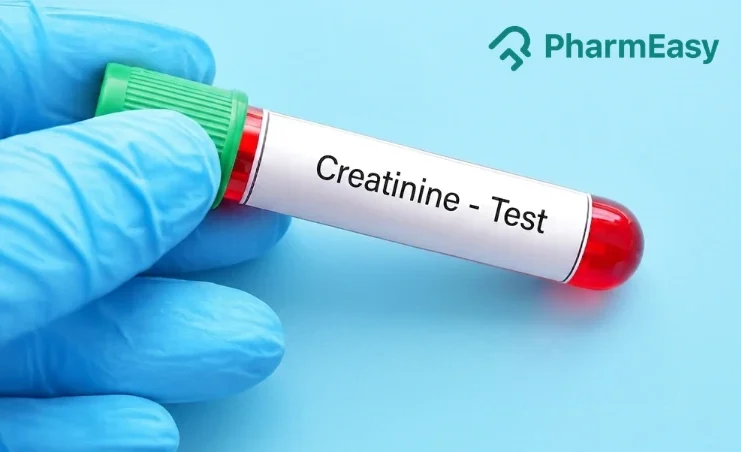
Creatinine is a waste product, usually produced during the breakdown of muscles. Healthy kidneys filter creatinine out of the blood through the urine. Traces of some creatinine can be found in everyone; however, it becomes concerning when creatinine levels are high1.
High creatinine levels may indicate impaired kidney function, while low levels are usually associated with low muscle mass, poor nutrition, or certain medical conditions and rarely indicate kidney disease2.
Creatinine levels are assessed through a blood test and expressed in milligrams per decilitre (mg/dL). The normal range can vary depending on factors such as age, sex, and muscle mass3. Generally, the following values are considered normal for creatinine:
Serum creatinine levels may show minor variations depending on factors such as the time of the day, time in the menstrual cycle, and dietary intake. Very high or persistently high creatinine levels may be associated with abnormal kidney function4. Creatinine levels above 1.1 mg/dL in females and above 1.3 mg/dL in males are considered high. Let’s understand the causes of high creatinine levels.
There are several causes of high creatinine levels, ranging from eating certain foods to conditions like underlying kidney disorders. Reasons for high creatinine levels include:
High creatinine levels may not cause any symptoms in some individuals and may only be detected through blood tests. When symptoms do occur, they are usually due to the underlying condition affecting the kidneys and not the direct effects of high creatinine or signs of high creatinine itself. These include2:
These symptoms can vary depending on the underlying cause and the severity of kidney impairment.
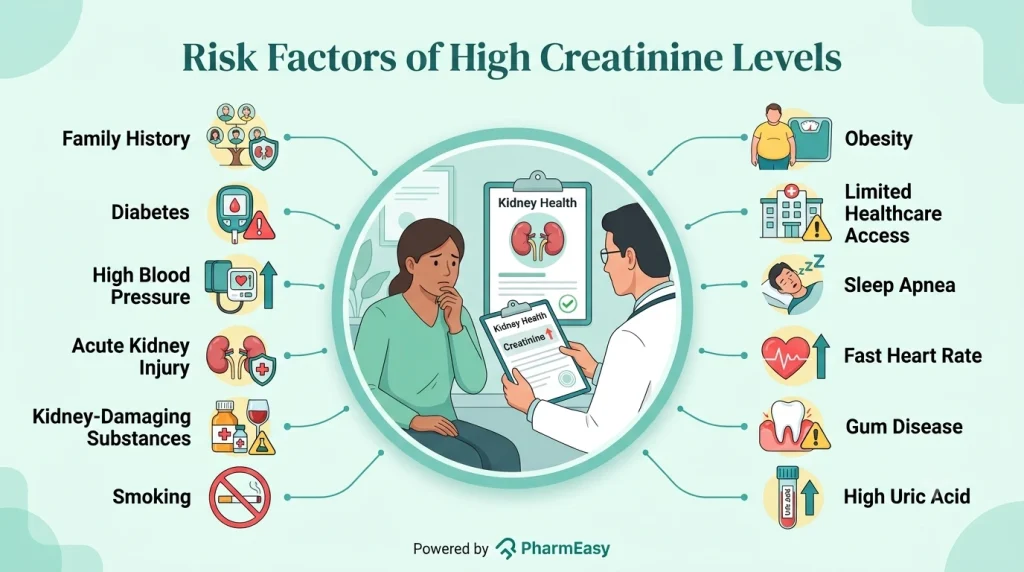
High creatinine levels are commonly associated with kidney damage or reduced kidney function. The following health conditions and lifestyle factors may increase the risk of developing elevated creatinine levels:
High creatinine levels can result from a variety of conditions. Diagnosing the underlying condition may need a combination of blood tests, urine tests, and, in some cases, imaging studies to get a clear picture of any health issues. Common diagnostic tests for conditions associated with high creatinine levels may include:
Creatinine is usually a marker and not a disease. Therefore, the treatment is directed towards the underlying cause that may have led to the high creatinine levels. Depending on the lab reports, treatment may involve:
One may be able to avoid high creatinine levels by effectively managing conditions that may damage the kidneys, such as diabetes and high blood pressure. Some simple steps could be:

This is one of the most effective ways of protecting kidney function and delaying the onset of kidney disease. The blood pressure goal should be less than 130/80 mmHg or as discussed with your doctor. Eating healthy, quitting smoking, having an active lifestyle, and getting adequate sleep are some ways that can help to maintain the blood pressure10.
Regular monitoring of blood glucose levels can help guide decisions about diet, medications, and physical activity. This allows better day-to-day diabetes management. Keeping blood glucose and HbA1c levels within the target range can help reduce the risk of diabetic kidney disease10.
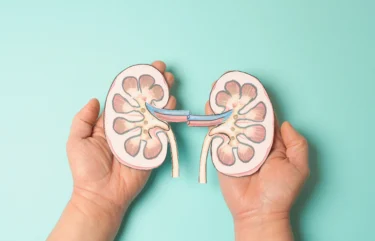
Regular kidney function tests are important not only for diagnosing kidney disease in individuals at risk of kidney disease but also for monitoring its progression over time. Since kidney disease often progresses gradually, eGFR and urine albumin levels help to track changes in the kidneys10.

Some over-the-counter (OTC) and prescription medications, particularly non-steroidal anti-inflammatory drugs (NSAIDs), can affect kidney function if used for prolonged periods. These medicines are commonly found in products used to relieve pain, fever, headaches, and cold symptoms. Before using pain relievers regularly, it is advisable to consult a doctor10.

Diet plays an important role in maintaining kidney health. A balanced, kidney-friendly eating plan can help support kidney function, manage blood pressure and blood sugar levels, and reduce the risk of complications associated with kidney disease10.

About 30 minutes of moderate-intensity physical activity a day can help regulate blood sugar levels, support cardiovascular health, and aid in weight management10.

Cigarette smoking may be associated with impaired kidney function. Quitting smoking may help to maintain blood pressure, which in turn is good for the kidneys and overall health10.

This is important for overall health. Adequate sleep can help regulate blood pressure, improve blood sugar levels, and contribute to better physical and mental well-being10.

Chronic stress can negatively affect overall health by contributing to high blood pressure, poor blood sugar control, and other factors that may impact kidney function. Finding healthy ways to manage stress can support both physical and emotional well-being10.
Also Read: Kidney Failure: Symptoms, Causes, Treatment & Prevention
While mildly elevated creatinine may resolve with hydration or dietary adjustments, certain symptoms require prompt medical attention. You should visit a doctor if you have:
Also Read: Hemolysis: Meaning, Causes, Types, Symptoms, Diagnosis & Treatment
Creatinine levels are an important indicator of kidney health and can provide valuable insights into kidney function. While high creatinine levels may occur due to factors such as dehydration or taking certain medicines, they may also indicate kidney conditions. Early detection and management of these issues can help the management of these conditions and reduce the risk of complications. Regular health checkups, healthy lifestyle habits, and timely treatment of conditions such as diabetes and high blood pressure can go a long way in protecting kidney function.
High creatinine levels may indicate that the kidneys are not functioning effectively. While mildly elevated creatinine levels may be reversible, high levels may indicate conditions such as CKD and AKI1.
A creatinine level above 1.3 mg/dL in men or 1.1 mg/dL in women may be higher than the normal range and could indicate reduced kidney function. This normal range may vary between laboratories. As creatinine levels vary based on factors such as age, muscle mass, medical history, and changes in creatinine levels over time, they should be interpreted with the help of a doctor3.
If dehydration is the cause of elevated creatinine, adequate hydration may help normalise creatinine levels1.
In many cases, yes. If the cause of high creatinine levels is dehydration, medication use, or a temporary condition such as AKI, creatinine levels may return to normal with appropriate management. If elevated creatinine levels are caused by CKD, treatment usually focuses more on slowing the progression of CKD rather than reversing high creatinine levels1,2.
Yes, protein shakes may temporarily increase creatinine levels in some individuals, however, it may not indicate kidney disease in healthy individuals. However, in individuals with kidney disease, high protein intake can accelerate kidney damage1.
Yes, kidney stones may cause high creatinine levels. Treating kidney stones may help improve creatinine levels11.
Disclaimer: The information provided here is for educational/awareness purposes only and is not intended to be a substitute for medical treatment by a healthcare professional and should not be relied upon to diagnose or treat any medical condition. The reader should consult a registered medical practitioner to determine the appropriateness of the information and before consuming any medication. PharmEasy does not provide any guarantee or warranty (express or implied) regarding the accuracy, adequacy, completeness, legality, reliability or usefulness of the information; and disclaims any liability arising thereof.
Links and product recommendations in the information provided here are advertisements of third-party products available on the website. PharmEasy does not make any representation on the accuracy or suitability of such products/services. Advertisements do not influence the editorial decisions or content. The information in this blog is subject to change without notice. The authors and administrators reserve the right to modify, add, or remove content without notification. It is your responsibility to review this disclaimer regularly for any changes.


Comments

Leave your comment...
You may also like

























Comments