




Bone Tuberculosis: What Is It, Types, Symptoms & How to Manage It
By Dr. Parth Mehta +2 more

Medically reviewed by Dr. Parth Mehta
Last updated: Aug 18, 2026 Published on: Jun 29, 2026


Get,

to manage your symptom
Get your,

4 Cr+ families
benefitted

OTP sent to 9988776655



You’ve successfully subscribed to receive
doctor-approved tips on
Whatsapp

Get ready to feel your best.


Register to Avail the Offer
Send OTPBy continuing, you agree with our Privacy Policy and Terms and Conditions
Hi There,
Sign up on PharmEasy now!!


Trusted by 4 crore+ families

OTP sent to 9988776655
You have unlocked 25% off on medicines


Code: NU25

By Dr. Parth Mehta +2 more
Table of Contents
Tuberculosis (TB) is a contagious infection caused by the bacteria Mycobacterium tuberculosis. It primarily affects the lungs (pulmonary TB) but can spread to other parts of the body, such as the bones, spine, or brain1. This article will explain what bone tuberculosis is, its forms, common symptoms, and how to manage it efficiently. Early detection of this disease is critical since timely diagnosis and treatment can reduce long-term problems and enhance the chances of recovery.

Bone tuberculosis is a form of TB that occurs when the infection occurs in the bones or joints. It is also known as skeletal tuberculosis or osteoarticular tuberculosis. TB of the spine is the most common type of bone TB, also known as Pott’s disease. Other commonly affected regions include the hip, knee, ankle, and long bones. It develops slowly, may go unnoticed in the early stages, and can cause significant bone destruction over time if not diagnosed and treated early2.
TB can affect different parts of the skeletal system. The different types of bone TB include:
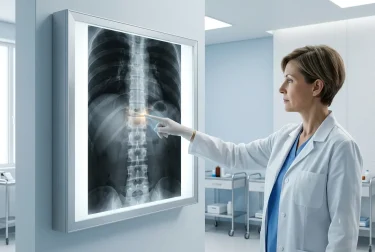
This is the most common type of bone tuberculosis, which affects the spinal vertebrae. It can cause the spinal bones to collapse, resulting in severe back pain and deformities such as kyphosis (hunchback). In severe disease, it can compress the spinal cord, resulting in neurological symptoms such as numbness of the extremities and buttock area and weakness3.

This type affects the long weight-bearing bone joints, such as the knees, hips, foot, and ankle. It develops slowly and leads to chronic pain, swelling, and stiffness in the affected joint. Over time, it can destroy joint cartilage and reduce mobility significantly. If untreated, it may result in permanent joint deformity4.
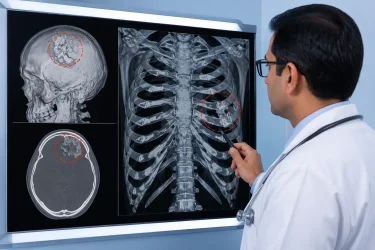
This one can affect almost any bone in the body, including the ribs, skull, pelvis, and long bones. It often develops through more than one route of infection5. In children, especially aged under 6, it can affect even fingers and toes (known as spina ventosa)6.
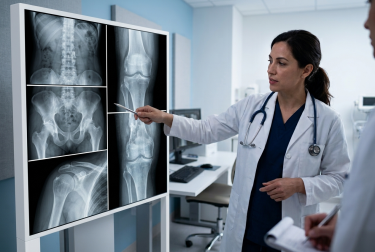
This condition affects more than one bone or joint at the same time or one after another. Commonly affected areas include the spine, pelvis, hip (femoral head), shoulders, and knees. It can cause symptoms like joint pain, stiffness, swelling, redness, warmth over the area, and difficulty in moving the joint. In severe cases, changes in bone shape or deformity may occur7.
Also Read: Spinal Tuberculosis (Pott’s Disease): Symptoms, Treatment, Diagnosis & More
Bone TB may be caused by:
Bone tuberculosis symptoms may develop gradually and can vary depending on the affected bone or joint. They can be divided into two:
Bone TB rarely causes general symptoms affecting the whole body. However, some people may experience the following:
Bone-related symptoms may occur due to damage and inflammation in the affected bones or joints. These include:
Bone TB is not usually communicable. Unlike pulmonary TB, which affects the lungs and can spread through the air when an infected person coughs, sneezes, or speaks1, bone TB develops when the TB bacteria travel from another region of the body to the bones or joints2,5.
A person with bone TB cannot spread the infection to others by physical contact, touching, sharing food, or being near someone. As a result, patients with bone TB are typically not considered contagious. However, if a person has both bone TB and active pulmonary TB, they may spread the TB bacteria through respiratory droplets from their lungs. In such cases, the lung infection is responsible for the transmission of TB, not the bone infection.
Bone tuberculosis diagnosis can be difficult since its symptoms usually appear gradually and resemble those of other bone and joint problems. Doctors usually confirm the diagnosis with a medical history, physical examination, imaging studies, and laboratory investigations.
The doctor will ask about symptoms such as prolonged bone or joint pain, swelling, stiffness, fever, weight loss, and any previous TB exposure. They might also look for neurological symptoms (weakness, numbness, etc.), restricted joint movement, discomfort, and other signs and symptoms2.
The doctor might recommend blood tests such as:
The doctor may recommend this test to check for possible TB infection or exposure. The test checks for a skin reaction after injecting a small amount of tuberculin solution, usually on the forearm1,4.
The doctor might recommend some imaging tests to get a detailed view of the bones and joints:
To confirm the diagnosis of bone TB, the doctor may do a biopsy, which involves taking a small sample of tissue from the diseased bone and examining it. The sample is then sent to the laboratory to confirm the presence of the bacteria using tests2 such as AFB culture, which can help detect active TB infection and enable correct treatment planning. Please visit the site below to know more about the AFB (MGIT) test
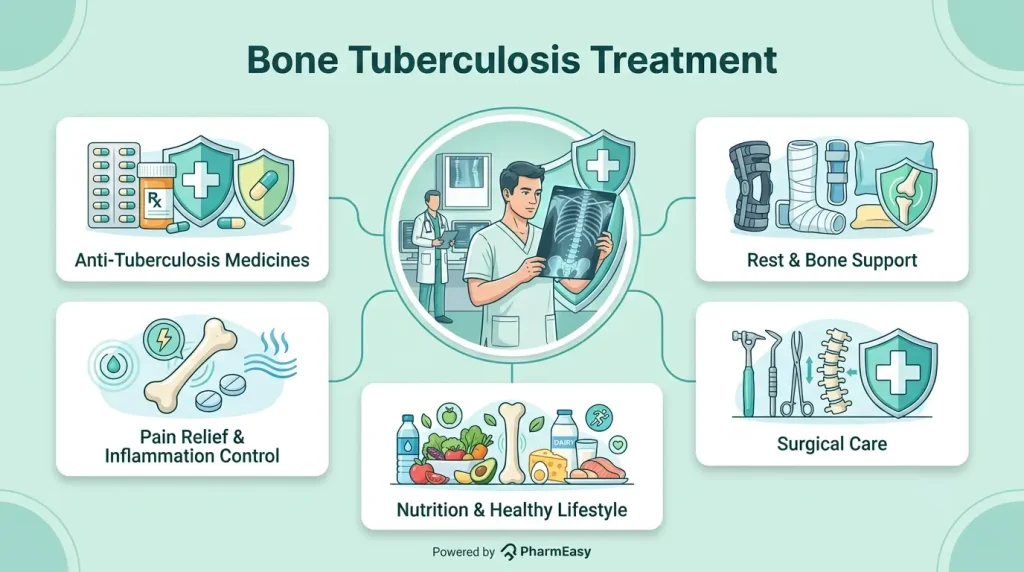
Bone tuberculosis treatment primarily focuses on eliminating the TB bacteria, reducing pain and inflammation, and avoiding long-term damage to bones and joints. The doctor might recommend the following as treatment approaches:
If bone tuberculosis is not treated promptly, it can slowly progress and cause a variety of complications, such as:
Recovery from bone or spinal TB is usually slow and depends on how early the disease is detected and how well treatment is taken6. Most patients require several months of consistent medication, and improvement occurs gradually over time3,8 Pain and other symptoms usually begin to subside within a few weeks to months, although complete healing of bones and joints may take longer.
Along with completing the full course of TB treatment, following the lifestyle changes listed below may help improve the effectiveness of treatment:
Consult a doctor immediately for the following:
Also Read: Tuberculosis: Types, Causes, Treatment and Prevention
Bone tuberculosis is a serious but treatable form of TB that affects the bones and joints, most commonly the spine. Because its symptoms often appear gradually, early detection is critical for avoiding problems like bone degeneration, joint deformity, and nerve damage. Most patients can recover successfully if they receive immediate treatment, which includes antitubercular drugs and appropriate supportive care. Following the treatment as prescribed, eating a healthy diet, and attending regular doctor visits can help support recovery and lower the risk of complications.
People with persistent bone, joint, or back pain, swelling, stiffness, trouble moving the affected area, and symptoms such as fever, weight loss, or night sweats should be checked for bone TB. It may be diagnosed with the help of imaging tests (X-ray, CT scan, or MRI) and confirmed by tests, most commonly a bone or tissue sample4.
Yes, bone TB can usually be cured with early detection and a complete course of anti-tubercular drugs. Early treatment reduces problems and increases the likelihood of a full recovery3.
Bone TB can be avoided by lowering the risk of TB infection through early detection and treatment of active TB, avoiding close contact with untreated TB patients, and keeping a strong immune system. Good nutrition, good hygiene, and well-ventilated living areas may help reduce the risk of TB1,2.
Processed and junk foods, extra sugar, and alcohol should be avoided during bone TB treatment since they may decrease immunity and slow healing. Limit the intake of particularly fatty or deep-fried foods, as these may interfere with general healing and nourishment.
1. Tobin EH, Tristram D. Tuberculosis Overview. 2024. https://www.ncbi.nlm.nih.gov/books/NBK441916/
2. Pigrau-Serrallach C, Rodríguez-Pardo D. Bone and joint tuberculosis. Eur Spine J. 2013;22(S4):556-566. doi:10.1007/s00586-012-2331-y https://pubmed.ncbi.nlm.nih.gov/22711012/
3. Tobin EH, Rausch-Phung EA. Tuberculous Spondylitis (Pott Disease). 2026. https://www.ncbi.nlm.nih.gov/books/NBK538331/
4. Marais LC, Nieuwoudt L, Nansook A, Menon A, Benito N. Tuberculous arthritis of native joints – a systematic review and European Bone and Joint Infection Society workgroup report. J Bone Joint Infect. 2023;8(4):189-207. doi:10.5194/jbji-8-189-2023 https://pubmed.ncbi.nlm.nih.gov/37780528/
5. Emerson P, Philip A, Varghese GM, Thomas R. Tuberculous Osteomyelitis of the Hyoid Bone: A Case Report. Case Reports in Otolaryngology. 2013;2013:1-3. doi:10.1155/2013/549564 https://pmc.ncbi.nlm.nih.gov/articles/PMC3610351/
6. N. AlGhazi A, H. AlZahrani M, AlMutiri WA, AlZoum NM. Disseminated tuberculosis presenting as finger swelling in a 2-year-old: a case report of TB osteomyelitis. Case Reports in Plastic Surgery and Hand Surgery. 2025;12(1):2473383. doi:10.1080/23320885.2025.2473383 https://pmc.ncbi.nlm.nih.gov/articles/PMC11899214/
7. Zhou J, Yang X, Hu Y, Li S. Epidemiological and osteoarticular involvement sites’ characteristics of multiple osteoarticular tuberculosis: a scoping review. Epidemiol Infect. 2025;153:e26. doi:10.1017/S095026882400150X https://pubmed.ncbi.nlm.nih.gov/39834064/
8. Herdea A, Marie H, Negrila IA, Abdel Hamid Ahmed AD, Ulici A. Reevaluating Pediatric Osteomyelitis with Osteoarticular Tuberculosis: Addressing Diagnostic Delays and Improving Treatment Outcomes. Children. 2024;11(11):1279. doi:10.3390/children11111279 https://pubmed.ncbi.nlm.nih.gov/39594854/
9. Gupta K, Gupta R, Atreja A, Verma M, Vishvkarma S. Tuberculosis and nutrition. Lung India. 2009;26(1):9. doi:10.4103/0970-2113.45198 https://pubmed.ncbi.nlm.nih.gov/20165588/
10. Spinal Tuberculosis: Rural India’s Hidden Epidemic. https://thespinefoundation.org/spinal-tuberculosis-hidden-epidemic/
11. Heshmati B, Omidi S, Mohammadi Y. Impact of alcohol consumption, substance use, and smoking on treatment outcomes in tuberculosis: a systematic review and meta-analysis. Syst Rev. 2025;14(1):139. doi:10.1186/s13643-025-02888-y https://pubmed.ncbi.nlm.nih.gov/40618124/
Disclaimer: The information provided here is for educational/awareness purposes only and is not intended to be a substitute for medical treatment by a healthcare professional and should not be relied upon to diagnose or treat any medical condition. The reader should consult a registered medical practitioner to determine the appropriateness of the information and before consuming any medication. PharmEasy does not provide any guarantee or warranty (express or implied) regarding the accuracy, adequacy, completeness, legality, reliability or usefulness of the information; and disclaims any liability arising thereof.
Links and product recommendations in the information provided here are advertisements of third-party products available on the website. PharmEasy does not make any representation on the accuracy or suitability of such products/services. Advertisements do not influence the editorial decisions or content. The information in this blog is subject to change without notice. The authors and administrators reserve the right to modify, add, or remove content without notification. It is your responsibility to review this disclaimer regularly for any changes.


Comments

Leave your comment...
You may also like

























Comments