



PCOS Belly Fat: Why It Happens and How to Manage It the Right Way
By Dr. Charmi Shah +2 more

Medically reviewed by Dr. Charmi Shah
Last updated: Oct 16, 2026 Published on: Jun 23, 2026


Get,

to manage your symptom
Get your,

4 Cr+ families
benefitted

OTP sent to 9988776655



You’ve successfully subscribed to receive
doctor-approved tips on
Whatsapp

Get ready to feel your best.


Register to Avail the Offer
Send OTPBy continuing, you agree with our Privacy Policy and Terms and Conditions
Hi There,
Sign up on PharmEasy now!!


Trusted by 4 crore+ families

OTP sent to 9988776655
You have unlocked 25% off on medicines


Code: NU25

By Dr. Charmi Shah +2 more
Table of Contents
Polycystic ovarian syndrome (PCOS) also now known as PMOS (Polyendocrine Metabolic Ovarian Syndrome) is a common hormonal condition that can affect how the body stores fat and manages weight. Many women with PCOS/PMOS note that their weight gain is concentrated around the belly, even if they eat a balanced diet and exercise regularly1. This can be confusing and discouraging, especially when efforts do not appear to produce the desired effects. This blog will explain why PCOS-related belly fat occurs and provide practical, science-backed strategies for managing it efficiently.
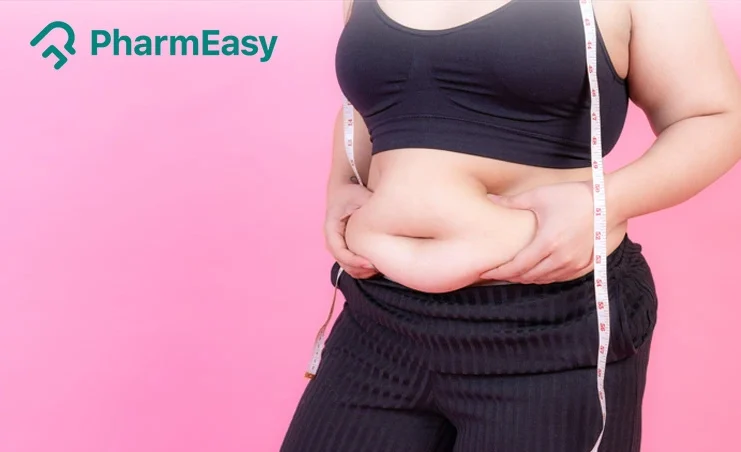
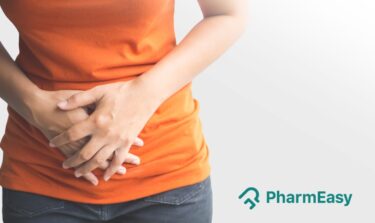
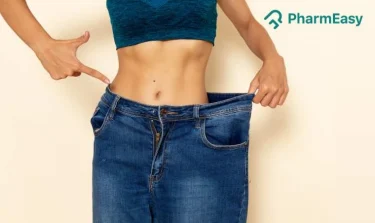
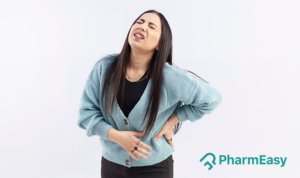
A PCOS belly or central obesity in PCOS refers to the tendency of women with PCOS to store excess fat around the lower abdomen. This is frequently connected to hormonal imbalance, namely elevated levels of insulin and androgens (male hormones). Unlike general weight gain, this fat distribution is more concentrated in the abdominal/belly region2. Studies suggest that up to 50-70% of women with PCOS struggle with insulin resistance2, which makes it harder for the body to use glucose effectively. This can directly contribute to the belly fat gain.
The following might help you understand whether your belly fat is related to PCOS or not:
PCOS belly fat is not just about appearance; it can also raise the risk of several health problems, such as:
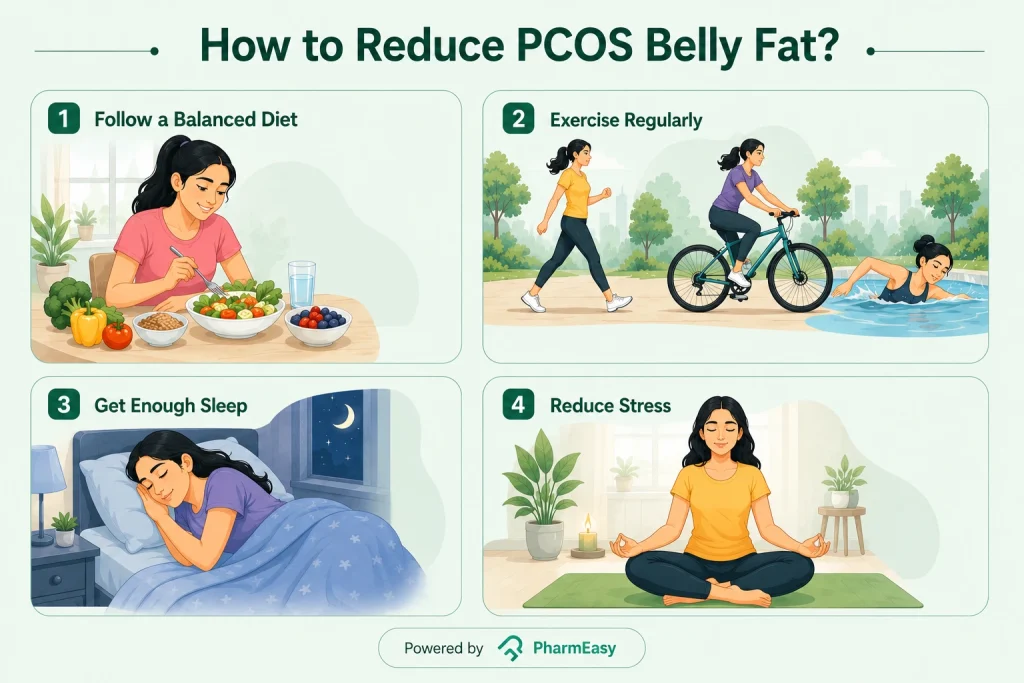
Reducing belly fat alone in PCOS is quite difficult and is not preferred. The recommended goal is overall weight loss. This mainly involves improving insulin sensitivity, maintaining a healthy diet, and staying physically active. Here are some helpful steps:
Note: PCOS belly fat can be difficult to lose, but consistent healthy lifestyle habits can lead to gradual and sustainable improvements over time.
While it is not possible to reduce fat from only one area of the body, regular exercise can help lower overall body fat, improve insulin sensitivity, and support weight management in people with PCOS. Here are a few exercises which might help you better understand how to reduce PCOS belly fat as a part of overall weight management:
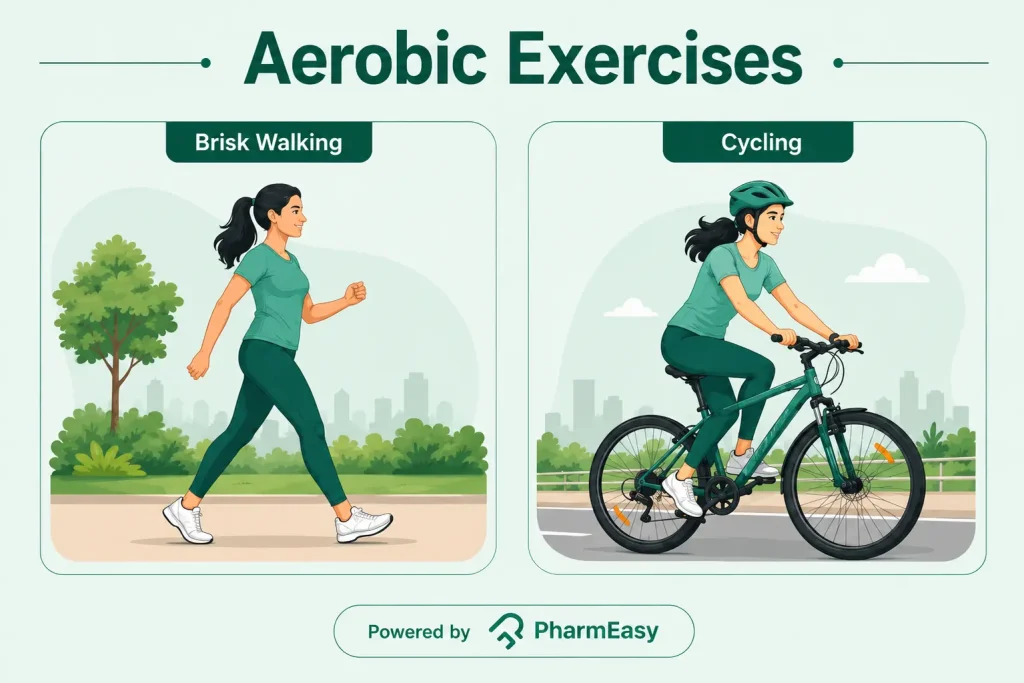
These exercises which increase heart rate and improve oxygen use in the body can be helpful in PCOS8.
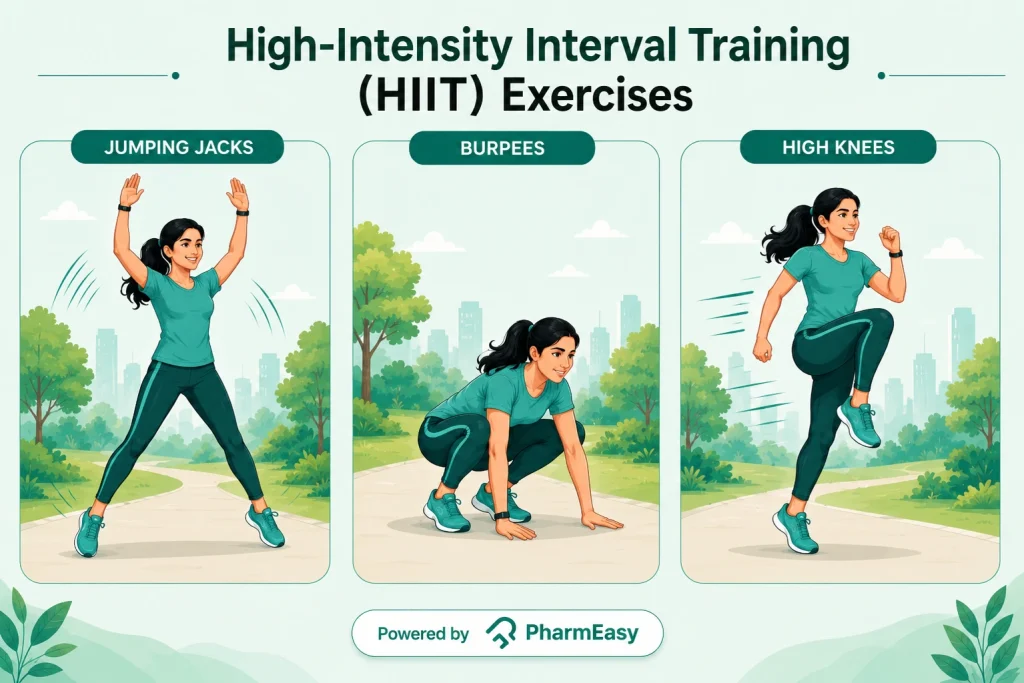
These exercises that help reduce insulin resistance and improve body mass index and body composition can be beneficial in PCOS8. They include:
Duration: The HIITs are usually recommended to be performed for 30 seconds, followed by 15 seconds of slow marching in place, then taking a break for 60 seconds and repeating the exercises 2 more times. This can be performed 3 times a week9.
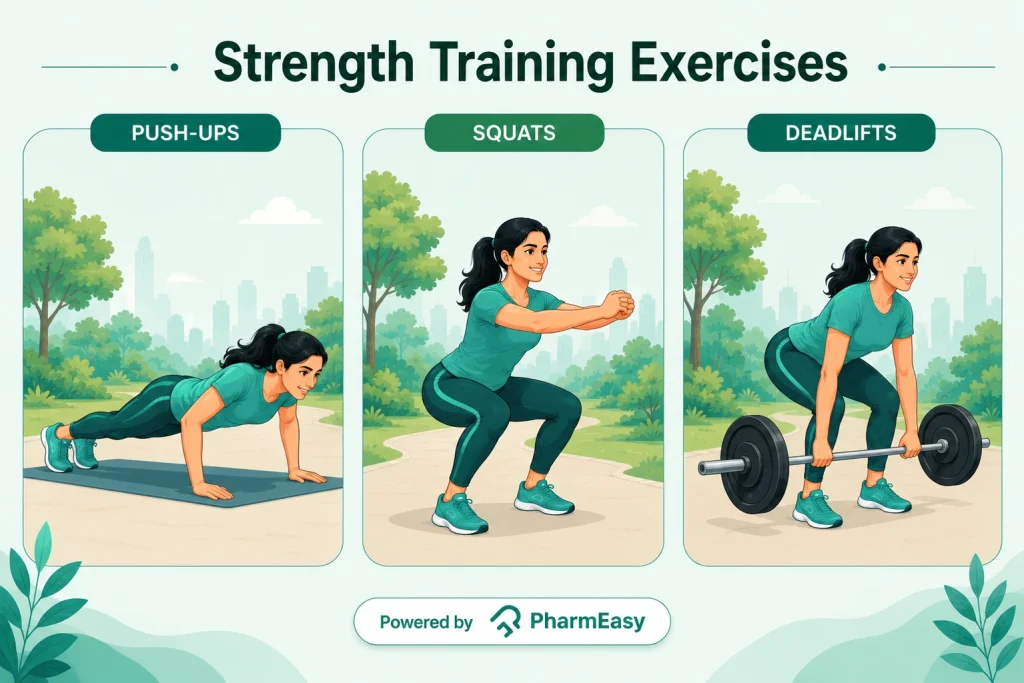
These exercises make the muscles strong and help reduce insulin resistance, thereby helping in lowering the body fat4,8. They include:
Duration: These are recommended to be performed two or three times a week4.
Diet plays a key role in managing abdominal fat and improving metabolic health in PCOS. The following are a few dietary tips that you may follow to manage the PCOS belly fat:
Yes, medical treatment can help manage belly fat in PCOS patients, but its effectiveness varies from person to person. The overall management of PCOS helps in managing the belly fat also.
Note: The information provided here is for general information only. Medical treatment should always be taken under the guidance of a certified doctor, as its overdose or improper use might cause severe side effects.
Though PCOS belly fat is manageable, certain mistake can interfere with outcomes.
You should consult a doctor if you notice rapid weight gain, irregular periods, difficulty managing symptoms despite lifestyle changes, or signs of insulin resistance like fatigue and increased cravings. Early medical support can help prevent long-term complications1,2.
Also Read: Simple Home Remedies to Help Ease PCOS Symptoms
PCOS belly fat is directly linked to hormonal and metabolic abnormalities, not just lifestyle. It is manageable with the correct combination of balanced nutrition, frequent exercise, stress reduction, and medical treatment as needed. Understanding your body is the first step toward making long-term and healthful changes.
Both running and walking can assist with PCOS; the choice depends on individual comfort, fitness level, and ability to maintain consistency.
Yes, PCOS belly fat can be naturally reduced by continuous lifestyle adjustments such as a low-glycaemic diet, regular exercise, adequate sleep, and stress management. These routines help to improve insulin resistance and hormonal balance, both of which are important contributors to reducing belly fat4,6.
PCOS usually does not cause a hard stomach; it may due to bloating, hormonal changes, or changes in abdominal fat. However, a persistent hard stomach should be checked by a doctor.
No, a PCOS belly is not permanent. It can improve and reduce over time with consistent lifestyle changes like a balanced diet, regular exercise, stress control, and appropriate medical treatment when needed4,6.
Yes, it is possible to obtain a flatter tummy with PCOS, but it typically requires long-term lifestyle adjustments. A well-balanced diet, regular exercise, adequate sleep, and stress management can all help improve insulin resistance and reduce belly fat. Body composition can improve significantly over time if approached correctly4,5.
1. Barber TM, Hanson P, Weickert MO, Franks S. Obesity and Polycystic Ovary Syndrome: Implications for Pathogenesis and Novel Management Strategies. Clin Med Insights Reprod Health. 2019;13:1179558119874042. doi:10.1177/1179558119874042 https://pubmed.ncbi.nlm.nih.gov/31523137/
2. Stańczak NA, Grywalska E, Dudzińska E. The latest reports and treatment methods on polycystic ovary syndrome. Annals of Medicine. 2024;56(1):2357737. doi:10.1080/07853890.2024.2357737 https://pubmed.ncbi.nlm.nih.gov/38965663/
3. Liu J, Liu Y, Li X. Effects of intestinal flora on polycystic ovary syndrome. Front Endocrinol. 2023;14:1151723. doi:10.3389/fendo.2023.1151723 https://pubmed.ncbi.nlm.nih.gov/36967808/
4. Li B, Li Y, Li X, et al. Effects of polycystic ovary syndrome on liver, heart, muscle, and pancreatic-related diseases. Front Endocrinol. 2026;17:1776584. doi:10.3389/fendo.2026.1776584 https://www.frontiersin.org/journals/endocrinology/articles/10.3389/fendo.2026.1776584/full
5. Xenou M, Gourounti K. Dietary Patterns and Polycystic Ovary Syndrome: a Systematic Review. Maedica. 2021;16(3). doi:10.26574/maedica.2020.16.3.516 https://pubmed.ncbi.nlm.nih.gov/34925611/
6. Basu B, Chowdhury O, Saha S. Possible link between stress-related factors and altered body composition in women with polycystic ovarian syndrome. J Hum Reprod Sci. 2018;11(1):10. doi:10.4103/jhrs.JHRS_78_17 https://pubmed.ncbi.nlm.nih.gov/29681710/
7. Walking for good health. 2023. doi: Available From: https://www.betterhealth.vic.gov.au/health/healthyliving/walking-for-good-health
8. Cavalcante DCB, Scandolara TB, Kogure GS, et al. Effects of physical activity in women with polycystic ovary syndrome: a systematic review and meta-analysis. Revista Brasileira de Ginecologia e Obstetrícia. 2025;47:e-rbgo56. doi:10.61622/rbgo/2025rbgo56 https://pubmed.ncbi.nlm.nih.gov/41098671/
9. HIIT (High Intensity Interval Training). 2021. doi: Available From: https://nutritionsource.hsph.harvard.edu/high-intensity-interval-training/
10. Weight loss – a healthy approach. 2024. doi: Available From: https://www.betterhealth.vic.gov.au/health/healthyliving/weight-loss-a-healthy-approach
11. French SA, Mitchell NR, Wolfson J, et al. Portion size effects on weight gain in a free living setting. Obesity (Silver Spring). 2014;22(6):1400-1405. doi:10.1002/oby.20720 https://pubmed.ncbi.nlm.nih.gov/24510841/
12. What are the treatments for PCOS? 2024. doi: Available From: https://www.nichd.nih.gov/health/topics/pcos/conditioninfo/treatments
13. Hazlehurst JM, Singh P, Bhogal G, Broughton S, Tahrani AA. How to manage weight loss in women with obesity and PCOS seeking fertility? Clinical Endocrinology. 2022;97(2):208-216. doi:10.1111/cen.14726 https://pubmed.ncbi.nlm.nih.gov/35319122/
Disclaimer: The information provided here is for educational/awareness purposes only and is not intended to be a substitute for medical treatment by a healthcare professional and should not be relied upon to diagnose or treat any medical condition. The reader should consult a registered medical practitioner to determine the appropriateness of the information and before consuming any medication. PharmEasy does not provide any guarantee or warranty (express or implied) regarding the accuracy, adequacy, completeness, legality, reliability or usefulness of the information; and disclaims any liability arising thereof.
Links and product recommendations in the information provided here are advertisements of third-party products available on the website. PharmEasy does not make any representation on the accuracy or suitability of such products/services. Advertisements do not influence the editorial decisions or content. The information in this blog is subject to change without notice. The authors and administrators reserve the right to modify, add, or remove content without notification. It is your responsibility to review this disclaimer regularly for any changes.


Comments

Leave your comment...
You may also like













Comments