




Fever During Pregnancy: Causes, Risks, Symptoms, Treatment & Prevention
By Dr. Charmi Shah +2 more

Medically reviewed by Dr. Charmi Shah
Last updated: Oct 1, 2026 Published on: Jun 12, 2026


Get,

to manage your symptom
Get your,

4 Cr+ families
benefitted

OTP sent to 9988776655



You’ve successfully subscribed to receive
doctor-approved tips on
Whatsapp

Get ready to feel your best.


Register to Avail the Offer
Send OTPBy continuing, you agree with our Privacy Policy and Terms and Conditions
Hi There,
Sign up on PharmEasy now!!


Trusted by 4 crore+ families

OTP sent to 9988776655
You have unlocked 25% off on medicines


Code: NU25

By Dr. Charmi Shah +2 more
Table of Contents
Fever during pregnancy can be concerning, especially when you’re unsure whether it’s a normal response to an infection or a sign of something more serious.
While a mild rise in body temperature is often manageable, persistent or high fever should never be ignored, as it may affect both maternal and foetal health1. Moreover, understanding the possible causes, warning signs, and safe management options can help you take the right steps with confidence.

In this blog, we’ll explore the causes, risks, symptoms, management, and prevention of fever during pregnancy.
A normal body temperature is around 37°C (98.6°F). Fever in pregnancy refers to a temporary increase in this basal body temperature, often as a result of the body fighting an infection or some illness2.
It is important to understand that fever itself is not a disease but a sign that the immune system is responding to an underlying condition. During pregnancy, persistent or high fever requires attention, as elevated body temperature may pose risks to both the mother and the developing baby, particularly in the early stages of pregnancy1.
Body temperature naturally fluctuates a little bit (by about 0.5°C) throughout the day, and a slight increase is usually normal3.
During pregnancy, a temperature of 38°C (100.4°F) or higher is generally considered a fever and may indicate an underlying infection or illness1,3. However, a slight increase in body temperature is common during early pregnancy due to higher progesterone levels5. This mild rise in temperature is normal and should not be confused with a fever, which is typically defined as a body temperature of 38°C (100.4°F) or higher.
While a mild fever that goes away on its own is usually not harmful, a high (above 41°C or 105.8°F) or persistent fever during pregnancy may pose some risks to the baby. This is particularly important in early pregnancy. Below are the possible risks4.
While these are some possible associations of high fever during pregnancy to foetal outcomes, scientific evidence for these is still limited and the risk is said to be low. These risks may be associated more so with the underlying infection or illness causing fever rather than the fever itself3,4.
Infections are the most common cause of fever during pregnancy. These may include4,6,7:
Less commonly, there may be some other causes of fever in pregnancy, such as1,6:
Note: Fever and hyperthermia are not the same. Fever is usually the body’s response to an infection or illness. In contrast, hyperthermia occurs when the body overheats due to external factors such as hot tubs, saunas, excessive exercise, or prolonged exposure to high temperatures1.
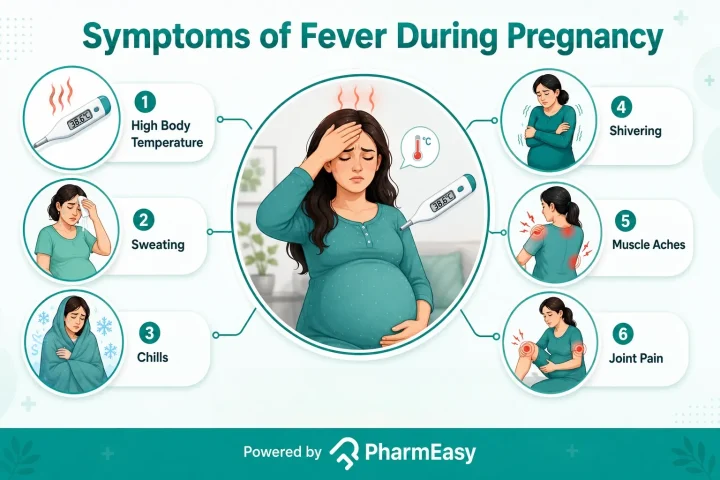
The most common sign of fever is a rise in body temperature. Fever may also be accompanied by other symptoms, including8:
Note: Many women wonder, Is fever a symptom of pregnancy? While fever is not considered a typical symptom of pregnancy, it may occur due to an underlying infection or illness and should be evaluated, especially if it is high or persistent.
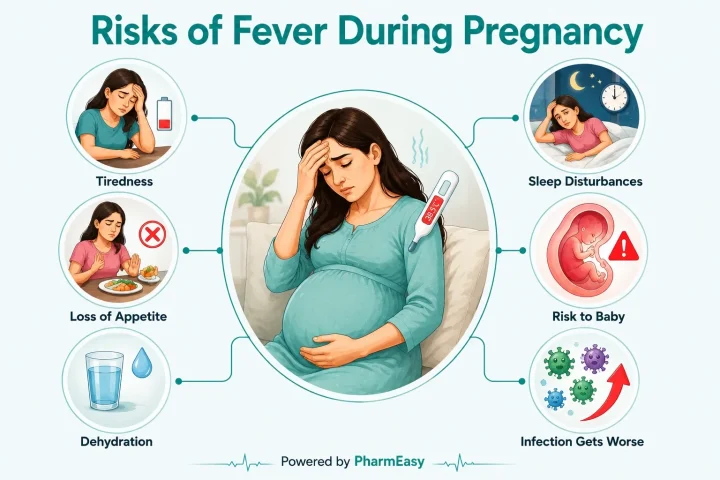
Fever can place additional stress on the body during pregnancy. While most fevers resolve without causing serious problems when addressed quickly, a high or persistent fever may increase the risk of certain complications for both the mother and the baby. Possible risks include:
Many expectant mothers search for how to treat fever during pregnancy but remember you must always consult your gynaecologist for the right solution. Generally, the treatment focuses on both reducing the fever and addressing its underlying cause. Common fever in pregnancy treatment/management approaches include:
Note: Ibuprofen and other non-steroidal anti-inflammatory drugs (NSAIDs) are generally not recommended during pregnancy, particularly after 20 weeks of gestation, unless specifically advised by a doctor1. Treatment of the underlying cause, such as antibiotics for bacterial infections or other appropriate therapies, may be necessary depending on the diagnosis3.
If you develop a fever during pregnancy, taking the right steps can help relieve symptoms, support recovery, and reduce the risk of complications.
While mild fevers often improve with home remedies for fever during pregnancy, such as rest and hydration, it is important to know what measures are safe during pregnancy and what practices should be avoided.
Important: Traditionally, some herbal teas containing turmeric, ginger etc were believed to be helpful, however, note that before trying any home remedies for fever during pregnancy, always check with your doctor to ensure it is safe for you and your baby, and does not impact any other medical conditions or medications you may have.
While not all causes of fever can be avoided, the following measures may help reduce your risk of infections and illness during pregnancy:
Also Read: Itching During Pregnancy: Causes, Symptoms, Treatment and More
You should contact your doctor as soon as possible if you have a fever during pregnancy, especially if you experience any of the following4,12,16:
Also Read: Anaemia In Pregnancy: Types, Symptoms, Causes, Diagnosis and Treatment
Fever during pregnancy is usually a sign that the body is fighting an infection or illness. While most fevers can be managed safely with immediate care, hydration, rest, and appropriate management, a high or persistent fever should never be ignored. Also, understanding the possible causes, symptoms, risks, and fever in pregnancy treatment/management options can help you take timely action and protect both your health and your baby’s well-being. If you develop a fever during pregnancy or have any concerns about your symptoms, contact your doctor for guidance and appropriate care.
Also Read: Viral Fever: Causes, Symptoms, and Treatment Options
A mild fever is often a sign that your body is fighting an infection and may not be harmful if addressed promptly1,2,4. However, pregnant women experiencing a high or ongoing fever should consult a doctor promptly, as timely diagnosis and treatment of the underlying cause are important for maternal and foetal health.
The Dolo medicine contains paracetamol (acetaminophen), which is generally considered the preferred fever-reducing medication during pregnancy1. However, it should be taken only as directed by your doctor and at the lowest effective dose.
A mild, temporary fever usually does not harm the baby. However, high or prolonged fever, particularly during the first trimester, may possibly increase the risk of certain complications, including birth defects, miscarriage, or preterm labour1,4.
Dehydration itself does not usually cause a true fever, but it can contribute to overheating (hyperthermia) and make you feel unwell17. Fever can also increase the risk of dehydration due to fluid loss through sweating18.
Stress may occasionally cause a slight increase in body temperature, sometimes referred to as psychogenic fever19. However, a significant fever is more commonly caused by an infection or another medical condition and should be assessed by a doctor1,19.
There may be a possible association between high fever during pregnancy and autism spectrum disorder in children. However, a direct connection has not been established, and more research is needed to better understand this relationship1.
High fever, especially during early pregnancy, has been associated with an increased risk of miscarriage1,4. Therefore, seeking timely medical care and treating the underlying cause of the fever may help reduce this risk.
Some women may experience mild side effects such as a low-grade fever, fatigue, or soreness at the injection site after receiving the flu vaccine20. These reactions are usually temporary and are generally considered less risky than getting influenza during pregnancy.
Disclaimer: The information provided here is for educational/awareness purposes only and is not intended to be a substitute for medical treatment by a healthcare professional and should not be relied upon to diagnose or treat any medical condition. The reader should consult a registered medical practitioner to determine the appropriateness of the information and before consuming any medication. PharmEasy does not provide any guarantee or warranty (express or implied) regarding the accuracy, adequacy, completeness, legality, reliability or usefulness of the information; and disclaims any liability arising thereof.
Links and product recommendations in the information provided here are advertisements of third-party products available on the website. PharmEasy does not make any representation on the accuracy or suitability of such products/services. Advertisements do not influence the editorial decisions or content. The information in this blog is subject to change without notice. The authors and administrators reserve the right to modify, add, or remove content without notification. It is your responsibility to review this disclaimer regularly for any changes.


Comments

Leave your comment...
You may also like

























Comments