




Healthy Noodles: Finding the Best Options for Your Health
By Dr. Malavika Athavale +2 more

Medically reviewed by Dr. Malavika Athavale
Last updated: Sep 15, 2026 Published on: Jul 26, 2023


Get,

to manage your symptom
Get your,

4 Cr+ families
benefitted

OTP sent to 9988776655



You’ve successfully subscribed to receive
doctor-approved tips on
Whatsapp

Get ready to feel your best.


Register to Avail the Offer
Send OTPBy continuing, you agree with our Privacy Policy and Terms and Conditions
Hi There,
Sign up on PharmEasy now!!


Trusted by 4 crore+ families

OTP sent to 9988776655
You have unlocked 25% off on medicines


Code: NU25

By Dr. Malavika Athavale +2 more
Table of Contents
If you’re in a mood for a delicious bowl of noodles but concerned about its health implications, you’re in the right place. Nowadays, there’s a growing trend towards healthier food choices including better alternatives for pasta and noodles as well. Options like whole wheat, beans, and vegetables are becoming popular in this category. This blog focuses on some healthier noodle options for those looking to make better dietary choices.
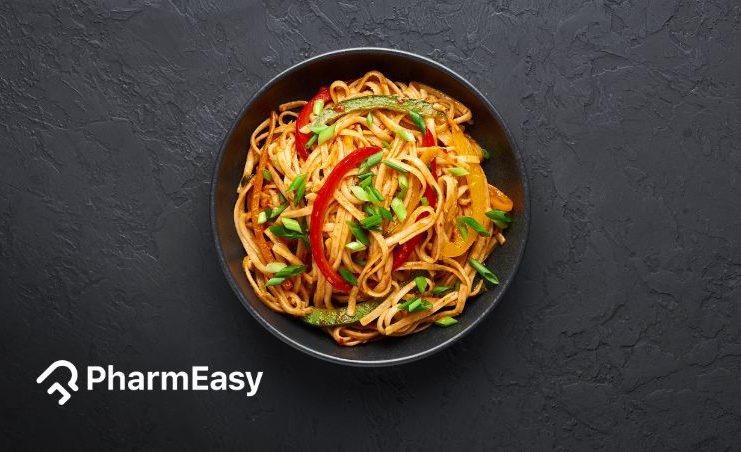
A wide range of healthy noodles exists. Each type has special benefits. Let’s get a closer look at their values and gains.
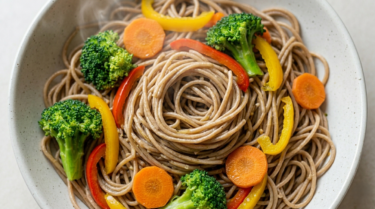
Whole-grain is a top pick for nutritious noodles. Let’s check out its nutrients and its gains.
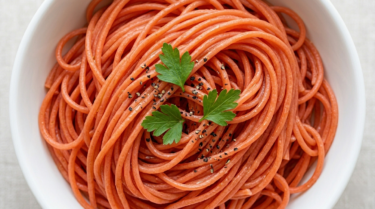
Chickpeas are a common ingredient used to make this, preferred for its rich taste and health benefits.
Red lentils or black beans are other healthy options that can be used in this category4.
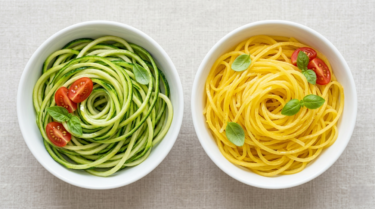
Veggie options like zucchini and spaghetti squash make noodles exciting and nutritious.
In my opinion, Shirataki noodles may aid in weight loss. Researchers11 believe that these noodles are extremely low in calories and carbohydrates, and due to their rich fibre content, they may keep you full for a longer duration, making them a potential diet food during a weight loss journey.
Dr. Siddharth Gupta, B.A.M.S, M.D (Ayu)
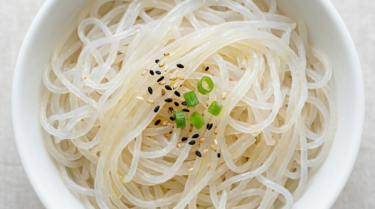
When looking for healthier noodle options, shirataki noodles are gaining a lot of popularity these days. But a lot of us don’t know what exactly these are. So, let’s find out.
“Shirataki”, also called miracle noodles, originally come from Japan. They’re clear, skinny or jelly-like strands, made from konjac yam6. They’re almost zero-calorie, few carbs and rich in fibre7. They’re loved by keto, low-carb, or gluten-free dieters.

Glucomannan is the fibre found in these noodles. It is known to have some great health effects. It may act as probiotic and provide healthy bacteria to gut. It can also help improve bowel movement and ease symptoms of constipation8.

Frequent intake of Glucomannan may help in your weight loss journey. It gels up when it soaks in water, so it keeps you full for longer. It’s mainly known to lower hunger and calorie intake9. But do consult a health care professional before adding it regularly to your diet.

Studies show that Glucomannan might help cut blood sugar levels. It might be helpful in managing blood sugar in people with diabetes and insulin resistance. It might also slow the stomach’s emptying. This leads to a slower rise in blood sugar levels after meals9.

Many suggest that Glucomannan can help cut cholesterol in the body. It may help reduce the amount of bad cholesterol in blood and thus can also be beneficial for your heart health10.
Shirataki noodles are long, white noodles made from a starch called Glucomannan. They are a part of Japanese cuisine and recently gaining popularity worldwide due to their health benefits. Researchers12 have found that Glucomannan fibre in the noodles may aid in lowering cholesterol by encouraging the liver to generate bile that metabolises cholesterol. This by-product is then removed through bowel movements.
Dr. Rajeev Singh, BAMS
Consuming Shirataki noodles can lead to digestive problems. Loose stools, bloating, and gas are some examples9.
To avoid side effects, add these to your diet bit by bit. Always drink lots of water when eating foods rich in Glucomannan, like these noodles.
Also Read: Chickpeas (Garbanzo beans): Uses, Benefits, Side Effects By Dr. Rajeev Singh
Next time you hear “noodles”, no need to feel guilty. There’s a wealth of healthy options for you to pick from. You can please your cravings while caring for your body.
From whole grain to chickpeas, vegetable to shirataki noodles, you have a plenty of choices. Choose your favourite, make a tasty dish, and relish the taste of health in every bite!
There are several types of healthy noodles available, such as whole wheat, chickpea, veggie, and red lentil noodles. This depends on your underlying health issues; always consult a doctor before anything new if you suffer from any chronic illness.
Yes, Healthy Noodles are essentially low in carbohydrates, making them a great option for people looking to lose weight or cut down on carbs, but always consult a doctor before anything new if you suffer from any chronic illness.
Egg noodles are high in protein and can be beneficial if you are aiming to incorporate more protein into your diet.
Depending on your dietary requirements, the best pasta for you may vary. For instance, if you are seeking a protein-rich diet, chickpea pasta would be an ideal choice.
1. Wongprawmas R, Sogari G, Menozzi D, et al. Determinants of US University Students’ Willingness to Include Whole Grain Pasta in Their Diet. 2021;18(6). https://www.mdpi.com/1660-4601/18/6/3173
2. Bojarczuk A, Kęszycka P, Marszałek K, Gajewska D. The Effect of Cooking and Cooling Chickpea Pasta on Resistant Starch Content, Glycemic Response, and Glycemic Index in Healthy Adults. Metabolites. 2024;14(11):585. doi:10.3390/metabo14110585 https://pubmed.ncbi.nlm.nih.gov/39590821/
3. Begum N, Khan QU, Liu LG, Li W, Liu D, Haq IU. Nutritional composition, health benefits and bio-active compounds of chickpea (Cicer arietinum L.). Front Nutr. 2023;10:1218468. doi:10.3389/fnut.2023.1218468 https://pubmed.ncbi.nlm.nih.gov/37854353/
4. Graf D, Monk JM, Wu W, Wellings HR, Robinson LE, Power KA. Red lentil supplementation reduces the severity of dextran sodium sulfate-induced colitis in C57BL/6 male mice. Journal of Functional Foods. 2020;64:103625. doi:10.1016/j.jff.2019.103625 https://www.sciencedirect.com/science/article/pii/S1756464619305493
5. Dionio JB. Formulation of Vegetable Noodles. International Journal for Multidisciplinary Research. 2024;6(3). doi:https://www.ijfmr.com/papers/2024/3/21094.pdf
6. Habla FA, Cambaliza CJ, Detera TF, Janer MLG, De Jesus G. Development of an Enriched Lubi-Lubi (Ficus pseudopalma) Noodles. jpair. 2012;10(1):35-55. doi:10.7719/jpair.v10i1.181 https://www.researchgate.net/publication/272774227_Development_of_an_Enriched_Lubi-Lubi_Ficus_pseudopalma_Noodles
7. Shirataki Noodles. 2022. doi:https://fdc.nal.usda.gov/food-details/2396564/nutrients
8. Chen HL, Cheng HC, Wu WT, Liu YJ, Liu SY. Supplementation of Konjac Glucomannan into a Low-Fiber Chinese Diet Promoted Bowel Movement and Improved Colonic Ecology in Constipated Adults: A Placebo-Controlled, Diet-Controlled Trial. Journal of the American College of Nutrition. 2008;27(1):102-108. doi:10.1080/07315724.2008.10719681 https://pubmed.ncbi.nlm.nih.gov/18460488/
9. Fang Y, Ma J, Lei P, et al. Konjac Glucomannan: An Emerging Specialty Medical Food to Aid in the Treatment of Type 2 Diabetes Mellitus. Foods. 2023;12(2):363. doi:10.3390/foods12020363 https://pmc.ncbi.nlm.nih.gov/articles/PMC9858196/
10. Ho HVT, Jovanovski E, Zurbau A, et al. A systematic review and meta-analysis of randomized controlled trials of the effect of konjac glucomannan, a viscous soluble fiber, on LDL cholesterol and the new lipid targets non-HDL cholesterol and apolipoprotein B ,. The American Journal of Clinical Nutrition. 2017;105(5):1239-1247. doi:10.3945/ajcn.116.142158 https://pubmed.ncbi.nlm.nih.gov/28356275/
11.Mohammadpour S, Amini MR, Shahinfar H, Tijani AJ, Shahavandi M, Ghorbaninejad P, Djafarian K, Shab-Bidar S. Effects of glucomannan supplementation on weight loss in overweight and obese adults: a systematic review and meta-analysis of randomized controlled trials. Obes Med. 2020;19:100276. doi:10.1016/j.obmed.2020.100276. https://www.sciencedirect.com/science/article/abs/pii/S2451847620300968
12. Jian X, Jian S, Deng B. Konjac glucomannan: A functional food additive for preventing metabolic syndrome. J Funct Foods. 2024;115:106108. doi:10.1016/j.jff.2024.106108.https://www.sciencedirect.com/science/article/pii/S1756464624001105
Disclaimer: The information provided here is for educational/awareness purposes only and is not intended to be a substitute for medical treatment by a healthcare professional and should not be relied upon to diagnose or treat any medical condition. The reader should consult a registered medical practitioner to determine the appropriateness of the information and before consuming any medication. PharmEasy does not provide any guarantee or warranty (express or implied) regarding the accuracy, adequacy, completeness, legality, reliability or usefulness of the information; and disclaims any liability arising thereof.
Links and product recommendations in the information provided here are advertisements of third-party products available on the website. PharmEasy does not make any representation on the accuracy or suitability of such products/services. Advertisements do not influence the editorial decisions or content. The information in this blog is subject to change without notice. The authors and administrators reserve the right to modify, add, or remove content without notification. It is your responsibility to review this disclaimer regularly for any changes.
 1
1 
Comments

Leave your comment...
You may also like




















Comments