




Cauliflower (Gobi): Uses, Benefits, Side Effects, and More!
By Dr Rajeev Singh +2 more

Medically reviewed by Dr Rajeev Singh
Last updated: Apr 15, 2026 Published on: Jul 22, 2022


Get,

to manage your symptom
Get your,

4 Cr+ families
benefitted

OTP sent to 9988776655



You’ve successfully subscribed to receive
doctor-approved tips on
Whatsapp

Get ready to feel your best.


Register to Avail the Offer
Send OTPBy continuing, you agree with our Privacy Policy and Terms and Conditions
Hi There,
Sign up on PharmEasy now!!


Trusted by 4 crore+ families

OTP sent to 9988776655
You have unlocked 25% off on medicines


Code: NU25

By Dr Rajeev Singh +2 more
Table of Contents
Cauliflower is a part of the cruciferous family of vegetables, like broccoli and cabbage. It is an important vegetable with various uses in foods and dishes. Because of this, cauliflower is grown across the world. Cauliflower is packed with nutrients and active phytochemicals that might have numerous valuable activities1. Cauliflower may be a valuable source of many nutrients and comes under the top 10 economic vegetables around the world. However, the number of nutrients varies depending upon the method of cultivation2. Besides being a part of your favourite foods and dishes, cauliflowers might also possess some health advantages.
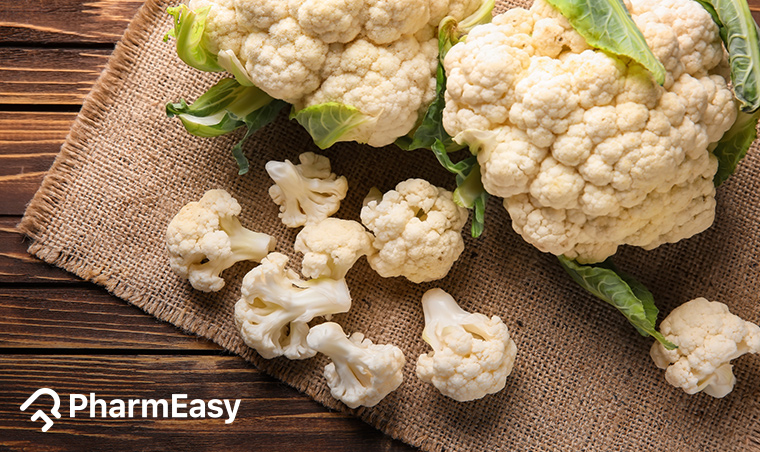
To find out more about the potential health-promoting benefits of cauliflower, continue reading!
Cauliflower might provide plenty of nutrients like vitamins, minerals, and other active phytochemicals. The nutritional value of cauliflower per 100 grams of serving is given below.
Cauliflower contains active phytochemicals. In addition, cauliflower might have the following properties:
Cauliflower might provide many health-promoting benefits because of the presence of various nutrients and phytochemicals. The potential benefits of eating cauliflower for managing different health conditions are given below.

Intake of cauliflowers might be beneficial for heart health. Cruciferous vegetables might have promising results in preventing the risk of heart diseases. Cauliflower juice can be taken as a supplement to avoid the risk of heart disease5. You can also make cauliflower a part of your daily diet to keep your heart healthy. If you feel like you or someone you know is suffering from heart disease, contact your healthcare provider immediately and get medical help.

Consuming cauliflower might help to prevent the risk of several cancers as per various human trials. Cauliflowers may be beneficial in avoiding the risk of breast cancer. Cauliflower might also be effective in reducing the risk of prostate and lung cancer5. You need to contact your healthcare provider and get a consultation before using any herb for disease conditions.

Type 2 diabetes is a condition that is common across the world. High blood glucose levels cause the development of diabetes. Cauliflower might stop the enzymes that are responsible for diabetes, according to a laboratory study. Therefore, the consumption of cauliflower might help you prevent the early stages of diabetes4. Before using cauliflowers to control your diabetes, consult your healthcare provider. Eating a healthy diet might benefit you in managing your blood glucose. Still, it is best to follow the doctor’s advice and the prescribed treatment promptly.
Though there are studies that show the benefits of cauliflower in various conditions, these are insufficient, and there is a need for further studies to establish the true extent of the benefits of cauliflower on human health.
In my experience, I have observed that cauliflower possesses notable qualities that may effectively enhance our intestinal defences. It may also aid in potentially reducing the likelihood of developing inflammatory bowel diseases such as ulcerative colitis and minimising the risk of a leaky gut11.
Dr. Siddharth Gupta, B.A.M.S, M.D (Ayu)
Cauliflowers are widely consumed as a part of daily diet across the globe. You can eat them:
You must consult a qualified doctor before taking any herbal supplements. Do not discontinue or replace an ongoing treatment of modern medicine with an Ayurvedic/herbal preparation without consulting a qualified doctor.
Cauliflower is generally consumed as a part of the daily diet. It may be safe when taken in foods and dishes. However, people react differently to some foods and vegetables. Contact your healthcare provider for consultation if you experience any severe or mild side effects after consuming cauliflower.
According to what I’ve seen, cauliflower contains sulforaphane, which may support the liver’s detoxification process. Thus, cauliflower might help improve the liver’s ability to eliminate toxins from the body11.
Dr. Rajeev Singh, BAMS
Also Read: Bottle Gourd: Uses, Benefits, Side Effects and More!
Some of the precautions to take with cauliflower are:
Always consult your Ayurvedic physician before taking cauliflower in the above-mentioned cases.
I would like to highlight an additional benefit of cauliflower. It is rich in vitamin C that may play a crucial role in supporting skin health, aiding in wound healing, and maintaining gum health.
Dr. Smita Barode, B.A.M.S, M.S.
Also Read: Methi (Fenugreek): Uses, Benefits, Side Effects, and More!
Cauliflower belongs to the cruciferous family of vegetables. Cruciferous vegetables might induce certain enzymes responsible for metabolizing foreign substances in the body5. Taking cauliflower with certain medications might speed up their metabolism and removal from the body.
Example isoniazid (a drug used for TB; tuberculosis), hydralazine and endralazine (drugs for reducing blood pressure), sulphonamides (antibacterial drugs), dapsone (anti-inflammatory drug), procainamide (a drug used for arrhythmia, a heart disease) and nitrazepam (sedative drug)8.
Therefore, you must consult your doctor before taking cauliflower if you are taking any medicines.
Also Read: Coconut: Uses, Benefits, Side Effects and More!
Cauliflowers might have many health benefits. Eating cauliflowers regularly might help you lower the risk of certain cancers, heart diseases, and diabetes. Cauliflowers may also have antioxidant benefits as well as other nutritional benefits1,3,5. You can add cauliflowers to your everyday diet to get these health benefits.
Cauliflowers are a rich source of dietary fibre and vitamin C that might offer many health benefits. Cauliflowers also contain macronutrients like carbohydrates, fats, and proteins. Minerals like iron, calcium, magnesium, potassium, zinc, copper, phosphorous and fluoride are also present. Besides Vitamin C, cauliflower also contains vitamins like B1, B2, B3, and B53.
Cauliflower is high in fibre content and contains low calories3. Foods containing high fibre might help manage weight as they might keep people full for a more extended period and help prevent overeating9.
Cauliflower contains plenty of vitamin C3. Vitamin C may be very good for promoting skin health. Vitamin C may help protect the skin from damage caused by overexposure to ultraviolet radiation (UV). It may help prevent signs of premature skin ageing caused by UV rays exposure. Vitamin C may also promote collagen formation and improve skin elasticity10.
Adding cauliflower to your diet might help you manage your blood glucose and manage the early stages of diabetes4. However, contact your healthcare provider for a consultation before using any herb or vegetable to manage your symptoms. Following the doctor’s advice is necessary to prevent the condition from worsening.
Disclaimer: The information provided here is for educational/awareness purposes only and is not intended to be a substitute for medical treatment by a healthcare professional and should not be relied upon to diagnose or treat any medical condition. The reader should consult a registered medical practitioner to determine the appropriateness of the information and before consuming any medication. PharmEasy does not provide any guarantee or warranty (express or implied) regarding the accuracy, adequacy, completeness, legality, reliability or usefulness of the information; and disclaims any liability arising thereof.
Links and product recommendations in the information provided here are advertisements of third-party products available on the website. PharmEasy does not make any representation on the accuracy or suitability of such products/services. Advertisements do not influence the editorial decisions or content. The information in this blog is subject to change without notice. The authors and administrators reserve the right to modify, add, or remove content without notification. It is your responsibility to review this disclaimer regularly for any changes.
 2
2 
Comments

Leave your comment...
You may also like

























Comments