Get,

Free Doctor Tips

to manage your symptom

Get your,

FREE Doctor Tips Now!!

4 Cr+ families

benefitted

Enter your Phone Number

+91

|

Enter a valid mobile number

Send OTP

Verify your mobile number

OTP sent to 9988776655

CONGRATULATIONS!!!

You’ve successfully subscribed to receive

doctor-approved tips on Whatsapp


Get ready to feel your best.

Hi There,

Download the PharmEasy App now!!

AND AVAIL

AD FREE reading experience
Get 25% OFF on medicines
Banner Image

Register to Avail the Offer

Send OTP

By continuing, you agree with our Privacy Policy and Terms and Conditions

Success Banner Image
Verify your mobile number

OTP sent to 9988776655

Comments

Subscribe
Notify of
guest
0 Comments
Inline Feedbacks
View all comments

Leave your comment here

Your email address will not be published. Required fields are marked *

25% OFF on medicines

Collect your coupon before the offer ends!!!

COLLECT

Chamomile (Matricaria Recutita): Uses, Benefits, Side Effects & More!

By Dr Siddharth Gupta +2 more

Join Health Talk by PharmEasy on WhatsApp

Introduction

Chamomile is a plant that has been in use for long for its health benefits. Mankind has known this plant, studied it, and utilized it since the medieval ages1. The chamomile plant belongs to the Asteraceae or  Compositae family which is also known as the Daisy family. The generic name chamomile which is the name popularly used comes from the words ”Khamai”, which means on the ground, and ”melon” which means an apple in Greek. Chamomile term is used collectively to refer to many plants that belong to the family Asteraceae which includes the

  • German or Hungarian chamomile (Matricaria recutita, or Chamomilla recutita)
  • English or Roman chamomile (Chamaemelum nobile)
  • Moroccan chamomile, Moroccan blue chamomile, corn chamomile, dyer’s chamomile, rayless chamomile, and scentless chamomile2,3,4

The German and Roman chamomile are known as the true chamomile due to their beneficial properties. They are very similar in appearance but differ slightly in the chemical content of the oils obtained from them2,3,4. The German chamomile is the more commonly used of the two5.  
chamomile benefits

Did you know?

  • Chamomile has been used for centuries to treat various ailments, including digestive issues and skin conditions. source: NCCIH 
  • Chamomile may have anti-inflammatory properties and can help reduce inflammation in the body. source: NCCIH 
  • Chamomile may have antimicrobial properties and can help fight against certain bacteria and fungi. source: NCCIH 
  • Chamomile may help improve sleep quality and reduce insomnia symptoms. source: NCCIH 
  • Chamomile is commonly consumed as a tea and is known for its calming and sleep-inducing effects. source: NCCIH
Advertisement

Where is Chamomile Found?

Chamomile is authentic to the Southern and Eastern parts of Europe. It is grown in:

  • Germany
  • Hungary
  • Russia
  • Brazil
  • France
  • Yugoslavia
  • North Africa
  • Australia, and
  • New Zealand.

It found its way to India during the rule of the Mughal emperors and is currently grown in the Northern parts of the country. The most prominent producer of this plant is Hungary1.

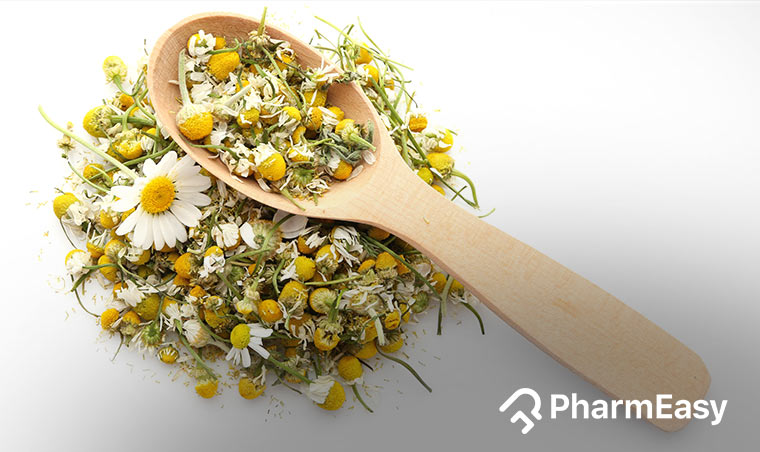
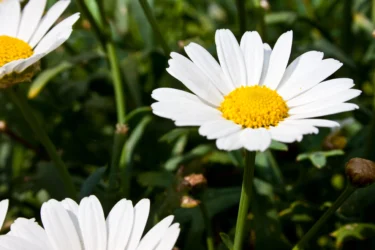
The flowers and leaves of the plant are usually used, the flowers being the part that is most used. The flowers can be used fresh or dried. The plant is harvested during the flowering phase on a sunny day during the morning time. The flower of this plant has a characteristic fruity fragrance and is daisy-like in appearance. It has a yellow center that is around 1- 1.5 cm wide and white petals5,6

Nutritional Value of Chamomile

Macronutrients Per 1 Cup (8 fl oz) of Chamomile Tea Brewed:

  • Energy: 2.37 kcal
  • Total fat: 0
  • Cholesterol: 0
  • Total Carbohydrate: 0.47 g
  • Protein: 0
  • Polyunsaturated fatty acid: 0.01 g

Micronutrients Per 1 Cup (8 fl oz) of Chamomile Tea Brewed:

Potential Uses of Chamomile

This ayurvedic herb has diverse beneficial properties that help with its potential uses which are discussed as follows:

Advertisement

1. Potential Uses of Chamomile for the Brain

brain
  • Potential Uses of Chamomile for Sleep Disorders: Chamomile tea is usually may be taken in cases of insomnia a sleep disorder marked by lack of sleep. The flavonoids and apigenin present in the herb might bind to a receptor in the brain (benzodiazepine receptor) which may causes slowing down of brain activity and induce sleep.  It might be used in children who are unable to fall asleep due to severe pain and in cases of difficulty falling asleep due to nervousness or anxiety2,3.
  • Potential Uses of Chamomile for Anxiety: Usually, the oil extracted from the flowers is inhaled as vapours and it might produce a calming effect and reduces pain as well. Thus, it may show beneficial effects in mild to moderate anxiety disorder2,3.
  • Potential Uses of Chamomile for Epilepsy: Animal studies have shown that chamomile delays the start of a seizure episode2. Human trials are required to establish this effect of chamomile on humans.
  • Potential Uses of Chamomile in Headache: The inhaled vapours produce calmness and reduce pain and can be used in headaches that appear before seizures, during nervousness, and during episodes of hysteria3.
  • Potential Uses of Chamomile in Anorexia Nervosa: Anorexia nervosa is an eating disorder where a person experiences lack of appetite. Chamomile oil vapors may elevate mood, reduce nervousness, and stimulate the appetite and might thus be used in persons with anorexia nervosa3

However, since insufficient studies are available, for conditions for brain it is important to consult your medical practitioner for advice as the herb may have different effects on individuals.

2. Potential Uses of Chamomile in Common Cold

cough and cold

Chamomile tea can be taken to relieve the symptoms of a common cold. Another way in which the plant can be used for this purpose is by boiling the flowers in water and inhaling the steam so produced8.  You must consult a doctor for a cold.

3. Potential Uses of Chamomile for the Heart

heart

It is said that persons who consume more flavonoids might have a lesser risk of death due to coronary heart disease. Chamomile has a good amount of flavonoids, but more studies must be done to validate how useful it is in preventing coronary heart disease2.

4. Potential Uses of Chamomile for Diabetes

Diabetes

In studies, chamomile has been found to help reduce blood sugar levels and diabetic complications by lowering blood sugar levels and increasing the storage of liver glycogen. Studies have also found it to be protective of the pancreas. However, more studies need to be done to determine its usefulness in the treatment of diabetes2.

5. Potential Uses of Chamomile for the Gut

gut health

Consumption of chamomile tea between meals might help to relieve heartburn, gastritis, gastric spasms (excessive gut muscle contraction), and flatulence3,9.

I strongly recommend the use of chamomile to relieve diarrhoea and, on the contrary, constipation too. Chamomile has the potential to assist with these problems by soothing the irritated or inflamed inner lining of your digestive tract21.

Dr. Rajeev Singh, BAMS

6. Potential Uses of Chamomile for the Bones

bone health

In osteoporosis, where the bone mass reduces, chamomile extract stimulates the bone-forming cells by interacting with the estrogen receptors (anti-estrogen effect)  and may help improve the condition2. It is always better to consult a doctor before you use chamomile for your bone problems there may be several underlying causes that may need to to analyzed before prescribing chamomile for its benefits.

7. Potential Uses of Chamomile for the Skin

good for skin

In eczema, where there are patches of irritated, inflamed, and cracked skin, external application of chamomile has been found to be useful in studies. Chamomile might be useful in case of bacterial infections, wounds, sunburns, corns, patchy areas on the scalp due to cradle caps used in infants, and skin irritation post-radiation therapy. Chamomile oil extract can be massaged, or a cloth can be soaked in chamomile tea and applied to the affected area. It might also be used as a cosmetic due to its anti-inflammatory and antioxidant properties2,3.

8. Potential Uses of Chamomile for Wound Healing

wound healing

Its anti-inflammatory and antimicrobial actions are proven to help in wound healing2,10. However these benefits need further studies to establish this fact.

9. Potential Uses of Chamomile for Inflammatory Conditions

inflammation

Chamomile might be useful in reducing inflammatory pains like sciatica and neuralgias, any types of swellings like abscesses, and inflammation of the vaginal lining (vaginitis), and lining of the mouth. For relief in vaginitis, a chamomile douche may be used2. It is, however, essential to consult your doctor before taking chamomile for such conditions.
10. Potential Uses of Chamomile as an Antimicrobial

chamomile

Chamomile may have an antibacterial effect and is therefore useful for improving the health of the oral cavity2. A professional dentist might be the best person to advise.

11. Potential Uses of Chamomile in Cancer

cancer

Many animal studies have shown that chamomile aids in the reduction of cancer growth. This may be due to the apigenin chemical which is present in chamomile. Currently, human studies are being conducted on cancer with chamomile extracts9. Moreover, for cancer conditions you must be diagnosed and treated by a doctor.

I strongly recommend the use of chamomile mouthwash. Mouth sores brought on by cancer chemotherapy and radiation therapies may be relieved by using chamomile mouthwash. Your mouth’s lining is calmed by the calming effects of chamomile. Both gingivitis (gum disease) and sores may be effectively managed with mouthwashes containing chamomile tincture as well as caraway, clove oil, Echinacea, menthol, molmol, peppermint and sage21.

Dr. Siddharth Gupta, B.A.M.S, M.D (Ayu)

12. Potential Uses of Chamomile for the Kidneys

kidney health

Chamomile may be used for kidney stones and bladder stones alone or in combination with other herbs in the  Unani system of medicine in India4. Animal studies have demonstrated a mild increase in urine formation as the flowers of Roman chamomile show urine-stimulating properties4,11. However, we need more studies to provide scientific evidence for these benefits of chamomile.

13. Potential Uses of Chamomile as a Mosquito Repellent

Mosquito Repellent

Studies have shown that the oil extract of chamomile has very good mosquito-repellent activity. Out of all the chamomile flower variants, the German chamomile has the maximum mosquito-repellent property12.  

Although studies show the benefits of chamomile in different health conditions, this information is insufficient. Hence, there is a need for further studies to establish the true extent of the benefits of chamomile on human health. Furthermore, every person may respond differently to these herbs. Therefore, it is important to consult a doctor before using chamomile for any medical condition.

How to Use Chamomile?

  • Most commonly chamomile is consumed as tea few flowers are added to boiling water for 5-10 min and strained. The clear liquid obtained is chamomile tea3.
  • Essential oils obtained from flowers can be used via inhalation or as massage oils.  
  • A chamomile tincture is made by mixing flowers at room temperature in ethanol-water and then evaporated. Few drops of this are added to water and can be used for gargling3.
  • Chamomile extract is prepared by a method just like the tincture with the only difference being the ratio of ethanol to water3.
  • Viscous chamomile extracts are added to make gels, ointments, and creams3.
  • Dry chamomile extracts are used to make pills, capsules, and tablets3.

You must consult a qualified doctor before taking any herbal supplements. Do not discontinue or replace an ongoing treatment of modern medicine with an ayurvedic/herbal preparation without consulting a qualified doctor. 

Side Effects of Chamomile

US-FDA includes chamomile in its GRAS (Generally Recognized as Safe) list, but the safety in young children, during pregnancy or breastfeeding, in disease of the liver and kidney has yet to be established by conducting studies. Some of the know side effects are as follows:

  • Contact dermatitis is a condition where a person develops itching, redness, and swelling on skin when they come in contact with something that their allergic to. This is seen as a side effect to many plants of the Compositae or Asteraceae family including chamomile. If a person is allergic to some plants of the same family like ragweed, chrysanthemums, etc., then the chances of contact dermatitis with chamomile are higher too2.
  • Persons with a history of allergies like seasonal allergic rhinitis (stuffy nose due to allergies) or asthma, may develop conjunctivitis and swelling of the eyes on using chamomile applications around the eye or on consuming chamomile tea2,13
  • Consuming very concentrated tea can induce vomiting2.
  • It can cause thinning of the blood leading to spontaneous bleeds in the body14.   
  • It is known to have a sedative effect; therefore, consumption in the morning, should be avoided if the person is expected to be carrying out activities like driving, using machinery, etc15

Precautions to Take with Chamomile

  • Pregnancy: Chamomile is contraindicated in pregnancy as it may cause the uterus to contract and can induce an abortion or pre-term labour16.
  • Breastfeeding Women: Safety during breastfeeding is not yet fully established therefore, it shouldn’t be self-medicated. Consult a gynaecologist before taking any chamomile formulation2.
  • Children/Infants: Traditionally, chamomile has been used in infants and young children for various conditions, but safety data is not yet fully established. Therefore, one must avoid usage in this age group2.

Interactions of Chamomile with Other Drugs

  • Anti-coagulant Drugs: Chamomile is a blood thinner and can lead to bleeds if given with anticoagulants e.g., warfarin14.
  • Anti-platelet Drugs: As chamomile is a blood thinner, it is best avoided when the person is taking anti-platelet drugs e.g., aspirin, clopidogrel, etc14.
  • Sedative Drugs: Chamomile is well known for reducing pain as it brings about calmness, and induces sleep; therefore, monitoring is needed if the person is already on drugs that slow down the brain e.g., sedatives or tranquilizers15.
  • Drugs Metabolized by the Enzyme CYP-450: CYP-450 is an enzyme in the liver that metabolizes many drugs in the body like diazepam, amiodarone, etc. Thus, taking chamomile might increase the levels of these drugs in the body leading to toxicity. Therefore, caution is to be taken15.

Also Read: Nagarmotha (Cyperus rotundus): Uses, Benefits, Side Effects & More!

Conclusion

Chamomile is a time-tested herb with a broad range of potential benefits, from promoting sleep and reducing anxiety to supporting gut health, wound healing, and skin conditions. Its anti-inflammatory, antimicrobial, and antioxidant properties make it a valuable natural remedy across multiple systems of the body. However, most evidence remains preliminary, with many findings limited to animal studies. While generally safe for adults, caution is advised during pregnancy, breastfeeding, and in children, and it may interact with blood thinners and sedatives. Consulting a healthcare professional before use remains essential.

Also Read: Psyllium Husk (Isabgol): Uses, Benefits & Side Effects

Frequently Asked Questions (FAQs)

What is Chamomile called in hindi? 

In Hindi chamomile is called Babuna1.

What does chamomile looks like? 

The chamomile flower is the part that is used most, and it has a yellow center (1 – 1.5 cms wide) with white petals5

When to harvest chamomile? 

The flower of this plant should be harvested near full bloom which is for a period of 3 – 6 weeks during March-April1,17

How long does dried chamomile last? 

In an airtight glass at room temperature, chamomile can be stored for long-term3.

What is the difference between chamomile and daisy? 

Chamomile belongs to the daisy family (Asteraceae or Compositae) which includes a lot more plants as well4.

What is the difference between chamomile and dandelion?  

Chamomile (Matricari recutita) and Dandelions (Taraxacum officinale) both belong to the same Asteraceae family but are different species4,18.

What is the difference between chamomile and feverfew? 

Chamomile (Matricari recutita) and Feverfew (Tanacetum parthenium) both belong to the same Asteraceae family but are different species4,19

Is chamomile caffeine-free? 

Chamomile mainly contains vitamin A, vitamin B, magnesium, manganese, potassium, calcium, iron copper, zinc, and has around 0.47g of carbohydrates but no caffeine. Therefore, it is caffeine-free7

Is chamomile a blood thinner? 

Chamomile has some amount of coumarin which is a chemical that prevents blood from clotting thus  it is a blood thinner and not to be taken if patients are on anticoagulants and antiplatelet drugs due to the risk of bleeding14. We may need further studies that can give evidence for these benefits on humans. Consult your doctor for better advice.

Does chamomile repel mosquitoes? 

Chamomile contains chemicals that have insecticidal action. Therefore, can be used as a mosquito repellant11.

Is chamomile good for dogs? 

It is useful in dogs also, for various skin conditions20.

Is chamomile good for babies? 

Traditionally it has been in use in babies in the past but currently, the safety is not fully established therefore use must be avoided2

Is it okay to drink chamomile tea every day? 

Yes, in adults if they are not on medications that interact with Chamomile, pregnant, breastfeeding,  or taking drugs metabolized by CYP-450 enzyme, etc2,15,16

References

  1. Ompal Singh, Zakia Khanam; Chamomile (Matricaria chamomilla L.): An overview. Pharmacognosy Reviews.  2011 Jan-June; 5 (9); 82-95. Available from: https://www.researchgate.net/publication/51808400_Chamomile_Matricaria_chamomilla_L_An_overview  
  2. Janmejai K Srivastava, Eswar Shankar; Chamomile: A herbal medicine of the past with bright future. Molecular Medicine Reports. 2010 August; 3 (6); 895-901. Available from: https://www.ncbi.nlm.nih.gov/pmc/articles/PMC2995283/  
  3. American Botanical Council. Introduction to Chamomile [Internet]. Available from: http://abc.herbalgram.org/site/DocServer/CRCPRESSChamomile-Section_1.5978-1-4665-7759-6.pdf?docID=6362  
  4. American Botanical Council. Chamomile [Internet]. Available from: https://www.herbalgram.org/resources/herbalgram/issues/108/table-of-contents/hg108-herbpro-chamomile/  
  5. Jalal Bayati Zadeh, Nasroallah Moradi Kor; Chamomile (Matricaria recutita) As a Valuable Medicinal Plant. International Journal of Advanced Biological and Biomedical Research. 2014; 2 (3); 823-829. Available from: http://www.ijabbr.com/article_7246_42b235e991c2c3676a7df58e7f9ec739.pdf  
  6. University of Texas at El Paso. Herbal safety. [Internet]. Available from: https://www.utep.edu/herbal-safety/herbal-facts/herbal%20facts%20sheet/chamomile.html  
  7. University of Rochester Medical Center. Health Encyclopedia. [Internet]. Available from: https://www.urmc.rochester.edu/encyclopedia/content.aspx?contenttypeid=76&contentid=14545-3  
  8. ScienceDirect. Viral Upper Respiratory Infection. [Internet] Available from:  https://www.sciencedirect.com/topics/pharmacology-toxicology-and-pharmaceutical-science/viral-upper-respiratory-tract-infection
  9. P.N. Ravindran, M. Divakaran; 27 – Other herbs and spices: achiote to Szechuan pepper. ScienceDirect. 2014 March; (); 534-556. Available from: https://www.sciencedirect.com/science/article/pii/B9780857090409500278  
  10. Renata Kolanos, Szabina A. Stice; Chapter 44 – German chamomile. ScienceDirect. 2019 January; (); 757- 772. Available from: https://www.sciencedirect.com/science/article/pii/B9780128210383000446 
  11. Kawa F. Dizaye, Asma A. Otraqchy; Diuretic efficacy of Matricaria chamomilla in normotensive and salt-induced hypertensive rats.The Second International Conference College of Medicine, Iraq. 2018 November; 2 (); 360-372. Available from: https://www.researchgate.net/publication/330541829_Diuretic_efficacy_of_Matricaria_chamomilla_in_normotensive_and_salt-induced_hypertensive_rats 
  12. Nurhayat Tabanca, Bora Demirci; Mosquito repellent activity of essential oils and extracts from chamomile flowers. Planta Medica. 2014 August; 80 (10); Available from: https://www.researchgate.net/publication/264159003_Mosquito_repellent_activity_of_essential_oils_and_extracts_from_Chamomile_flowers 
  13. Frederick T. Fraunfelder; PART 9 – Herbal medicine and dietary supplement induced ocular side effects. ScienceDirect. 2008 February; (); 307-313. Available from: https://www.sciencedirect.com/science/article/pii/B9781416046738100099 
  14. ScienceDirect. Health Benefits of Traditional Culinary and Medicinal Mediterranean Plants. [Internet] Available from: https://www.sciencedirect.com/science/article/abs/pii/S0378874113000652
  15. Adrienne Juarascio, Norma G. Cuellar; Chapter 9 – Alternative Therapeutics for Sleep Disorders. ScienceDirect. 2011 November; (); 126-139. Available From: https://www.sciencedirect.com/science/article/pii/B978143771703710009X 
  16. George M. Kapalka; Chapter 8 – Anxiety Disorders. ScienceDirect. 2010 May; (); 219-258. Available from: https://www.sciencedirect.com/science/article/pii/B978012374927700008X 
  17. Wisconsin Horticulture. Chamomile, Matricaria chamomilla. [Internet]. Available from: https://hort.extension.wisc.edu/articles/chamomile-matricaria-chamomilla/  
  18. National Center for Complementary and Integrative Health. Dandelion. [Internet]. Available from: https://www.nccih.nih.gov/health/dandelion  
  19. Anil Pareek, Manish Suthar; Feverfew (Tanacetum parthenium L.): A systematic review. Pharmacognosy Review; 2012 Jan-Jun; 5 (9); 103-110. Available from: https://www.ncbi.nlm.nih.gov/pmc/articles/PMC3210009/  
  20. Milena Tresch, Meike mevissen; Medicinal plants as therapeutic options for topical treatment in canine dermatology? A systematic review. 2019 May; 15 (1); 1-19. Available from: https://www.ncbi.nlm.nih.gov/pmc/articles/PMC6537371/ 
  21. WebMD Editorial Contributor. Health benefits of chamomile [Internet]. WebMD. Reviewed by Mikstas C. 2024 Dec 29 [cited 2026 May 20]. Available from: https://www.webmd.com/diet/health-benefits-chamomile

Disclaimer: The information provided here is for educational/awareness purposes only and is not intended to be a substitute for medical treatment by a healthcare professional and should not be relied upon to diagnose or treat any medical condition. The reader should consult a registered medical practitioner to determine the appropriateness of the information and before consuming any medication. PharmEasy does not provide any guarantee or warranty (express or implied) regarding the accuracy, adequacy, completeness, legality, reliability or usefulness of the information; and disclaims any liability arising thereof.

Links and product recommendations in the information provided here are advertisements of third-party products available on the website. PharmEasy does not make any representation on the accuracy or suitability of such products/services. Advertisements do not influence the editorial decisions or content. The information in this blog is subject to change without notice. The authors and administrators reserve the right to modify, add, or remove content without notification. It is your responsibility to review this disclaimer regularly for any changes.

Likes 6
Dislikes 1
Advertisement

Comments

Leave your comment...