



Fat Burning Foods: What to Eat to Support Healthy Weight Loss
By Dr. Malavika Athavale +2 more

Medically reviewed by Dr. Malavika Athavale
Last updated: Oct 19, 2026 Published on: Oct 19, 2026


Get,

to manage your symptom
Get your,

4 Cr+ families
benefitted

OTP sent to 9988776655



You’ve successfully subscribed to receive
doctor-approved tips on
Whatsapp

Get ready to feel your best.


Register to Avail the Offer
Send OTPBy continuing, you agree with our Privacy Policy and Terms and Conditions
Hi There,
Sign up on PharmEasy now!!


Trusted by 4 crore+ families

OTP sent to 9988776655
You have unlocked 25% off on medicines


Code: NU25

By Dr. Malavika Athavale +2 more
Table of Contents
Many people look for fat-burning foods that can help speed up weight loss.
While it is true that no single food can directly burn body fat, some nutrient-dense foods may support fat burning indirectly. They can help with metabolism, appetite control, fullness, and overall calorie balance1,2,3,4. This, in turn, can make healthy weight management easier.

This blog explains which fat burning foods may support healthy weight loss, how they can help with appetite and metabolism, and how to include them as part of a balanced diet.
Fat-burning foods are foods that may support healthy weight loss by helping control appetite, improve fullness, and support normal metabolism1,2,4. They are sometimes called natural fat burning foods.
These food items typically provide protein, fibre, healthy fats, or other nutrients that can help you feel full and satisfied while supporting a balanced diet4. And when you combine them with regular physical activity and an appropriate calorie intake, these foods can be part of a healthy approach to weight loss5.
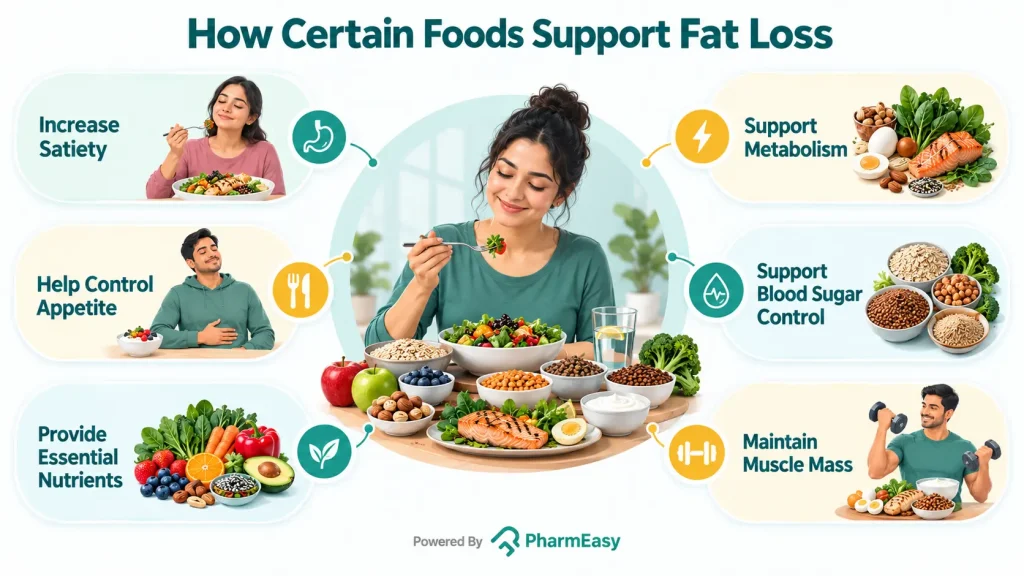
As we discussed earlier, certain foods may support fat loss indirectly rather than burning body fat themselves. They can help with weight management in several ways:
There are no specific foods that burn belly fat. However, some foods can make healthy weight loss easier by providing protein, fibre, healthy fats, or other nutrients that support fullness and overall calorie control. But, don’t go by hearsay, when looking for food for weight loss, always check for right nutrients. So, if you are wondering what foods help burn fat, the following food items may be include as part of a balanced diet:
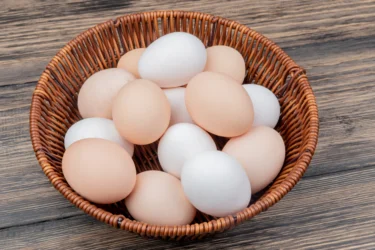
Eggs are a good source of easily digestible, high-quality protein, which helps build and maintain muscle mass9,11. They can also help increase fullness and reduce hunger12. Therefore, including eggs in a balanced breakfast may help with appetite control and calorie intake, making it easier to maintain a calorie deficit needed for weight loss.
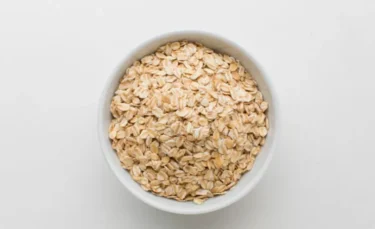
Oats are a good source of dietary fibre, particularly beta-glucan, which can help promote fullness and support appetite control (by regulating ghrelin and leptin). Their fibre content may also support healthy blood glucose and cholesterol levels13. Therefore, adding oats to your diet could help with blood sugar control and insulin secretion which helps with weight loss.
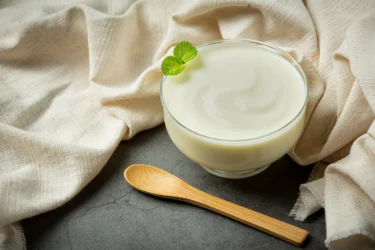
Greek yogurt is a protein-rich food that may help promote fullness and support appetite control. Its protein content can also support the maintenance of lean muscle during weight loss14. So, including it in your diet may therefore help with calorie control and healthy weight management.
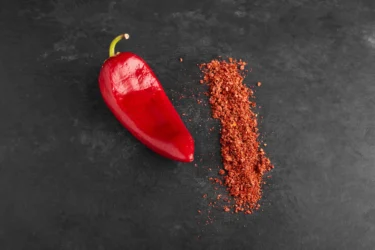
Chili peppers can be an example of food that increase metabolism and burns fat. They contain capsaicin, an active compound that may support weight management by increasing energy expenditure and oxidation of fat. Capsaicin may also help reduce appetite and energy intake, potentially supporting healthy weight loss when chili peppers are included as part of a balanced diet15.
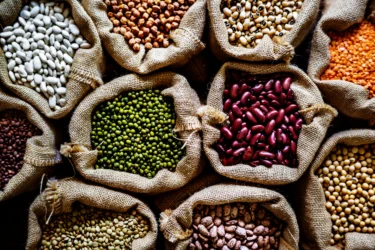
Legumes such as beans, lentils, and chickpeas may support healthy weight management because they are rich in protein and dietary fibre. These nutrients can promote fullness and help reduce hunger which may support better control of overall food intake16. Therefore, including legumes regularly in a balanced diet can be a useful strategy for supporting weight loss.
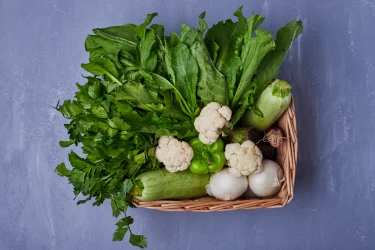
Leafy green vegetables (such as spinach, kale, and lettuce) are nutrient-dense foods that provide vitamins, carotenoids, minerals, and other beneficial compounds17. Their inclusion in a balanced diet can therefore support overall metabolic health and reduce insulin sensitivity, thereby supporting healthy weight management.
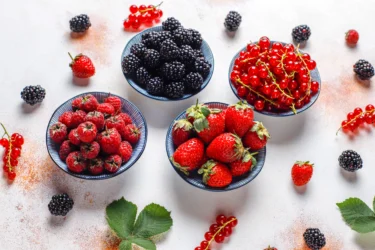
Berries such as lingonberries, blackcurrants, bilberries, and raspberries are rich in bioactive compounds. These compounds may help reduce body fat by supporting glucose regulation and lowering insulin resistance18. Therefore, including a variety of berries as part of a balanced diet can provide beneficial plant compounds while adding natural sweetness.
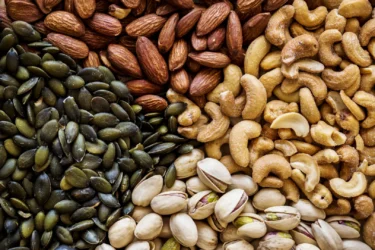
Nuts such as almonds, walnuts, and pistachios provide healthy fats, protein, and fibre, which can help promote satiety and appetite control. Despite being relatively high in calories, research suggests that regular and moderate nut consumption does not necessarily lead to weight gain and may support weight control and prevention of long-term weight gain19.
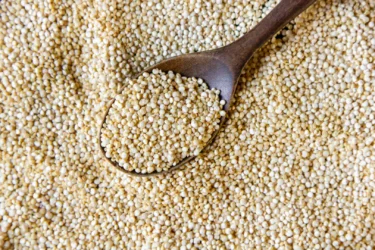
Quinoa is a fibre-rich whole-grain alternative that also provides protein and various beneficial plant compounds. Its fibre content can also contribute to fullness and appetite control (by regulating leptin and ghrelin). This makes it a useful addition to a balanced diet for healthy weight loss20.
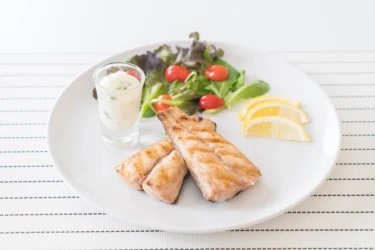
Fatty fish such as salmon, sardines, mackerel, etc. provide high-quality protein and healthy fats, including omega-3 fatty acids21. Therefore, including fatty fish as part of a nutritionally balanced diet may support overall metabolic health and weight loss.
Note: Individual needs may vary based on body constitution and overall health condition. So, when planning a diet for weight loss, always consult a clinician for a customised one.
You can include foods that support healthy weight management without making major changes to your usual meals. Try these simple approaches22,23:
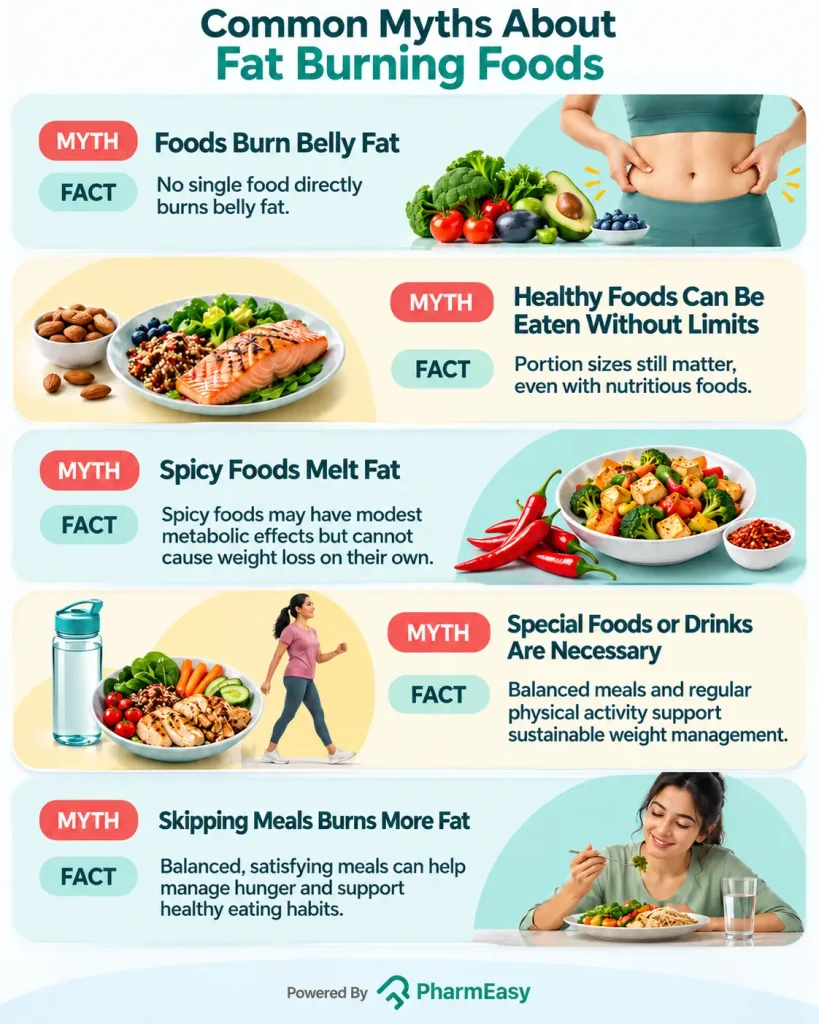
There are many claims about foods that supposedly burn fat or speed up weight loss. Therefore, understanding what is supported by evidence can help you make healthier choices.
There are no stomach fat burning foods because no single food directly melts or burns body fat. Some foods may support fullness, appetite control, or energy expenditure, but fat loss depends largely on maintaining an appropriate calorie balance5.
Even nutritious foods/natural fat burning foods contain calories. Foods such as nuts and fatty fish can be part of a healthy diet, but portion sizes still matter19,24:
Compounds such as capsaicin may have modest effects on metabolism. So, they should not be considered a standalone weight-loss treatment15.
Sustainable weight loss can only be achieved with a balanced diet based on nutrient-dense foods, appropriate portions, and regular physical activity5. It should not be focused only on foods that burn fat fast.
Skipping meals is not necessary for weight loss. Instead, you should focus on choosing balanced, satisfying meals that can make it easier to manage hunger and maintain healthy eating habits.
Also Read: Natural Home Remedies To Reduce Belly Fat
There are no best fat burning foods, but certain food items can support healthy weight loss by improving fullness, appetite control, nutrient intake, and overall calorie balance. These include foods such as eggs, oats, Greek yogurt, leafy greens, berries, nuts, fatty fish, and quinoa, which can be included as part of a balanced diet.
However, for sustainable results, you should focus on portion control, a varied nutrient-rich diet, regular physical activity, and healthy eating habits rather than relying on any one food or ingredient.
Some foods may have modest effects on metabolism, appetite, or energy expenditure, but no food directly or rapidly burns body fat2,15. Sustainable fat loss depends mainly on overall calorie balance and healthy lifestyle habits.
Spicy foods containing capsaicin may slightly increase energy expenditure and fat oxidation15. However, the effect is modest and should not be considered a weight-loss method.
Protein-rich foods such as eggs and Greek yogurt can increase fullness, help control appetite, and support the maintenance of lean muscle during weight loss11,14. This makes them useful as part of a balanced diet.
There is no food, drink, or natural ingredient that can safely burn body fat extremely fast. Weight loss is achieved through a consistent calorie deficit, a balanced diet, and regular physical activity5.
Water is a good choice when trying to lose weight because it has no calories. Therefore, replacing sugary drinks with water can help reduce overall calorie intake. Other low- or no-calorie options, such as plain tea, coffee, sparkling water, and unsweetened flavoured water, can also fit into a healthy eating pattern25.
Lemon water can be a refreshing, low-calorie alternative to sugary drinks, which may help reduce overall calorie intake25. However, lemon itself does not directly burn body fat or cause weight loss.
1. Bo S, Fadda M, Fedele D, Pellegrini M, Ghigo E, Pellegrini N. A Critical Review on the Role of Food and Nutrition in the Energy Balance. Nutrients. 2020;12(4):1161. doi:10.3390/nu12041161 https://pubmed.ncbi.nlm.nih.gov/32331288/
2. Stuby J, Gravestock I, Wolfram E, Pichierri G, Steurer J, Burgstaller JM. Appetite-Suppressing and Satiety-Increasing Bioactive Phytochemicals: A Systematic Review. Nutrients. 2019;11(9):2238. doi:10.3390/nu11092238 https://pubmed.ncbi.nlm.nih.gov/31533291/
3. Jeukendrup AE, Randell R. Fat burners: nutrition supplements that increase fat metabolism. Obes Rev Off J Int Assoc Study Obes. 2011;12(10):841-851. doi:10.1111/j.1467-789X.2011.00908.x https://pubmed.ncbi.nlm.nih.gov/21951331/
4. Njike VY, Smith TM, Shuval O, et al. Snack Food, Satiety, and Weight123. Adv Nutr. 2016;7(5):866-878. doi:10.3945/an.115.009340 https://pubmed.ncbi.nlm.nih.gov/27633103/
5. Contreras F, Al-Najim W, le Roux CW. Health Benefits Beyond the Scale: The Role of Diet and Nutrition During Weight Loss Programmes. Nutrients. 2024;16(21):3585. doi:10.3390/nu16213585 https://pubmed.ncbi.nlm.nih.gov/39519418/
6. Wilde PJ. Eating for Life: Designing Foods for Appetite Control. J Diabetes Sci Technol. 2009;3(2):366-370. doi:10.1177/193229680900300219 https://pmc.ncbi.nlm.nih.gov/articles/PMC2771510/
7. Acute Effects of Dietary Fiber in Starchy Foods on Glycemic and Insulinemic Responses: A Systematic Review of Randomized Controlled Crossover Trials – PMC. Accessed October 6, 2026. https://pmc.ncbi.nlm.nih.gov/articles/PMC10223420/
8. Ludwig DS, Ebbeling CB. The Carbohydrate-Insulin Model of Obesity: Beyond ‘Calories In, Calories Out.’ JAMA Intern Med. 2018;178(8):1098-1103. doi:10.1001/jamainternmed.2018.2933 https://pubmed.ncbi.nlm.nih.gov/29971406/
9. Moon J, Koh G. Clinical Evidence and Mechanisms of High-Protein Diet-Induced Weight Loss. J Obes Metab Syndr. 2020;29(3):166-173. doi:10.7570/jomes20028 https://pmc.ncbi.nlm.nih.gov/articles/PMC7539343/
10. Jäger R, Kerksick CM, Campbell BI, et al. International Society of Sports Nutrition Position Stand: protein and exercise. J Int Soc Sports Nutr. 2017;14:20. doi:10.1186/s12970-017-0177-8 https://pubmed.ncbi.nlm.nih.gov/28642676/
11. Puglisi MJ, Fernandez ML. The Health Benefits of Egg Protein. Nutrients. 2022;14(14):2904. doi:10.3390/nu14142904 https://pubmed.ncbi.nlm.nih.gov/35889862/
12. Vander Wal JS, Gupta A, Khosla P, Dhurandhar NV. Egg breakfast enhances weight loss. Int J Obes. 2008;32(10):1545-1551. doi:10.1038/ijo.2008.130 https://pubmed.ncbi.nlm.nih.gov/18679412/
13. Shehzad A, Rabail R, Munir S, Jan H, Fernández-Lázaro D, Aadil RM. Impact of Oats on Appetite Hormones and Body Weight Management: A Review. Curr Nutr Rep. 2023;12(1):66-82. doi:10.1007/s13668-023-00454-3 https://pubmed.ncbi.nlm.nih.gov/36790719/
14. Eales J, Lenoir-Wijnkoop I, King S, et al. Is consuming yoghurt associated with weight management outcomes? Results from a systematic review. Int J Obes 2005. 2016;40(5):731-746. doi:10.1038/ijo.2015.202 https://pubmed.ncbi.nlm.nih.gov/26443336/
15. Zheng J, Zheng S, Feng Q, Zhang Q, Xiao X. Dietary capsaicin and its anti-obesity potency: from mechanism to clinical implications. Biosci Rep. 2017;37(3):BSR20170286. doi:10.1042/BSR20170286 https://pubmed.ncbi.nlm.nih.gov/28424369/
16. McCrory MA, Hamaker BR, Lovejoy JC, Eichelsdoerfer PE. Pulse Consumption, Satiety, and Weight Management1. Adv Nutr. 2010;1(1):17-30. doi:10.3945/an.110.1006 https://pmc.ncbi.nlm.nih.gov/articles/PMC3042778/
17. Nurzyńska-Wierdak R. Green Leafy Vegetables (GLVs) as Nutritional and Preventive Agents Supporting Metabolism. Metabolites. 2025;15(8):502. doi:10.3390/metabo15080502 https://pubmed.ncbi.nlm.nih.gov/40863121/
18. Heyman L, Axling U, Blanco N, Sterner O, Holm C, Berger K. Evaluation of Beneficial Metabolic Effects of Berries in High-Fat Fed C57BL/6J Mice. J Nutr Metab. 2014;2014:403041. doi:10.1155/2014/403041 https://pmc.ncbi.nlm.nih.gov/articles/PMC3941780/
19. Baer DJ, Dalton M, Blundell J, Finlayson G, Hu FB. Nuts, Energy Balance and Body Weight. Nutrients. 2023;15(5):1162. doi:10.3390/nu15051162 https://pubmed.ncbi.nlm.nih.gov/36904160/
20. Gholamrezayi A, Hosseinpour-Niazi S, Mirmiran P, Hekmatdoost A. The effect of replacing grains with quinoa on cardiometabolic risk factors and liver function in patients with non-alcoholic fatty liver: a randomized-controlled clinical trial. Front Nutr. 2025;12:1505183. doi:10.3389/fnut.2025.1505183 https://pubmed.ncbi.nlm.nih.gov/40098740/
21. Thorsdottir I, Tomasson H, Gunnarsdottir I, et al. Randomized trial of weight-loss-diets for young adults varying in fish and fish oil content. Int J Obes. 2007;31(10):1560-1566. doi:10.1038/sj.ijo.0803643 https://pubmed.ncbi.nlm.nih.gov/17502874/
22. CDC. Tips for Increasing Vegetables and Fruits in Your Diet: Healthy Eating for Healthy Weight. Healthy Weight and Growth. July 24, 2026. Accessed October 6, 2026. https://www.cdc.gov/healthy-weight-growth/healthy-eating/fruits-vegetables.html
23. 8 tips for healthy eating. nhs.uk. February 24, 2022. Accessed October 6, 2026. https://www.nhs.uk/live-well/eat-well/how-to-eat-a-balanced-diet/eight-tips-for-healthy-eating/
24. Mendivil CO. Fish Consumption: A Review of Its Effects on Metabolic and Hormonal Health. Nutr Metab Insights. 2021;14:11786388211022378. doi:10.1177/11786388211022378 https://pubmed.ncbi.nlm.nih.gov/34158802/
25. CDC. About Water and Healthier Drinks. Healthy Weight and Growth. March 5, 2026. Accessed October 6, 2026. https://www.cdc.gov/healthy-weight-growth/water-healthy-drinks/index.html
Disclaimer: The information provided here is for educational/awareness purposes only and is not intended to be a substitute for medical treatment by a healthcare professional and should not be relied upon to diagnose or treat any medical condition. The reader should consult a registered medical practitioner to determine the appropriateness of the information and before consuming any medication. PharmEasy does not provide any guarantee or warranty (express or implied) regarding the accuracy, adequacy, completeness, legality, reliability or usefulness of the information; and disclaims any liability arising thereof.
Links and product recommendations in the information provided here are advertisements of third-party products available on the website. PharmEasy does not make any representation on the accuracy or suitability of such products/services. Advertisements do not influence the editorial decisions or content. The information in this blog is subject to change without notice. The authors and administrators reserve the right to modify, add, or remove content without notification. It is your responsibility to review this disclaimer regularly for any changes.


Comments

Leave your comment...
You may also like



















Comments